
Castro cruise port brings passengers into the capital of Chiloé, close to its market, colourful San Francisco church and waterfront. The town itself is strong enough for a rewarding independent day.
A guided island excursion earns its price only when it adds Chiloé interpretation: Dalcahue, a second UNESCO wooden church, food traditions or rural landscape. Do not buy a long coach merely to collect villages, and do not attempt the national park or Ancud on a normal call.
Castro Cruise Port at a Glance
| Port name | Castro |
|---|---|
| Main arrival area | Puerto de Castro on the central waterfront |
| Cruise region | South America / Galapagos |
| Country / Territory | Chile |
| Currency | Chilean peso (CLP) |
| Languages | Spanish |
| Port role | Day Call |
| Disembarkation | Tender |
| Walkability | Good in the centre, with hills towards viewpoints |
| Shuttle required | No |
| Main transport | Walking, taxi and local or ship tour vehicle |
| Best first-time plan | DIY church, market, palafitos and centre; organise Dalcahue and UNESCO church interpretation |
| Main caution | Chiloé roads and weather make long island circuits poor cruise-day value |
Tenders arrive on Castro’s central waterfront
Puerto de Castro places passengers close to the market and lower town rather than at an outlying commercial terminal. The exact floating position can vary with vessel and tide.
Photograph the landing and final tender notice. Several piers and waterfront structures can look similar from the town, while the ship will use one designated passenger point.
DIY or organised tour? DIY Castro, organise cultural Chiloé
Central Castro is compact and legible enough to explore independently. A guide is not needed simply to reach the church, market or palafito viewpoints.
Organised touring becomes valuable outside town, where local history, church architecture, food and road timing matter. Choose one coherent route rather than a coach that races through every named village.
San Francisco Church is the first priority
The church facing Plaza de Armas is part of the UNESCO Churches of Chiloé group and stands out through colour, timber construction and interior scale.
Enter respectfully when open and look beyond the bright façade. The wooden structure and local building tradition explain why Chiloé’s churches deserve world-heritage status.
Go inside when services and opening arrangements allow. The coloured exterior is immediately recognisable, but the timber construction, interior proportions and relationship with Chiloé’s church tradition provide the substance of the visit.
Dress and behave as for a functioning church. A short locally guided explanation can add more than a long coach stop because it connects the building with island carpentry, faith and settlement rather than presenting it as an isolated UNESCO object.
Plaza de Armas orients the centre
The square links the church with shops, public buildings and the upper town. It is the easiest place to pause, use Wi-Fi or decide whether to continue towards a viewpoint.
Do not spend the first hour shopping. The church and market are more distinctive, while retail can be fitted around weather or the return.
The market is the best everyday-life stop
Castro’s market and waterfront stalls can offer seafood, produce, wool, crafts and regional food. They provide more living context than a conventional souvenir shop.
Ask before photographing vendors closely, carry small pesos and consider what can legally return to the ship. Fresh food and untreated plant or animal products may face restrictions.
Use the market to understand Chiloé through seafood, potatoes, smoked products, wool and everyday trade rather than as a quick souvenir stop. Ask before photographing vendors closely and keep the cruise return in mind when buying food that may face later biosecurity controls.
The waterfront is most useful early, when the tender operation is clear and the town is waking up. It also provides an easy fallback if rain makes the higher streets or longer excursion less attractive.
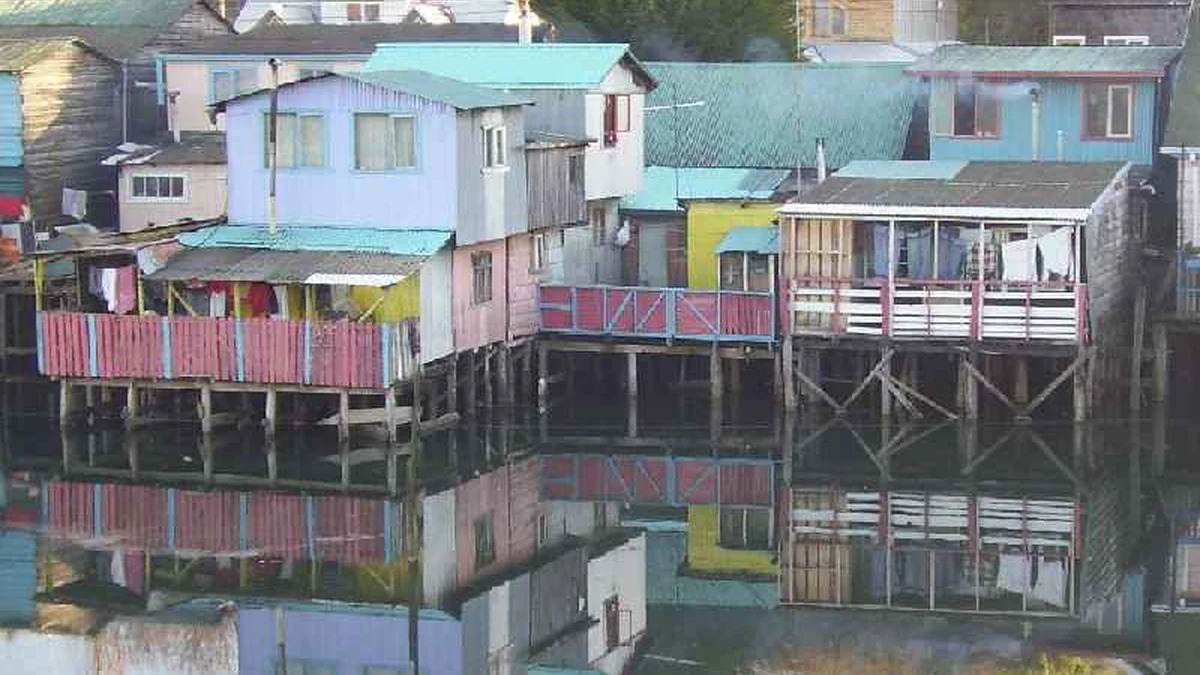
Palafitos are the town’s defining image
Official Chile tourism highlights the stilt houses of Castro as a signature of Chiloé.
They are homes and businesses adapted to the tidal waterfront, not an open-air set. View them from recognised streets and miradores without entering private decks or alleys.
The Gamboa and Pedro Montt sectors provide different angles on the stilt houses. Choose one clear viewpoint or a short guided route rather than spending the morning moving between several similar photographs.
Tide changes the appearance dramatically: at high water the buildings seem to rise directly from the channel, while low water exposes structure and mudflat. Neither is the wrong time, and a guide should explain adaptation rather than promising one postcard condition.
Gamboa is the strongest palafito viewpoint
The Gamboa area provides one of the clearest views across rows of stilt houses and the tidal inlet. It is uphill from the waterfront but close enough for a taxi or steady walk.
Use a taxi when rain, mobility or time makes the climb unattractive. The view is worthwhile; completing every surrounding street is not.
Pedro Montt offers a second waterfront perspective
The Pedro Montt palafitos can be combined with the lower town and a meal, giving a closer sense of how buildings meet the water.
Choose Gamboa or Pedro Montt as the main photographic area rather than forcing both into a shortened call. Their value is similar, and weather may make one easier.
Chiloé food deserves a planned stop
Curanto, seafood, potatoes and local preparations express the island’s culture more clearly than a generic café lunch.
A full curanto experience can take time, so confirm service before ordering. A smaller seafood or potato-based meal may fit the tender day better without reducing the local character.
A seafood lunch, empanada or carefully chosen local dish fits naturally after the market and church. Curanto is culturally important but can be a long, heavy meal; book it only when the excursion schedule has allowed enough time.
Passengers with allergies should ask directly about shellfish, stock and cross-contamination. Do not leave the only substantial meal until immediately before the final tender, when service and payment delays become a return risk.
Dalcahue is the best organised extension
Official itineraries connect Dalcahue and Castro through churches, crafts and Chiloé food.
A half-day tour can add Dalcahue’s church and artisan market while keeping the road journey reasonable. This is our preferred paid excursion for a first visit.
The road journey is manageable when the excursion leaves soon after landing and stays focused on the waterfront, church, market or craft tradition. It becomes weaker when several distant church villages are added simply to lengthen the list.
Choose a guide who can explain differences between Castro and Dalcahue rather than allowing the second town to feel like a smaller repetition. Local weaving, boatbuilding and the channel setting provide the useful contrast.
A second UNESCO church adds comparison
Seeing only Castro’s church can make the heritage feel like one colourful landmark. A guide can show how different communities adapted the wooden tradition.
Choose Dalcahue or another nearby recognised church rather than driving across the island for the greatest possible count. Interpretation matters more than tallying façades.
Craft markets need selectivity
Woollen goods, woodwork and regional designs can be worthwhile, but not every product is locally made.
Ask about origin and maker, compare quality and avoid bargaining as if labour has no value. Keep purchases dry during the tender.
Rural mythology needs a knowledgeable guide
Chiloé’s stories of sea and forest creatures are often marketed as colourful folklore. A good local guide connects them with landscape, belief and community history.
Avoid a tour that reduces culture to costumes or a list of legends. The strongest interpretation respects contemporary island life as well as tradition.
Chiloé National Park is too far for a normal call
The park offers forest and Pacific-coast scenery, but road time, trail conditions and weather make it a fragile cruise-day target from Castro.
Use it only through a ship-protected excursion on a long call. For most passengers, Dalcahue and central Castro deliver more cultural depth with less risk.
Chiloé is large and road travel is slower than the map implies. Ancud, Chiloé National Park, penguin colonies and eastern church routes each deserve their own day and should not be combined from a tender call.
For a first visit, Castro plus Dalcahue already provides urban, religious, waterfront and craft context. A longer circuit often sacrifices the market, food and walking time that make Castro distinctive.
Ancud is not a sensible first-time add-on
Ancud lies far to the north and has its own history and coast. Reaching it means passing many nearer Chiloé experiences.
Do not combine Ancud with Castro on a standard call. Save it for a land itinerary or a port that specifically uses the northern island.
Taxis are useful for hills, not island touring
A local taxi can efficiently connect the port, Gamboa viewpoint and centre. Agree the price or meter expectation before leaving.
For Dalcahue or a rural circuit, use a booked guide or vehicle with a return commitment. An improvised taxi is not automatically a cruise-aware tour.
Rain should change the order, not cancel the day
Chiloé weather is famously changeable. Begin with the viewpoint during a clear interval and use the church, market or meal when rain arrives.
Carry waterproof layers rather than an umbrella that struggles in wind. Wet timber and pavements can be slippery even after the shower ends.
Use the church, market and museum or indoor craft spaces during the heaviest shower, then take palafito viewpoints when visibility improves. Chiloé weather can change repeatedly within one call.
Waterproof footwear matters more than an umbrella in wind. Old paving, market edges and tender surfaces can remain slippery after the rain stops, so shorten the route before balance becomes a problem.
Accessibility requires route editing
The lower waterfront and central square can be easier than the hills and narrow palafito streets. Tender access remains the first barrier.
Use a taxi to Gamboa and ask about church thresholds. A limited-mobility passenger can still combine the market, church exterior and a scenic drive without attempting every slope.
Castro’s hills make a short map distance misleading. A vehicle can place passengers near Plaza de Armas and San Francisco Church, then continue to a selected palafito viewpoint and the market rather than requiring repeated climbs from the harbour. Confirm kerbs, steps and toilet access with the guide, especially in rain. The best accessible plan keeps the cultural priorities and removes duplicated viewpoints, not the interpretation that makes them worthwhile.
A shortened call should remain in Castro
Late tendering removes the case for Dalcahue. The church, market, centre and one palafito viewpoint still form a complete day.
Make the switch immediately rather than asking a driver to rush the original route. Castro is not merely a waiting room for wider Chiloé.
Use a compact harbour-to-plaza sequence: market, San Francisco Church, one palafito viewpoint and local food. This retains the defining architecture, faith and everyday culture without exposing the day to a Dalcahue road return. A late tender is the moment to deepen Castro, not to compress the wider island.
What to skip in Castro
Skip a full-island circuit, Chiloé National Park without ship protection, Ancud and a tour that spends more time at retail stops than heritage sites.
Also skip treating palafitos as abandoned scenery. They are part of a working town and should be viewed accordingly.
Return downhill to Puerto de Castro early
Plan the final route from the upper town towards the water. This avoids a last-minute climb or dependence on finding a taxi.
Use any spare time around the market and lower centre, then join an earlier tender. Rain or wind can slow both walking and small-boat loading.
Castro’s centre rises above the harbour, and the final downhill walk can be slower in rain or crowds. Arrange the last stop so that the route naturally finishes beside the tender rather than requiring another climb or taxi.
A private guide should return passengers to the named maritime terminal, not merely to Plaza de Armas. Keep enough time for harbour control and the tender queue after the road vehicle has arrived.
Use the final waterfront period to check tender instructions, organise purchases and enjoy the harbour rather than adding another uphill stop. This leaves a practical cushion if rain returns or the tender queue begins early.
Use spare minutes beside the harbour rather than climbing back into town.
CruisePing Recommended Port Day
Start at the market and waterfront, climb or take a taxi to Plaza de Armas and San Francisco Church, then continue to one palafito viewpoint. Add a local lunch and return downhill through the centre.
For a paid excursion, choose Dalcahue with its church, market and proper local interpretation. Chiloé National Park is too far for a normal call. A focused cultural route is more varied and more useful than hours of road travel.
Weather & Best Time to Visit Castro
| Month / season | Typical high | Typical low | Rain / conditions |
|---|---|---|---|
| December–February | 18°C | 10°C | Mildest period, long daylight and changeable showers |
| March–May | 14°C | 7°C | Cooler, wetter and often windy |
| June–August | 10°C | 4°C | Cold, wet and short daylight; slippery surfaces possible |
| September–November | 14°C | 6°C | Spring changeability with brighter intervals |
Castro is cool and changeable even in summer. Rain, wind and wet walking surfaces should shape the order of the day. Check the current official forecast before finalising the day.
Frequently Asked Questions
Where do passengers land in Castro?
Cruise tenders normally use Puerto de Castro on the central waterfront.
Can Castro be explored independently?
Yes. The church, market, centre and palafito viewpoints make an excellent DIY day.
Which organised excursion is best?
Dalcahue with a UNESCO church, crafts and local interpretation is the strongest first-time extension.
Can you visit Chiloé National Park?
Only on a long, ship-protected excursion; it is not our default recommendation.
What should you wear?
Waterproof layers and secure walking shoes are useful year-round.
Useful Official Links
- Chile Travel: Chiloé
- Chile Travel: Castro and Dalcahue
- UNESCO Churches of Chiloé
- Chile Travel World Heritage
- MeteoChile
CruisePing Port Verdict
Castro is a genuinely strong DIY port: San Francisco Church, the market, local food and one palafito viewpoint provide a varied and coherent day from the tender landing.
Pay for Dalcahue and church interpretation when you want wider Chiloé. Skip the full-island circuit, Ancud and distant park ambitions; cultural depth beats mileage here.
Ready to browse our article library?
Looking beyond Castro? Explore more ports in the South America / Galapagos region, or narrow it to Chile in particular. For cruise comparisons, planning shortcuts and value guides, head over to our main article archive.