
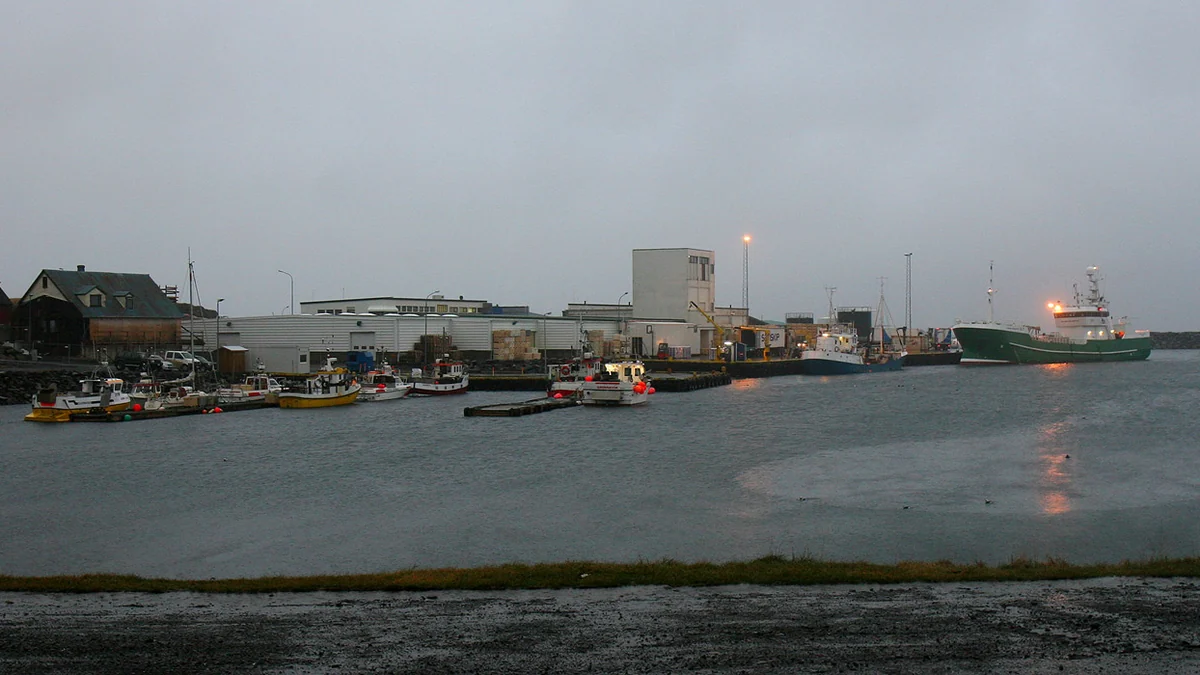
Djúpivogur is a small East Iceland port where the day feels very different from a big-city cruise call. Ships usually visit because of the surrounding fjords, the quiet harbour, the birdlife and the chance to sample a remote Icelandic settlement rather than because there is a long list of headline attractions beside the pier.
For most cruise passengers, the best plan is to keep the day honest. Use the tender landing and village as the low-risk base, then decide whether conditions support a local walk, a Papey-style boat trip, a guided Eastfjords drive or a ship excursion towards bigger landscape targets. This is a port where mist, wind and tender timing can matter as much as distance on the map.
Djúpivogur Cruise Port at a Glance
| Port name | Djúpivogur Iceland Cruise Port |
|---|---|
| Main cruise area | Tender landing around Djúpivogur harbour, subject to ship instructions |
| Cruise region | Antarctic / Arctic |
| Country / Territory | Iceland |
| Currency | Icelandic króna (ISK) |
| Language | Icelandic |
| Disembarkation | Tender |
| Walkability | Medium |
| Shuttle required | Sometimes |
| Mobility difficulty | Medium |
| Main transport options | Walking Route, Taxi, Organised Excursion |
| Best DIY option | Harbour, Langabúð area, Eggin í Gleðivík and short local walks |
| Main caution | Weather and tender operations can narrow the realistic day quickly |
Weather & Best Times to Visit Djúpivogur
April to May
Typical high: 5–8°C
Typical low: 0–3°C
Rain / conditions: Cold spring conditions; wind and showers can make an exposed harbour walk feel raw.
June to August
Typical high: 10–13°C
Typical low: 5–8°C
Rain / conditions: Cool rather than warm; visibility and wind matter more than heat.
September to October
Typical high: 6–10°C
Typical low: 2–6°C
Rain / conditions: Shorter days and unsettled weather; keep any longer excursion conservative.
November to March
Typical high: 0–4°C
Typical low: -4–1°C
Rain / conditions: Winter calls are uncommon; icy roads and low light would change excursion choices.
Weather guide: CruisePing summary based on NASA POWER climate data for the Djúpivogur / Eastfjords area. Check the latest forecast.
In Djúpivogur, weather mainly affects visibility and sea state. If Búlandstindur is hidden by low cloud, a local harbour-and-Eggs walk can be more satisfying than a long coach ride across the Eastfjords just to sit in grey weather.
Where Cruise Passengers Come Ashore in Djúpivogur
Djúpivogur is not a conventional walk-through cruise terminal port. Treat it as a tender call unless your cruise line says otherwise, and read the ship newsletter carefully before deciding how far to range from the harbour. The visitor-facing information for Djúpivogur through Visit Austurland is the best starting point for understanding the village and its local sights. The tender landing puts most reasonably mobile passengers close to the harbourfront, but the practical feel of the day depends on the sea. A calm morning can make this a relaxed village call. A poor-weather morning can make the tender queue slow and make longer independent plans feel fragile. Do not build the day around a tight taxi plan unless the arrangement is confirmed. Djúpivogur is small, transport supply is limited, and most cruise-compatible trips are better handled through the ship, a pre-booked local provider or a plan that can survive a late start.
Getting Around Djúpivogur Without Overreaching
The easiest independent plan is simply to walk. The harbour, Langabúð area, local art spaces and shoreline viewpoints give a good sense of place without needing a vehicle. The best local decision is whether to stretch the walk towards Eggin í Gleðivík or keep closer to the tender landing if weather turns.
Visit Austurland lists Búlandstindur, Eggin í Gleðivík, Tankurinn and nearby natural sites, but not all of those make equal sense for a normal cruise call. Some are straightforward local stops; others belong more naturally to a guided scenic drive. Taxi and private touring capacity should be treated as limited unless arranged in advance. There is nothing wrong with staying local here. In fact, a slow harbour walk can be a better expression of Djúpivogur than rushing inland just because a more dramatic name appears on a map.
Best Cruise-Compatible Things to Do from Djúpivogur
Djúpivogur harbour and Langabúð area
Best for: A calm introduction to the village, fishing harbour and small-scale Eastfjords atmosphere.
Best way: Walk from the tender landing, allowing time to stop rather than marching through it.
Watch: Wet or windy weather can make even a simple walk feel more exposed than expected.
Eggin í Gleðivík
Best for: The most distinctive local landmark, with 34 stone eggs representing nesting bird species.
Best way: Walk if conditions are good and your mobility is reasonable; otherwise use an arranged short transfer if available.
Watch: It is more satisfying as part of a relaxed shoreline loop than as a rushed photo stop.
Búlandstindur views
Best for: Landscape-focused passengers who want the port’s mountain setting in the day.
Best way: Usually best seen from local viewpoints or as part of a guided Eastfjords drive.
Watch: Low cloud can remove much of the point of a scenery-first plan.
Papey or coastal wildlife trip
Best for: Passengers who want birdlife and a more nature-led port day.
Best way: Use a ship excursion or pre-booked operator only if timings clearly fit the call.
Watch: Boat trips are inherently weather-sensitive and should not be treated as guaranteed.
Local art and Tankurinn
Best for: A short, low-pressure add-on when the village itself is the plan.
Best way: Walk locally after checking what is open or accessible on the day.
Watch: Do not assume every small venue will operate to cruise-ship timing.
Longer East Iceland scenery excursion
Best for: Passengers who prefer a structured coach or private tour beyond the village.
Best way: Best as a ship excursion or confirmed local tour with clear return timing.
Watch: A long drive is weak value if the weather closes in or the call is short.
A Slow Djúpivogur Walking Plan That Makes Sense
A good independent day in Djúpivogur starts at the harbour rather than away from it. Walk the waterfront first, get your bearings, then move towards the Langabúð area and the small village centre. Speed adds little here. Let the harbour, mountains and small-town rhythm do some of the work.
The best local walk for many passengers is the route towards Eggin í Gleðivík, the outdoor artwork of stone bird eggs linked to Icelandic nesting birds. It gives the day a clear destination without pushing you into uncertain transport. In settled weather, this is the kind of low-cost independent plan that suits a tender call: enough to feel you have gone beyond the landing, but not so much that the return becomes stressful.
Build in time to pause rather than making the village a tick-box route. If the weather is clear, the views towards Búlandstindur are part of the appeal. If cloud sits low, the same walk still works because you are not dependent on one viewpoint opening at a particular moment. That is a useful distinction in East Iceland.
Use the harbour area as a timing anchor. Decide at the start when you want to be back near the tender point, then let the walking route fill the middle rather than the other way round. That sounds simple, but it is exactly what keeps a small tender port from becoming irritating.
Photography-minded passengers should also think in terms of light and shelter. A quick walk to the egg sculptures can be beautiful in clear air, yet the same route can feel bleak in rain. Keep gloves, a waterproof layer and a camera cover accessible rather than buried in a bag.
When a Longer East Iceland Excursion Is the Better Choice
A longer excursion can make sense from Djúpivogur, but it should be arranged before the port day. The surrounding fjord country is the reason many cruise passengers remember East Iceland, yet the geography does not behave like a city-port day where you can step off, choose a bus and change your mind easily.
A ship excursion or confirmed local tour is strongest for passengers who want wider scenery, photography stops or a more structured interpretation of the Eastfjords. It also suits anyone who would rather not manage small-place logistics after a tender arrival. The cost can be easier to justify here than in a highly walkable city because the independent alternative is not simply a cheap public-transport version of the same day.
The weaker choice is to hope that a taxi or tour place will appear at the harbour without checking. Sometimes cruise days create extra local capacity; sometimes they do not. For a port like Djúpivogur, uncertainty is the deciding factor. Local walking is robust. Long-distance improvisation is not.
The better organised excursions from a port like this are not necessarily the ones that cover the greatest mileage. A shorter tour with well-chosen scenic stops, a reliable driver and clear return timing can be more valuable than a broad itinerary that spends too long on the road.
Passengers who have already seen Reykjavík, Akureyri or Ísafjörður should not underestimate the appeal of a quieter East Iceland call. Djúpivogur’s value is partly its contrast with Iceland’s better-known cruise ports.
Mobility, Weather and the Tender Reality
Djúpivogur’s mobility challenge is less about urban obstacles and more about tendering, wind, surfaces and exposure. The village itself is small, but passengers still need to think about getting from ship to shore, queuing for tenders, walking on uneven harbour-side routes and staying comfortable in cold or wet conditions.
Passengers who use sticks, scooters or wheelchairs should check the cruise line’s tender policy before counting on going ashore independently. Tender access can vary by ship, sea state and crew assessment. Even if the harbour end looks manageable, the decision starts on board, not at the landing.
The port works best when the plan has a weather valve. If the morning is calm and clear, walk further and give the landscape more time. If the weather closes in, shorten the route, use the village centre and avoid turning the day into a test of endurance.
How to Scale a Djúpivogur Call Without Forcing It
The sensible way to approach Djúpivogur is to decide how much weather risk you want before you leave the ship. A harbour-and-village day is not a consolation prize here; it fits a call where the tender landing, wind and local transport supply can all shape the morning. If you have a short call, keep the plan close to the landing and treat Eggin í Gleðivík as the natural outer edge of an easy independent walk.
A more ambitious Eastfjords plan needs to be pre-arranged rather than improvised at the quayside. This is especially true if you want scenery beyond the village, photo stops around Búlandstindur or a longer drive into the surrounding fjord country. The distances may not look intimidating on a map, but the combination of small-place transport supply and variable Icelandic weather makes a casual taxi assumption weak.
For passengers who do not enjoy tender queues, this is also a port where the first hour matters. Let the early rush clear if you are only staying local; go early only if you have a confirmed excursion or a specific independent arrangement. That choice can make the difference between a calm village day and a frustrating morning spent watching tender groups.
CruisePing Recommended Port Day
For a first visit, the strongest low-risk plan is a local Djúpivogur day: harbour, Langabúð area, Eggin í Gleðivík, a coffee stop if available and enough spare time to let the tender operation breathe. That may sound modest, but it suits the scale of the place.
If your ship offers a well-timed scenic excursion and the weather is clear, that can be worth considering. The important point is not to turn a remote tender port into a self-made transport puzzle. The farther you move away from the harbour, the more you should want someone else taking responsibility for the route and timing.
For passengers who want a clearer objective, use Eggin í Gleðivík as the main local target and keep the return route deliberately unhurried. That gives the day enough shape without pretending that Djúpivogur needs a crowded itinerary.
A ship excursion is worth considering when it adds proper Eastfjords context or reaches scenery you could not sensibly arrange alone. The test is simple: does the tour solve a real access problem, or is it just a more expensive version of a walk you could have enjoyed at your own pace?
For nervous tender passengers, make this a half-day shore visit and return before the peak. The village is close enough to support that choice, and it avoids the worst version of the port: standing in a late tender queue after a weather-delayed start.
A small practical detail helps: keep warm layers available even when the ship feels comfortable. Tender boats, exposed harbour areas and slow walking in wind can feel much colder than the temperature number suggests.
The best judgement call is made after you see the morning. If the ship is slow clearing tenders or wind is already up, stay local and make the shore visit relaxed rather than treating the delay as something to recover by rushing.
That restraint is what makes the call work: choose a plan that still feels good if the tender starts late.
For CruisePing, that is the right trade: a modest route that protects the tender return and still feels unmistakably Icelandic.
Keep the final half hour near the harbour, especially if wind has built during the call.
DIY or Organised Excursion from Djúpivogur?
Djúpivogur is a good DIY port only if DIY means walking locally. It is a poor DIY port if DIY means trying to improvise a full East Iceland tour after coming ashore. There may be local options on cruise days, but supply, weather and tender timing can all change the plan.
Passengers who like small places will probably enjoy staying close to the harbour. Passengers who will be disappointed without waterfalls, mountains or a longer drive should look at the ship’s excursion list first and then compare it with confirmed local providers.
There is also a practical difference between confidence and improvisation. Confident DIY here means knowing that your route is local, flexible and reversible. Improvisation means assuming that a small Icelandic harbour will offer the same transport choices as a major cruise terminal. Those are not the same thing.
The most robust independent plan is also the easiest to modify. If the tender queue is quick, walk further. If the weather changes, cut back. If the village is busier than expected, take your time around the harbour and avoid competing for scarce transport.
The village is also a good port for passengers who enjoy doing less properly. Read the signs, watch the harbour, take the short walk to the artwork, and avoid measuring the day against larger Icelandic ports with coaches waiting at the gangway.
If your cruise line offers a short local orientation or nature-focused trip at a sensible time, compare it with the walking plan honestly. The right paid option should add access or interpretation, not simply replace a free harbour walk.
A short, well-paced Djúpivogur day also leaves passengers with a more honest memory of the Eastfjords: harbour, mountain, weather and village scale, rather than a blurred coach window view.
Djúpivogur Port-Day Pitfalls and Value Hacks
- Do not assume the tender landing time is the same as your advertised arrival time; build slack into the first hour ashore.
- Treat weather as a decision-maker. Wind and low cloud can weaken Papey, mountain-view and long-scenery plans.
- Do not rely on finding a taxi at the harbour for a custom Eastfjords tour unless your cruise line or a local provider has confirmed availability.
- Keep footwear practical. Even a village walk can include wet surfaces, gravel and breezy exposed sections.
Djúpivogur Cruise Port Checklist
- Check the ship’s tender instructions before making any independent commitment.
- Decide whether your priority is the village itself, Eggin í Gleðivík, Papey or a guided Eastfjords drive.
- Use the harbour as your fallback if weather weakens scenic plans.
- Carry a windproof layer even in summer.
- Return to the tender landing with more buffer than you would use in a docked city port.
Useful Official Links for Djúpivogur
For Djúpivogur, the most useful checks are the local Eastfjords visitor pages, nearby sight information and the Icelandic forecast before committing to anything beyond the harbour.
- Visit Austurland Djúpivogur visitor information
- Visit Austurland Djúpivogur destinations and sights
- Visit Iceland day in Djúpivogur guide
- Icelandic Met Office Eastfjords forecast
Djúpivogur Cruise Port FAQ
Is Djúpivogur a tender port?
For most cruise passengers, Djúpivogur should be treated as a tender call unless your cruise line gives different instructions for your sailing. That makes sea conditions and tender queues part of the planning.
Can you walk around Djúpivogur from the tender landing?
Yes, a local harbour and village walk is the most reliable independent option for reasonably mobile passengers. Longer nature trips should be arranged rather than improvised.
Is Papey realistic from a cruise ship?
It can be realistic only when a boat trip is properly timed for the ship call and conditions cooperate. Do not make it your only plan unless the operator or cruise line confirms the timing.
What is the safest fallback in bad weather?
Stay local: harbour, Langabúð area, small local sights, Eggin í Gleðivík if conditions allow, and an early return to the tender point.
CruisePing Port Verdict
Djúpivogur is a quiet, weather-led Iceland call rather than a checklist port. It works best when you respect its scale: walk the harbour, add Eggin í Gleðivík if conditions are good, and use organised arrangements for anything beyond the village. The weak plan is trying to make a remote tender port behave like a big transport hub.
Ready to browse our article library?
Looking beyond Djúpivogur? Explore more ports in the Antarctic / Arctic region, or narrow it to Iceland in particular. For cruise comparisons, planning shortcuts and value guides, head over to our main article archive.