
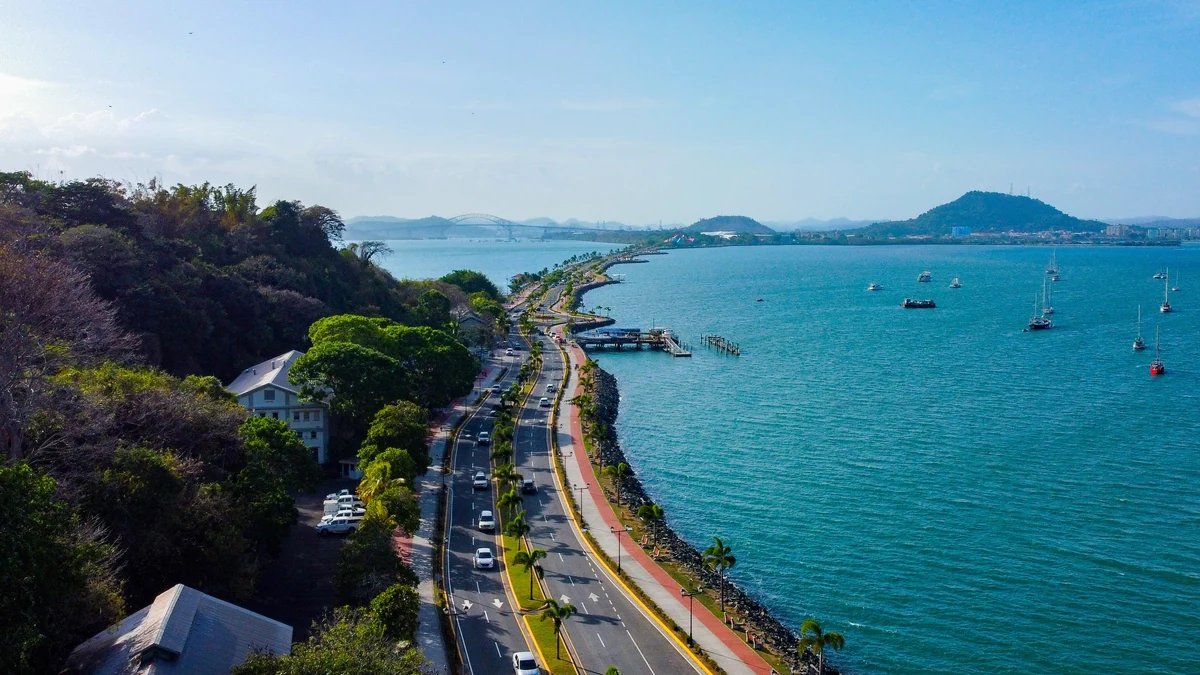
Fuerte Amador cruise port now uses the Panama Cruise Terminal on Isla Perico for many calls, replacing the old assumption that every visit begins by tender. The terminal sits on the Amador Causeway, outside the historic centre and Miraflores Locks.
For first-time passengers, the best organised day combines Miraflores and Casco Viejo. Confident independent travellers can use a taxi or rideshare for the same two priorities, but Panama City traffic and canal viewing times demand a real buffer. Amador itself is the strong short-call fallback.
Fuerte Amador Cruise Port at a Glance
| Port name | Fuerte Amador |
|---|---|
| Main arrival area | Panama Cruise Terminal on Isla Perico, Amador Causeway |
| Cruise region | Mexico / Central America / Panama Canal |
| Country / Territory | Panama |
| Currency | Panamanian balboa (PAB) and US dollar (USD) |
| Languages | Spanish; English widely used in tourism |
| Port role | Day Call / Transit Call |
| Disembarkation | Normally docked at the modern cruise terminal when assigned |
| Walkability | Limited to Amador; city and canal sights require transport |
| Shuttle required | No standard shuttle should be assumed |
| Main transport | Ship excursion, taxi, rideshare, private guide and local bus |
| Best first-time plan | Miraflores first, then Casco Viejo; stay on Amador for a short or delayed call |
| Main caution | Panama City traffic and ship-specific terminal arrangements can change the return time substantially |
The modern terminal changes old port advice
Older guides describe Fuerte Amador as a tender call. The purpose-built Panama Cruise Terminal on Isla Perico can now receive cruise ships directly, although assignment remains ship-specific.
Read the current sailing documents rather than relying on a previous visit. The map marks the modern terminal, and the ship may still use alternative handling during operational changes.
Older guides may describe every Panama City call as a tender to a marina or as a Balboa-area arrival. The current terminal on Isla Perico changes the first and last road leg, so independent drivers must be given the terminal name rather than a general request for Amador.
Follow the ship’s gangway and transport instructions even when the building is visible. Port security, bus dispatch and pedestrian access determine how passengers reach public roads; a modern terminal does not necessarily mean a free walk straight to a waiting taxi.
The terminal is not central Panama City
Amador sits on reclaimed causeway islands at the Pacific entrance to the canal. Casco Viejo and Miraflores require road transport.
Do not set off walking towards the city. Heat, distance, road design and the absence of a continuous tourist route make a taxi or organised vehicle the sensible first stage.
Build every timing estimate from Isla Perico, not from a generic Panama City hotel or downtown pin.
DIY or organised tour? Organise the first visit
A ship excursion is our first recommendation because it coordinates terminal dispatch, canal timing and traffic. The best product gives meaningful time at Miraflores and walks through Casco Viejo rather than viewing both from a bus.
DIY is feasible for experienced city travellers using rideshare or taxi. Start at the locks, keep the driver plan simple and finish near Amador, not at a distant final attraction.
Miraflores is the headline for first-time visitors
The Panama Canal Authority operates the Miraflores visitor experience on the Pacific side, with viewing and interpretation of canal operations.
Go early because vessel passages do not occur continuously for the benefit of visitors. Even without a ship directly in the chamber, the engineering and geography justify the stop.
The value comes from understanding how ships are raised and lowered, how the lock chambers fit into the canal and how the expanded route differs from the original locks. Use the visitor interpretation before choosing a viewing position.
Ask the guide or visitor centre whether a meaningful transit is expected during the planned window. If the channel is quiet, the museum and film can still make the visit worthwhile, but passengers should not spend several hours waiting for a promised vessel that has no confirmed movement.
Ask when vessels are expected
Canal traffic is operational rather than a performance schedule. A guide or the visitor centre can indicate likely movement, but delays and sequencing remain possible.
Do not spend the whole call waiting for one perfect transit. Set a latest departure for Casco Viejo and accept that the canal is worthwhile even when the largest vessel is not present.
The Miraflores visit needs more than a balcony photograph
Allow time for the film or exhibits included in the current visitor experience, then use the viewing areas to understand chambers, gates, locomotives and water movement.
A coach stop of thirty minutes is poor value once travel and entry are considered. Choose a tour that treats Miraflores as a principal attraction, not as a roadside photo.
Move between indoor interpretation and the terraces rather than holding one rail for the entire stop. Heat and crowding can make the upper viewing areas uncomfortable, while different levels may provide clearer commentary or a better angle as a vessel enters.
A ship excursion should allow enough time for the lock cycle. A coach that leaves as soon as the first gates close may technically have visited the canal but has not given passengers the complete process they paid to understand.
Casco Viejo is the cultural priority
The historic district provides churches, plazas, balconies, museums, cafés and views towards the modern skyline. It contrasts sharply with the engineering focus at Miraflores.
Explore on foot with a guide or a clear route. The area’s narrow streets and heat make repeated vehicle pickups less efficient than one set-down and a planned collection.
A focused walk should include the street pattern, plazas, churches, restored façades and views across the bay, with time to explain the district’s rebuilding after Panamá Viejo rather than treating it as a colourful shopping quarter.
Traffic should drop passengers at a practical edge of the pedestrian route and collect them elsewhere. Requiring a large coach to meet the group at the same narrow street can waste the very time saved by organised transport.
Use a focused Casco Viejo walk
Prioritise Plaza de la Independencia, the cathedral area, waterfront viewpoints and two or three streets of restored architecture.
Do not try to enter every church and museum. A shorter interpreted walk plus lunch is more valuable than a rushed checklist that leaves no traffic margin.
Choose two or three meaningful interiors or plazas rather than entering every church, museum and shop. The heat, uneven paving and crowds reward a route with shade and a planned refreshment stop.
A private guide is especially valuable for passengers interested in architecture, political history or canal-era change. It is less valuable when the itinerary consists mainly of retail stops that could be visited independently.
Panama Viejo is a separate historic option
The archaeological remains of the first Spanish city provide a different story from Casco Viejo and can suit repeat visitors.
It lies east of the centre and should replace, not accompany, a full Miraflores and Casco plan. Crossing the city repeatedly creates the weakest possible itinerary.
The archaeological site explains the first Spanish city and its destruction, while Casco Viejo shows the later urban centre. Combining both can be intellectually coherent, but it requires a longer road route and enough walking time at each.
Choose Panamá Viejo instead of Miraflores only when colonial history is the main interest or the canal has already been experienced. First-time transit passengers usually gain more from the locks plus Casco Viejo.
Amador is the best short-call fallback
Official tourism describes the Amador Causeway as four connected islands used for walking, cycling and waterfront recreation.
When arrival is late, stay local. The causeway, skyline views, Biomuseo or Punta Culebra create a complete day without entering city traffic.
The causeway provides bay and skyline views, restaurants and several attractions without crossing the city. It is the correct response to a late berth or reduced call, not a disappointing leftover.
Use a taxi or port-supported transfer between the terminal, Biomuseo and Punta Culebra when heat or mobility makes the full distance impractical. The route is visually open but longer and more exposed than it appears from the ship.
Biomuseo is the strongest Amador attraction
The Biomuseo explains how Panama’s emergence changed biodiversity and global natural history, inside Frank Gehry’s distinctive building.
Check the day’s opening hours before building the fallback around it. The museum is close enough to the terminal for a taxi or bus, but not a comfortable walk for every passenger in tropical heat.
The museum’s subject—the emergence of the isthmus and its global ecological effects—adds context that neither a skyline drive nor canal photograph provides. It works particularly well for families and repeat canal passengers.
Check opening hours against the ship’s day because the building may not operate early enough for every call. Allow time for the exhibits rather than treating the architecture alone as the stop.
Punta Culebra is excellent for families and nature interests
The Smithsonian’s Punta Culebra Nature Center combines marine and terrestrial interpretation, trails and views near the Pacific canal entrance.
Choose it over Biomuseo when live nature, children’s science or outdoor space matters more than a full museum. Opening days and timed access must be checked.
The Smithsonian site gives access to coastal ecology, marine life and views of the canal entrance in a smaller, more hands-on setting. Outdoor paths and heat still require water and suitable footwear.
Use it as an alternative to Biomuseo or combine the two on a long local day. Do not add both after Miraflores and a complete Casco Viejo walk unless the call is exceptionally long.
Do not try to walk the whole causeway casually
The causeway looks flat and simple, but distances between islands and attractions are longer than they appear from the ship.
Walk one scenic section, rent a bicycle only when heat and return are controlled, or use a taxi between the terminal and museum area. Save energy for the chosen attraction.
A private guide can outperform a large coach
A private guide can adapt the order to canal traffic, reduce waiting and give better context in Casco Viejo.
The guide must collect at the correct terminal and state a conservative return. Private status does not remove city congestion or security processing.
The strongest private sequence is Miraflores early, Casco Viejo in a compact walk and Amador only if time remains. Ask the guide to set a latest departure from central Panama City before the vehicle leaves the terminal.
A driver and a guide are not always the same service. Confirm who provides interpretation while the vehicle is parked and who monitors traffic and terminal changes.
Taxi and rideshare DIY requires a written sequence
Use the terminal Wi-Fi or offline app, confirm the vehicle plate and show the destination in Spanish. Miraflores should normally come first.
Keep the return as Panama Cruise Terminal, Isla Perico—not simply Amador. Several marinas and attractions share the causeway name.
Save the exact terminal pin, Miraflores visitor entrance and a practical Casco Viejo pickup point offline. Mobile signal and app availability can fail at the moment passengers need the final car.
Do not rely on hailing a vehicle from a crowded heritage street. Arrange the return before lunch or use a licensed taxi stand, and keep Spanish wording for Terminal de Cruceros de Panamá on the phone.
Cash and cards both work
US dollars circulate alongside balboas at the same value. Cards are widely accepted at major attractions and restaurants.
Carry small dollars for taxis, tips and minor purchases. Do not exchange money merely to obtain balboa notes, and avoid displaying large cash at busy viewpoints.
Traffic is the central DIY risk
Journey times can expand around commuting periods, road incidents, events or port congestion. A navigation estimate at breakfast is not a guaranteed afternoon return.
Finish the central-city component early and move back towards Amador. The final hour should be on the causeway, not across town at Panama Viejo or a shopping centre.
The outward journey can be quick while the afternoon return slows around city corridors, events or rain. Navigation estimates are not a cruise-safe margin because they exclude finding the driver, port access and terminal processing.
Work backwards from the ship time. Leave Casco Viejo while there is still enough time to absorb a failed rideshare and take another vehicle, then use any spare period on the Amador side.
A partial canal transit is a different excursion
Boat excursions through locks can be outstanding, but they involve a fixed embarkation point, canal authority sequencing and a long return.
Use the ship product or a fully cruise-protected operator. Do not book an independent partial transit that reaches the city near all-aboard with no recovery margin.
This product involves bus transport, scheduled vessel boarding, lock operations and a separate disembarkation point. Its appeal is experiencing the waterway from a vessel, but it consumes most or all of the call.
Use the ship excursion. The transit schedule belongs to canal operations rather than the passenger’s preferred return, and an independent ticket offers no practical recovery if the vessel finishes late or at a distant pier.
Gatun Lake and Emberá visits need ship protection
Rainforest boats and hosted Indigenous-community visits can offer nature and culture beyond the city. They also require long road or water chains.
Choose a responsible excursion that explains permissions, community benefit and the actual return. These should replace Miraflores and Casco, not be squeezed around them.
Both can be excellent, but they involve several connected legs and more variable timing than a city tour. A responsible Emberá visit should explain community consent, payment and what the programme supports rather than presenting culture as a staged add-on.
Choose one of these experiences instead of Casco Viejo and Miraflores, especially when the call is not long. A tour that claims to deliver village, wildlife, locks and old city usually provides mostly road time.
Repeat transit passengers may skip Miraflores
Passengers who have just watched a full canal transit from the ship may gain more from Casco Viejo, Biomuseo, food or Panama Viejo.
Do not repeat the locks solely because they appear on every first-time list. The right priority depends on what the itinerary has already shown.
Shopping is not the best use of a first call
Panama City has major malls and duty-free options, but they reveal less than the canal, historic district or Amador institutions.
Shop only for a specific need or as a weather fallback. A coach dominated by retail stops is poor value for a single day in Panama.
Heat changes the pace
The city and causeway are hot and humid, with strong sun reflected from water and paving.
Use shade, water and air-conditioned stops deliberately. An early outdoor walk followed by a museum or lunch is more comfortable than leaving Casco Viejo until midday.
Casco Viejo’s stone streets and Amador’s exposed causeway can feel significantly hotter than an air-conditioned coach. Build shade, water and an indoor interpretation stop into the sequence before anyone becomes unwell.
Light clothing should still respect church and cultural visits. A hat, sunscreen and a small rain layer are more useful than carrying a large day bag through crowded plazas.
Rain can be intense and localised
Tropical downpours may slow roads and flood walking surfaces without lasting all day.
Carry a light waterproof layer and keep the route flexible. Miraflores and Biomuseo offer better wet-weather resilience than a long outdoor nature itinerary.
Accessibility varies across the chain
The modern terminal can be accessible, but coach steps, Casco Viejo paving and attraction distances differ.
Ask for the whole transfer, not only the museum entrance. A private accessible vehicle and Amador-focused day may provide more comfort than a large coach with repeated boarding.
What to skip at Fuerte Amador
Skip walking to the city, a three-attraction cross-city race, a retail-heavy coach and any independent canal boat that returns close to all-aboard.
Also skip assuming old tender advice applies. The current terminal assignment is the first fact to confirm.
Return to Isla Perico early
The vehicle reaching the terminal gate is not the same as standing aboard the ship. Security, traffic inside the precinct and gangway timing still apply.
Use spare time on the causeway or terminal rather than adding one final city stop. A conservative return is essential in Panama City.
The final road vehicle still needs to enter the terminal area, pass security arrangements and unload before passengers reach the ship. A driver arriving at the terminal at all-aboard time has not provided a safe return.
Keep the final activity on Amador. A short waterfront stop or meal near the causeway uses an early buffer without creating another cross-city journey.
Confirm the driver’s access point before the final journey because terminal traffic control may use a different unloading lane from morning collection.
Do not spend that margin on another cross-city stop.
CruisePing Recommended Port Day
Take a ship excursion or cruise-aware guide to Miraflores first, allowing enough time for the visitor experience, then walk a focused Casco Viejo route and return towards Amador before traffic becomes the final decision-maker.
For a short or delayed call, stay on Amador: choose Biomuseo or Punta Culebra, add one causeway walk and eat with skyline views. Repeat canal passengers should consider this local plan or a deeper Casco Viejo day instead of automatically revisiting the locks.
Weather & Best Time to Visit Fuerte Amador
| Month / season | Typical high | Typical low | Rain / conditions |
|---|---|---|---|
| December–April | 32°C | 24°C | Drier season with strong sun and occasional showers |
| May–July | 31°C | 24°C | Wet-season rain and thunderstorms increase |
| August–November | 30°C | 24°C | Very humid with frequent heavy downpours |
| Year-round | Warm | Warm | Traffic and local rain can change journey times quickly |
Panama City is hot and humid year-round. Heavy rain can be brief but intense, affecting walking and traffic more than temperature. Check the current official forecast before finalising the day.
Frequently Asked Questions
Do ships still tender at Fuerte Amador?
Many calls now use the Panama Cruise Terminal on Isla Perico, but the current sailing assignment must be checked.
What is the best first-time excursion?
Miraflores Locks followed by a focused Casco Viejo walk.
Can you explore independently?
Yes by taxi or rideshare, but begin at Miraflores and return towards Amador early.
What can you do near the terminal?
Biomuseo, Punta Culebra and a selected section of the Amador Causeway form the best local fallback.
Can you walk from the terminal to Panama City?
No. The distance, heat and road environment make transport necessary.
Useful Official Links
- Panama Cruise Terminal
- Panama Canal Authority
- Visit Panama: Panama City
- Biomuseo
- Smithsonian Punta Culebra
CruisePing Port Verdict
Fuerte Amador’s best first visit combines Miraflores with Casco Viejo through a ship excursion or disciplined private guide. The canal and historic city deserve real time; shopping and cross-city attraction collecting do not.
Amador is not merely a terminal zone. Biomuseo, Punta Culebra and the causeway make an excellent short-call or repeat-visitor day, while keeping the final return safely outside Panama City traffic.
Ready to browse our article library?
Looking beyond Fuerte Amador? Explore more ports in the Mexico / Central America / Panama Canal region, or narrow it to Panama in particular. For cruise comparisons, planning shortcuts and value guides, head over to our main article archive.