
Fusina is a Venice cruise access point on the mainland side of the lagoon, not a walk-off berth beside St Mark’s Square. That single fact shapes the whole day: passengers first need to understand the transfer, then choose a Venice route that still makes sense once time, luggage, bridges and return arrangements are included.
The new Fusina cruise terminal has been developed as part of Venice’s wider shift away from old large-ship patterns in the historic lagoon. For cruise passengers, the port can work well, but it is a logistics-first Venice call. CruisePing would plan Fusina as a controlled-transfer port rather than a place for casual independent wandering from the gangway.
Fusina (Venice) Cruise Port at a Glance
| Port name | Fusina Cruise Port (Venice) |
|---|---|
| Main cruise area | Fusina / Marghera mainland lagoon-side terminal area |
| Cruise region | Mediterranean |
| Country / Territory | Italy |
| Currency | Euro (EUR) |
| Language | Italian |
| Disembarkation | Docked |
| Typical berth | Fusina cruise terminal; arrangements may vary by cruise line and ship |
| Walkability | Low from the port itself |
| Shuttle required | Sometimes; transfer arrangements are central to the day |
| Main transport options | Cruise transfer, coach, taxi, ferry, water taxi, organised excursion |
| Best DIY option | Use cruise-line or confirmed local transfer into Venice, then a compact city route |
| Main caution | Do not plan Venice as though the ship docks in the historic centre |
Weather & Best Times to Visit Fusina (Venice)
January to March
Typical high: 7–13°C
Typical low: 1–6°C
Rain / note: Cool and damp; transfer waits and Venice bridge routes can feel harder in wind or rain.
April to June
Typical high: 17–26°C
Typical low: 8–17°C
Rain / note: Good sightseeing weather, though showers and crowds still affect boat and walking plans.
July to September
Typical high: 25–29°C
Typical low: 18–21°C
Rain / note: Hot and busy; the Venice transfer plus bridge-heavy walking needs a lighter itinerary.
October to December
Typical high: 8–20°C
Typical low: 3–13°C
Rain / note: Wetter and atmospheric; high-water or fog disruption can make contingency planning useful.
Weather guide: CruisePing summary based on NASA POWER climate data for the Fusina, Marghera and Venice lagoon area. Check the latest forecast.
From Fusina, poor weather affects both halves of the day: the transfer into Venice and the bridge-heavy city route. Rain or high-water alerts are a reason to reduce the itinerary, not to add islands or extra museum stops.
Where Cruise Ships Dock at Fusina
Fusina sits in the mainland port system rather than in the pedestrian heart of Venice. Industry reporting on the new Fusina Cruise Terminal describes a single-floor terminal of about 3,000 square metres, capacity for two home-porting ships, seating, check-in desks, W/C facilities and outside space for taxis, buses and other services. That makes it a meaningful cruise facility, but not a city-centre sightseeing base.
For the passenger, the practical rule is to follow cruise-line instructions closely. A Fusina sailing may involve direct terminal use, controlled transfers, luggage arrangements, or a Venice meeting point depending on the cruise line and whether you are embarking, disembarking or visiting for the day. This article treats Fusina as a Venice gateway where the exact ship-day process must be confirmed from the cruise line’s current instructions.
Transfer Time Reality Check: Fusina to Venice
Cruise-line transfer
Best for: Most passengers, especially embarkation or disembarkation passengers
Typical timing: Timings and routing vary by cruise line; expect the first movement to be organised around coach, terminal or water-transfer procedures rather than independent walking.
CruisePing view: Use this as the default unless your cruise documents clearly support an independent route.
Taxi or private transfer
Best for: Passengers with luggage, limited mobility or a pre-arranged hotel plan
Typical timing: Road transfers can help with luggage and mainland hotels, but they still need a Venice edge-point such as Piazzale Roma or Tronchetto if entering the historic centre by land.
CruisePing view: Best for logistics, not for spontaneous sightseeing inside Venice.
Water-based transfer
Best for: Passengers whose operator or hotel has a clear boat arrangement
Typical timing: Water transfers can be attractive but depend heavily on operator, pier and luggage rules.
CruisePing view: Confirm details before travel; do not assume a vaporetto-style solution from the cruise terminal itself.
Fusina versus Venice: What Changes for the Port Day
A Venice itinerary starting from Fusina should be more conservative than one starting from a central water drop-off. The historic centre is still the destination, but the transfer has to be counted both ways. Add bridge-heavy walking, crowded vaporetti and access-fee checks, and a supposedly simple day can become stretched.
This is why CruisePing would choose a tighter Venice route from Fusina: Rialto and the Grand Canal, or St Mark’s and a nearby loop, or Dorsoduro / Accademia if your transfer supports it. Murano, Burano and multiple museum interiors are better saved for longer stays or very well-structured excursions.
Venice Access Fee and Official Checks
Venice’s access-fee system is date- and category-dependent. The official access-fee website sets the application dates and hours, while the exemptions page lists groups and transit areas where different rules apply. Fusina passengers should check the official site for their exact date and status, especially if travelling independently into the historic city.
Do not rely on a general statement from an old travel article. The access-fee question is separate from the transfer question: your cruise line may handle one, both or neither depending on the package and visit type. Keep the official Venice access-fee page in your pre-cruise checklist.
Getting Around Independently from Fusina
The weak DIY version is to step off the ship and improvise. Fusina is not that kind of port. Independent travel should be based on confirmed transfer information, a pre-arranged taxi or shuttle, or clear cruise-line instructions about how passengers reach Venice.
Once in Venice, the same city rules apply: walk and vaporetto routes are possible, but bridges, queues and crowds govern the day. If the transfer delivers you to Piazzale Roma, Santa Lucia, San Basilio, Tronchetto or a water point, build your route from that place. Do not start with a wish list and then hope the transfer fits.
Best Cruise-Compatible Things to Do from Fusina (Venice)
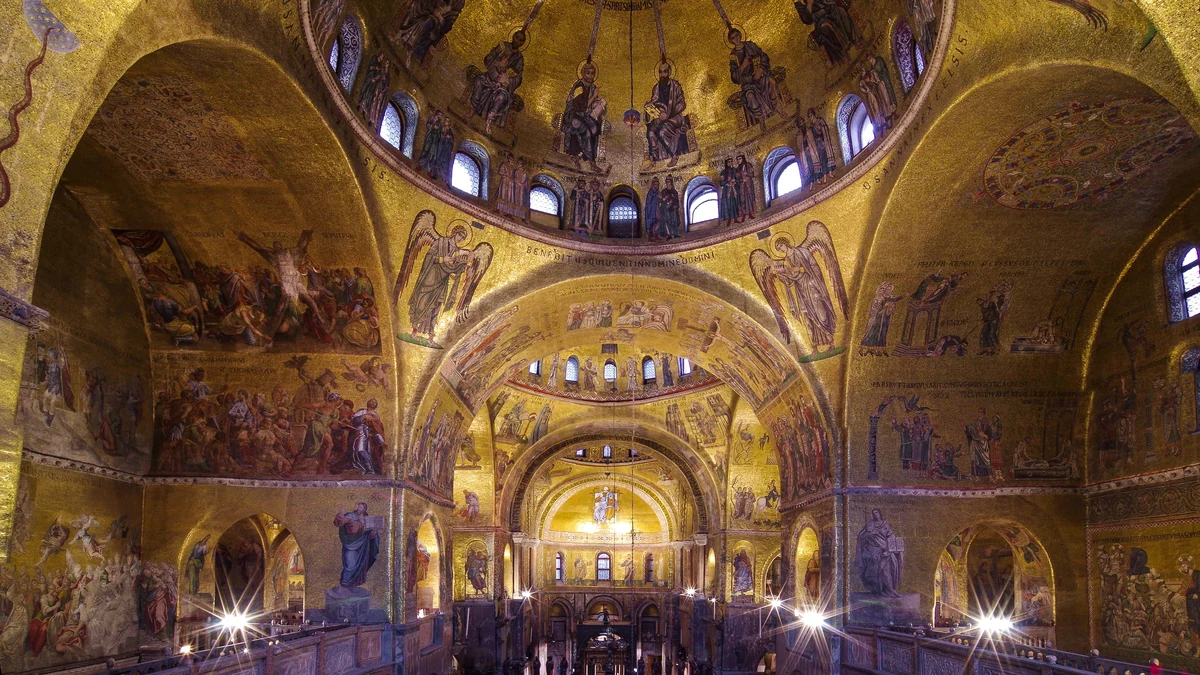
St Mark’s Basilica and Piazza San Marco
Best for: First-time visitors with a controlled transfer into Venice
Best way: Cruise transfer plus walking or vaporetto, with timed entry where useful
Watch: High crowd pressure and access rules can reduce usable time
Rialto Bridge and Grand Canal
Best for: A classic Venice route that can be scaled to time available
Best way: Walk or vaporetto from the transfer drop-off point
Watch: Crowds at Rialto can become a bottleneck on short calls
Dorsoduro and Accademia
Best for: Passengers wanting a slightly calmer Venice day
Best way: Best if your drop-off supports the south-west side of the city
Watch: Still bridge-heavy and not a flat mobility route
Grand Canal vaporetto section
Best for: Seeing Venice from the water without a full private taxi
Best way: Use official ACTV information and a clear boarding point
Watch: Crowding can turn it into a wait rather than a scenic shortcut
Organised Venice walking tour
Best for: Passengers who want interpretation and route control
Best way: Book through the cruise line or reputable local operator
Watch: Avoid tours with too many distant stops
Murano or lagoon islands
Best for: Repeat visitors with a long call or cruise-line excursion
Best way: Organised excursion or carefully checked boat routing
Watch: Too fragile for many Fusina calls if the city transfer already takes time
How Fusina Changes a Venice Day
Fusina changes Venice because the first meaningful decision is not which basilica or bridge to see. It is how the cruise process moves you from a mainland port area to a usable Venice starting point. That process may be smooth, but it is still a process. Passengers who pretend Fusina is simply “Venice, but a few minutes away” risk building a day with no room for the transfer at either end.
Once you are in Venice, the city is the same maze of water, bridges and crowds that every visitor faces. The difference is that Fusina passengers may have less freedom over the first and last movement. That makes a compact route more important. If the transfer drops you near Piazzale Roma or Tronchetto, Rialto and the Grand Canal make sense. If the cruise arrangement puts you nearer San Marco, see that area first and then move away from the crowd.
Fusina can also be a turnaround port. In that case, luggage, coach loading, check-in desks and airport or hotel routing matter more than romantic Venice images. CruisePing would rather see passengers add a Venice hotel night than attempt a heroic sightseeing day with cases and a boarding deadline.
Sample Day Plans from Fusina
Controlled first-time Venice route
Best for: Passengers whose cruise line provides a clear city transfer
Typical timing: Use the transfer, then choose St Mark’s plus Rialto/Grand Canal or a short Dorsoduro route, not all of Venice.
CruisePing view: Best default for first-timers because it respects the port transfer.
Mobility-conscious Venice route
Best for: Passengers who can walk but struggle with bridges or long standing time
Typical timing: Transfer to the best available city edge, then use vaporetto or water taxi selectively and keep walking distances short.
CruisePing view: Spend money on reducing effort rather than adding more sights.
Embarkation-day light visit
Best for: Passengers boarding at Fusina with spare time
Typical timing: Hotel or luggage first, then one defined Venice element before following terminal instructions.
CruisePing view: Do not let sightseeing threaten check-in or transfer timing.
Lagoon-island excursion
Best for: Repeat visitors with a long call and firm boat arrangements
Typical timing: Use a ship excursion or confirmed boat route for Murano, Burano or lagoon touring.
CruisePing view: Poor DIY choice if your Fusina transfer is already complex.
Embarkation, Luggage and Return Buffers
Fusina’s practical challenge is greatest on embarkation and disembarkation days. A passenger arriving by air, rail or hotel transfer needs to know where luggage is accepted, where check-in happens and whether the cruise line uses a separate meeting point. These details are too sailing-specific to guess. Check the cruise line’s current instructions before relying on any transfer, luggage or meeting-point arrangement.
For day calls, the return buffer should include more than the boat or coach ride. Include walking time from your final Venice stop to the meeting point, time to find the correct pier or coach bay, and a margin for crowding. Venice makes people late in small increments: one wrong bridge, one full vaporetto, one slow queue, one confusing sign.
For passengers staying in Venice before or after a Fusina cruise, hotel location matters. A hotel near Piazzale Roma or Santa Lucia can simplify luggage but may not feel as romantic as a deep historic-centre stay. A hotel near San Marco may be magical but harder with bags. CruisePing would choose logistics first for one-night stays and romance first only when there is enough time to enjoy it.
What to Skip from Fusina
Skip any independent plan whose first instruction is “find local transport at the port” unless your cruise documents clearly explain that option. Fusina is not a central tourist quay with obvious city streets outside. Use confirmed transfers, pre-booked taxis or cruise-line arrangements.
Skip the outer islands on a first Fusina call. Murano and Burano are worthwhile, but they compound the transfer problem. First reach Venice, then enjoy Venice. Save the islands for a longer stay or a cruise-line excursion designed around the ship’s timing.
Skip timed tickets that sit too early in the day unless the transfer is guaranteed. A timed St Mark’s or Doge’s Palace entry is useful only if you can reasonably reach it. Otherwise it becomes pressure from the moment you leave the terminal.
CruisePing Recommended Port Day
For most passengers using Fusina as a Venice access point, CruisePing would accept the controlled transfer first and then keep the Venice route compact. A strong first-time day is St Mark’s, a short Grand Canal or Rialto element, and enough unscheduled walking to feel the city. That is more satisfying than racing from island to palace to bridge while worrying about the return.
For embarkation or disembarkation, be even stricter. Luggage, check-in, coach movements and airport or hotel transfers take priority. If everything is solved and you have time, add one defined Venice element. If not, build Venice into a pre- or post-cruise night rather than turning a terminal day into a stressful sightseeing exercise.
DIY or Organised Excursion?
From Fusina, DIY is possible only when the transfer is clear. The port itself is not the attraction, and the gap between ship and Venice is the main planning issue. CruisePing would use a cruise-line transfer or organised arrangement for most first-time visitors, then switch to independent walking once safely in Venice.
A fully organised excursion makes sense for passengers with limited mobility, those nervous about the transfer, or anyone trying to combine St Mark’s, a gondola or boat element and a guided walk. Confident travellers can still DIY the city section, but they should not DIY the transfer unless the cruise documents and local transport information support it.
Walkability and Mobility Notes
Fusina itself has low walkability for a cruise passenger because useful sightseeing is not outside the terminal. Venice then adds a different mobility challenge: bridges, steps, boat boarding, crowds and uneven surfaces. A passenger who can comfortably walk a flat mile may still find Venice tiring because the effort is repeated and fragmented.
The best mobility strategy is to minimise unknowns. Use controlled transfers, reduce the number of bridges, avoid heavy luggage in the historic centre and consider a private water taxi only where the pick-up and drop-off points genuinely reduce effort.
Five Decisions to Make Before Leaving Fusina
1. Controlled transfer or independent transfer
This is the main decision, and for many passengers the answer should be controlled transfer. Fusina is not a place to improvise without instructions. If the cruise line provides a city transfer, use it unless you have a confirmed private arrangement. Independence begins once you are in a usable Venice position.
2. City edge or central landmark
If the transfer leaves you at a city edge such as Piazzale Roma or Tronchetto, build the route from there. If it places you close to San Marco, use that advantage early. Do not plan as though every Venice starting point is interchangeable. The same attraction can be easy from one point and awkward from another.
3. Sightseeing or embarkation logistics
On a boarding day, the terminal process comes first. Luggage acceptance, check-in desks, transfer buses and ship documents are not details to be fitted around sightseeing. They are the framework. If you want Venice in depth, add a night before or after the cruise.
4. Bridges or boat support
Venice walking means bridges. From Fusina, passengers have already used time and energy reaching the city, so reducing bridge crossings can be worth money. A vaporetto or water taxi is not just a scenic indulgence; used well, it can protect the day for passengers with limited mobility.
5. Access-fee check
The access-fee question should be settled before travel. It is date-sensitive and category-sensitive, and it is not the same as the cruise transfer. Keep the official website as the source rather than relying on a summary in a port forum or an old article.
When the Fusina Plan Starts to Slip
If the cruise transfer is slower than expected, reduce the Venice plan immediately. Drop the farthest district, skip the island idea, or turn the day into a Grand Canal and Rialto/St Mark’s sample. The transfer will happen again in reverse, so do not spend the return buffer before lunch.
If the weather is poor, avoid routes with too many bridges and exposed waits. Venice in rain can still be memorable, but from Fusina the day already has more logistics. A shorter route with one indoor anchor is stronger than a long outdoor march.
If luggage enters the equation, be ruthless. Sightseeing with bags in Venice is rarely good value. Storage, hotel transfer or direct terminal movement should come first. A small amount of comfortable sightseeing is better than a longer route made miserable by cases and bridges.
Tickets, Transfers and What to Confirm Before Travel
Fusina is a port where paperwork and instructions matter. Before travel, confirm whether check-in, luggage drop, security and boarding all happen at Fusina, or whether the cruise line uses another Venice meeting point before moving passengers to the ship. Do not assume that arrangements for one line, one season or one ship apply to another. The terminal is part of a changing Venice cruise model, and same-sailing instructions are the source to trust.
If you are flying into Venice, confirm whether your transfer goes to Fusina, to a maritime station, to a hotel, or to a coach meeting point. If you are arriving by train, check whether the most practical route is via Mestre, Santa Lucia, Piazzale Roma or a cruise-line transfer. The shortest-looking route on a map may be awkward with luggage. This is where pre-booked cruise transfers can be good value even for normally independent travellers.
For day visitors, the most important ticket decisions come after the transfer is known. A timed St Mark’s or Doge’s Palace ticket can work if the cruise-line movement puts you in the city with enough certainty. It is risky if the first transfer window is vague. A public-transport pass is worthwhile only if the route uses boats more than once; otherwise, one targeted boat ride or a mostly walking route may be better.
Fusina should also make passengers think harder about return buffers. A late arrival at a city meeting point does not just risk a short walk back to the ship. It may affect a coach, boat or terminal process. Keep the last part of the Venice day close to the agreed return point and treat the final movement as part of the cruise operation, not as ordinary sightseeing time.
Low-Risk Fallbacks if the Main Plan Fails
From Fusina, fallbacks should protect the transfer above all else. If the city transfer takes longer than expected, stay close to the arrival point in Venice and drop the farthest sight. If the weather is poor, use one indoor anchor and avoid routes with too many bridges. If luggage or check-in delays eat into the day, reduce sightseeing to a short walk, meal or water view rather than trying to salvage the original list.
The strongest Fusina fallback is not improvisation at the port. It is a smaller Venice route after the confirmed transfer, or a terminal/logistics day followed by a proper Venice stay before or after the cruise. Passengers who accept that early usually have a better experience than those who fight the port geography all day.
Fusina also makes a strong case for treating Venice as a cruise-and-stay destination rather than a pure day call. If the itinerary starts or ends here, a hotel night can remove most of the pressure: luggage is handled separately, the historic centre can be seen early or late, and the terminal transfer becomes one planned movement rather than the spine of the sightseeing day. Without that extra time, keep the Fusina day deliberately compact.
For repeat visitors, Fusina can still produce a good Venice day if expectations are adjusted. Instead of fighting towards the most famous square, use the transfer to reach the city, then choose a quieter district, one church, one canal-side walk or one meal. The port logistics are the same, but the city pressure is lower. That can be a better use of Fusina than trying to recreate a first-time Venice checklist through a more complicated access point.
Families and passengers with limited mobility should be especially cautious with Fusina. The Venice experience may still be excellent, but the transfer and bridge pattern can tire the group before the headline sights begin. A shorter route, pre-arranged assistance where available and a realistic return buffer will usually create a better day than pushing for every classic Venice stop.
The simplest rule is to protect the transfer. From Fusina, a smaller Venice day with a calm return beats a larger plan that depends on perfect timing.
That is especially true on boarding days, when the terminal process, luggage and return transfer need to be protected carefully.
Port-Day Pitfalls and Value Hacks
- Do not assume Fusina works like an old central Venice cruise berth.
- Read your cruise documents before booking independent Venice tickets.
- Check the official Venice access-fee rules for your exact date.
- Keep the city route compact because the transfer consumes time twice.
- Avoid lagoon-island add-ons unless your call is long and the boat plan is confirmed.
Fusina (Venice) Cruise Port Checklist
- Confirm whether your sailing uses Fusina for embarkation, disembarkation or a day-call transfer.
- Check the exact meeting point, luggage process and transfer timing from your cruise line.
- Decide whether your Venice priority is St Mark’s, Rialto/Grand Canal, Dorsoduro or a guided overview.
- Check official Venice access-fee information before travel.
- Plan the return before committing to timed tickets or boat rides.
Useful Official Links for Fusina (Venice)
These are the official or locally authoritative links worth checking before your port day.
- Venezia Terminal Passeggeri cruise information
- Official Venice Access Fee information
- Venezia Unica access-fee exemptions
- ACTV Venice public transport information
- Italian Air Force weather forecast for Venice
FAQ
Where is Fusina cruise port?
Fusina is on the mainland side of the Venice lagoon, in the Marghera/Fusina port area. It should be planned as a Venice gateway rather than as a walk-off historic-centre berth.
Can you walk from Fusina cruise port to Venice?
No. Fusina is not a practical walking port for Venice sightseeing. Passengers need cruise-line transfer, coach, taxi, water transfer or another confirmed transport arrangement.
Is Fusina better DIY or with a cruise-line transfer?
Use the cruise-line transfer or another confirmed arrangement for the port-to-Venice movement. Once in Venice, confident passengers can walk independently if the route is compact.
Does the Venice access fee apply from Fusina?
It may, depending on date, time and exemption category. Check the official Venice access-fee site for your exact sailing and circumstances.
CruisePing Port Verdict
Fusina Cruise Port (Venice) is a logistics-led Venice gateway. It can work well when the transfer is controlled and the city plan is modest, but it is a poor port for improvisation. CruisePing would follow cruise-line transfer instructions, check official Venice access rules, and build a compact route around one or two Venice priorities rather than pretending Fusina is a central walk-off call.
Ready to browse our article library?
Looking beyond Fusina (Venice)? Explore more ports in the Mediterranean region, or narrow it to Italy in particular. For cruise comparisons, planning shortcuts and value guides, head over to our main article archive.