
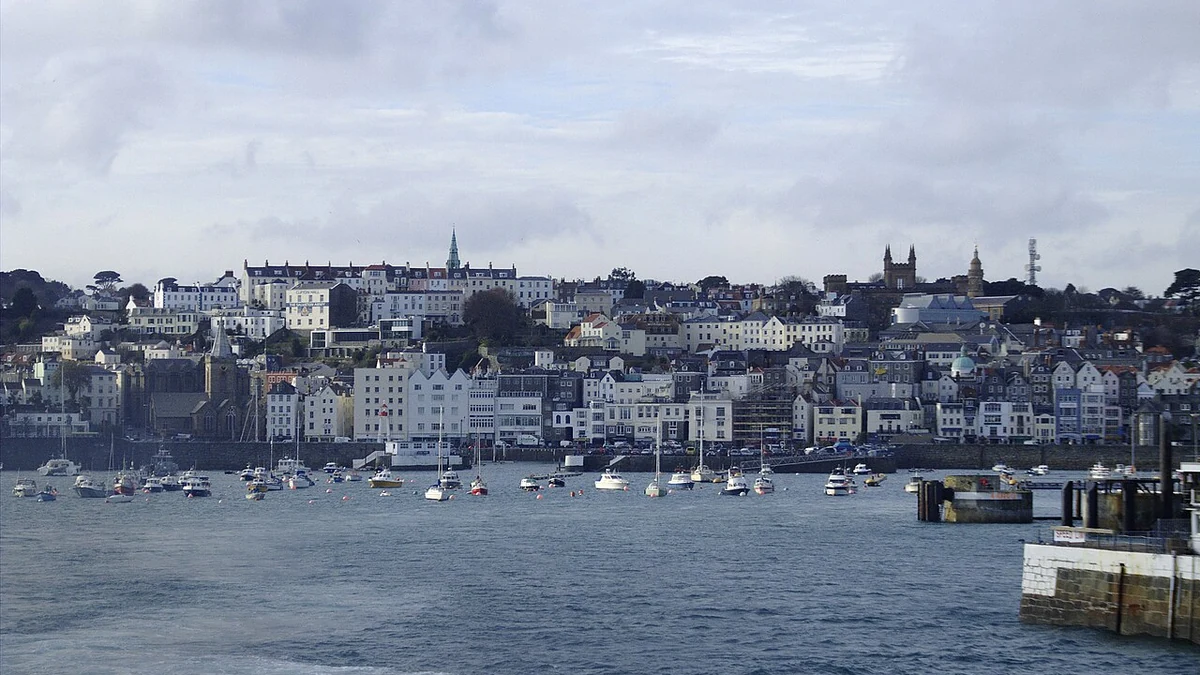
Guernsey cruise port is a tender call into St Peter Port, a harbour town that rises in layers from the waterfront. Passengers step ashore close to cafés, shopping streets, Castle Cornet and the old town rather than at a remote commercial berth. The island beyond is compact enough for a bus or taxi circuit, yet varied enough that coast, occupation history, gardens and smaller-island ferries compete for the same few hours.
The tender is the non-negotiable part of the plan. When it runs smoothly, Guernsey is one of the easier independent island calls in the British Isles. When sea conditions delay landing, an elaborate loop or ferry connection can unravel quickly. For a first visit, St Peter Port plus one carefully chosen extension gives a better day than attempting the town, a full island circuit and Herm in one sweep.
Guernsey Cruise Port at a Glance
| Port name | Guernsey Cruise Port |
|---|---|
| Main cruise area | St Peter Port harbour and cruise tender pontoon |
| Cruise region | British Isles |
| Country / Territory | Guernsey |
| Currency | Guernsey pound; UK sterling is widely accepted |
| Language | English |
| Disembarkation | Tender |
| Walkability | High for central St Peter Port, with steep streets above the waterfront |
| Shuttle required | No |
| Main transport | Walking, public bus, taxi, ferry or organised excursion |
| Best DIY option | St Peter Port and Castle Cornet, with a bus or taxi extension |
| Main caution | Tender weather and overcommitting to a ferry or full island loop |
Weather & Best Times to Visit Guernsey
January to March
Typical high: 9–11°C
Typical low: 6–8°C
Rain / conditions: Cool, breezy and often damp; rougher sea conditions may affect tender operations.
April to June
Typical high: 12–18°C
Typical low: 8–13°C
Rain / conditions: Increasingly bright with long evenings, though sea fog, showers and fresh winds remain possible.
July to September
Typical high: 18–21°C
Typical low: 13–16°C
Rain / conditions: The warmest and busiest period; generally favourable for coast and ferry plans but never wind-proof.
October to December
Typical high: 11–17°C
Typical low: 7–13°C
Rain / conditions: Mild for the latitude but more unsettled, with shorter days and a greater chance of tender disruption.
Weather guide: CruisePing summary based on NASA POWER climate data for St Peter Port and eastern Guernsey. Check the latest forecast.
Guernsey’s weather decision begins with the tender. Once ashore, St Peter Port works in showers because Castle Cornet, museums, shops and cafés sit close together, but a Herm ferry, cliff walk or exposed island viewpoint needs calmer conditions. Sea fog can also weaken panoramic touring even when roads remain dry.
The Guernsey Tender into St Peter Port
St Peter Port is the physical harbour behind the Guernsey cruise port name. The official Guernsey Harbours information for St Peter Port describes the island’s main harbour, while Cruise Britain identifies a dedicated cruise pontoon close to town and a short tender transfer in normal operation. The exact boat, boarding method and timing remain the responsibility of the ship.
Tendering places passengers at the right end of town for independent exploration. Castle Cornet lies across the harbour arm, the lower shopping streets begin inland and the old town climbs behind them. There is no need to buy a transfer simply to reach St Peter Port. The first practical task is instead to note the final tender, expected queuing arrangements and whether the ship requires a numbered ticket for the outward journey.
Sea conditions may affect mobility-aid transfer even when the harbour looks protected. A cruise line may allow an aid on one call and refuse it on another because passenger safety depends on movement between ship and tender. Anyone whose shore plan relies on a wheelchair or scooter should confirm the procedure before booking a non-refundable tour.
How to Read St Peter Port’s Hills
The waterfront is straightforward; the streets behind it are not level. St Peter Port rises quickly through lanes, steps and sloping roads, which creates attractive harbour views but makes an apparently short route more tiring. The town can still be explored selectively: stay low for the harbour and shopping area, climb towards Candie Gardens for a higher viewpoint, or use a taxi to avoid repeating the steepest section.
A sensible walking sequence moves in one direction rather than repeatedly dropping to sea level and climbing again. Castle Cornet is a separate harbour-side commitment, so pair it with lower-town wandering. Candie Gardens and the Guernsey Museum suit a higher-town route. Hauteville House belongs to another uphill section and may require advance arrangements. Trying to link all three without checking gradients turns a compact town into a surprisingly strenuous day.
The official VisitGuernsey cruise guide is useful for orienting the arrival and current visitor options. Use it with the ship’s landing notice, not instead of it.
Getting Around Guernsey by Bus, Taxi and Ferry
Guernsey’s public buses make an island extension possible without renting a car. The current network and timetable should be checked on the official Guernsey bus service site. Circular or cross-island routes can link beaches, parishes and heritage areas, but a cruise passenger needs to understand the direction of travel and the return frequency before boarding.
A bus is best when the ride itself forms part of the island experience and the passenger is content with one or two stops. It is weaker for a tightly sequenced list of occupation sites or coastal viewpoints, where a missed connection can consume the margin. Taxis and private island tours offer more control and are particularly useful for mixed-mobility groups or visitors who want the Little Chapel, a cliff viewpoint and one museum in a single circuit.
Ferries to Herm and Sark leave from St Peter Port, but they create a second maritime timetable on top of the cruise tender. Herm is the more plausible short outing on a long, calm call; Sark normally deserves more time and transport planning. Neither should be attempted simply because a departure appears to fit. Check the return sailing, boarding cut-off and the time needed to move from the ferry arrival to the cruise tender queue.
Best Cruise-Compatible Things to Do from Guernsey
Castle Cornet and the harbour
Castle Cornet occupies the harbour approach and is the clearest substantial attraction within walking reach of the tender landing. The official Guernsey Museums visitor information should be checked for current opening, events and access. The site combines fortifications, island history and views back towards St Peter Port, so it works as more than a rainy-day museum.
Allow enough time for the walk along the harbour arm and for uneven historic surfaces inside. A brief visit loses much of the value; if the castle is your priority, do it before a bus loop. Passengers with limited mobility should examine access information rather than assuming a harbour-level attraction is level throughout.
Old St Peter Port and Candie Gardens
The town itself provides the easiest independent day. Move through the lower streets, climb selectively to Candie Gardens and use the height for harbour views. The gardens and nearby museum create an indoor-outdoor combination that tolerates passing showers and keeps the passenger within a manageable return of the tender.
This route suits visitors who want Guernsey atmosphere rather than a coach summary. The caution is ascent. Take a taxi uphill and walk down if knees cope better with descent, or remain around the harbour and lower lanes. There is no prize for reaching every upper street.
Hauteville House and Victor Hugo
Victor Hugo’s Guernsey home is one of the island’s most distinctive cultural visits. It is not a casual walk-in assumption: seasonal opening, tour format and advance booking can determine access. Check the official property information before making it the anchor of the call.
The house sits uphill from the waterfront, so build the route around the booked time and use a taxi if the climb would reduce the visit. Pair it with St Peter Port, not a full island circuit. When it is closed or sold out, the town and Castle Cornet provide a stronger fallback than trying to improvise another timed property.
Little Chapel and a west-coast island loop
The Little Chapel is often included in island tours because it is visually memorable and sits away from St Peter Port. A wider loop may add parish scenery, bays and viewpoints. This is the best option for passengers who want to understand Guernsey beyond its capital without committing to a long coastal hike.
A taxi tour or organised excursion gives the route shape and avoids waiting for buses between several scattered stops. Ask which coast locations are included and how much walking is required. The chapel is small, and coach-group timing can affect the experience; it should be one component of the circuit, not the only justification for hours on a vehicle.
German Occupation history
Guernsey’s Second World War occupation sites are a major reason to tour the island. VisitGuernsey’s heritage overview helps identify museums, batteries and fortifications, but cruise passengers should choose a theme rather than chase every site. Opening seasons and the distance between locations make a guided route valuable.
This is an area where a knowledgeable guide materially improves the day. Concrete structures without context can blur together, while a focused tour explains occupation, island life and defensive geography. Check whether tunnels, steps or uneven ground form part of the visit if mobility is limited.
South-coast cliffs and short walks
Guernsey’s south coast provides the island’s strongest walking scenery, with cliff paths and coves offering a different character from St Peter Port. A short, pre-selected section can work on a cruise call when a taxi or tour handles the access and retrieval. The route should be chosen for distance, gradients and a reliable finish point.
Do not begin an open-ended cliff walk from a generic excursion description. Wind, wet steps and the need to meet a vehicle make precise planning essential. For active passengers, a guided walk or private transfer to one section is better than a broad coach loop that only pauses at roadside viewpoints.
Herm as a separate island day
Herm offers beaches, paths and a quieter island atmosphere within reach of St Peter Port. It can be an excellent choice on a long call when tendering is punctual and the inter-island ferry schedule provides more than one safe return option. The attraction is the change of pace, not a list of formal sights.
This is a weather-and-timetable plan. Confirm the ferry directly with the current operator and leave enough time after returning to St Peter Port to join the cruise tender queue. Passengers with mobility limitations should research gangways, paths and beach access. CruisePing would not choose Herm when the ship’s own landing is already running late.
CruisePing Recommended Port Day
For a first Guernsey call, start with St Peter Port and make Castle Cornet the substantial visit. Return through the harbour and lower town, then add either Candie Gardens or a short taxi or bus extension if the tender schedule remains healthy. This sequence gives the island’s maritime identity, history and townscape without making the day dependent on several transport links.
Passengers who have already seen St Peter Port should book a focused island loop: occupation history, south-coast scenery or the Little Chapel and west coast. A private taxi tour is often worth the premium for two to four people because it can adjust to weather and avoid long waits at coach stops. Ask for a realistic route rather than the maximum number of landmarks.
Herm is the alternative, not the add-on. Choose it on a long, calm call and accept that St Peter Port will be the arrival and return rather than the main visit. If the cruise tender starts late, abandon the island ferry idea and stay in town. Guernsey provides enough close-range interest to make that change painless.
St Peter Port, an Island Loop or Herm?
St Peter Port is the best first-time and poor-weather choice. It has the greatest concentration of sights, the least transport risk and the easiest route back to the ship. An island loop is best for repeat visitors, occupation-history enthusiasts and passengers who want coast and parish scenery. Herm is best for walkers and beach-minded visitors who value quiet over formal attractions.
The length of call is only one test. Tender reliability, the ferry schedule, wind and personal pace matter just as much. A ten-hour itinerary does not produce ten hours ashore once tender distribution and return queues are included. Conversely, a shorter call can still support an excellent town day because the meaningful sights begin almost at the landing.
Do not choose the island loop simply to say you saw “all of Guernsey”. A two-hour bus circuit without a strong stop can be less memorable than Castle Cornet and an unhurried climb through St Peter Port. Choose the form of day that gives time on foot in the place you care about.
DIY or Organised Excursion in Guernsey?
St Peter Port is firmly DIY. Walking, museum visits and a selective bus journey need no cruise-line coach. The public bus network also supports independent island exploration when one route and one stop are planned conservatively. Keep a taxi number or return alternative for any journey that approaches the tender deadline.
Organised touring becomes worthwhile for occupation history, several scattered sights or a south-coast route. The island is compact, but compact does not mean every stop connects neatly by public transport. A guide can also distinguish fortifications and explain how the occupation affected island life, which is more valuable than being driven past a series of concrete structures.
A cruise-line excursion offers protection if tendering is delayed, while a local taxi tour provides flexibility. For Herm, neither a general island coach nor a town walking tour helps; the decision rests on the ferry timetable. CruisePing would book the specific mode that solves the real problem rather than buying an excursion because Guernsey is an island.
Money, Buses and Small-Island Practicalities
Guernsey issues its own notes and coins, while UK sterling is normally accepted. Change may be returned in local currency, which is not generally useful after leaving the islands. Cards reduce the issue, but carry a modest alternative for small purchases or transport and check the current payment method for buses and ferries.
Bus routes may be described by number and direction, and a circular service can make the same stop appear in two contexts. Confirm which way around the island you are travelling and where the return stop sits. Saving a screenshot of the relevant timetable helps if mobile data is weak, but use the live official information for last-minute changes.
St Peter Port can become crowded when a large ship lands. Visit the castle or begin an uphill route before shopping, then leave flexible browsing for later. This reverses the pattern of passengers who remain close to the tender all morning and arrive at the main attraction with the largest groups.
Guernsey for Passengers with Limited Mobility
Tender access is the first threshold. Ask the cruise line whether the passenger can transfer into the boat and whether the mobility aid can be carried in the expected conditions. Once ashore, the lower harbour area is the easiest section, while St Peter Port’s upper streets quickly introduce gradients and steps.
A taxi tour is often the best island option because it limits walking between scattered sights and can return directly to the tender area. Request actual access details for Castle Cornet, occupation museums and the Little Chapel. Historic fortifications may contain narrow passages, steps and uneven surfaces that a general “panoramic tour” label does not reveal.
Herm should be researched particularly carefully. Ferry boarding changes with tide and local conditions, and island paths are not equivalent to an urban pavement. A low-effort St Peter Port plan with one accessible museum and a harbour drive can deliver more than an inter-island trip built on hopeful assumptions.
Tender and Ferry Weather: Two Separate Decisions
A cruise tender operating does not guarantee that every local ferry or coastal activity will suit the day. Vessel size, route and harbour conditions differ. Check the Herm or Sark service independently after landing and pay attention to the return forecast, not just the morning departure.
In wet weather, the occupation museums, Castle Cornet’s indoor areas and Guernsey Museum provide substance, although moving between buildings may still involve exposed ground. Strong wind makes cliff paths a poor choice and can turn an open-top or viewpoint-heavy island loop into a disappointing outing. A guide who can swap the coast for heritage is worth more than a fixed photo-stop itinerary.
Sea fog is another issue. It may leave town exploration unaffected while erasing the long views that justify a panoramic circuit. When the horizon disappears, concentrate on St Peter Port’s close-range history and architecture rather than spending the call looking through a coach window at grey verges.
Guernsey Pitfalls and Better Choices
The first trap is booking a ferry connection too close to the expected cruise landing. The second is underestimating St Peter Port’s hills because the waterfront looks level from the tender. The third is using public buses for several timed sites without checking seasonal opening and the direction of travel.
A better choice is one paid taxi circuit with a clear theme, followed by independent town time. Another is Castle Cornet early, before coach groups and weather changes build. Herm can be excellent value when it is genuinely the whole day, but poor value when passengers spend more time watching clocks and changing boats than walking the island.
Guernsey Port-Day Checklist
- Confirm tender tickets, mobility-aid rules, the St Peter Port landing and the final boat time with the ship.
- Check Castle Cornet, Guernsey Museum and Hauteville House separately; each has its own seasonal access and visiting format.
- For buses, save the current route and return journey from buses.gg and verify the direction of any circular service.
- Treat Herm as the main day and insist on more than one safe return option before buying ferry tickets.
- Pre-book a taxi or small tour when occupation sites, the Little Chapel and coastal viewpoints are all important.
- Carry a waterproof and windproof layer for harbour crossings, exposed fortifications and cliff viewpoints.
- Return to St Peter Port early enough to walk from the local ferry or bus stop to the cruise tender queue.
Useful Official Links for a Guernsey Cruise Day
Guernsey’s current value lies in its local services, so check these sources for the tender-side town, island transport and seasonal heritage access before locking the route.
- Guernsey Harbours: St Peter Port
- VisitGuernsey: visiting by cruise
- Guernsey buses: routes and timetables
- Guernsey Museums: Castle Cornet
- VisitGuernsey: occupation and heritage sites
Guernsey Cruise Port FAQs
Where is Guernsey cruise port?
Cruise passengers arrive by tender at St Peter Port, Guernsey’s main harbour town. The Guernsey cruise port name describes the island destination, while St Peter Port is the physical landing and practical starting point for the day.
Can I explore Guernsey without a shore excursion?
Yes. St Peter Port is immediately accessible from the tender landing, and public buses can support a conservative island extension. A taxi or organised tour becomes more useful when several scattered heritage sites, coastal viewpoints or mobility needs are involved.
How long is the tender into St Peter Port?
Cruise Britain describes a short transfer in normal operation, but actual time includes loading, sea conditions and any queue at ship or pontoon. Plan around the cruise line’s final tender instruction rather than a nominal boat journey.
Is Castle Cornet walkable from the tender?
It is a natural harbour-side walk from central St Peter Port and one of the strongest first visits. The approach and historic site include more distance and uneven surfaces than the waterfront view suggests. Check current access and opening before treating it as guaranteed.
Can I visit Herm during a cruise call?
Yes on a long, punctual call with calm conditions and a ferry timetable that gives a generous return. It should be the main plan, not an extra after an island tour. Leave time after the local ferry returns to reach the separate cruise tender queue.
Do I need Guernsey currency?
Guernsey notes and coins circulate locally and UK sterling is normally accepted. Cards are widely useful, but small transport or retail payments may require a current check. Local change is less useful after departure, so avoid withdrawing more cash than the day needs.
What is the best Guernsey option in poor weather?
Stay in and around St Peter Port. Castle Cornet, Guernsey Museum, shops, cafés and historic streets provide a flexible route with indoor stops. An exposed cliff walk or inter-island ferry creates more weather dependency and should be dropped when wind or visibility is poor.
CruisePing Port Verdict
Guernsey is an excellent independent call when the tender behaves. St Peter Port and Castle Cornet make the strongest first day because they begin at the landing and contain enough substance to justify staying local. Add one higher-town or island extension; do not turn the port into a race between every coast and museum.
A focused taxi loop is the best repeat-visitor option, especially for occupation history or the south coast. Herm is a rewarding separate choice on a calm, long call, but its second ferry timetable must be respected. Guernsey’s compact size is helpful, not permission to overplan. The island feels larger and more memorable when one area is given time.
Ready to browse our article library?
Guernsey adds a tender-led island day to the wider British Isles cruise region. Find further calls within the Guernsey destination directory, or move across all CruisePing destinations and planning topics in the main article library.