
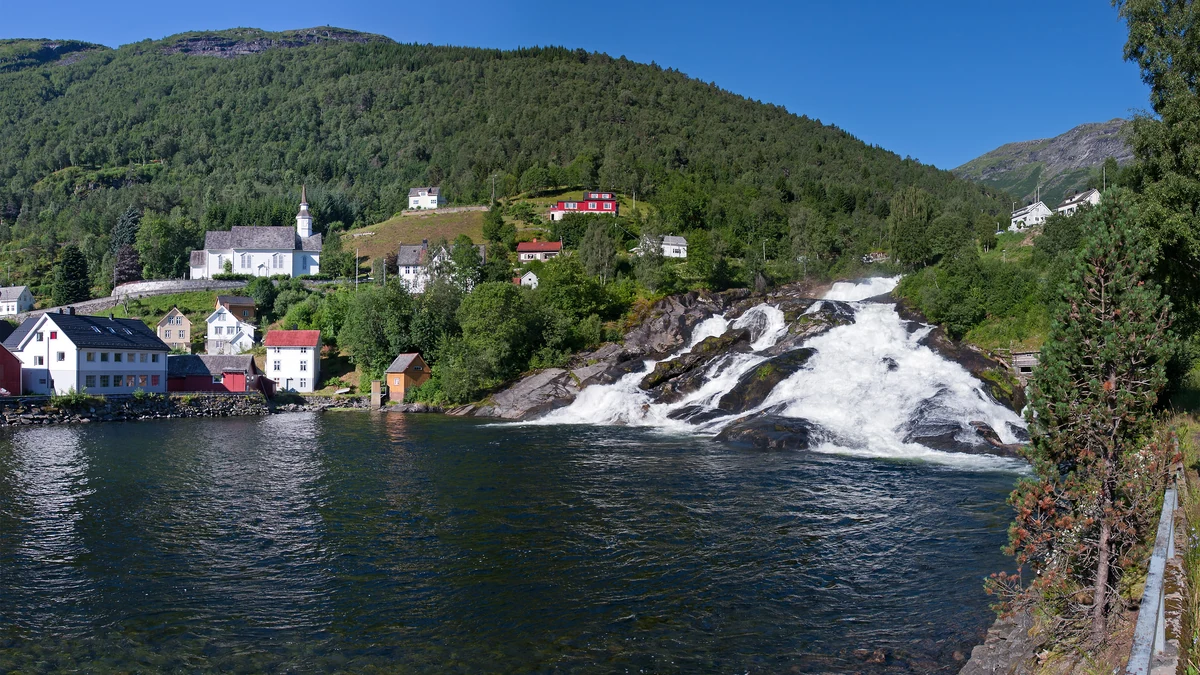
Hellesylt cruise port sits at the head of Sunnylvsfjord beside a village waterfall, but the call is often less straightforward than the compact quay suggests. Some ships use Hellesylt as a normal destination where passengers can walk ashore. Others stop to dispatch overland excursions before sailing on to Geiranger, with only booked tour guests permitted to leave and rejoin the ship elsewhere. That distinction must be checked before any independent plan is built.
When passengers can go ashore freely, Hellesylt offers three different days: a quiet village and waterfall visit, a fjord journey towards Geiranger, or a long organised excursion through mountain and valley scenery. The port is small; the landscape choices are not. The best plan depends on the itinerary wording, cloud base and whether the ship later calls at Geiranger.
Hellesylt Cruise Port at a Glance
| Port name | Hellesylt Cruise Port |
|---|---|
| Main cruise area | Hellesylt quay on Sunnylvsfjord |
| Cruise region | Fjords & Norway |
| Country / Territory | Norway |
| Currency | Norwegian krone (NOK) |
| Languages | Norwegian and widely used English |
| Disembarkation | Docked or tender; passenger access may be restricted on excursion-only technical calls |
| Walkability | High within the village, with steep or uneven ground on longer walks |
| Shuttle required | No for central Hellesylt |
| Main transport | Walking, ferry, taxi or organised excursion |
| Best DIY option | Hellesyltfossen, the village and a confirmed fjord ferry plan |
| Main caution | Do not assume independent disembarkation or same-port rejoining |
Weather & Best Times to Visit Hellesylt
January to March
Typical high: 2–7°C
Typical low: −3–2°C
Rain / conditions: Cold with snow, rain and limited daylight; winter calls and independent road plans require particular caution.
April to June
Typical high: 7–17°C
Typical low: 1–8°C
Rain / conditions: Rapidly lengthening days, strong waterfall flow and highly variable mountain weather.
July to September
Typical high: 14–19°C
Typical low: 8–11°C
Rain / conditions: The mildest cruise period, although rain, low cloud and cool fjord winds remain common.
October to December
Typical high: 3–12°C
Typical low: −1–7°C
Rain / conditions: Cooling and increasingly unsettled, with shorter daylight and a higher chance of difficult road or viewpoint conditions.
Weather guide: CruisePing summary based on NASA POWER climate data for Hellesylt and the Sunnylvsfjord. Check the latest forecast.
Cloud base is decisive in Hellesylt because many excursions earn their value from high roads, waterfalls and fjord viewpoints. The village and Hellesyltfossen remain worthwhile under grey skies, but a long panoramic drive loses much of its point when mountains disappear. Rain also increases waterfall drama while making paths, coach stops and boarding surfaces more slippery.
First Check: Is Hellesylt a Normal Port Call?
Before researching ferries or walks, read the cruise line’s exact wording for Hellesylt. The official Stranda Port Authority Hellesylt page presents the port as a cruise quay and excursion starting point. Cruise-line pages can add a crucial restriction: for example, MSC states that on some itineraries Hellesylt is used only for guests on booked excursions who later rejoin in Geiranger.
This is not a minor operational detail. On an excursion-only call, a passenger cannot choose to walk off, take a public ferry and meet the ship later unless the cruise line explicitly permits that arrangement. The ship may leave the quay after coaches depart, and the next passenger access may be in another port. A generic port guide cannot override the booking conditions.
Look for three answers: may independent passengers disembark; where must passengers rejoin; and does the ship make a separate Geiranger call later that day? When any answer is unclear, ask the cruise line in writing or confirm onboard before paying for independent transport.
Where Ships Dock and What Is Immediately Walkable
Hellesylt has a modern cruise quay with direct village access, while tendering remains possible according to the vessel and port plan. The village centre, waterfront and Hellesyltfossen waterfall are close enough to visit without a shuttle when independent landing is allowed. This is not an industrial gateway requiring a transfer before scenery begins.
The waterfall runs through the centre between the higher lake and the fjord, giving Hellesylt an immediate focal point. Visit Norway’s official Hellesylt waterfall listing describes the sight beside the village. Paths and viewpoints allow different angles, but wet rock, spray and road crossings deserve attention.
The village is small enough that passengers who remain local should slow down rather than invent distance. Walk both sides of the waterfall where access permits, look back towards the ship and fjord, and use a café or waterfront stop. On a short technical call with permission to leave, this close-range plan is safer than attempting a transport connection that depends on a precise return.
The Geiranger Question
Hellesylt and Geiranger are linked by the fjord system and by cruise itineraries, but they are not interchangeable labels for one port. A ship may call at both, use one as an excursion departure and the other as a rejoining point, or visit Hellesylt without giving enough time for an independent round trip. Your day should follow the actual ship movement, not an online map.
The scheduled Geirangerfjord passenger ferry information describes the scenic water route between Hellesylt and Geiranger. It can be a superb cruise-day experience because the transport is itself the attraction. It is suitable only when sailing times, ticket availability and the ship’s location create a permitted, conservative plan.
A one-way ferry followed by rejoining the cruise ship in Geiranger must be explicitly compatible with the itinerary. A return ferry to Hellesylt needs enough margin for delay and the ship’s all-aboard. Do not assume the cruise line will know where an independently travelling passenger is simply because both places appear on the same day’s route.
Best Cruise-Compatible Things to Do from Hellesylt
Hellesyltfossen and the village
The waterfall is the best universal option because it begins beside the quay and requires no transport contract. The water, bridges, old buildings and fjord views form a compact circuit that can fit a short call or provide a calm alternative to a full-day coach. Strong flow can make the waterfall especially impressive in spring and after rain.
Use footwear with grip and keep clear of unsafe edges. The village plan is suitable for passengers who dislike long coaches, but it is not entirely level once higher viewpoints are added. Limit the climb according to knees, weather and the time required to return through any security check.
Geirangerfjord ferry
The ferry route turns the connection between Hellesylt and Geiranger into a close view of steep fjord walls, waterfalls and farms. It is the most natural independent ambition for passengers who are allowed ashore and whose ship plan supports the journey. Unlike a bus transfer, the travel time is the experience rather than time lost before it.
Book only against the current official timetable and the correct direction. Confirm whether you need a return to Hellesylt or may rejoin in Geiranger. Weather, capacity and seasonal schedules matter. A sailing that reaches port shortly before all-aboard is not made safe by being scenic.
Cruise-line overland to Geiranger
Many Hellesylt calls are designed around an overland excursion that leaves the ship here and rejoins in Geiranger. The route may include mountain roads, lakes, valleys and viewpoints, giving a land-based contrast to the ship’s fjord sailing. This is often the correct choice when the call is explicitly excursion-only.
Read the route rather than buying the word “panoramic”. High viewpoints are vulnerable to cloud, and long coach itineraries can include brief stops. The strongest excursion combines one meaningful landscape stop with the overland journey and confirms what happens if a road or viewpoint is unavailable.
Briksdal, Loen or a wider Nordfjord excursion
Some organised trips travel far beyond Hellesylt towards glaciers, lakes or the Loen area. These can be memorable on a long call, but they are major road excursions rather than casual add-ons. The attraction must justify spending most of the day away from Sunnylvsfjord.
Use a cruise-line excursion or a specialist operator with a documented ship return. Ask about total vehicle time, walking at the main stop and the effect of poor visibility. CruisePing would not build this independently around public transport; the margins and seasonal roads are too important.
Kayak, RIB or local fjord activity
A water activity can provide a more intimate fjord experience than a coach, especially for repeat Norway visitors. Kayaks favour calm conditions and physical participation; RIB trips cover more distance and add speed. Both require an operator whose departure, equipment and return are designed for the cruise call.
Wind, cold water and clothing are central, not minor cautions. Confirm the minimum ability, boarding method and cancellation terms. Schedule the activity early enough that a weather delay or slower return does not collide with the gangway or tender deadline.
A short local walk above Hellesylt
Passengers who want height without a full excursion can select a signed local path or road walk above the village. Even a modest climb can open views over the quay and Sunnylvsfjord. The official local advice and conditions should determine the route; do not follow a vague line from a travel photo onto private or unsuitable ground.
Rain makes grass, rock and roots slippery, while low cloud can erase the reward for climbing. Set a turnaround time before leaving the village and keep the waterfall circuit as the fixed part of the day. A short confident walk is better than an uncertain route that ends with a hurried descent.
Stay aboard for the fjord sailing
On an excursion-only stop, staying aboard may be the only independent option. It need not be treated as wasted time. The ship’s movement from Hellesylt towards Geiranger can provide substantial fjord scenery, often from a high, stable viewpoint with shelter close at hand.
Choose a deck position early and listen for commentary or timing of the main waterfalls. This is especially sensible for passengers who cannot manage a coach or whose mobility aid cannot be accommodated. The trade-off is losing the village at ground level, but it preserves the itinerary’s central landscape experience.
CruisePing Recommended Port Day
The recommendation begins with the itinerary. When Hellesylt is an excursion-only stop, choose the cruise-line overland tour that best matches your interests or remain aboard for the onward fjord sailing. Do not attempt to negotiate an independent exception at the gangway. The ship’s movement between Hellesylt and Geiranger is part of the operation, not merely a suggested schedule.
When independent landing is permitted and the ship stays long enough, first-time visitors should prioritise a confirmed fjord ferry plan or a well-structured overland excursion. Hellesyltfossen and the village fit before or after only when the transport margin remains comfortable. The fjord journey is the main event; a hurried village circuit is not worth risking it.
For a shorter ordinary call, stay local. Walk the waterfall, waterfront and one higher viewpoint, then return early. This is the sensible fallback for poor visibility as well. Hellesylt may be small, but the waterfall and ship-framed fjord provide a genuine port day without a coach.
One-Way Excursion or Round Trip?
A one-way excursion is often efficient because the ship sails independently to the rejoining port. It removes backtracking and allows passengers to experience the fjord from both land and ship. Its weakness is dependence on the cruise line’s approved logistics: the passenger must be on the correct tour and reach the correct rejoining point.
A round trip returns control to the same port but consumes more time. A ferry out and back may duplicate scenery while leaving little room for Geiranger or Hellesylt. A private road excursion returning to the quay requires a conservative buffer because mountain traffic, road works and weather can alter pace.
Use one-way travel only when the ship or excursion contract explicitly supports it. Use a round trip only when the return service is robust and earlier than the last theoretically possible connection. Never create a hybrid plan in which you independently follow the ship and hope port staff will accept the arrangement.
DIY or Organised Excursion in Hellesylt?
DIY works for the village, waterfall and a carefully verified passenger ferry. It does not work when the cruise line restricts disembarkation, when the ship repositions and independent rejoining is unapproved, or when a distant road itinerary depends on several seasonal connections. Permission comes before price comparison.
Organised excursions are unusually valuable here because they can solve the one-way ship movement. A cruise-line coach leaving Hellesylt and meeting the vessel in Geiranger carries a logistical advantage that an ordinary tour cannot reproduce. The best local or private alternative is one that returns to Hellesylt well before departure and does not depend on catching the ship elsewhere.
CruisePing would pay for the coordinated overland excursion when Hellesylt is designed as its starting point and the route includes a worthwhile landscape focus. If the tour is mostly coach time under low cloud, staying aboard for the fjord sailing or taking a permitted local village day may give better value.
Cloud, Waterfalls and Viewpoint Value
Rain is not automatically bad in Hellesylt. It can strengthen waterfalls and deepen the atmosphere in the village. Low cloud is the bigger problem for high-road excursions because it removes the layers of mountain scenery that justify the journey. Check the forecast at several elevations rather than relying on the temperature shown for the quay.
An excursion description should name its main viewpoints and alternatives. If a mountain road is clouded in, a valley stop, waterfall or cultural site can preserve value. A route with no weather fallback is a gamble, especially when it requires hours on a coach. Ask the shore-excursion team what normally changes in poor visibility.
For a fjord ferry, mist can still be dramatic at water level, but heavy rain and wind affect comfort on open decks. Bring a waterproof outer layer and warm mid-layer even in midsummer. Sheltered indoor seating is useful, yet the best views may require short periods outside.
Mobility and Access in Hellesylt
The cruise quay and village make the immediate call relatively manageable when the ship docks. A tender introduces a separate transfer assessment. The waterfall can be viewed from lower positions, while higher paths, bridges and wet surfaces increase difficulty. Ask the ship whether a shuttle or assistance is provided for the actual berth.
One-way coach excursions reduce walking distance between regions but may include high steps, uneven viewpoint ground and long periods seated. Confirm the accessible vehicle, toilet arrangements and walking at the main stop. A passenger who cannot leave at Hellesylt independently may still be able to enjoy the ship’s fjord passage from an accessible deck.
Ferries and small activity boats require their own access check. Gangway angle can change, and an operator’s definition of accessible may not cover a powered chair. The local village plan is the safest fallback because it keeps the passenger close to the quay and allows the route to be shortened immediately.
What to Do When the Call Is Short
A short Hellesylt stop is not the moment to invent Geiranger independently. If passengers may disembark, walk directly to Hellesyltfossen, follow the most convenient village viewpoints and return with the ship’s security process in mind. The waterfall is close enough to create a real sense of place without transport.
If only excursion guests may leave, decide whether the offered one-way tour is worth the price and physical commitment. Those staying aboard should treat the stop as the beginning of the scenic sailing, not dead time. Secure a viewing position, charge the camera or phone and have a warm layer ready before the ship moves.
A late arrival should remove every activity that depends on a public ferry or independently booked departure. Operators may wait for ship tours but not for individual passengers. The village remains the only robust independent choice after lost time.
Hellesylt Pitfalls and Better-Value Choices
The largest pitfall is assuming the itinerary name guarantees permission to go ashore. The second is buying a one-way public ferry without written certainty about rejoining the ship. The third is selecting the longest coach tour without considering cloud and usable time at the headline stop.
Better value may be the coordinated overland tour because it solves ship movement, not because organised travel is always superior. On an ordinary call, better value may be free: the waterfall, village and fjord views from the quay. A passenger who has already visited Geiranger can gain more from a short local walk or water activity than from repeating a panoramic road circuit.
Hellesylt Port-Day Checklist
- Read the itinerary and ask the cruise line whether independent passengers may disembark at Hellesylt.
- Confirm whether the ship stays in Hellesylt, sails to Geiranger or expects excursion guests to rejoin elsewhere.
- Use the current official ferry timetable and correct direction before buying a Hellesylt–Geiranger ticket.
- Check cloud base, wind and rain for mountain viewpoints as well as the temperature at fjord level.
- For one-way overland tours, note the rejoining port and carry the excursion contact details supplied by the ship.
- Wear waterproof footwear with grip around Hellesyltfossen and on wet paths or viewpoint stops.
- Keep a village-and-waterfall plan ready if ferry, road or visibility conditions weaken the main excursion.
Useful Official Links for Hellesylt
These pages cover the three details that cannot be safely inferred: port operation, the current Hellesylt–Geiranger water connection and the itinerary-specific possibility of an excursion-only stop.
- Stranda Port Authority: Hellesylt port
- Norway’s Best: Geirangerfjord ferry information
- Visit Geiranger: car and passenger ferry
- Visit Norway: Hellesylt waterfall
- MSC Cruises: example Hellesylt call arrangements
Hellesylt Cruise Port FAQs
Can all cruise passengers get off in Hellesylt?
Not on every itinerary. Some cruise lines use Hellesylt only to dispatch booked excursion guests who later rejoin in Geiranger. Other calls allow normal independent disembarkation. Check the cruise line’s wording for your sailing and confirm onboard before making any independent booking.
Do ships dock or tender at Hellesylt?
Hellesylt has a cruise quay with direct village access, but tendering can also be used depending on the vessel and port operation. The ship’s daily information confirms the exact arrangement and whether the gangway or tender is available to independent passengers.
Can I take the ferry from Hellesylt to Geiranger?
The passenger ferry can be a superb scenic trip when the current timetable, ticket availability and ship movement fit. You must know whether to return to Hellesylt or whether the cruise line permits rejoining in Geiranger. Never assume a one-way independent rejoin is allowed.
Is there enough to do in Hellesylt without an excursion?
Yes for a short, low-pressure call. Hellesyltfossen, the waterfront, village and selected local viewpoints provide an attractive few hours. Hellesylt is not a large attraction town, so passengers with a long call may prefer a ferry or organised landscape excursion.
Is an overland excursion to Geiranger worth it?
It is often worthwhile when the itinerary is designed around leaving in Hellesylt and rejoining in Geiranger. The value depends on the route, time outside the coach and visibility at high viewpoints. A coordinated one-way excursion solves a real logistical problem that independent travel may not.
What is the best poor-weather plan in Hellesylt?
Stay with the village and waterfall if independent landing is allowed, or remain aboard for the fjord sailing if the stop is restricted. Avoid paying for a viewpoint-heavy road day when low cloud removes the main views unless the operator offers worthwhile valley and cultural alternatives.
Can I visit Briksdal or Loen independently from Hellesylt?
These are substantial road outings and are not sensible casual public-transport plans from a cruise call. Use a ship excursion or specialist cruise-timed operator with a conservative return. Ask about road time, walking and the exact main stop before booking.
CruisePing Port Verdict
Hellesylt demands that passengers read the itinerary before the landscape. When the stop is excursion-only, the practical choices are a ship-coordinated overland tour or staying aboard for the fjord sailing. Independent plans should not be built on the assumption that the gangway will be open or that the ship can be rejoined in Geiranger.
On a normal call, the Geirangerfjord ferry is the strongest independent ambition when its timings are conservative. Hellesyltfossen and the village make a good short or weather-weakened day, while distant glacier and Nordfjord excursions belong with organised transport. The port is not difficult once its role is understood. Confusion comes from treating every Hellesylt listing as the same kind of call.
Ready to browse our article library?
Hellesylt belongs to a network of Norwegian ports where ship movement and timed scenic transport shape the day. Browse the Fjords and Norway cruise region, focus on the Norway port directory, or compare all CruisePing guides through the article library.