
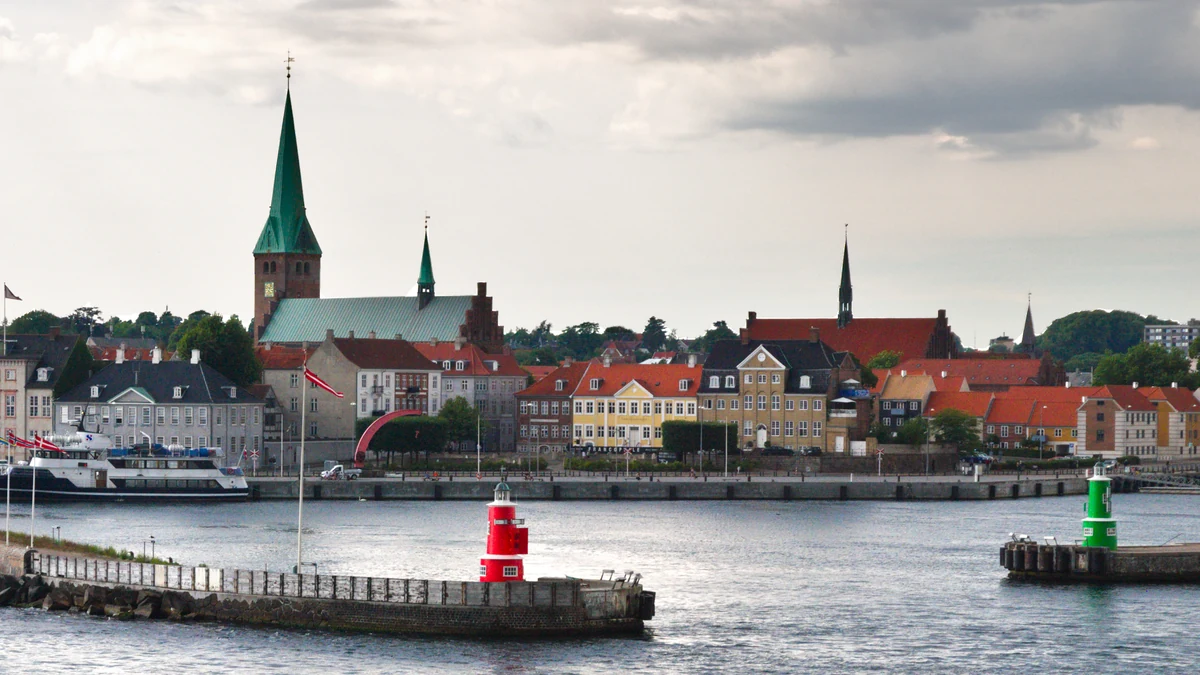
Helsingor cruise port brings passengers ashore within sight of Kronborg Castle, the waterfront fortress linked with Shakespeare’s Hamlet. The ship normally anchors off the Danish coast and uses tenders, but this is not a remote landing followed by a coach transfer: Helsingør’s castle, maritime museum, old streets and railway station are concentrated around the harbour.
That compact geography creates a better choice than the obvious “how do I get out of the port?” question. Most first-time visitors should stay local and give Kronborg proper time. Copenhagen and the ferry to Sweden are possible on suitable calls, yet both exchange a strong walk-off destination for more transport, more deadlines and less tolerance for a slow tender start.
Helsingør Cruise Port at a Glance
| Port name | Helsingør Cruise Port |
|---|---|
| Main cruise area | Offshore anchorage with tender landing in Helsingør harbour |
| Cruise region | Northern Europe & Baltic |
| Country / Territory | Denmark |
| Currency | Danish krone (DKK) |
| Language | Danish; English is widely useful in visitor settings |
| Disembarkation | Tender |
| Typical arrival | Short tender ride to a central floating pier; ship arrangements vary |
| Walkability | High once ashore |
| Shuttle required | No |
| Main transport | Walking; train; ferry; taxi; organised excursion |
| Best DIY option | Kronborg Castle with the maritime museum or old town |
| Main caution | Tender timing, harbour wind and over-ambitious Copenhagen or Sweden connections |
Weather & Best Times to Visit Helsingør
January to March
Typical high: 3–7°C
Typical low: -1–2°C
Rain / conditions: Cold, often windy and changeable; winter cruise calls are uncommon and exposed tendering may feel raw.
April to June
Typical high: 10–20°C
Typical low: 4–11°C
Rain / conditions: Cool spring develops into long, mild early-summer days; showers and brisk harbour winds remain possible.
July to September
Typical high: 17–22°C
Typical low: 10–14°C
Rain / conditions: The mildest main cruise period, with mixed sunshine, showers and occasional stronger winds on the Øresund.
October to December
Typical high: 4–13°C
Typical low: 0–8°C
Rain / conditions: Increasingly cool, wet and windy; daylight contracts quickly later in the season.
Weather guide: CruisePing summary based on NASA POWER climate data for Helsingør and the northern Øresund coast. Check the latest forecast.
Wind matters more than a small difference in temperature at Helsingør. It can affect tender comfort and makes the exposed walk around Kronborg feel colder, while rain strengthens the case for placing the maritime museum in the middle of the day rather than treating it as an optional extra.
How the Helsingor cruise port tender works
Helsingør is an unusual Baltic call because the ship generally anchors outside the harbour and passengers come ashore by tender, yet the landing point is much closer to the principal sights than at many conventional docked ports. Cruise information published for the destination describes an anchorage southeast of the harbour and a purpose-built floating tender pier. Tender journeys are normally short, but the tender operation still controls the first and last part of the day. Your cruise line’s announcement, ticket system and final tender time take priority over any independent plan.
The practical advantage becomes clear as soon as you land. Kronborg Castle is visible beside the water, the old town lies immediately behind the harbour, and the sunken M/S Maritime Museum occupies the former dry dock between them. There is no industrial transfer before the day begins. Most reasonably mobile visitors can leave the tender pier and start sightseeing on foot.
The vulnerability is weather. Wind and sea state can slow tendering, create queues or, occasionally, affect whether a call operates as planned. Do not book an independent train or ferry connection so tightly that it depends on being among the first passengers ashore. On the return, aim for an earlier tender than the final one. The harbour is compact, but a late castle exit or a queue at the landing point can consume the margin that looked generous on paper.
Why Helsingør works so well on foot
The central choice is not how to reach the town; it is how much to add after Kronborg. From the tender landing, the waterfront route towards the castle and maritime museum is straightforward. The historic centre, with pedestrian streets, churches, courtyards and cafés, sits close enough to combine with either attraction without needing local transport.
Kronborg’s grounds are easier than its full interior. A complete castle visit can involve cobbles, thresholds, staircases and the underground casemates, so passengers with limited mobility should decide which parts matter before buying a ticket. The maritime museum’s modern building is set below ground around an old dry dock. It is close geographically, although a museum visit still takes time if you engage with the exhibitions rather than treating it as a quick photo stop.
Helsingør station is by the harbour and is useful for passengers considering Copenhagen, Hillerød or another rail trip. The ferry terminal for Helsingborg in Sweden is also nearby. These possibilities make the map look temptingly open-ended. CruisePing’s view is that the quality of the immediate destination is the reason not to rush away. Helsingør has enough substance for a full call, and every border crossing or long rail journey introduces another timetable into a day that already begins and ends with tenders.
Best things to do from Helsingør Cruise Port
Kronborg Castle
Best for: The defining first visit, combining Danish royal history, a fortress setting and the castle associated with Shakespeare’s Hamlet.
Best way: Walk from the tender landing and visit early, before excursion groups settle into the main rooms. Check the official castle site for opening days and ticket arrangements.
Watch: A full interior visit takes longer than the harbour view suggests. The casemates and upper areas add uneven surfaces and stairs.
M/S Maritime Museum of Denmark
Best for: Maritime history, architecture and a substantial indoor option if the weather is poor.
Best way: Pair it with Kronborg because the museum occupies the former dry-dock site beside the castle. This is the strongest two-attraction day without transport.
Watch: Do not schedule it as a token 20-minute visit. Choose fewer galleries if your castle visit has overrun.
Helsingør old town
Best for: An easy independent day with streets, churches, food and local atmosphere rather than a second paid attraction.
Best way: Walk back through the historic centre after Kronborg. St Olaf’s Church and the Carmelite Priory area give the route more shape than simply browsing the shopping streets.
Watch: Sunday and seasonal opening patterns can make the town quieter than expected, so verify any specific shop, church or café that matters to you.
Helsingborg by ferry
Best for: Passengers attracted by the novelty of visiting Denmark and Sweden in one port day.
Best way: Use the regular passenger ferry only after checking the current timetable, travel documents and your ship’s tender deadline. Keep the Swedish visit compact around the waterfront and central sights.
Watch: This adds two ferry crossings to two cruise tenders. It is an optional extra, not the sensible default for a first visit.
Frederiksborg Castle in Hillerød
Best for: Travellers who have already seen Kronborg or particularly want another major Danish royal site.
Best way: Use a pre-planned train and local connection, or an organised excursion that controls the timings.
Watch: The journey consumes the flexibility that makes Helsingør appealing. Check opening hours and leave a wide return margin.
Copenhagen
Best for: Repeat visitors with a long call who regard Copenhagen as non-negotiable.
Best way: A direct train can make an independent visit possible, but the day should be built around one compact Copenhagen district or attraction rather than a city-wide highlights list.
Watch: Copenhagen turns an immediately rewarding port into a rail-dependent excursion. Tender delays and the return train both matter; most first-time Helsingør visitors have a better day locally.
CruisePing Recommended Port Day
For a first Helsingør call, CruisePing recommends staying in Helsingør. Go to Kronborg first, while your energy and timetable are strongest. Afterwards, choose between the M/S Maritime Museum and a slower old-town circuit; trying to give both equal depth can make the final part of the day feel rushed. A practical version is castle interior in the morning, lunch or coffee in town, then the maritime museum if at least two clear hours remain before your planned tender.
If mobility, weather or tender delays make the castle interior unattractive, use the grounds for the views and put the museum first. It gives the day a strong local identity without exposed walking for hours. Copenhagen is a valid choice only for passengers who have already decided that Helsingør itself is secondary and whose call leaves a genuinely generous rail and tender buffer.
DIY or organised excursion?
This is one of the easiest DIY cultural ports in the Baltic once the tender has landed. Kronborg, the maritime museum and the old town need no coach, guide or shuttle. Official attraction information and a simple walking route are enough for most passengers. Buying directly also preserves the useful ability to change the order if tendering is slow or rain arrives.
An organised excursion earns its place when it solves a problem rather than repeating an easy walk. A specialist guide can add value at Kronborg, particularly for visitors interested in royal or Shakespearean context. Transported excursions to Frederiksborg, North Sealand or Copenhagen may also make sense because they bundle the long connection and return responsibility. Even then, read the itinerary carefully: a coach that offers brief external views of several castles may give less satisfaction than a proper visit to one.
The Helsingborg ferry is better treated as independent travel than as a formal tour, but only for passengers comfortable with border documentation and multiple embarkation cut-offs. The cheap fare is not the deciding factor. The real cost is the portion of a finite cruise day spent moving between terminals.
Where Helsingør plans go wrong
Assuming a short tender cannot delay the day. The water crossing may be brief, but ticket groups, sea conditions and loading still affect when you step ashore. Keep the first timed admission flexible where possible.
Using Copenhagen as the automatic headline destination. Trains make it feasible on some calls, but feasibility is not the same as value. You are landing beside a UNESCO-listed royal fortress and one of Denmark’s strongest maritime museums.
Adding Sweden casually. The ferry is frequent enough to look like a local bus, yet you still need valid travel documents, two crossings and time for the ship’s tender. Decide in advance what you would actually do in Helsingborg.
Underestimating surfaces inside Kronborg. Photographs emphasise the level waterfront. They do not show every staircase, cobbled approach or dim casemate. Passengers with limited mobility should use the castle’s current accessibility information and choose a realistic route.
Leaving the tender return until the published final boat. CruisePing would plan to be at the landing point for an earlier departure, especially after a rail or ferry excursion.
Helsingør port-day checklist
- Check whether your cruise line uses tender tickets and whether independent passengers can leave before excursion groups.
- Confirm the final tender time and choose a personal return target at least one tender earlier.
- Check Kronborg and M/S Maritime Museum opening information for the exact date of your call.
- Wear footwear suitable for cobbles, castle stairs and potentially wet harbour surfaces.
- Carry a payment card; Denmark is highly card-friendly, but keep a small contingency for any operator that handles payment differently.
- Bring a light waterproof layer because the waterfront and tender ride are exposed.
- If travelling by train or ferry, save the current timetable and a fallback service rather than relying on one connection.
- Carry the travel document required for any Sweden visit and check current border guidance before leaving Denmark.
- Avoid prepaying a distant independent attraction unless the cancellation terms account for a missed or delayed tender call.
- Keep enough time for the harbour walk back after the castle; do not measure the return from the old-town centre alone.
Useful official links
- Official Helsingør cruise information
- Kronborg Castle
- M/S Maritime Museum of Denmark
- DSB trains
- Øresundslinjen ferries
- Visit North Sealand
Helsingør cruise port FAQs
Do cruise ships dock in Helsingør?
Cruise calls generally use an offshore anchorage and tender passengers to a floating pier near the harbour. Arrangements can vary by ship and conditions, so follow the cruise line’s instructions for your sailing.
Can you walk from the Helsingør tender landing to Kronborg Castle?
Yes. The castle, maritime museum and old town are all within the central harbour area and are normally reached on foot by reasonably mobile passengers. The bigger accessibility questions are surfaces and stairs inside the attractions.
Is Copenhagen realistic from Helsingør on a cruise day?
It can be realistic on a long call because Helsingør has direct rail links, but it is not CruisePing’s first recommendation for a first visit. Tendering, station time and the return train reduce the useful time in Copenhagen.
Can I visit Sweden from Helsingør?
Passenger ferries connect Helsingør with Helsingborg. Check the live timetable, travel-document requirements and your ship’s final tender before attempting it. Treat Sweden as a defined half-day choice rather than a quick add-on.
Which is better, Kronborg Castle or the maritime museum?
Kronborg is the defining first-time sight. The maritime museum is the stronger choice for maritime history, modern architecture and poor-weather shelter. With a normal call, many passengers can visit both if they start promptly.
Is Helsingør suitable for passengers with limited mobility?
The harbour area is compact, but cobbles, castle thresholds, stairs and tender boarding may matter. Review the ship’s tender-access policy and each attraction’s current accessibility information rather than relying on the short map distances.
Do I need Danish cash?
Cards are widely used. A small cash reserve may be reassuring, but most mainstream visitor spending can normally be handled by card. Check your bank’s overseas charges.
What should I do if tendering starts late?
Drop the distant option first. Kronborg’s grounds, the old town and the maritime museum remain close to the landing point, so Helsingør still supports a worthwhile shortened day without a train or cross-border ferry.
How to divide a four-, six- or eight-hour Helsingør call
On a short call with around four usable hours ashore, keep the route to Kronborg and the harbour. Walk straight to the castle, select either the principal rooms or the grounds and casemates according to interest, then return through the old town. The maritime museum becomes the weather alternative rather than an automatic second admission. Do not use this window for Copenhagen, Frederiksborg or Sweden.
With roughly six usable hours, Kronborg and the M/S Maritime Museum fit comfortably for visitors who start promptly. Give the castle the first half of the day, take a proper lunch or coffee break in town and use the museum for the second substantial visit. This sequence reduces backtracking because both attractions share the harbour edge. It also preserves the option to leave the museum early if the tender return begins to build.
An eight-hour call opens a wider choice, but it should not create an obligation to leave. Helsingborg becomes a plausible alternative after Kronborg, or Copenhagen can become the whole day for a repeat visitor. CruisePing would still avoid combining Kronborg, Helsingborg and Copenhagen. Each border, train and admission consumes flexibility. A long local day can instead add churches, the priory area, more of the maritime museum and unhurried food without feeling empty.
Use “usable hours ashore” rather than the published port duration when comparing these plans. The clock begins after your tender has landed and ends before the tender departure you have chosen, not when the ship drops anchor and raises it again.
Choosing how much of Kronborg to see
Kronborg is large enough that “visit the castle” is not one standard activity. Visitors can focus on the external fortress and courtyards, the royal apartments and halls, or the underground casemates. Trying to complete every area can absorb most of a short call, particularly if queues, guided groups or mobility slow the route.
First-time visitors interested in the Shakespeare connection should still allow the site’s Danish history to lead the visit rather than expecting a theatrical attraction. Families may prefer the most accessible highlights and grounds. Passengers uncomfortable underground can skip the casemates without losing the castle’s waterfront setting. Check current exhibitions, tours and accessibility on the official site because routes can change.
The value decision is simple: buy enough time, not merely a ticket. If you have less than 90 minutes before you need to turn back, the exterior and old town may be more satisfying than rushing through paid rooms. If the castle is your reason for choosing the itinerary, go early and let the second attraction shrink instead.
CruisePing Port Verdict
Helsingør is a tender port that rewards restraint. The famous castle is beside the arrival point, the maritime museum is genuinely complementary, and the old town gives the day breathing space. For most first-time passengers, leaving for Copenhagen or Sweden weakens rather than improves the call. Walk to Kronborg, choose one substantial second element and return before the tender queue becomes the final memory of the day.
Ready to browse our article library?
Explore more ports in Northern Europe & the Baltic, or narrow it to Denmark in particular. For cruise comparisons, planning shortcuts and value guides, head over to our main article library.