
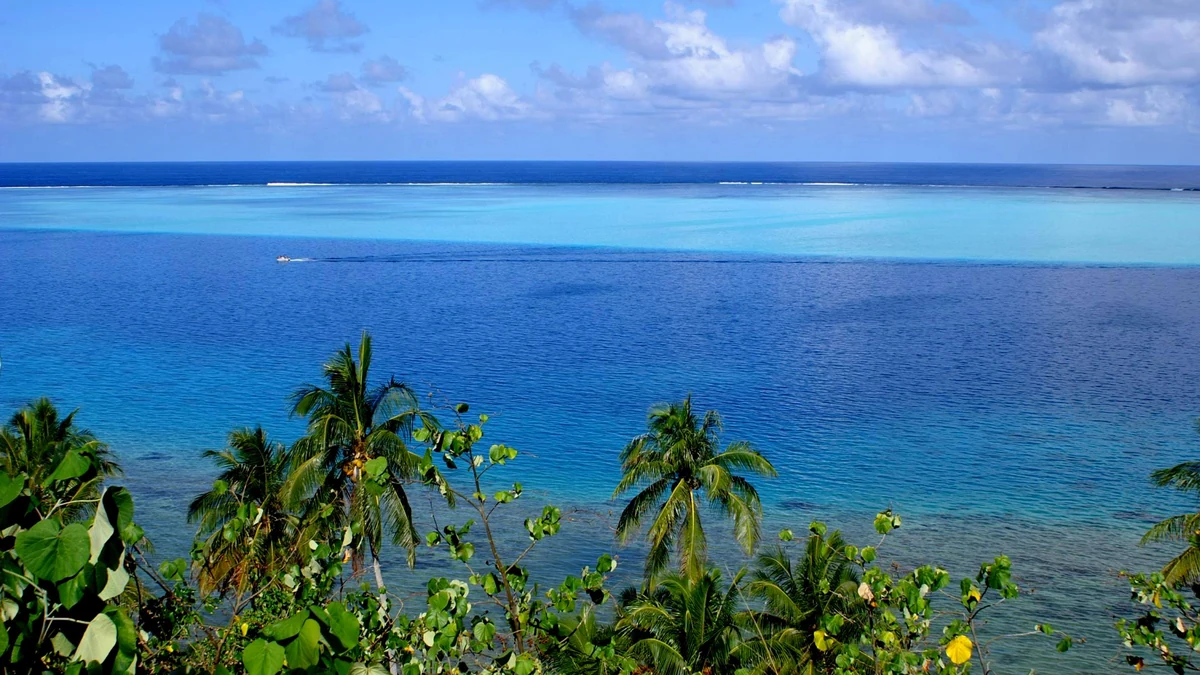
Huahine is one of French Polynesia’s quieter Society Islands: green, lightly developed and rich in archaeological sites, fish traps and lagoon landscapes. The cruise day is not about reaching one dominant monument. It is about choosing the right scale—an island circuit, a lagoon trip or an unhurried day around Fare—and accepting that small-island transport must often be arranged rather than summoned.
Ships generally anchor and transfer passengers by tender, commonly towards Fare, but the landing and operation remain controlled by the ship and local conditions. Once ashore, the island divides into Huahine Nui and Huahine Iti, linked by a bridge and ringed by a road that makes a land tour possible. A full loop has value only when it includes meaningful stops; the better alternative may be a focused heritage circuit around Maeva or a boat day in the lagoon.
Huahine Cruise Port at a Glance
| Port name | Huahine, French Polynesia |
|---|---|
| Main arrival area | Tender landing around Fare, subject to ship instructions |
| Cruise region | Australasia / Pacific Islands |
| Country / Territory | French Polynesia |
| Currency | CFP franc (XPF) |
| Main languages | French and Tahitian; English varies |
| Port role | Day call |
| Disembarkation | Tender |
| Walkability | Good around Fare; low for the wider island |
| Shuttle required | No standard island-wide shuttle; arranged transport is useful |
| Main transport | Local tours, lagoon boats, rental cars, scooters, bicycles and limited taxis |
| Best first-time plan | Choose a Maeva heritage circuit or a lagoon tour, then leave time in Fare |
| Main caution | Do not arrive expecting plentiful on-demand vehicles or guaranteed card acceptance |
Tendering Makes the First Hour Variable
The tender journey and queue can shorten the usable day, particularly when sea conditions slow boarding. Follow the ship’s stated landing point and final tender time rather than assuming every Huahine call uses an identical quay. Independent operators need the ship name and date because they may meet passengers beside the tender landing, deliver a rental vehicle there or adjust departure around the operation.
Passengers with mobility concerns should ask about tender steps, boat movement and assistance before committing to an island tour. The quay itself may be straightforward while the transfer vessel is not. Keep the final hour close to Fare and return to the tender queue earlier than feels necessary when wind or rain increases. A small island does not remove maritime delay; it concentrates everyone on the same limited landing.
There Are Three Sensible Ways to Use the Call
A land circuit reveals Huahine’s cultural landscape: Maeva, marae, traditional fish traps, viewpoints, villages and the southern bays. A lagoon trip prioritises water colour, snorkelling, motu stops and marine scenery. A local day stays around Fare, uses a nearby beach or short transfer and allows a slower meal and market visit. Each is complete enough to stand alone.
The poor plan tries to complete a ring-road tour and a full lagoon excursion, then adds a beach because Huahine looks small. Boat departures, vehicle handovers and the tender clock do not align perfectly. Choose the part of the island that matters most and let the second half of the day remain flexible. This also gives operators room to change the sequence when rain crosses one coast.
Fare Is the Practical Centre
Fare is Huahine’s main settlement and the most useful place for shops, cafés, small markets, banks and basic services. It is modest rather than resort-like, which is part of the island’s appeal. Opening hours can be uneven, especially around Sundays, holidays and the midday pause. Buy water and withdraw or exchange any needed cash early instead of assuming another village will offer the same facilities.
A short Fare stay works well before or after a tour. Walk the waterfront, look for local produce and crafts, and use a recognised meeting point for the return. The settlement is generally easy on foot, although heat, sudden rain and uneven roadside edges still matter. Do not expect a continuous shaded promenade or a fleet of taxis waiting throughout the day.
A Land Circuit Needs a Driver or Reserved Vehicle
Huahine’s surfaced ring road encourages independent exploration, but the island is too large for casual walking and too hot for an unplanned full cycle. Local guides add cultural explanation and know which sites are open or appropriate to enter. Rental cars and scooters provide freedom, while the official Huahine destination brief notes that vehicles and bicycles may be delivered to the quay by operators.
Confirm licence requirements, insurance, fuel policy, helmet provision and the exact hand-back time. Photograph the vehicle at collection and save the rental contact offline. A complete island loop can fit a cruise day, but stops expand quickly. CruisePing would prioritise Maeva and one southern scenic area rather than driving continuously simply to say the bridge and every village were passed.
Maeva Holds Huahine’s Strongest Heritage Landscape
Maeva, on the north-eastern side of Huahine Nui, contains an important concentration of marae and archaeological remains around Lake Fauna Nui and Mataʻireʻa Hill. These are cultural places, not decorative ruins. A local guide can explain the social and ceremonial landscape and help visitors recognise features that are easily missed when walking alone. Use marked routes and do not climb, sit on or move stones.
The official tourism information for the Maeva archaeological site is useful background, but opening and access should still be checked locally. Footing may include grass, earth and uneven surfaces. In strong sun, carry water and a hat; after rain, expect mud and mosquitoes. Maeva is best given time rather than reduced to a rapid photo stop on a minibus loop.
Fare Pōteʻe Gives Context to the Archaeology
The reconstructed Fare Pōteʻe at Maeva serves as a cultural and interpretive focal point, traditionally shaped as a communal meeting house. Displays and access can vary, so verify the day’s arrangements through Tahiti Tourisme or your guide. When open, it helps connect tools, fishing, social life and oral history to the surrounding archaeological sites.
Treat the building and nearby marae with the same respect you would give an active religious or civic place. Ask before photographing people or ceremonies, keep voices moderate and follow local instructions. A heritage-focused tour that includes interpretation here will usually provide more understanding than an island circuit whose guide offers only a few sentences from the driver’s seat.
Traditional Fish Traps Are Part of a Living Landscape
Stone fish traps in the channels near Maeva demonstrate long-standing knowledge of tides and lagoon ecology. They are not simply ancient remains; local fishing practices and stewardship continue around them. View them from appropriate roadside or guided positions and avoid entering working areas. Water level and light affect how clearly the structures can be seen.
This stop is easy to underestimate in a list of island attractions, yet it is one of Huahine’s most distinctive cultural features. A guide who explains how water moves through the channels adds more value than another scenic pause. Pair the traps with Maeva and Fare Pōteʻe so that the morning follows one coherent story rather than scattering unrelated stops around the ring road.
The Sacred Eels Need a Respectful Stop
Huahine is known for large blue-eyed freshwater eels associated with local stories and custom. Tours may visit streams where the eels are accustomed to people. Conditions, access and the presence of animals cannot be guaranteed. Remain where the guide directs, do not enter the water or feed wildlife unless the local custodian explicitly manages the interaction, and avoid crowding the stream edge.
The stop is brief but culturally specific. It should not be presented as a petting attraction. Listen to the explanation, keep hands clear and supervise children near slippery banks. Independent drivers need a precise location and permission context rather than following a vague social-media pin onto private or village land.
Huahine Iti and Avea Bay
The southern island, Huahine Iti, has quieter roads, broad views and the lagoon at Avea Bay. Reaching it from Fare takes time, particularly with scenic stops. A land tour may combine viewpoints, villages and a pause near the bay; a rental vehicle gives flexibility but requires the discipline to turn back. The road is not a racetrack, and local traffic, bicycles and dogs can appear unexpectedly.
Avea is attractive for swimming and a meal when access is confirmed, but much of the shoreline is associated with small hotels, pensions or private property. Ask where public access is appropriate and whether facilities require a purchase. Reef depth and current vary; enter only where local advice supports it. This southern route works best as the main scenic element, not as an afterthought after a long Maeva visit.
A Lagoon Tour Shows the Island from Its Best Angle
Huahine’s lagoon is often the strongest choice for passengers who have already toured several Polynesian islands by road. Excursions may include snorkelling, a motu meal, coral gardens or a circuit between Huahine Nui and Huahine Iti. Details differ significantly, so ask how much time is spent moving, how many people are carried, whether shade and toilets are available and which equipment is supplied.
Boat plans depend on wind, swell and visibility. A responsible operator may move the snorkelling site or cancel an exposed section. That is better than forcing an advertised route. Wear reef-safe sun protection, secure glasses and hats, and bring a dry bag. Passengers who cannot climb a ladder should request photographs or dimensions of the boat access rather than relying on the word “easy”.
Snorkelling and Marine Encounters
Clear water does not guarantee effortless snorkelling. Current, depth, boat traffic and coral proximity matter. Use the operator’s buoyancy aid when offered and state your swimming ability honestly. Never stand on coral or follow animals for a closer photograph. Shark, ray or fish encounters are wildlife experiences, not scheduled performances, and feeding practices should be assessed carefully.
A private or small-group boat can adapt to ability and weather, while a larger excursion may provide more structure and easier support. Confirm whether prescription-mask options exist and whether non-swimmers can remain aboard comfortably. The best lagoon day leaves enough time to dry, eat and reach the tender without rushing through Fare in wet clothes.
Cycling and Scooters Are Not Automatically Easy
Bicycles suit a short exploration near Fare or a targeted ride for fit passengers. The full island is too ambitious for most cruise calls because of heat, distance, road edges and the lack of a rescue vehicle. Electric bikes can widen the range, but battery condition and assistance still need checking. Wear a helmet and carry water even for a route that looks flat.
Scooters offer more reach but add insurance, road-surface and weather risk. Sudden rain changes braking and visibility, and unfamiliar riders should not learn on a cruise clock. A small rental car is often the safer independent choice for two or more people. Whatever the vehicle, secure a phone offline map and agree what to do if a puncture or mechanical problem occurs away from Fare.
Money, Connectivity and Small-Island Practicalities
The CFP franc is the working currency. Established tour and rental businesses may accept cards, but small stalls, cafés and incidental purchases may require cash. Do not depend on a single ATM after a large ship lands. French is the administrative language and Tahitian is widely important; English varies. A few polite French words and a written booking confirmation help when a phone signal is weak.
Mobile coverage is generally present around settled areas but should not be the only return plan. Save the operator’s number, meeting point and final tender time as screenshots. Public toilets and changing facilities are limited outside organised stops. Carry tissues, water and a compact waterproof, and take rubbish back with you. Small-island travel works smoothly when passengers are prepared rather than demanding city-level services.
Best Things to Do from Huahine Cruise Port
Maeva archaeological landscape
Best for: Visitors interested in Polynesian history
Plan: Use a guide and combine the marae, fish traps and Fare Pōteʻe
Watch: Heat, uneven ground and respectful access
Huahine lagoon tour
Best for: Snorkellers and passengers wanting a water-led day
Plan: Book a boat matched to mobility and swimming ability
Watch: Wind, ladder access and wildlife not being guaranteed
Huahine island circuit
Best for: First-time visitors wanting breadth
Plan: Reserve a driver or car and choose meaningful stops
Watch: Driving time can overwhelm the day
Avea Bay and Huahine Iti
Best for: A scenic southern route with beach time
Plan: Make the south the main plan and verify public access
Watch: Private frontage and the long return to Fare
Fare
Best for: A relaxed local day
Plan: Walk, eat and shop around the tender settlement
Watch: Limited opening hours and modest facilities
Short cycle or rental drive
Best for: Independent visitors
Plan: Keep the route close enough to recover from delay
Watch: Heat, road edges and vehicle breakdown
CruisePing Recommended Port Day
For a first visit, CruisePing would book a half-day land tour centred on Maeva: the archaeological landscape, Fare Pōteʻe, traditional fish traps and one or two carefully chosen scenic stops. Return to Fare with at least ninety minutes before the final tender, eat locally and use the remaining time for a waterfront walk. This gives Huahine a distinctive identity rather than treating it as another generic lagoon island.
Passengers who have a strong interest in snorkelling should instead choose a reputable lagoon excursion and resist adding a complete road circuit. Ask about the boat, shade, access and weather policy before paying. On a short or uncertain call, Fare and a nearby beach or brief driver circuit form a valid low-pressure day. The island’s appeal is quietness; over-scheduling works against it.
DIY or Organised on Huahine
An organised land tour is strongest for cultural interpretation and for solving the vehicle shortage. A lagoon tour is necessarily operator-led unless you have specialist arrangements. Independent rental works well for confident drivers who reserve early and receive the vehicle at the quay. The weak DIY strategy is arriving without a booking and expecting several taxis to compete for a custom island loop.
Confirm cancellation terms for a missed port, the currency of payment and whether the operator tracks tender delays. For rentals, write down the emergency procedure and return location. Keep one backup close to Fare in case the tour is cancelled. A market walk, lunch and shoreline time may be simple, but it is far better than losing the morning negotiating transport that never materialises.
Mobility and Comfort
Tendering is the first accessibility test. Beyond it, Fare is comparatively level, while marae grounds, stream edges and boat ladders can be challenging. Ask land-tour operators whether guests remain seated for long periods and whether steps are required at each stop. A private vehicle can be worth the premium for anyone who needs a slower boarding pace or regular rest.
Heat and humidity matter even when distances are short. Carry water, sun protection and insect repellent. Coral cuts become infected easily, so use appropriate water footwear where local guidance permits and never walk on reef. Passengers who prefer not to swim can still enjoy a scenic boat trip only when the operator has shade, stable seating and a boarding method that fits their needs.
Weather & Best Time to Visit Huahine
Use Météo-France Polynésie’s Leeward Islands forecast and the marine bulletin before arrival. Huahine is warm throughout the year. The wetter, more humid season broadly runs from November into April, while the austral winter is usually drier and slightly cooler. Short tropical showers can occur in any month and may affect one side of the island more than another.
Marine conditions matter more than an icon showing sun or cloud. Wind can make the tender and lagoon uncomfortable even when rainfall is low. Boats may alter snorkelling locations, and heavy rain can make archaeological paths muddy. Carry a dry bag and light waterproof, but retain sun protection because ultraviolet exposure remains strong through broken cloud. The ranges below are rounded planning figures, not a sailing forecast.
| Month / season | Typical high | Typical low | Rain / conditions |
|---|---|---|---|
| January–March | 30°C | 24°C | Hot, humid and wettest; thunderstorms possible |
| April–June | 29°C | 23°C | Transition to drier, slightly cooler conditions |
| July–September | 28°C | 22°C | Generally drier with trade winds and cooler evenings |
| October–December | 29°C | 23°C | Humidity and rainfall build towards the wet season |
Practical Questions for a Huahine Cruise Call
Where do cruise tenders land on Huahine?
Fare is the common practical centre, but landing arrangements remain ship- and condition-specific. Follow onboard instructions and send the confirmed ship details to any independent operator.
Can I tour Huahine without booking?
You may find local offers, but vehicle supply is limited. Reserve a guide, rental car, scooter or lagoon trip when a particular experience matters.
Can I cycle around the whole island?
Only strong, prepared riders should consider it, and it is not CruisePing’s first-time recommendation. Heat, distance, road edges and the tender deadline make a shorter ride safer.
Are cards widely accepted?
Do not rely on them everywhere. Carry CFP francs for small vendors and confirm payment method with tours and rentals in advance.
Is Huahine good for non-swimmers?
Yes. A Maeva heritage circuit, island drive and time in Fare make a complete day. Some lagoon boats also accept non-swimmers, but boarding and shade should be checked.
Useful Official Links
- Tahiti Tourisme Huahine guide
- Official Huahine destination brief
- Maeva archaeological site
- Fare Pōteʻe de Maeva
- Getting around Huahine
- Météo-France Leeward Islands forecast
- Météo-France marine forecast
CruisePing Port Verdict
Huahine is at its best when the day follows one thread. Maeva and the fish traps reveal a deep cultural landscape; the lagoon offers the island’s most luminous scenery; Fare supports a gentle local call. None needs to be diluted by a frantic complete-island checklist.
Reserve limited transport, respect the tender and carry enough cash and water to remain independent of perfect logistics. The island does not reward passengers who demand constant facilities. It rewards those who choose carefully, listen to local interpretation and leave enough unstructured time to notice why Huahine feels different from its busier neighbours.
Ready to browse our article library?
Explore more ports in the Australasia / Pacific Islands region, narrow the library to French Polynesia cruise ports, or return to the main CruisePing article library.