
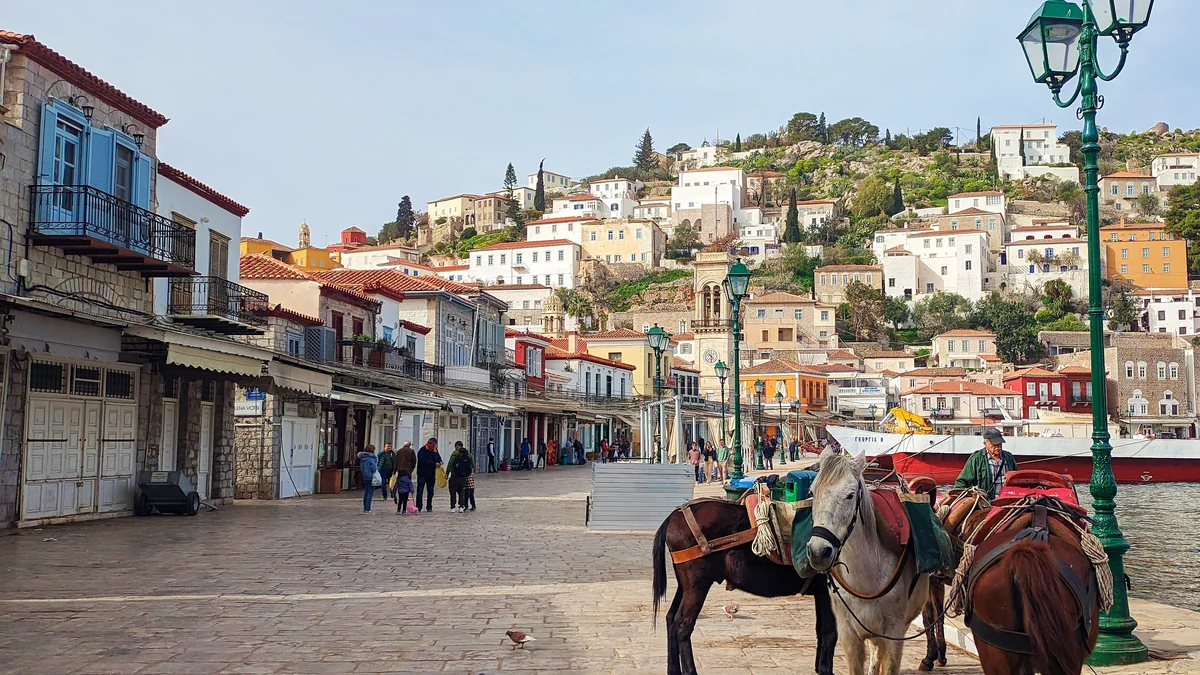
Hydra cruise port places passengers in one of Greece’s most distinctive island towns: a stone harbour surrounded by mansions, narrow lanes and steep hills, with no ordinary private cars shaping the centre. The arrival is immediately rewarding. Cruise tenders usually bring passengers close to the waterfront, so the day can begin on foot without a shuttle or a long transfer.
The absence of cars does not make Hydra effortless. Steps rise behind the harbour, coastal routes are exposed to sun, and beaches beyond town may require a water taxi or a purposeful walk. The best plan is therefore local and selective: explore Hydra Town properly, then add one museum, coastal walk, beach or boat extension rather than trying to manufacture an island circuit.
Hydra Cruise Port at a Glance
| Main arrival | Tender into or near Hydra harbour |
|---|---|
| Port role | Compact island day call |
| Currency | Euro (EUR) |
| Getting around | Walking, water taxi and local excursion boat |
| Best first plan | Harbour, historic lanes, one museum and the western coastal path |
| Main caution | Steps, steep lanes and a weather-dependent tender |
Where Cruise Tenders Land in Hydra
Most cruise passengers arrive by tender in the main harbour area, close to the horseshoe waterfront. The exact landing place and tender schedule depend on the ship and local traffic, so follow the onboard notice. Hydra’s harbour handles ferries, working boats, water taxis and private craft as well as cruise tenders; movement can feel busy even though the town itself is free from normal road traffic.
Photograph the final tender time before leaving. A local walk may keep the ship visible, but a water-taxi trip or coastal route can put several stages between you and the tender queue. Return to the harbour with enough time to locate the correct boarding point and clear any queue rather than treating the published final tender as an arrival target.
When wind or sea conditions interrupt tendering, the ship controls the decision. Independent bookings should have a clear cancellation policy. Hydra is an excellent spontaneous port once ashore, so there is little reason to commit non-refundable money to a plan that depends on a small boat before the tender operation is confirmed.
Understanding Hydra’s Car-Free Character
Hydra is often described as car-free. In practical visitor terms, that means walking and boats dominate movement around the harbour and settlements, while working animals remain part of freight and local transport. Limited operational and emergency exceptions do not create a conventional taxi or bus network. You cannot step ashore and hire a car for an island loop.
This concentrates the day in a useful way. Hydra Town, the harbour batteries, museums and western coastal path are all realistic without organised transport. More distant monasteries, beaches and settlements require either sustained walking or a boat arrangement. The island rewards travellers who accept those limits instead of trying to recreate a road-tour port.
Pack lightly. Every unnecessary item has to be carried up steps, along sunlit paths or onto a small boat. Comfortable shoes matter more than formal resort wear, and a refillable water bottle is particularly useful once you leave the commercial harbour frontage.
A Strong Walking Route Through Hydra Town
Begin by walking the harbour rather than immediately climbing. The waterfront gives the clearest sense of Hydra’s shape: stone mansions rise behind quays lined with cafés, fishing boats and ferries, while defensive batteries guard the entrance. The eastern and western sides offer changing views back across the bowl of the town.
Then move into the lanes behind the harbour. The most interesting route is not a single signed circuit but a controlled wander through whitewashed walls, stone houses, small churches and stepped alleys. Keep an eye on gradient. A lane that looks inviting may climb sharply and require the same effort on the return.
Hydra is photogenic because daily life and historic fabric sit together. Give the town time instead of treating it as a corridor to a beach. Early in the call, the back lanes can be quieter than the waterfront. Later, the harbour becomes the natural place for lunch and for watching ferries and tenders move through the port.
Historical Archives Museum of Hydra
The Historical Archives Museum is one of the most useful ways to understand Hydra beyond its appearance. The island played an important maritime role, particularly during the Greek War of Independence, and the museum connects prominent families, ships and national history to the harbour outside.
It fits easily into an independent day because it is close to the waterfront and does not require a transport commitment. Check current opening information rather than assuming that hours remain constant across the cruise season. On a hot day, it also provides a valuable indoor interval before a coastal walk.
Choose this museum when maritime and political history is a genuine interest. Do not race through several small collections simply to increase the attraction count. One well-chosen museum, followed by time to observe the town that produced the objects, gives a more coherent visit.
Lazaros Koundouriotis Historical Mansion
The Koundouriotis mansion presents a different side of Hydra: domestic architecture, art, political history and the life of an influential island family. It stands above the harbour, so the visit involves climbing. The elevated position adds views and context, but the approach should be considered by anyone with limited mobility or difficulty on steps.
This is a good choice for passengers who want to see inside one of the grand houses that shape the townscape. Pair it with a slow route through nearby lanes rather than rushing back down for another ticketed attraction. The house and its setting work together.
Current admission and opening arrangements should be checked through official cultural information or locally on arrival. In the heat of summer, make the climb earlier in the day and descend towards the harbour before the sun becomes strongest.
Walking West to Kamini and Vlychos
The coastal path west from Hydra Town is the most natural extension for independent visitors. It leads towards Kamini, a smaller harbour with a quieter feel, and continues towards swimming areas and Vlychos. The route combines sea views, low-key settlements and places to pause without requiring a vehicle.
Distance is less important than conditions. There is limited shade on exposed sections, surfaces vary and the return follows the same coast unless a water taxi is arranged. Decide the turnaround point before fatigue or heat becomes a problem. Kamini alone is a satisfying extension; reaching farther is optional.
A useful strategy is to walk outward while energy is high and keep a boat return as a possible fallback, but do not assume that a water taxi will appear instantly. Ask about availability and agree the destination and fare before boarding. The local transport guide from Hydra Direct is helpful background, but call-day arrangements still need confirmation.
Beaches and Swimming from Hydra Cruise Port
Hydra’s swimming places range from rocky platforms near town to beaches reached on foot or by boat. Spilia and Hydronetta are close choices for passengers who want a quick swim without giving the day to transport. Farther west, Kamini, Vlychos and other coves provide a more beach-focused extension.
Do not judge a swimming place solely by distance. Entry may involve rocks, ladders or uneven paths, and facilities vary. Passengers who need a conventional sandy beach with easy access should research the exact location rather than assuming every blue patch on a map offers the same experience.
The island’s official destination information and local beach listings, including the Hydra beach guide, can help narrow the choice. On the day, sea state and boat availability should decide whether a farther beach remains sensible. Keep dry clothes, footwear and the tender deadline in the plan.
Using Water Taxis Sensibly
Water taxis are part of Hydra’s practical transport system, not merely a sightseeing attraction. They can connect the harbour with beaches, coastal settlements and walking routes that would otherwise take too much time. Their value is highest when both outbound and return arrangements are clear.
Agree the destination, fare and pickup expectation before leaving. A quoted “return” may mean a reserved collection or simply the possibility of calling for another boat; those are not the same. Mobile signal, demand and sea conditions can affect response. For a cruise passenger, certainty is worth paying for.
Small-boat boarding requires balance and may involve steps or a moving gap. Ask the operator and the ship’s destination team about suitability if mobility is limited. A water taxi can remove a long walk, but it is not automatically accessible.
Monastery Walks and the Interior
Hydra’s interior contains monasteries and high viewpoints, including routes towards the Monastery of the Prophet Elias. These are proper hikes, not casual extensions of a harbour stroll. The ascent, heat, limited shade and time required mean that a monastery walk should become the central activity for fit, prepared visitors.
Start early, carry enough water, use a reliable route and set a firm turnaround time. A long cruise call does not remove the need to return to the tender harbour. Hiking alone on unfamiliar paths in high heat is a poor place to improvise, particularly when the ship cannot wait.
For most first-time visitors, the coast and town offer a better balance. The interior is best for passengers who already know what they are choosing and are willing to give up museums, swimming and a long lunch. Do not attempt it merely because the peak is visible from the harbour.
Working Animals and Visitor Choices
Horses, mules and donkeys remain visible around Hydra because goods and materials must move without normal road vehicles. Their presence is part of the island’s working life. Visitors should distinguish between observing that role and treating an animal ride as an automatic tourist activity.
Consider animal condition, load, heat, route and operator practice. Passengers with mobility difficulties should not assume that mounting an animal is safer or easier than walking; balance, height and dismounting can create their own problems. A boat or a shorter route may be the better solution.
Photography should not obstruct handlers or working routes. The harbour is an active transport space, and animals may be carrying supplies rather than posing for visitors. Respectful distance improves both safety and the experience of the town.
Weather & Best Time to Visit Hydra Cruise Port
January to March
Typical high: 12–16°C
Typical low: 7–11°C
Rain / conditions: Cooler and changeable; rough water can affect tenders and local boats.
April to June
Typical high: 18–28°C
Typical low: 12–21°C
Rain / conditions: Increasingly settled, with good walking weather before peak heat.
July to September
Typical high: 28–33°C
Typical low: 21–25°C
Rain / conditions: Hot, bright and dry; exposed paths require water and an early start.
October to December
Typical high: 15–25°C
Typical low: 10–19°C
Rain / conditions: Mild autumn gives way to cooler, wetter and occasionally windy days.
Weather guide: CruisePing summary based on NASA POWER climate data for Hydra. Check the latest forecast before travelling.
Heat changes the day more than the harbour breeze may suggest. Climb to museums and viewpoints early, then return to the water for the afternoon. On windy days, do not commit to a distant beach until the tender and local boat operations are clearly running.
Recommended Hydra Port Day
Start with the harbour and one of the elevated historic areas while the town is relatively cool. Choose either the Historical Archives Museum or the Koundouriotis mansion according to interest. Then walk west towards Kamini, stopping when the heat, views and available time suggest. Return on foot or by a pre-arranged water taxi.
Keep the final hour close to the harbour. This is the right time for lunch, a drink, shopping or a short swim near town. The sequence protects the tender return without making the day feel restricted. It also allows a quick change if wind cancels the boat component.
Repeat visitors can reverse the emphasis: take a confirmed boat to a beach early, then explore the historic town after returning. The mistake is stacking several separate boat trips into a tender call. Every marine connection adds weather and timing risk.
DIY or Organised Excursion?
Hydra is one of the strongest DIY ports in the region. The harbour, museums, lanes and coastal path require no coach, and local boats can be arranged directly. A conventional bus tour offers little because there is no ordinary island road network to tour.
An organised excursion can still add value when it provides a specialist guide, a private boat with a cruise-compatible return or a serious guided hike. Read the content carefully. A “panoramic Hydra” excursion may offer less freedom than simply walking from the tender.
Pay for expertise or secured capacity, not for being led around an area that is already easy to understand. The island’s official tourism overview at Visit Greece is a useful starting point for deciding what interests you before sailing.
Mobility and Accessibility
The harbour edge can support a rewarding low-level visit, but Hydra as a whole is demanding. Cobbling, steps and steep lanes begin close to the waterfront. A map may show attractions nearby without revealing the effort needed to reach them.
The tender is the first question. Ask about steps, transfer chairs, boat movement and the landing stage. Once ashore, remain on the waterfront and lower lanes if climbing is difficult. A short water-taxi trip may broaden the day, but boarding must be assessed separately.
Avoid booking a standard walking tour without a precise route description. “Moderate walking” can mean something very different on a stepped island. A private guide who can adapt the route may be more useful than a larger group itinerary.
Food, Shopping and Harbour Time
The harbour contains the greatest concentration of cafés and restaurants, making it the easiest place for a meal that does not threaten the return. Side lanes can feel quieter and more local, but keep track of gradient and service time. In high season, a waterfront table may involve a wait.
Local shopping includes food products, art, jewellery and maritime-themed souvenirs. Buy because an item is distinctive and well made, not because the port is car-free and everything feels unusually picturesque. Check liquid and food rules before carrying purchases back through ship security.
The most valuable harbour activity costs nothing: sit long enough to watch ferries, boats, working animals and residents move through the space. Hydra’s appeal is not a checklist. Leaving room for observation is part of using the port well.
How Call Length Changes the Hydra Plan
On a short call, stay with Hydra Town and the first section of the western coast. The harbour, one museum and a walk towards Kamini can fill the available time without any fragile connection. Do not take a distant water taxi merely because the crossing appears brief; waiting and pickup can consume the flexible part of the call.
A medium call supports one clear extension. Choose a beach by boat, a longer coastal walk or an elevated cultural route, then return to the harbour for the final period. A long call gives more time for swimming or a demanding hike, but it does not remove the need to manage heat and the tender. Extra hours are best used to slow the day rather than to stack several boat journeys.
What to Take Ashore
Carry water, sun protection, secure footwear and a light bag. A small dry pouch is useful when boarding boats or swimming. Download the ship’s contact information and a map because narrow lanes can make orientation less obvious once the harbour is out of sight. Cash can be useful for small operators, but cards are widely accepted in established businesses.
Common Mistakes in Hydra
- Assuming car-free means flat or easy for limited mobility.
- Walking too far along the coast before deciding how to return.
- Taking a water taxi without agreeing the collection arrangement.
- Booking a weather-sensitive boat trip with no cancellation terms.
- Attempting a monastery hike as an extra after a full town visit.
- Returning to the harbour at the final tender time rather than before the queue.
- Spending the entire call at a beach and missing the town that makes Hydra distinctive.
Hydra Cruise Port FAQs
Is Hydra really car-free?
Normal private motor traffic does not shape the island’s visitor experience. Walking, boats and working animals are the practical methods around the harbour and settlements.
Can I explore without an excursion?
Yes. Hydra Town and the western coastal path make an excellent independent day.
Where do cruise tenders land?
They normally use the main harbour area, but the ship’s instructions should confirm the exact point and final tender.
Can I reach a beach on foot?
Yes. Close swimming areas and the route towards Kamini and Vlychos are practical, depending on heat and mobility.
Are water taxis reliable?
They are a normal local transport option, but availability and sea conditions vary. Agree the return rather than relying on an immediate boat.
Is Hydra suitable for limited mobility?
A lower-harbour day may work, but tender boarding, cobbles, gradients and steps require careful assessment.
Hydra also rewards an early start simply because the first quiet circuit of the harbour feels different from the busy middle of the day. Use that calmer period for photographs and orientation before ferries, water taxis and excursion groups fill the quay.
Enjoy it slowly.
CruisePing Port Verdict
Hydra is strongest when treated as a place to explore rather than a launch point for collecting islands. Walk the harbour and historic lanes, choose one cultural stop, then continue west along the coast or use a water taxi for one clearly defined extension. The lack of cars simplifies the choices, while the terrain and tender make a generous return margin essential.
Ready to Browse Our Article Library?
Explore more ports in Greece and the Greek Islands, or narrow it to the Greek Islands in particular. For cruise comparisons, planning shortcuts and value guides, head over to our main article archive.