
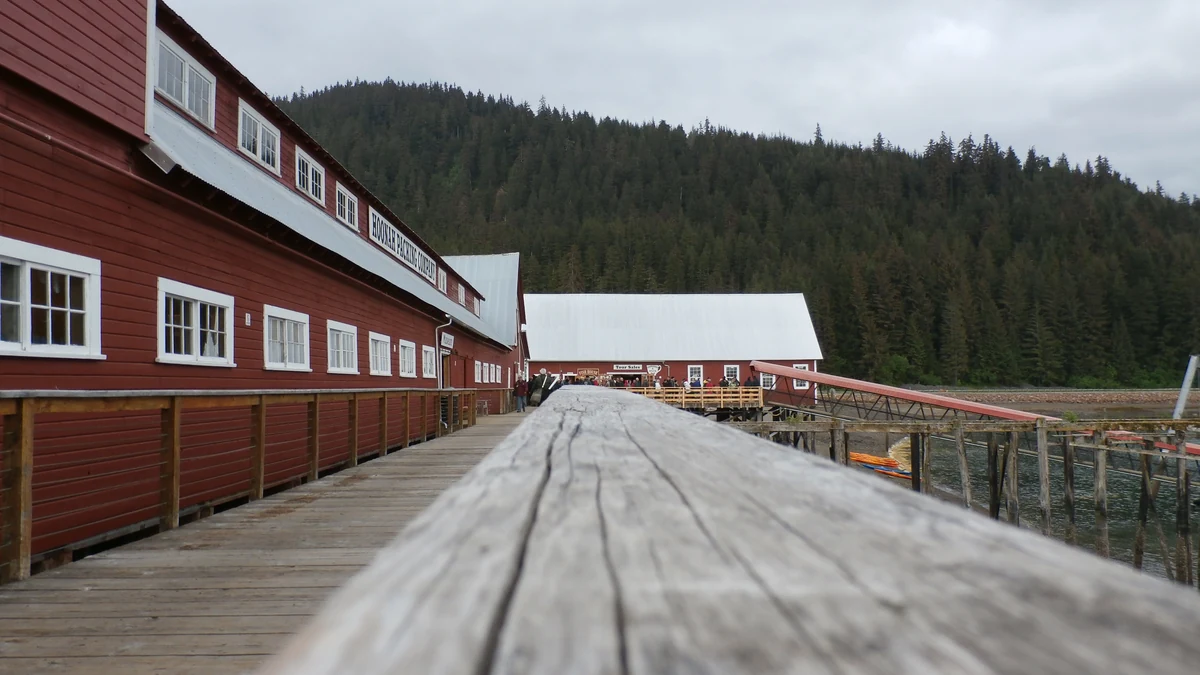
Icy Strait Point is not a conventional Alaska town-centre port. It is a purpose-built, Alaska Native-owned visitor destination outside Hoonah on Chichagof Island, developed around a restored salmon cannery, forest, shoreline and booked wildlife or adventure experiences. The day can remain entirely within the site, extend into Hoonah or centre on whales, bears, fishing or the mountain gondola.
Modern cruise berths allow most passengers to walk ashore, but the exact landing area affects the first route through the destination. Facilities, gondolas and paths spread along the waterfront and hillside. The key decision is not how many attractions to collect; it is whether one pre-booked experience will anchor the call. When whale watching or wildlife viewing matters, reserve it before sailing and treat the remaining site as the flexible part of the day.
Icy Strait Point Cruise Port at a Glance
| Port name | Icy Strait Point, Alaska |
|---|---|
| Main arrival area | Ocean Landing or Wilderness Landing within Icy Strait Point |
| Cruise region | Alaska / North America / Canada |
| Country / Territory | USA |
| Currency | US dollar (USD) |
| Main languages | English; Tlingit cultural interpretation is central |
| Port role | Day call |
| Disembarkation | Docked for most calls; follow ship instructions |
| Walkability | Good within the developed site, with distances and slopes |
| Shuttle required | No for the site; transport needed for Hoonah or remote tours |
| Main transport | Walking, site gondolas, organised excursions and local shuttle or taxi arrangements |
| Best first-time plan | Book one whale, wildlife or mountain experience and explore the cannery waterfront |
| Main caution | Excursion capacity and weather matter more than spontaneous transport |
Icy Strait Point Is a Destination beside Hoonah
The site sits outside the community of Hoonah and operates when cruise ships are present. Its shops, restaurants, historic cannery, trails and excursion departures are designed to make a complete port day without requiring a city transfer. The official history explains its relationship to Huna Totem Corporation and the Huna Tlingit community. That ownership and cultural context should shape how visitors approach the day.
Hoonah remains a living town rather than an extension of the attraction. Visit respectfully, use local services and do not photograph residents as though the community were a display. Passengers who want cafés, harbour views and a quieter sense of place can include Hoonah, but the transfer must be confirmed and timed around the ship. The site and town complement one another; they are not interchangeable names for the same waterfront.
Your Berth Changes the First Walk
Ships may use different docking areas within Icy Strait Point. Ocean Landing serves the historic cannery side, while Wilderness Landing connects into the newer gondola and adventure zone. The operator’s transport system helps move visitors between principal areas, but queues and walking distance still affect the day. Read the onboard map and note where your specific excursion meets before wandering in the opposite direction.
Passengers with limited mobility should request current dock and accessible-route details from the cruise line. Boardwalks and paved areas are generally straightforward, yet gradients, gangways and long distances between zones can be tiring. A site described as “walk-off” is not necessarily compact. Keep the return route in mind, especially after a mountain excursion that finishes away from the original berth.
Book One High-Value Experience before Sailing
Whale watching, bear searches, fishing, kayaking, the ZipRider and mountain experiences have finite capacity. A late decision may leave only times that fragment the day or no availability at all. The official excursion listings show the range, but bookings may be routed through the cruise line. Compare duration, transport, physical requirements and cancellation rules rather than choosing by photograph.
One booked excursion is enough. A wildlife boat followed by the cannery and shoreline makes a complete day. Two major tours can create a chain in which one late return compromises the next. When a particular activity is essential, book the earliest practical slot and keep the rest flexible. This also provides time to absorb a weather delay without immediately racing back to the ship.
Whale Watching Is the Strongest First-Time Choice
The waters around Icy Strait are productive feeding grounds for humpback whales and other marine life during the Alaska cruise season. Sightings are likely on well-run trips but never guaranteed in a specific form. Boats differ in size, viewing deck, indoor shelter and boarding method. Ask whether everyone can stand at the rail, how long is spent travelling to the search area and whether binoculars or refreshments are provided.
Wear layers and waterproof outerwear even when the dock is calm. Wind over the water lowers the apparent temperature, while spray and rain can reach open decks. Photographers should protect equipment and avoid watching only through a screen. A naturalist-led trip adds understanding of feeding behaviour and local ecology. The strongest operator keeps an ethical distance and does not crowd animals for a dramatic photograph.
Bear Viewing Is Seasonal and Road-Dependent
Chichagof Island has significant brown-bear habitat, and guided searches may visit forest roads, streams or viewing areas. No tour can guarantee a bear. Success changes with salmon runs, food availability, weather and time of day. Book with an authorised local operator and follow every instruction about remaining with the group, food, noise and distance.
Bear trips typically involve vehicle travel away from the cruise site and may include uneven ground or standing in exposed conditions. Ask how much walking is involved and whether toilets are available. A passenger who would be disappointed by a scenic forest trip without a bear should choose whale watching or a cultural experience instead. Wildlife is not a scheduled attraction, and responsible operators will not force an unsafe encounter.
The Mountain and Gondola Experiences
The mountain route lifts visitors above the forest for broad views over Port Frederick, Icy Strait and the surrounding peaks when cloud allows. The official mountain-top information describes the ascent and viewpoints. Visibility is the controlling variable: low cloud may turn a panorama excursion into a forest-and-weather experience.
Confirm whether the ticket covers only transport or includes a guided element, and check operating status on the day. Gondola cabins can be easier than a steep hike, but boarding gaps, queues and the walk to the station still matter for mobility. Carry a warmer layer at elevation. When views are poor, do not keep postponing the ride until the final hour; switch to the cannery, cultural programme or Hoonah instead.
ZipRider and Adventure Activities
Icy Strait Point’s ZipRider is a signature high-adrenaline option, descending from the mountain towards the waterfront. Height, weight, health and footwear rules are enforced, and the full activity includes transport and preparation rather than only the descent. Read restrictions before purchase and consider whether cold, rain or fear of heights will reduce enjoyment.
Weather can suspend operations. A cancellation should leave enough day to enjoy the site, which is another reason not to combine tightly timed major excursions. Companions who are not riding need a clear meeting point. Secure loose objects and follow staff instructions; attempting to film with unsuitable equipment can put property and people below at risk.
The Historic Cannery Is More than a Shopping Hall
The restored Hoonah Packing Company cannery anchors the older waterfront. Exhibits, machinery and interpretation tell the story of commercial salmon processing and local employment. Give it time before moving directly to souvenir shops. The industrial history connects Hoonah’s twentieth-century economy to the sea and helps explain why this location became the cruise destination.
Indoor sections provide a useful weather refuge, although busy ship days can make them crowded. Cultural presentations and demonstrations vary by schedule. Check the day’s programme after arrival and fit short events around the main excursion. The cannery zone is also a practical place for food and a final walk close to the ship, making it a better end-of-day anchor than a last-minute transfer into town.
Tlingit Culture Requires Attention, Not Consumption
Huna Tlingit history and living culture are central to Icy Strait Point. Cultural performances, carving, storytelling and interpretation should be approached as opportunities to listen, not as staged proof of an imagined past. Use the names and guidance provided by local hosts, ask before close photography and support artists through genuine purchases rather than bargaining over handmade work.
Visitors who want greater depth should choose a cultural excursion or spend longer with interpretation instead of treating a performance as a gap between adventure rides. The official site’s community and ownership information is useful preparation. Respect also extends into Hoonah: remain on public routes, keep private homes out of photographs and remember that cruise operations affect a small community intensely.
Should You Go into Hoonah?
Hoonah offers a working harbour, local businesses, churches, public art and a quieter streetscape. It is worth visiting when the call is long, no major excursion fills the middle of the day and transport is confirmed. The City of Hoonah’s official website provides local context. Do not expect a large tourist centre or a constant taxi rank.
Walking the road between the cruise site and town may be possible for fit visitors in suitable conditions, but distance, traffic edges and time make local transport preferable for many. Check the site’s current shuttle arrangements or use a booked local service. Return early enough to enjoy the cannery rather than watching the ship from a delayed vehicle. Hoonah should add community context, not become a stressful collection mission.
Shoreline Walks and Low-Cost Time
Passengers do not need an expensive excursion to enjoy Icy Strait Point. The waterfront, forest edge, beach areas and cannery can fill several hours. Watch for eagles and marine activity, but maintain distance from wildlife and do not approach bears if one appears near developed areas. Follow staff directions immediately; an animal close to the port is not an invitation to create a crowd.
Paths vary from smooth boardwalk to forest surface. Rain makes roots and timber slick. A pair of binoculars adds more than rushing between commercial activities. Low-cost visitors should still budget for food or a cultural purchase when possible because the destination’s community ownership is part of its value. Sit long enough to watch the water rather than judging the day only by ticketed experiences.
Best Things to Do at Icy Strait Point
Whale-watching cruise
Best for: First-time Alaska visitors and wildlife enthusiasts
Plan: Book one reputable trip and leave the rest of the call flexible
Watch: Wildlife is never guaranteed and open decks are cold
Brown-bear search
Best for: Visitors comfortable with uncertain wildlife outcomes
Plan: Use an authorised guided excursion
Watch: Seasonality, road travel and uneven ground
Mountain gondola
Best for: Scenic views with less exertion than hiking
Plan: Ride when cloud and operating status are favourable
Watch: Low visibility, queues and cooler conditions
ZipRider
Best for: Adventure-focused passengers
Plan: Check restrictions and reserve ahead
Watch: Weather suspension and physical eligibility
Cannery and cultural programme
Best for: History, culture and poor-weather flexibility
Plan: Allow time for interpretation, not only shopping
Watch: Programme times and cruise-day crowds
Hoonah visit
Best for: Repeat visitors and longer calls
Plan: Use confirmed transport and behave as a guest in a living town
Watch: Limited on-demand transport and return time
CruisePing Recommended Port Day
For a first call, CruisePing would reserve a morning whale-watching trip, then spend the afternoon at the historic cannery, cultural interpretation and waterfront. This combination uses Icy Strait’s strongest natural asset while keeping the second half close to the ship. If whales are not the priority, substitute a bear or mountain excursion rather than adding it on top.
On a wet, low-cloud day, remain flexible. A sheltered wildlife boat may still operate while the mountain view disappoints; the cannery and cultural programme become stronger choices. Visit Hoonah only when transport and time are comfortable. The site is sufficiently complete that no passenger needs to force a town transfer merely to say they left the purpose-built destination.
DIY or Organised
The developed site is easy to explore independently. Wildlife, fishing, kayaking and remote road experiences require organised operators, and many are distributed through cruise-line booking systems. Compare official descriptions and physical requirements before sailing. Independent local bookings should include a missed-port policy and a clear meeting point at the correct landing area.
A Hoonah visit sits between the two: it can be independent once transport is solved, but taxis and shuttles should not be assumed. Download the site map, screenshot tickets and note the excursion meeting time separately from ship time. Avoid booking two operators back-to-back; each may consider only its own schedule, while you carry the risk of the connection.
Mobility and Accessibility
Docked access removes the tender obstacle for most calls, but gangway gradient changes with tide. The destination covers a meaningful distance and includes slopes between waterfront and mountain facilities. Use the transport gondola and accessible routes where appropriate, and ask the cruise line which dock the ship expects to use. Wheelchairs and scooters may need advance arrangements on excursion vehicles and boats.
Whale boats can have ramps, steps or narrow thresholds; bear tours may use vans and uneven viewing points. Ask specific questions rather than accepting “minimal walking”. Cold and rain increase fatigue, so build indoor pauses. Passengers who stay within the cannery and waterfront can still have a satisfying call without repeatedly boarding vehicles.
Food, Shopping and Payment
Restaurants and food stands focus on seafood, casual Alaska dishes and cruise-day service. Opening follows ship schedules, yet queues peak around excursion returns. Eat before the final rush or choose a simpler order. Cards are widely useful inside the destination, though carrying a small amount of cash is sensible for tips and small purchases.
Look for locally made work and clear artist attribution. The destination has plenty of conventional souvenirs, but a purchase from a Huna Tlingit artist or local producer has greater connection to the place. Do not buy wildlife products whose legality or origin is unclear. Food cannot always be taken back through agricultural or customs controls later in the itinerary, so check ship guidance before buying perishables.
Weather & Best Time to Visit Icy Strait Point
Use the National Weather Service point forecast and marine information close to arrival. Southeast Alaska is cool, wet and changeable. Conditions at the dock, on the water and on the mountain may differ. Low cloud particularly affects scenic gondola value, while wind and sea state affect wildlife boats.
The main cruise season runs from late spring into early autumn. June and July have long daylight, while August and September often feel wetter and cooler. Wildlife patterns shift across the season. Dress in layers with a waterproof outer shell and closed shoes with grip. The table gives rounded planning ranges rather than a forecast or wildlife calendar.
| Month / season | Typical high | Typical low | Rain / conditions |
|---|---|---|---|
| May | 13°C | 5°C | Cool with long daylight and frequent showers |
| June–July | 17°C | 9°C | Mildest period; rain and low cloud remain possible |
| August | 16°C | 9°C | Cool, often damp with active wildlife season |
| September | 13°C | 6°C | Wetter, darker and more changeable |
Practical Questions for an Icy Strait Point Cruise Call
Is Icy Strait Point the same as Hoonah?
No. Icy Strait Point is the cruise destination outside Hoonah. The town is a separate living community reached by local transport or a longer walk.
Do I need an excursion?
No. The cannery, cultural interpretation, shoreline and forest paths make a complete independent visit. Book ahead when whales, bears, fishing or the ZipRider are priorities.
Are whales guaranteed?
No. The area is productive, but sightings and behaviour vary. Choose an ethical operator and value the wider marine experience.
Can I walk from the ship?
Most modern calls dock directly within the destination, though the berth and gangway vary. Distances between zones can still be substantial.
What happens in poor weather?
Wildlife boats and adventure operations may alter or cancel. Keep the cannery, cultural programme and sheltered waterfront as a worthwhile backup.
Useful Official Links
- Icy Strait Point official website
- Icy Strait Point FAQs
- Icy Strait Point excursions
- Icy Strait Point community and history
- City of Hoonah
- Travel Alaska Hoonah and Icy Strait Point
- National Weather Service forecast
CruisePing Port Verdict
Icy Strait Point works because it does not require a transfer to justify the call. One strong wildlife or mountain experience, followed by the cannery and shoreline, creates a complete day. Hoonah adds context when time and transport support it, but it should not be rushed or treated as another attraction zone.
Reserve scarce experiences, dress for wet cold and keep the schedule loose enough to absorb weather. The best visit recognises the destination’s Huna Tlingit ownership and listens as carefully to cultural interpretation as it watches the water. A single whale trip and an unhurried waterfront can be more memorable than three expensive activities joined by queues.
Ready to browse our article library?
Explore more ports in the Alaska / North America / Canada region, narrow the library to USA cruise ports, or return to the main CruisePing article library.