
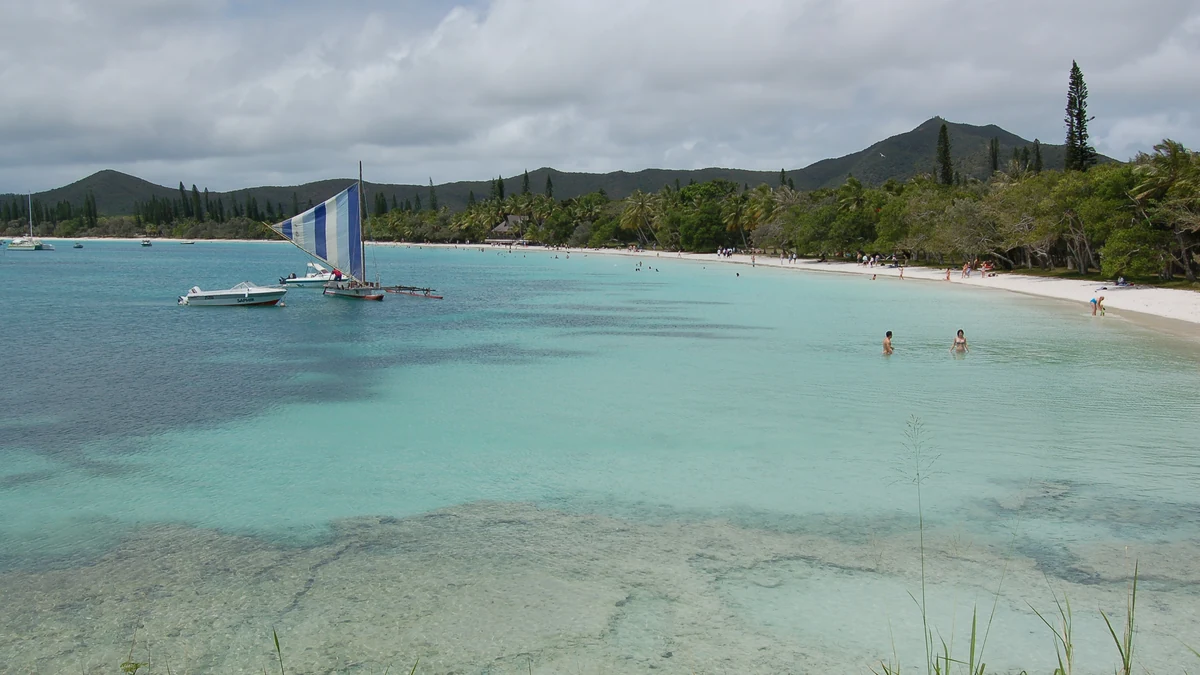
The Isle of Pines—Île des Pins, or Kunié—is one of the South Pacific’s most visually distinctive calls: pale sand, clear lagoons and tall columnar pines. Most cruise visitors arrive by tender at Kuto Bay, where an excellent beach day begins almost immediately. The island’s celebrated natural pool at Oro Bay, Upi Bay pirogues and inland cultural sites require transport, timing and greater respect for local access.
This is not a port where every famous image belongs to one easy walking route. Kuto and Kanumera bays form the simple, low-risk choice beside the tender. Oro, Vao and the wider island need a booked vehicle or tour, and some natural or customary areas may have access conditions. Confirm the current call operation before sailing; official New Caledonia tourism guidance now reports cruise stopovers accessible, but individual dates, tender landings and local services remain operational decisions.
Isle of Pines Cruise Port at a Glance
| Port name | Isle of Pines (Île des Pins / Kunié) |
|---|---|
| Main arrival area | Tender landing at Kuto Bay for most cruise calls |
| Cruise region | Australasia / Pacific Islands |
| Country / Territory | New Caledonia |
| Currency | CFP franc (XPF) |
| Main languages | French and Kwênyii; English varies |
| Port role | Day call |
| Disembarkation | Tender |
| Walkability | Excellent for Kuto and Kanumera; low for the wider island |
| Shuttle required | No for the twin bays; booked transport needed for Oro and island touring |
| Main transport | Walking, local minibuses, organised tours, taxis and pirogue or boat excursions |
| Best first-time plan | Enjoy Kuto and Kanumera or pre-book a carefully timed Oro Bay route |
| Main caution | Do not assume distant attractions, customary access or return vehicles can be improvised |
The Tender Landing Usually Shapes the Whole Day
Cruise calls commonly tender into Kuto Bay, placing passengers beside the beach and within walking distance of neighbouring Kanumera Bay. The ship controls tender tickets, landing order and final return. Wind and swell can delay or cancel the operation even when the bay looks calm from shore. Independent operators need the ship name, call date and expected landing because a delayed first tender can compress a pre-booked island route.
Tender access may involve steps, moving platforms and gaps between vessels. Passengers with limited mobility should ask the cruise line about assistance and make the nearby beach day their default if the transfer is tiring. Return to Kuto well before the final tender. A queue forming on sand or at a small jetty moves differently from a large terminal queue, and the ship’s last boat—not the scheduled departure time—is the deadline that matters.
Current Access Should Be Checked, Not Assumed from Old Reports
New Caledonia experienced serious disruption in 2024, and older articles may still describe closures or suspended cruise activity. The current official travel-status page states that the archipelago’s tourism areas and cruise stopovers are accessible. That broad reopening does not guarantee every island service or shore call on every date.
Check the cruise line’s itinerary updates, the official destination website and any local operator shortly before sailing. Avoid repeating stale claims that the island is closed, but also avoid treating a scheduled call as certain. Weather, local arrangements and ship operations can still change. A missed-port policy is essential for independently booked transport or pirogue trips.
Kuto Bay Is the Easiest Complete Port Day
Kuto Bay offers a long arc of pale sand, shallow turquoise water and views towards forested hills. It is the obvious choice for passengers who want a relaxed call, have limited mobility after tendering or prefer not to negotiate transport. Walk away from the busiest landing section for more space, while remaining aware of where facilities and the tender queue are located. The official Kuto Beach listing provides current destination information.
Shade is not continuous and facilities can be modest when a large ship lands. Bring water, sun protection and a towel from the ship where permitted. Swimming conditions should be judged locally; clear water is not proof of no current. Keep valuables attended and avoid leaving belongings beneath a tree without checking for falling branches or coconuts. Kuto is strong precisely because it does not need to become an excursion.
Kanumera Bay Is Close but Has Different Etiquette
Kanumera Bay lies a short walk across the narrow isthmus from Kuto and is framed by pines and a rocky islet. Its sheltered appearance attracts snorkellers, but access around the sacred rock and local rules must be respected. Do not climb the islet or cross areas marked or described as prohibited. The official Kanumera Beach page should be read alongside guidance given on the day.
The route between the bays is easy for most walkers, though heat and road crossings still matter. Kanumera can feel crowded after tenders arrive, so visit early or use it as a shorter contrast to the broader Kuto beach. Snorkelling visibility and marine life vary. Keep clear of coral, do not feed fish and ask before entering any area that local custodians identify as culturally sensitive.
The Twin-Bay Day Is Better than a Forced Island Tour
Kuto and Kanumera together provide swimming, walking, photography and a local meal without a vehicle or fragile timetable. This is the best plan for a short call, unsettled weather or passengers who have already booked several long excursions elsewhere. Start with Kanumera before it becomes busy, return to Kuto for lunch and spend the final hour within sight of the tender operation.
A low-cost day still needs preparation. Carry CFP francs for small vendors, check whether cards are accepted and bring any essential medication ashore. Public toilets and showers may be limited or tied to businesses. Avoid expecting resort-level beach service. The beauty is natural and the infrastructure is small-scale; those facts belong together.
Oro Bay and the Natural Pool Require Real Logistics
The natural pool near Oro Bay is one of the island’s most famous landscapes, protected by reef and surrounded by forest. It lies well away from Kuto and is not a sensible independent walk from the tender. Reaching it generally requires a tour, pre-arranged minibus or contracted driver, followed by a walk whose surface and water depth vary. Access conditions, customary permissions and fees can change.
Ask the operator exactly where the vehicle stops, how long the walk takes, whether guests wade, what footwear is recommended and what happens if heavy rain or tide makes the route unsuitable. The pool is a natural environment rather than a managed swimming bath. Do not stand on coral, use soap or sunscreen immediately before entering, feed fish or leave rubbish. Return transport should wait or be firmly timed; an outbound lift alone is not a plan.
How to Plan the Oro Route without Missing the Ship
Book before arrival when Oro is the priority. Confirm pickup beside the tender, total tour duration and the latest guaranteed return to Kuto. A shared minibus may wait to fill seats, which is harmless in the morning but dangerous when used for the final return. A private driver costs more but gives control, while a ship excursion provides the strongest protection when access and timing are uncertain.
Allow time to rinse feet, change footwear and rejoin the tender queue. Do not add an extended Vao stop or pirogue trip unless the operator sells them as one coherent cruise-day route. On a delayed tender morning, ask what will be removed rather than allowing every stop to become shorter. The natural pool deserves unhurried time; if the revised schedule cannot provide it safely, use the twin bays instead.
Upi Bay Pirogues Are a Distinctive but Structured Excursion
Traditional-style outrigger pirogue trips across Upi Bay offer a quiet view of limestone formations, forested shores and clear water. These are not usually walk-up rides from Kuto. They form part of a pre-arranged route, often linked with a transfer and walk towards Oro. Departure point, wind and local organisation determine the day, so use a reputable operator or cruise excursion.
Ask about boat stability, sun cover, boarding from shore, the amount of walking after the crossing and what bags can be kept dry. Passengers with back, knee or balance problems should not infer accessibility from calm promotional photographs. The pirogue is best treated as the day’s main experience, not a quick transport novelty inserted between beaches.
An Island Circuit Adds Culture and Landscape
A road tour may include Vao, the church, coastal viewpoints, caves or grottos, memorials and local settlements. The exact sites and permissions vary. A guide adds essential context to customary land and Kunié history, while also preventing visitors from entering private areas. The official Isle of Pines guide is a useful overview rather than a promise that every stop is open.
Choose a circuit when cultural understanding matters more than extended swimming. Ask how long is spent outside the vehicle and whether entrance fees are included. Some tours market a large number of named places but provide only roadside pauses. A smaller circuit with Vao, one heritage stop and a proper bay visit usually produces more value.
Vao and the Living Island
Vao is the island’s principal village and administrative centre. Its church and local streets can add context beyond the beaches, but visitors should remember that schools, homes and public services are not attractions. Dress modestly away from the beach, keep voices low near worship and ask before photographing people. Sunday calls may encounter reduced commercial activity and stronger religious rhythms.
Local guides can explain the relationship between Kanak customary life, Catholic history and contemporary New Caledonia. A rushed vehicle stop does not do this. When no interpretation is offered, enjoy the public setting without inventing meanings from architecture. Buy from local vendors where appropriate and carry cash; card terminals and mobile connections are not guaranteed.
Queen Hortense Cave and Other Inland Stops
Queen Hortense Cave is frequently included in island tours, associated with local history and set within dense vegetation. Access may involve a fee, steps, damp ground and customary arrangements. Use a guide, follow the permitted path and do not touch formations or remove anything. Opening can change, so no independent itinerary should depend on arriving unannounced.
The cave works as one element of an island circuit rather than a destination worth crossing the island for on its own. Visitors with claustrophobia, poor balance or difficulty on uneven surfaces should ask for an alternative stop. In wet weather, the approach may become slippery. The nearby forest and explanation often provide as much value as the interior.
Snorkelling Is Easy to Start but Requires Care
Kanumera and other sheltered areas may offer accessible snorkelling close to shore. Conditions vary with tide, wind and visibility, and coral can be damaged by standing or kicking. Enter only where local advice supports it, use a flotation aid if confidence is limited and keep enough energy for the walk and tender return. Never pursue turtles or rays.
Bring your own well-fitting mask when snorkelling is important; shore rentals are not guaranteed. Water shoes can protect feet on approved entries but do not make reef-walking acceptable. Reef-safe behaviour includes avoiding contact, keeping distance from animals and using sun protection that does not wash straight into the lagoon. A rash vest and shade reduce reliance on repeated sunscreen application.
Local Transport Is Limited and Should Be Reserved
Minibuses, taxis and tour vehicles meet cruise calls, but supply is finite and may be organised around pre-sold excursions. Prices and routes should be agreed before departure, ideally in writing. Confirm whether the vehicle waits, whether the fare is per person or per vehicle, which entrance fees are included and the precise Kuto return time.
Do not accept a vague promise that “another bus will come” from a distant site. Phone signal and English-language communication can be uneven. Save the driver’s details and carry the ship information. Renting a car is less straightforward than on a major island and should only be used with a confirmed local supplier, insurance and a delivery arrangement compatible with tender times.
Money, Food and Facilities
The CFP franc is the dependable currency. Some established businesses may accept cards, but small food stalls, transport and access fees can require cash. Bring modest notes rather than expecting change for a large denomination. Fare and service levels can change when a ship is present, and a stall that operated on another call may not appear on yours.
Seafood, grilled food and simple local dishes may be available near Kuto or through tours. Dietary requirements should be discussed in advance, especially on a pirogue or Oro route where alternatives are not close. Carry water and a snack without generating unnecessary packaging. Dispose of rubbish properly and do not take shells, coral or natural material from beaches.
Best Things to Do from Isle of Pines Cruise Port
Kuto Bay
Best for: An easy, beautiful beach day close to the tender
Plan: Walk away from the landing, swim and remain flexible
Watch: Limited shade and cruise-day crowding
Kanumera Bay
Best for: Scenery and shore snorkelling
Plan: Visit early and respect rules around the sacred islet
Watch: Coral contact, crowding and local restrictions
Oro natural pool
Best for: Visitors prioritising a remote lagoon landscape
Plan: Use booked return transport or a protected excursion
Watch: Access, customary conditions and journey time
Upi Bay pirogue
Best for: A distinctive water-and-land excursion
Plan: Book a complete route with transfers and walking explained
Watch: Boarding, sun exposure and weather
Island circuit and Vao
Best for: Culture and wider landscape
Plan: Choose a guided route with meaningful stops
Watch: Private/customary access and too much vehicle time
Queen Hortense Cave
Best for: History within an island tour
Plan: Visit with a guide and suitable footwear
Watch: Damp, uneven access and changing opening
CruisePing Recommended Port Day
For most first-time visitors, CruisePing would keep the day around Kuto and Kanumera. Visit Kanumera soon after landing, return to Kuto for a swim and lunch, then spend the final hour near the tender. This plan captures the island’s defining scenery with almost no transport risk and remains easy to shorten when tendering begins late.
Choose Oro and Upi instead only when they are the clear priority and a reputable operator provides the complete transfer, access and return. Do not try to bolt the natural pool onto a full island circuit. Passengers seeking cultural depth should choose a guided Vao-and-island route and accept less beach time. The best day is one coherent version of the island, not all three compressed.
DIY or Organised
Kuto and Kanumera are naturally independent. Oro, Upi and inland touring strongly favour a ship excursion or pre-booked local operator because transport, customary access and the tender clock interact. Independent bookings should state the missed-port policy and return time. Share the ship schedule, but remember that the ship does not protect a private tour.
A local minibus arranged after landing can work for a simple circuit, yet passengers should agree the route before paying. Avoid entering a vehicle solely because a caller is advertising a famous site. Confirm who operates it, when it returns and whether the driver remains. Keep enough cash for the agreed fare and any entrance fee.
Mobility and Heat
The tender is the principal barrier. Once at Kuto, beach sand and the lack of continuous paved access may challenge wheelchairs and walkers, although the scenery can be enjoyed close to the landing. Kanumera requires a short road crossing and more sand. Oro adds vehicle steps, an uneven walk and possible wading; pirogues add low boarding and limited support.
Ask for exact requirements before booking. Shade can be sparse at midday and humidity increases fatigue. Carry water, a hat and a light cover for shoulders. Closed water-compatible footwear helps on approved trails, but flip-flops are poor for damp cave or forest approaches. A beach day with one short transfer may be more satisfying than a vehicle tour in which a less mobile passenger cannot join the main stops.
Families should agree a fixed meeting point at Kuto before anyone swims or walks to Kanumera. Mobile reception may not be reliable enough to reunite a group at the final tender, and identical stretches of beach are difficult to describe by phone. Keep one adult with the tender information and do not allow children to explore the isthmus alone. On organised routes, count heads whenever the group changes vehicle, boat or walking section; small island tours sometimes use several local providers in one itinerary.
Photography is easy at the bays but requires more judgement in villages and customary places. Ask before photographing residents, ceremonies, homes or children, and put drones away unless explicit local and aviation permission has been obtained. A public beach does not make the nearby community a public set. Respectful restraint protects access and produces a better encounter than trying to reproduce every image seen online.
Weather & Best Time to Visit Isle of Pines
Use the Météo-France Isle of Pines forecast and marine information close to arrival. The island has a warm subtropical climate. The warmer, wetter and more cyclone-prone period broadly runs from November to April; the austral winter is cooler and often drier. Trade winds can affect tendering and exposed boat routes even on a bright day.
Water remains inviting for much of the cruise season, but a cool wind after swimming can be uncomfortable. Heavy rain changes forest tracks and cave access, while low cloud matters less for the twin bays than for island viewpoints. Carry sun and rain protection together. The table provides rounded planning ranges, not a promise for the call.
| Month / season | Typical high | Typical low | Rain / conditions |
|---|---|---|---|
| January–March | 29°C | 23°C | Warm, humid and wetter; tropical systems possible |
| April–June | 27°C | 20°C | Cooling, with trade winds and mixed showers |
| July–September | 24°C | 17°C | Cooler and generally drier; breezy evenings |
| October–December | 27°C | 21°C | Warming with humidity and rainfall increasing |
Practical Questions for an Isle of Pines Cruise Call
Where do cruise passengers land?
Kuto Bay is the common tender area, but follow the ship’s final instructions because weather and operations control the landing.
Can I walk to Kanumera Bay?
Yes. It is close to Kuto across the isthmus. Respect local signs and do not climb the sacred islet.
Can I walk to the natural pool?
Not from the cruise landing as a practical port-day route. Arrange transport and confirm the walking, access and return details.
Is the Isle of Pines open to cruise visitors?
Current official New Caledonia guidance reports tourism areas and cruise stopovers accessible. Individual calls and services still need checking with the cruise line and operator.
Do I need CFP francs?
Carry them. Cards may work at established businesses, but small transport, food and access payments can be cash-only.
Is a ship excursion necessary?
Not for Kuto and Kanumera. It is the strongest low-risk method for Oro, Upi or a multi-stop island circuit when return transport is critical.
Useful Official Links
- Official New Caledonia travel-status update
- Official Isle of Pines guide
- Kuto Beach
- Kanumera Beach
- A day on the Isle of Pines
- Isle of Pines tour and transport listing
- Météo-France Isle of Pines forecast
CruisePing Port Verdict
The Isle of Pines does not require an ambitious excursion to succeed. Kuto and Kanumera form one of the South Pacific’s strongest walk-off-after-tender beach days. Oro, Upi and Vao add depth only when transport, access and return are properly arranged.
Ignore both extremes: stale claims that the island is universally closed, and casual claims that every famous site is easy from the tender. Check current operations, carry cash and behave respectfully on customary land. The clearest choice—twin bays, natural-pool route or cultural circuit—will always outperform a rushed attempt to combine them.
Ready to browse our article library?
Explore more ports in the Australasia / Pacific Islands region, narrow the library to New Caledonia cruise ports, or return to the main CruisePing article library.