
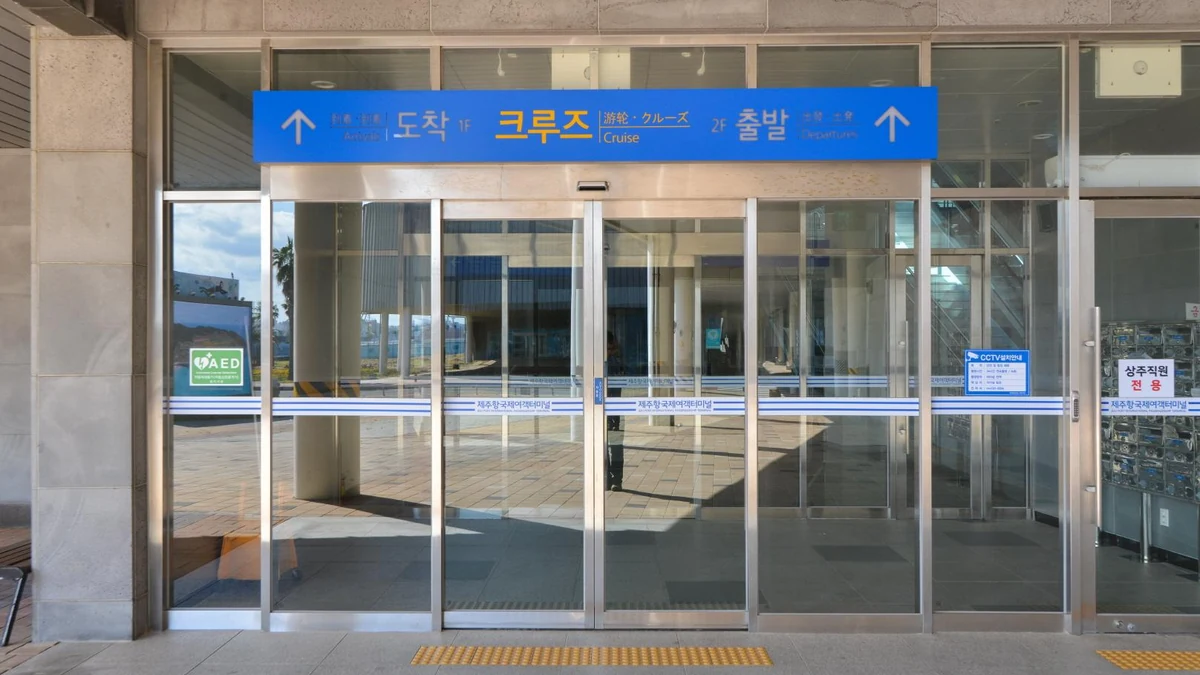
Jeju cruise port is not a single arrival point. Ships may dock at Jeju Port near the island’s northern city or at Gangjeong near Seogwipo in the south. The distance between them is large enough to change the entire sightseeing plan.
That terminal check should happen before choosing attractions. A route that is efficient from Jeju City can waste hours from Gangjeong, while Seogwipo waterfalls and the south coast make much more sense from the southern terminal. Jeju is best enjoyed as one regional loop, not as an attempt to cross the island repeatedly.
Jeju Cruise Port at a Glance
| Port name | Jeju Cruise Port |
|---|---|
| Main arrival area | Jeju Port near Jeju City in the north or Gangjeong cruise terminal near Seogwipo in the south |
| Cruise region | Asia |
| Country / Territory | South Korea |
| Currency | South Korean won (KRW) |
| Languages | Korean; English signage is common at major attractions and transport hubs |
| Port role | Island gateway with two principal cruise terminals serving Jeju City in the north and Seogwipo/Gangjeong in the south |
| Disembarkation | Docked at Jeju Port or Jeju International Cruise Terminal at Gangjeong, depending on the itinerary |
| Walkability | Low from either terminal for the island’s major sights; moderate only within selected city or market districts after transfer |
| Shuttle required | Often provided or required; the correct terminal and shuttle endpoint must be confirmed |
| Main transport | Ship shuttles, excursion coaches, taxis, private drivers and public buses |
| Best first-time plan | Confirm the terminal, then build one regional loop: north-and-east from Jeju Port or south-and-west from Gangjeong |
| Main caution | The two terminals sit on opposite sides of the island, so advice written for one can create a long and unnecessary transfer from the other |
Weather & Best Time to Visit Jeju
Jeju has four distinct seasons and more wind than many visitors expect. Spring and autumn are often comfortable for touring, summer is hot, humid and vulnerable to heavy rain or typhoons, and winter can be cold and blustery with snow on higher ground. Coastal conditions may differ sharply from Hallasan and the island interior. Check the current forecast for Jeju Island and the ship’s notice close to the call. Wind, heavy rain, heat, typhoons or winter conditions can alter exposed coastal paths, mountain access and coach timings.
| Month / season | Typical high | Typical low | Rain / conditions |
|---|---|---|---|
| December–February | 10°C | 4°C | Cool and windy on the coast; snow or ice can affect higher ground |
| March–May | 20°C | 11°C | Mild to warm, with changeable rain and generally good touring conditions |
| June–September | 29°C | 22°C | Hot, humid and wet, with typhoon disruption possible |
| October–November | 21°C | 13°C | Often comfortable and clearer, though wind and rain remain possible |
December to February
Carry a warm windproof layer. Coastal sightseeing can remain possible while Hallasan roads or trails are affected by snow and ice.
March to May
This is a good period for markets, coast and gardens. Spring weather can still change quickly, so keep one indoor stop in the route.
June to September
Heat and humidity make exposed volcanic paths demanding. Typhoons and intense rain can alter the call, so avoid a plan that depends on one distant outdoor attraction.
October and November
Autumn often suits a full island excursion, but shorter daylight and strong coastal wind still matter. Protect the terminal return before adding a final viewpoint.
The Two Jeju Cruise Terminals
The official Korean cruise guide to Jeju distinguishes the island’s cruise facilities and should be checked alongside the ship’s terminal notice. Save the Korean and English terminal name before making any private booking.
The north Jeju Port guide describes access to Jeju City and its older downtown districts. The Gangjeong terminal guide serves the south, closer to Seogwipo and Jungmun. They are not interchangeable pickup points.
Ask a driver to repeat the terminal and ship name in writing. A booking that says only “Jeju cruise port” is incomplete, and the mistake may not become obvious until the vehicle is waiting on the opposite coast.
Planning from Jeju Port in the North
Jeju Port favours the city, Dongmun Market, Yongduam Rock, coastal roads and excursions towards the east. A first-time route can combine a city stop with one volcanic or heritage attraction without crossing the whole island.
Dongmun Market is useful for lunch, produce and local products, but it can be busy and the surrounding roads slow. Visit after the farther attraction so the final part of the day is closer to the ship.
Seongsan Ilchulbong is possible from the north on a controlled excursion, often paired with an eastern village, cave or coastal stop. It is not a quick addition after a relaxed city morning.
Planning from Gangjeong and Seogwipo
Gangjeong is better placed for Seogwipo, Cheonjiyeon Waterfall, the Jungmun resort area, Jusangjeolli cliffs and the south coast. Keep the plan on this side of Hallasan unless the call is long.
Seogwipo’s market and waterfront can provide a flexible final stop. Waterfalls may involve steps and wet surfaces, while coastal columns and viewpoints are exposed to wind. Check the actual path rather than relying on a coach-tour accessibility label.
The southern terminal is not within a simple sightseeing walk of central Seogwipo. Use the ship shuttle, coach or a pre-booked driver and confirm where the return bus boards.
Jeju’s UNESCO Volcanic Landscape
The official Jeju UNESCO-theme guide explains the island’s volcanic heritage, including Hallasan, lava tubes and Seongsan Ilchulbong. These are spread across Jeju and should not be treated as one compact attraction complex.
Seongsan’s summit path is steep and exposed. Passengers who do not want the climb can still use lower viewpoints and the coastal setting. Allow for coach parking and queues rather than calculating only the road journey.
Manjanggul and other cave access can close for conservation, maintenance or weather. Verify the current opening before building a route around a lava tube. A closed cave should lead to another eastern attraction, not a rushed drive across the island.
Hallasan: Beautiful but Not a Quick Port Stop
Hallasan dominates Jeju but serious summit hiking is not compatible with a normal cruise call. Trails require registration or cut-off awareness, weather can change rapidly and the return journey crosses the island interior.
A scenic drive, visitor centre or short lower trail may work when conditions are good. The operator should state the walking distance, elevation and surface. “Hallasan tour” can describe anything from a roadside view to a demanding hike.
In winter, snow and ice can affect mountain roads even when the port is clear. In summer, heat and thunderstorms create different risks. Keep a coast-based fallback that does not depend on mountain access.
Markets, Food and City Time
The official Jeju tourism website is useful for current market, museum and attraction information. Jeju specialties include black pork, seafood, abalone, tangerines and regional noodles, but a famous restaurant queue can consume a large part of the call.
Choose a restaurant near the final city or market stop and state the time available before ordering. Carry Korean won for market purchases, although cards are widely accepted in established businesses.
Food gifts, tea and cosmetics are easier to return to the ship than fresh produce. Check customs and ship rules before buying fruit, meat or unsealed food.
Taxis, Private Drivers and Public Buses
A private driver is the most flexible option for a small group, but the itinerary must be regional. Agree the total hours, parking, waiting time and terminal return in writing. Do not accept a route that jumps north, east and south simply because each attraction is individually famous.
The Jeju tourist bus map can help with independent planning, but public buses require transfers and timetable discipline. They work best for one or two straightforward destinations, not a full island circuit.
Keep the terminal name in Korean and photograph the shuttle schedule. A taxi dropping passengers at the city shuttle stop may be more practical than attempting to enter a controlled cruise area.
Beaches, Coastal Paths and Wind
Jeju’s beaches and coastal paths vary by terminal and season. A summer swim requires a managed beach with lifeguards and current opening information. In cooler months, the coast is better treated as a scenic stop than a beach day.
Wind can make an otherwise mild day uncomfortable and can close exposed paths or marine activities. Carry a layer and keep hats secure. Black basalt can be slippery after rain and rough around informal shoreline access.
Do not add a distant beach merely because it appears on a “best of Jeju” list. Select one that fits the regional loop and leaves a direct road back to the correct terminal.
Museums and Weather Fallbacks
Jeju has museums covering folk culture, natural history, art and the island’s difficult modern history. A museum should be selected for substance and location, not as a random replacement inserted after rain begins.
From the north, city museums and Dongmun Market create a compact fallback. From the south, Seogwipo and Jungmun provide indoor attractions and restaurants. This preserves the regional logic of the day even when outdoor plans change.
Confirm opening days. A coach operator may know which attraction can absorb a late change, while an independent traveller should save two alternatives near the chosen side of the island.
Mobility and Accessibility
Both terminals are modern, but the island’s major attractions often involve coaches, stairs and volcanic paths. Ask for the distance from coach parking to the viewpoint, waterfall or market rather than relying on the phrase “accessible by bus”.
A vehicle-based coast-and-city tour can work for limited mobility. Choose paved viewpoints, a museum and a market with controlled drop-off. Avoid combining several attractions where every stop requires a long climb.
Wind, summer heat and winter cold increase fatigue. Build in seated breaks and keep the final stop close to the correct terminal.
Jeju Cruise Port Timing
Place the farthest attraction first and work back towards the terminal side of the island. From the north, finish in Jeju City; from the south, finish around Seogwipo or the Jungmun corridor.
Traffic can build around cities and popular sites. The driver should give a port-gate arrival time, not simply an end-of-tour time. Shuttle, security and the walk to the ship remain after the vehicle stops.
If the call is shortened, remove the cross-island element immediately. One coast, one landscape and one city stop will feel more complete than several attractions seen through a coach window.
CruisePing Recommended Jeju Port Day
From Jeju Port, choose an eastern volcanic or coastal attraction, then return through Jeju City and Dongmun Market. From Gangjeong, use Seogwipo, one waterfall or cliff site and the south-coast route.
Choose Seongsan only when the terminal, call length and group mobility make the east practical. Do not add Hallasan, Seongsan and Seogwipo to the same standard day.
Keep a weather fallback on the same side of the island. Jeju rewards a coherent regional route, while a maximum-distance circuit mainly demonstrates how large the island is.
Common Jeju Cruise Port Mistakes
- Booking a driver without naming the north or south terminal.
- Following a Jeju City itinerary after docking at Gangjeong, or the reverse.
- Trying to combine Hallasan, Seongsan and the south coast in one normal call.
- Assuming a waterfall or volcanic viewpoint is level because a coach reaches it.
- Using public buses for a multi-stop circuit without protecting the return.
- Ignoring wind because the temperature looks comfortable.
- Leaving a famous restaurant queue until the final hour.
- Returning to the correct town but the wrong cruise terminal.
Sample Route from North Jeju Port
A balanced northern route starts east or outside the city, then returns through Jeju City. Seongsan can be the main excursion on a long call; on a shorter one, use a nearer coast, a museum or a folk attraction before Dongmun Market.
Yongduam and the coastal road are easy to add near the city, but they should not delay the shuttle. Place them at the end only when the driver remains with the group and road conditions are clear.
Passengers who want food and city atmosphere can build the day around Dongmun, a museum and one coastal stop. That is a complete route, not a failed substitute for crossing the island.
Sample Route from Gangjeong
From Gangjeong, travel first to the most distant south-coast attraction, such as Jungmun or Jusangjeolli, then work back through Seogwipo. Select one waterfall according to mobility and current access rather than attempting every named cascade.
A market or harbour lunch in Seogwipo provides a controllable final section. Confirm whether the ship shuttle returns from central Seogwipo or only from the terminal; the two arrangements create different last-mile plans.
Do not add Jeju City late in the day. The cross-island journey can be slow, and arriving in the northern city does not mean the ship is nearby when it is docked at Gangjeong.
Seongsan Ilchulbong and the East Coast
Seongsan is visually distinctive and deserves to be the main commitment. The summit route is steep, but lower coastal views and the harbour area still provide value for passengers who do not climb.
A driver may pair it with a folk village, coastal road or nearby museum. Keep the second stop geographically close. Adding a south-coast waterfall after Seongsan usually turns the day into a long island traverse.
Wind and rain can make the exposed path unpleasant or close sections. Decide in advance whether the group would prefer a lower viewpoint, indoor attraction or city route when the summit is unsuitable.
Jeju Transport Apps, Addresses and Language
Save the terminal, attractions and meeting points in Korean. Map services used in South Korea may provide better local routing than an international app, and a hotel or tourism desk can help write the address for a taxi.
A private driver should receive the ship name, terminal photograph and all-aboard time. Ask for the planned route in order, not just a list of places, so a cross-island mistake is visible before payment.
Public-bus passengers need the stop name for the return direction and enough cash or the current transport card. A missed bus matters more on a rural coast than in Jeju City, where taxis and alternative routes are easier to find.
Shopping and Korean Entry Formalities
Jeju markets sell food, citrus products, crafts and cosmetics. Keep receipts, follow the ship’s rules on fresh food and avoid buying more refrigerated goods than can be consumed before returning.
Immigration or landing procedures can vary by nationality and itinerary. Follow the cruise line’s current instructions on passports and arrival cards, even if a previous Korean port used a different process.
Allow time for security on return. The final shuttle arrival is not the same as being aboard, particularly when several excursion coaches reach the terminal together.
Typhoon and Heavy-Rain Planning
A typhoon can alter the ship’s itinerary before passengers reach Jeju, while a distant system can still create strong wind and rain. Treat marine and road conditions as one planning problem rather than checking temperature alone.
In heavy rain, avoid replacing an exposed coast with an equally exposed waterfall. Use a museum, market or city route on the same side of the island and give the driver authority to remove flooded or slow roads.
Keep waterproof footwear and a compact layer available. Jeju remains interesting in poor weather, but only when the route stops trying to reproduce a clear-day attraction list.
When the forecast is uncertain, ask the driver which road or attraction normally closes first and agree the replacement before departure. This prevents the group spending the morning debating alternatives in a terminal car park while the usable part of the call becomes shorter. Keep the terminal-side city plan ready on the driver’s route sheet, including an agreed market, museum or sheltered coastal stop near the correct terminal area and a dependable return road.
Jeju Cruise Port Checklist
- Confirm Jeju Port or Gangjeong.
- Save the terminal name in Korean.
- Choose one regional loop.
- Pre-book a driver for distant attractions.
- Carry Korean won and a weather layer.
- Check walking surfaces and steps.
- Keep an indoor fallback on the same side of the island.
- Photograph the shuttle schedule.
- Finish near the correct terminal.
Useful Official Links
Use these official pages to identify the terminal, understand the island’s regions, check volcanic attractions and review current weather.
- Korea Cruise Port guide to Jeju
- Jeju Port cruise terminal in the north
- Gangjeong cruise terminal in the south
- Official Visit Jeju website
- Jeju volcanic World Heritage guide
- Jeju tourist shuttle-bus map
- Korea Meteorological Administration
Jeju Cruise Port FAQ
Which cruise terminal does my ship use in Jeju?
It may use Jeju Port in the north or Gangjeong near Seogwipo in the south. Check the ship’s notice.
Can I tour Jeju independently?
Yes for a focused regional route, but a driver is usually more practical than buses for several attractions.
Can I climb Hallasan during a cruise call?
A summit hike is not suitable for a normal call. Consider a short lower trail or scenic stop only when conditions allow.
Is Seongsan Ilchulbong close to the port?
It is a substantial road journey from either terminal and works best as the main excursion, not a quick add-on.
What currency is used?
South Korean won. Cards are common, but cash remains useful for markets and small purchases.
Is Jeju accessible?
Modern terminals and vehicle-based tours can work, but many volcanic and waterfall attractions involve steps and uneven paths.
CruisePing Port Verdict
Jeju cruise port becomes straightforward once the terminal is known. The north and south each offer enough for a strong day, but crossing repeatedly between them turns the call into a transport exercise.
CruisePing would choose one regional loop, place the farthest outdoor attraction first and finish in the nearest city. The terminal decision is the foundation of the whole plan.
Ready to browse our article library?
Looking beyond Jeju? Explore more ports in the Asia region, or narrow it to South Korea in particular. For cruise comparisons, planning shortcuts and value guides, head over to our main article archive.