
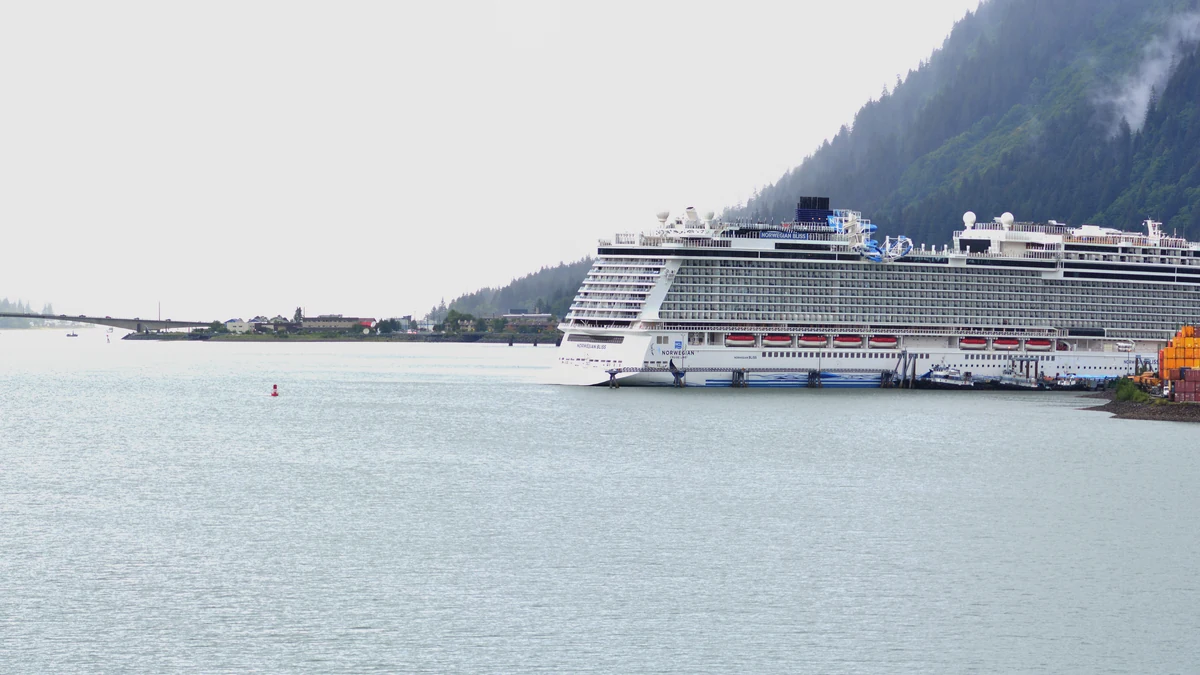
Juneau is one of Alaska’s most rewarding cruise calls because ships berth close to a compact historic centre while glaciers, whales, rainforest and the Juneau Icefield sit beyond it. That range creates the main planning problem: Mendenhall Glacier, whale watching, flightseeing and the Goldbelt Tram are not small interchangeable stops. Choose one major experience and let downtown provide the flexible remainder.
The exact berth changes only the first and last part of the day, but those minutes matter. Downtown docks place passengers beside shops and the tram; the more distant AJ Dock normally uses a shuttle into the centre. Excursion transport is heavily concentrated around ship schedules, and Mendenhall capacity has become a genuine constraint. Reserve the experience that matters, check the weather, and do not build an independent return around the last possible bus or taxi.
Juneau Cruise Port at a Glance
| Port name | Juneau, Alaska |
|---|---|
| Main arrival area | Downtown cruise docks or AJ Dock |
| Cruise region | Alaska / North America / Canada |
| Country / Territory | USA |
| Currency | US dollar (USD) |
| Main languages | English; Tlingit heritage is central to the region |
| Port role | Day call |
| Disembarkation | Docked for most calls; occasional tendering is possible |
| Walkability | Excellent from downtown docks; shuttle-assisted from AJ Dock |
| Shuttle required | Usually provided from AJ Dock; not needed from central docks |
| Main transport | Walking, excursion coaches, taxis, local shuttles, boats, floatplanes and Capital Transit |
| Best first-time plan | Choose Mendenhall Glacier or whale watching, then explore downtown |
| Main caution | Transport capacity and weather can change glacier, boat and flight plans |
Your Dock Affects the First Twenty Minutes
Juneau’s central cruise berths line the downtown waterfront, placing passengers close to South Franklin Street, the visitor centre and Goldbelt Tram. AJ Dock lies farther south and is less convenient on foot; Travel Juneau notes that a shuttle normally connects it with the main visitor area. Ships can also use other arrangements when berths are busy, so read the onboard notice rather than assuming the view from the balcony identifies the exit route.
Save the dock name and shuttle drop before leaving. Returning to “the cruise port” is not precise enough when several large ships are present. The City and Borough of Juneau harbour facilities page gives official waterfront context, while Travel Juneau’s cruise calendar helps identify the day’s ship load. Crowding affects taxis, attraction queues and pavements even when your own vessel arrives early.
Choose One Major Juneau Experience
Mendenhall Glacier, whale watching and flightseeing each justify a substantial block of the day. A glacier-and-whale combination can work when sold as one protected excursion, but independently linking separate operators introduces transfer and delay risk. The tram and downtown are flexible because they lie close to the ships; they should fill available time rather than dictate a fragile chain of bookings.
Make the choice according to what cannot be repeated elsewhere on the itinerary. If the cruise already includes Glacier Bay and several whale-rich ports, a guided Tlingit or history route may add more variety. If Juneau is the only realistic glacier access, prioritise Mendenhall. If a helicopter landing is a lifetime ambition, book it but keep an emotionally acceptable weather fallback. Alaska rewards contingency planning, not certainty theatre.
Mendenhall Glacier Is Close, but Access Is Not Frictionless
Mendenhall Glacier Visitor Center lies about thirteen miles from downtown. The road journey is normally manageable, yet commercial shuttle capacity, permits and peak demand can constrain independent visits. The US Forest Service maintains current transport guidance for the recreation area. Read it shortly before sailing because old blogs may describe services that no longer operate in the same form.
Ship excursions and authorised local shuttles offer the simplest round trip. Taxis can work when both directions are arranged, but drivers may not wait and on-demand availability at the glacier is not guaranteed. A rental car is rarely necessary for this single trip. Whatever the method, agree the return time before walking away from the vehicle and allow for visitor-centre queues, road congestion and the possibility that the glacier is partly hidden by cloud.
Public Bus to Mendenhall Is a Budget Option, Not a Direct Shuttle
Capital Transit does not take passengers to the visitor-centre entrance. Its official Mendenhall guidance explains that the nearest stop leaves a walk of roughly 1.5 miles each way, and the bus journey can approach an hour depending on route and traffic. That makes the true commitment much larger than the fare suggests.
This option suits fit passengers on a long call who understand the timetable and are willing to walk more than three additional miles before any glacier trail. It is not suitable for a short visit, poor weather or anyone planning to catch the final possible service. Start back early and retain money for a taxi contingency, while recognising that a taxi may also be scarce at peak time. CruisePing would not recommend the public bus as the default first-time glacier method.
What to Do at Mendenhall Glacier
The visitor-centre area provides viewpoints, interpretation and several trails. Photo Point offers a relatively short route to a classic view. Nugget Falls is a longer, generally straightforward walk that brings visitors closer to the waterfall and lake, but it consumes a meaningful part of a brief shuttle stop. Steep or extended trails belong to a longer independent visit, not a standard excursion window.
Ask a shuttle operator exactly how long remains on site after driving and loading. An advertised two-hour excursion does not mean two hours at the glacier. Check Forest Service alerts for trail closure, bear activity and visitor-centre hours. The glacier has retreated and its appearance changes; do not compare the day with old photographs and assume the driver has taken you to the wrong viewpoint.
Whale Watching Usually Departs from Auke Bay
Many whale-watching trips use harbours around Auke Bay, west of downtown and near the Mendenhall area. Operators normally include coach or van transport from the cruise zone, which makes the complete excursion longer than the boat ride. Ask how much time is spent on the water, the vessel size, indoor seating, viewing-deck access and whether the trip includes a glacier stop.
Humpback whales feed in Southeast Alaska during the cruise season, but particular behaviours are not guaranteed. A responsible captain observes distance rules and avoids crowding. Dress more warmly than the downtown forecast suggests and carry a waterproof layer. Passengers prone to motion sickness should take their usual precautions before boarding. Binoculars help, although whales may surface close enough that simply watching the water is more rewarding than constant photography.
Glacier and Whale Combination Tours
A combined excursion can be efficient because the operator controls the transfer between Mendenhall and Auke Bay. It is strongest when both components receive useful time and the company builds margin into the return. Read the detail: some “glacier” components are a short viewpoint stop, while some “whale” components count harbour travel as wildlife time.
Choose a combination when breadth matters more than long trails or a small-boat wildlife experience. Do not independently book a glacier shuttle ending close to a separate whale check-in unless the second operator confirms the connection. If the first vehicle is delayed, neither the ship nor the whale boat has to wait. One integrated booking removes that handoff risk.
Goldbelt Tram Is the Best Flexible Major Attraction
The Goldbelt Tram rises from the downtown waterfront to Mount Roberts, making it easy to attempt when the summit is visible and abandon when cloud closes in. The official tram website publishes current tickets, operating status and facilities. Queues can become long when several ships are in port, especially after morning excursions return.
At the top, viewpoints, interpretive spaces and trails offer different levels of activity. Conditions are cooler and wetter than at sea level, and paths can be muddy. Do not leave the ride until the final possible hour: a queue or operating pause can remove the return buffer. Conversely, do not pre-commit the whole morning when the mountain is inside cloud. Its location beside downtown is what makes the tram valuable.
Downtown Juneau Is a Real Port Day, Not Filler
South Franklin Street is heavily shaped by cruise tourism, but a few blocks beyond the jewellery shops the city’s political, mining and community history becomes clearer. Walk towards the Alaska State Capitol, St Nicholas Russian Orthodox Church, local museums and public art. The compact centre works well in rain and gives passengers control of the clock.
The Alaska State Museum offers a deeper account of Alaska Native cultures, state history, art and natural landscapes. Check opening hours before the call. A focused museum-and-city route may provide more substance than a low-visibility mountain excursion, especially for repeat Alaska visitors. Juneau’s steep hillside streets can become tiring, so plan the uphill elements early and return downhill towards the ship.
Tlingit History Should Not Be Reduced to Souvenirs
Juneau stands in Lingít Aaní, the homeland of the Tlingit people. Totem poles, art and place names around the waterfront are connected to living clans and histories. Use local interpretation, museum displays and Native-led experiences to understand them rather than treating every carving as interchangeable decoration. Ask before photographing people or cultural performances.
A cultural tour can be a strong alternative to another scenic coach trip, particularly when weather limits flightseeing. Look for clear information about who leads the experience and where the proceeds go. When shopping, favour named artists and documented work. Avoid bargaining over handmade pieces or purchasing items that imitate restricted cultural designs without attribution.
Flightseeing Offers Scale but Carries Weather Risk
Helicopter and floatplane flights reveal the Juneau Icefield, glaciers and coastal mountains at a scale impossible from the road. Some excursions add a glacier landing, dog-sled camp or remote lodge. They are expensive, capacity-limited and dependent on visibility, wind and operational judgement. Cancellation is a normal safety outcome rather than evidence that the operator has failed.
Book early and understand the weight policy, footwear, mobility requirements and refund process. Keep the rest of the day flexible so a delayed decision does not destroy another booking. Passengers using essential medication should carry it. If the flight is cancelled, move quickly to a backup such as the museum, tram when open, downtown walk or a locally available coach tour; thousands of passengers may be seeking the same replacement excursion.
Dog Sledding and Remote Excursions
Glacier dog-sled experiences usually depend on helicopter access and share the same weather vulnerability. Ground-based summer dog camps provide a different experience and may be reached by road. Read descriptions carefully so that “dog sledding” is not confused with a wheeled cart demonstration or a flight-only scenic package. Each can be enjoyable, but they are not equivalent.
Remote fishing, kayaking and lodge excursions also need clear duration and return protection. Ask how far the activity lies from the dock and whether the operator is contracted through the ship. Juneau’s surrounding wilderness is the attraction, but it also removes easy alternatives when a vehicle or boat is late. Independent bookings should include direct emergency contact and a missed-port policy.
Best Things to Do from Juneau Cruise Port
Mendenhall Glacier
Best for: First-time visitors wanting an accessible glacier landscape
Plan: Reserve authorised round-trip transport and choose trails that fit the stay
Watch: Transport capacity, cloud and insufficient time at the site
Whale watching
Best for: Wildlife-focused passengers
Plan: Book a boat with included Auke Bay transfers
Watch: Cold, motion and wildlife not being guaranteed
Goldbelt Tram
Best for: A flexible panorama and short trails
Plan: Ride when the summit is clear and queues are manageable
Watch: Cloud, queues and cooler mountain weather
Downtown and Alaska State Museum
Best for: History, culture and poor-weather reliability
Plan: Walk beyond the cruise shops and check museum opening
Watch: Steep streets and weekend hours
Flightseeing
Best for: A high-cost, high-impact icefield view
Plan: Book early but keep a strong cancellation fallback
Watch: Weather, weight rules and mobility
Glacier-and-whale combination
Best for: Visitors wanting breadth in a long call
Plan: Use one integrated operator
Watch: Each component may be shorter than expected
CruisePing Recommended Port Day
For a first visit, CruisePing would reserve an early Mendenhall shuttle or small-group excursion with enough on-site time for Photo Point and, when the schedule allows, Nugget Falls. Return downtown by early afternoon, check the mountain and ride the tram only if visibility and queues are good. Otherwise visit the Alaska State Museum and walk the historic centre. This gives one protected major experience and a weather-responsive second half.
Wildlife enthusiasts should substitute a morning whale trip, ideally with transport included, then keep the tram and downtown as the flexible finish. A combined glacier-and-whale tour is sensible when it is one booking and the call is long. Do not independently chain Mendenhall, a separate whale operator and a late tram ride. Juneau offers enough quality that one missed item does not make the day incomplete.
A Juneau Plan by Call Length
Six hours or less
Choose one protected excursion or remain downtown. A short Mendenhall shuttle can work when booked, but public-bus access is too slow. The tram is ideal only when cloud and queues cooperate. Finish near the dock rather than travelling to Auke Bay late.
Seven to nine hours
This supports Mendenhall plus downtown or whale watching plus downtown. A single integrated glacier-and-whale excursion may also fit. Use the extra time for depth and margin, not a third major booking.
Ten hours or more
Long calls can support a substantial flightseeing, fishing or remote-lodge experience. Weather still governs. Keep a backup and check whether an evening departure means shops, museums or local buses close before the ship sails.
DIY or Organised
Downtown and the tram are naturally independent. Mendenhall can be independent with an authorised shuttle, contracted taxi or—on a long call—the public bus plus walking. Whale watching, flightseeing and remote excursions require an operator. The choice is less about confidence than transport capacity: a booked seat prevents the call being spent searching for a ride.
Ship excursions provide return protection and easy meeting points. Independent local tours may offer smaller groups and longer stops, but confirm that the company monitors ship changes and has a missed-port policy. Avoid relying on spontaneous taxi availability for the return from Mendenhall or Auke Bay. Keep the dock name, ship contact and all-aboard time saved offline.
Mobility and Accessibility
Downtown docks are highly convenient, though gangway slope changes with tide. AJ Dock shuttle vehicles may have different accessibility capacity, so confirm with the cruise line. Central Juneau includes steep streets, and the tram summit has weather-affected paths. The waterfront and lower downtown can still provide an accessible experience with views, shops and visitor services.
Mendenhall’s visitor-centre area has accessible viewpoints, but specific trails and shuttle vehicles vary. Whale boats may use ramps or steps, while small aircraft have strict boarding limits. Ask for measurements and procedures rather than accepting “easy”. Rain, cold and long standing periods can affect passengers whose mobility is normally good, so schedule seated indoor time.
Food, Shopping and the Final Hour
Juneau is known for seafood, casual pubs and Alaska products, but cruise-day queues can be substantial. Eat before the excursion rush returns or choose a venue away from the busiest South Franklin block. Opening hours vary at the edges of the season. Keep the final meal close to the correct dock and tell staff if time is limited rather than assuming every order will be served quickly.
Look for locally made art, books and food with clear origin. Much of the immediate waterfront retail is designed for cruise volume; walking a few blocks broadens the choice. Purchases from Alaska Native artists should identify the artist and material. Leave enough room in the final hour to collect goods, use the shuttle if required and pass port security without running.
Return-Time Management
Juneau’s danger is not becoming geographically lost; it is underestimating excursion loading and limited transport. Mendenhall shuttles may queue, whale boats must unload and buses can be delayed. Begin the independent return while alternatives still exist. A ride-hailing app showing nearby cars does not guarantee one will accept the trip during a five-ship afternoon.
At AJ Dock, include the transfer from the central shuttle stop to the gangway. At downtown berths, verify which ship is yours before joining a security line. Ship tours will normally coordinate a delayed return, but may shorten the excursion. Independent passengers should aim to be back in the cruise zone well before the published all-aboard and use the final margin downtown.
Weather & Best Time to Visit Juneau
Use the National Weather Service Juneau forecast close to arrival. Juneau’s maritime climate is cool and wet, with conditions changing between downtown, Auke Bay, Mendenhall and the mountains. Low cloud can cancel flights and hide Mount Roberts while leaving a boat or museum day perfectly viable. Rain rarely needs to cancel the whole call.
May and June often bring long daylight and somewhat drier spells; late summer and September can be wetter. Temperatures on the water and icefield are lower than downtown readings. Wear layers, a waterproof shell and shoes with grip. Do not depend on an umbrella in wind. The table gives rounded cruise-season ranges rather than a forecast for a specific sailing.
| Month / season | Typical high | Typical low | Rain / conditions |
|---|---|---|---|
| May | 14°C | 5°C | Cool with long daylight; mixed rain and clearer spells |
| June–July | 18°C | 9°C | Mildest period, still showery with mountain cloud |
| August | 17°C | 9°C | Cool, damp and busy with wildlife activity |
| September | 13°C | 6°C | Wetter, darker and increasingly changeable |
Practical Questions for a Juneau Cruise Call
Can I walk into Juneau from the ship?
Yes from the central docks. AJ Dock passengers normally use the provided shuttle to the main cruise area; follow ship instructions for the current arrangement.
Can I take a public bus to Mendenhall Glacier?
Yes, but it is not direct. Capital Transit leaves a walk of roughly 1.5 miles each way and the bus journey can be lengthy, so it suits long calls and fit passengers.
Should I book Mendenhall transport in advance?
Yes when the glacier is a priority. Commercial capacity can sell out and a taxi return should not be improvised at the last minute.
Are whale sightings guaranteed?
No. Humpbacks commonly feed in the region during the season, but location and behaviour vary. Choose an ethical operator and value the full marine trip.
What if my helicopter flight is cancelled?
Use downtown, the Alaska State Museum, Mendenhall transport if available or the tram when clear. Do not make a weather-dependent flight the only acceptable version of Juneau.
Is the Goldbelt Tram worth pre-booking?
Its great advantage is flexibility. Check visibility and queues on the day; current ticket rules belong on the official tram website.
Useful Official Links
- City and Borough of Juneau Harbors
- Juneau harbour facilities
- Travel Juneau
- Juneau cruise ship calendar
- US Forest Service Mendenhall transport guidance
- Capital Transit Mendenhall guidance
- Goldbelt Tram
- Alaska State Museum
- National Weather Service Juneau forecast
CruisePing Port Verdict
Juneau is easy at the gangway and complex beyond it. Downtown can be explored without a plan, but Mendenhall, whales and flights depend on finite transport and weather. Reserve one major experience, understand where it starts and let the compact city provide the adaptable part of the call.
The strongest first day is rarely Mendenhall, whales, flightseeing and the tram together. It is one protected natural experience followed by a responsive afternoon. Check the dock, carry waterproof layers and return while alternatives still exist. Juneau’s range is a gift only when the itinerary leaves room to use it.
Ready to browse our article library?
Explore more ports in the Alaska / North America / Canada region, narrow the library to USA cruise ports, or return to the main CruisePing article library.