
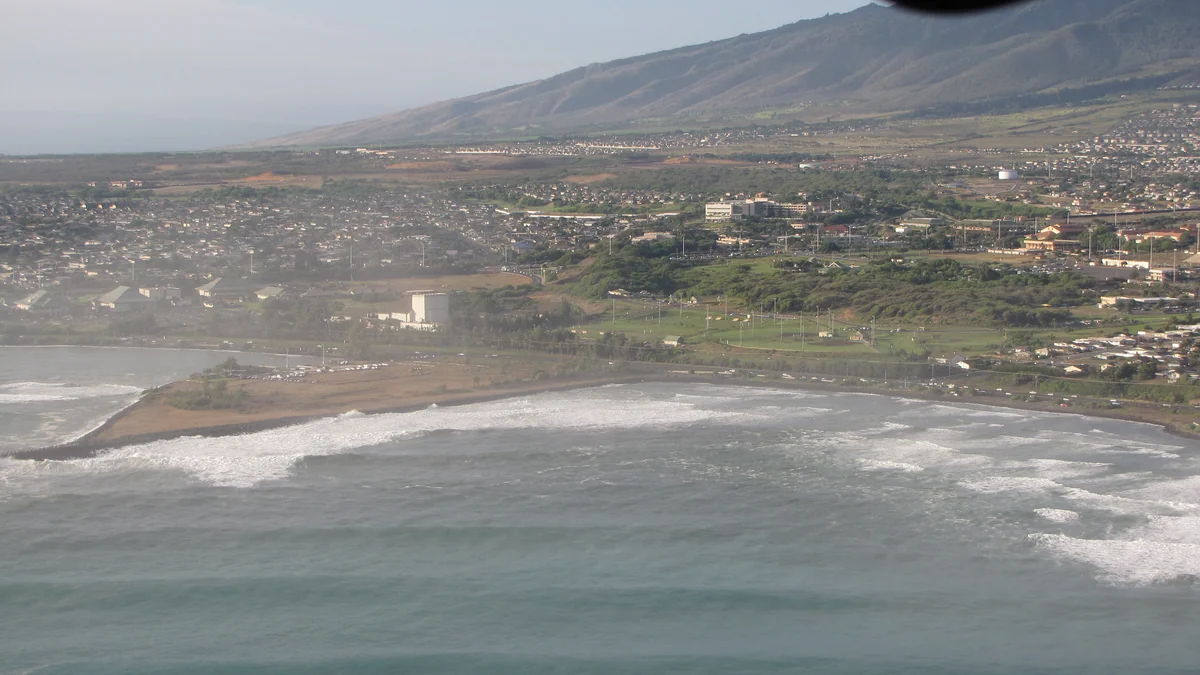
Kahului cruise port is Maui’s practical cruise gateway rather than its prettiest waterfront. Ships normally dock in a working commercial harbour close to the island’s main road network, airport and service centre. That location is useful: Haleakalā, Upcountry Maui, ʻĪao Valley, the north shore and the opening stretch of the Road to Hāna all begin more naturally here than from the resort districts. The trade-off is that the gangway does not place you in a finished tourist quarter.
A good Kahului day starts with one route, not a wish list. Haleakalā is a high-altitude commitment; Hāna is a long road journey; West and South Maui beaches require cross-island travel; and a central Maui day can combine ʻĪao, Wailuku, Pāʻia or the Maui Ocean Center with much less return risk. Confirm transport before arrival and use the Hawaiʻi Department of Transportation passenger schedule to check the current call rather than relying on an old berth description.
Kahului Cruise Port at a Glance
| Port name | Kahului (Maui), Hawaii |
|---|---|
| Main arrival area | Kahului Harbor commercial passenger berth |
| Cruise region | Alaska / North America / Canada |
| Country / Territory | USA |
| Currency | US dollar (USD) |
| Languages | English and Hawaiian |
| Port role | Day call and occasional overnight call |
| Disembarkation | Docked |
| Walkability | Low from the harbour; limited practical interest nearby |
| Shuttle required | Usually helpful for town, shopping or arranged transport collection |
| Main transport | Ship excursions, pre-booked tours, rental cars, taxis, ride-hailing and Maui Bus |
| Best first-time plan | Choose Haleakalā and Upcountry, a carefully timed Hāna route, or a lower-risk central Maui circuit |
| Main caution | Do not combine two island-scale routes or underestimate Maui traffic and mountain weather |
Kahului Harbor Is Functional, Not a Walk-Off Attraction
Kahului Harbor handles cargo as well as cruise passengers, so the immediate environment is controlled, vehicle-oriented and subject to operational instructions. Follow the ship’s signs for the authorised pedestrian exit, excursion coaches, taxis and rental-car collections. Even when a shopping shuttle is offered, it should be treated as transport to a practical hub rather than the start of a scenic walking trail. The harbour’s advantage is road access, not atmosphere.
Decide before breakfast whether the first move is a tour coach, rental vehicle, taxi or local bus. A late start is particularly damaging for Haleakalā and Hāna because the first hour determines how much margin remains. Passengers planning an independent vehicle should confirm the collection location and opening time; not every rental office provides unrestricted pier service, and a queue at an off-site depot can quietly consume the best part of the morning.
Make the Island-Scale Choice Before You Leave the Ship
Maui looks compact on a map, but volcanic slopes, narrow coastal roads and busy junctions turn distance into time. The strongest choices are: Haleakalā with selected Upcountry stops; a professionally managed Road to Hāna day; a central circuit through ʻĪao Valley, Wailuku and Pāʻia; or a beach and coastal route towards South or West Maui. Each can fill a cruise call when stops, parking and return traffic are counted honestly.
The weakest plan is Haleakalā plus Hāna, or Hāna plus a West Maui beach, simply because the attractions are famous. That creates repeated backtracking through central Maui and leaves the ship protected only by an optimistic timetable. Choose the landscape you most want to understand. A focused summit day or a well-paced rainforest road is more memorable than a vehicle window tour of three regions.
Haleakalā Is the Clearest Major Excursion
The summit district of Haleakalā National Park rises above 3,000 metres and can feel like another island. Crater viewpoints, cinder landscapes, native plants and cloud movement provide the experience; a visible sunrise is not required. From Kahului, the climb normally takes well over an hour before stops, traffic or weather are added. A ship excursion or pre-booked small-group tour removes the pressure of mountain driving and parking.
Independent drivers need fuel, warm layers and a realistic turnaround point. Temperature at the summit can be dramatically lower than at the harbour, and cloud can close views within minutes. Sunrise reservations apply to private vehicles entering during the controlled early period, but most cruise calls arrive too late for sunrise anyway. Do not spend the day chasing a photograph that belonged to a different timetable; visit for the volcanic landscape and let visibility be a bonus.
Upcountry Maui Adds Depth Without Creating a Second Expedition
Makawao, Kula and the agricultural slopes below Haleakalā make a natural companion to a summit visit. They offer cafés, galleries, farms, broad island views and a cooler sense of Maui away from the resort strip. The route works because it follows the mountain journey rather than sending you to another coast. A guide can select stops that are genuinely open on the call date instead of following an old online circuit.
Keep the number of stops modest. A summit visit, one Upcountry town and a farm or garden can already be a full day once driving and lunch are included. If cloud makes the upper mountain unrewarding, an adaptable tour can spend longer in Kula or Makawao. That flexibility is one reason a local guide may be worth more than a tightly programmed itinerary with five named photo stops.
The Road to Hāna Needs the Whole Day
The official Hāna guidance explains that the route begins in Kahului and covers only about 52 miles, yet the drive can take several hours because of narrow bridges, bends and stopping traffic. The official Hāna visitor guide encourages visitors to use permitted professional guides. For cruise passengers, that is sensible: the driver manages the road, knows which access points are lawful and carries responsibility for a disciplined return.
A cruise version of Hāna is not the same as a land-holiday road trip. You may need to turn back before Hāna town or omit distant stops to protect the ship. Avoid any operator promising every waterfall, black-sand beach and coastal viewpoint in one ordinary call. The journey itself is the attraction. Several good stops, safe road behaviour and a large return margin are better than reaching a famous signboard and racing back.
Do Not Treat Waiʻānapanapa as a Casual Add-On
Waiʻānapanapa State Park is one of the most photographed stops on the Hāna coast, but non-resident entry and parking can require advance reservations. A reservation time must fit the road, not merely the ship’s port hours. Missing the slot because traffic moved slowly does not create extra time later. Check current rules directly and confirm whether a commercial tour includes authorised access.
If the park is unavailable, the day is not ruined. North-shore scenery, roadside waterfalls, tropical vegetation and Hāna’s wider landscape still justify the route. Building the excursion around one timed car park makes the whole day brittle. A strong operator has alternatives and will not trespass, stop dangerously or encourage passengers to enter closed land for the sake of reproducing a social-media image.
ʻĪao Valley Is the Best Shorter Nature Commitment
ʻĪao Valley State Monument lies much closer to Kahului than Haleakalā or Hāna and gives a compact introduction to Maui’s steep green interior. Non-residents should check the current reservation system through Hawaiʻi State Parks. The paved viewpoint route is relatively short, but humidity, steps and wet surfaces still matter. Rain can intensify quickly in the valley even when the harbour is bright.
Pair ʻĪao with Wailuku, the Maui Tropical Plantation area, Pāʻia or another central stop rather than trying to bolt it onto a summit or full Hāna drive. The shorter transfer makes it particularly useful for a late arrival, an early departure or passengers who want real scenery without spending most of the call in a vehicle. Protect the booked entry time and leave flexibility around it.
Pāʻia and the North Shore Work as a Flexible Half-Day
Pāʻia is a small north-shore town with cafés, independent shops and access to a breezier, less resort-shaped part of Maui. It sits near the beginning of the Hāna road, which makes it a useful destination in its own right or the final stop on a shortened rainforest route. Parking can be awkward when the island is busy, so a driver who can drop and collect passengers has an advantage.
Nearby beaches may be visually impressive but are not automatically safe swimming stops. Wind, shore break and currents vary, and some areas are better for watching experienced surfers or windsurfers than entering the water. Use lifeguarded beaches where possible and follow signs. A north-shore afternoon can be excellent without swimming: lunch, a town walk, coastal views and an early return create a relaxed counterpoint to the industrial harbour.
Maui Ocean Center Is a Strong Weather-Proof Choice
The Maui Ocean Center at Māʻalaea interprets Hawaiian marine life, reef systems and local conservation in a setting that remains useful when mountain cloud or heavy showers weaken an outdoor plan. It is not beside the ship, but the transfer is much shorter and more predictable than a trip to Hāna. Timed admission, opening hours and any special presentations should be checked on the official site.
The aquarium pairs naturally with a South Maui viewpoint, a short coastal stop or ʻĪao Valley, depending on traffic and weather. It is also a sensible choice for families and passengers who cannot manage rough paths or high altitude. Do not dismiss it as a fallback: on a poor-weather day it may provide more understanding of Maui than several misted-over roadside viewpoints.
Beach Choices Require More Transport Than the Map Suggests
Kahului is not a beach-resort port. The better-known swimming areas lie towards South Maui, West Maui or the north shore, each with a different road and sea state. A taxi can deliver you, but the return must be arranged rather than assumed. Ride-hailing supply varies, and a resort-area pickup during afternoon traffic can take longer than the outward journey.
For a beach-led day, choose one coast and a lifeguarded or well-managed location. Carry only what you can secure, respect private resort areas and check ocean conditions. South Maui generally offers a more straightforward beach circuit from Kahului than going deep into West Maui, but traffic still builds. A ship excursion or round-trip driver is valuable when the beach is far from the harbour.
Rental Cars Give Freedom but Add a Collection Clock
A rental car is useful for Haleakalā, Upcountry or a carefully limited central route. It is less comfortable when the call is short, the office is off-site or the final return depends on refuelling and a shuttle. Reserve early, confirm the exact depot and ask whether pier collection is permitted on your date. Do not assume that an airport booking can be collected at the harbour without a transfer.
Build the route around the car’s real hand-back time, not the ship’s all-aboard time. Returning the vehicle, documenting fuel, waiting for transport and clearing harbour security all sit between the last attraction and the gangway. Download maps before leaving the port and keep the route simple. The freedom of a car disappears if every stop is timed to the minute.
Maui Bus Is Useful for Modest Plans, Not Island Expeditions
The Maui Bus schedules can support lower-cost travel around central Maui and selected coastal corridors. Routes, frequencies and transfer points should be checked against the exact day of the week. A bus can be sensible for shopping, Wailuku or a flexible local outing; it is not a direct cruise excursion to Haleakalā or a dependable way to reproduce the Road to Hāna.
Public transport works best when missing one service would be inconvenient rather than dangerous to the ship. Note the stop used for the return before travelling outward and keep a taxi alternative. Passengers with mobility aids should verify accessibility and space, while anyone carrying beach equipment should avoid blocking ordinary local journeys. The system serves residents first, not a cruise timetable.
Traffic Is the Hidden Maui Attraction Limit
Maui’s main roads funnel traffic through a small number of junctions. An incident, roadworks, school traffic or a queue near a popular beach can change a journey that looked comfortable in the morning. Hāna Highway adds narrow bridges and weather; Haleakalā adds slow mountain driving; West Maui adds a long coastal return. The schedule must include uncertainty, not just distance.
Set a hard final-departure time from the farthest point and tell the driver before the tour begins. Independent passengers should turn back earlier than a ship excursion because the ship is not obliged to wait. On an overnight call, use the first day for the longer route and the second for a nearby plan; the presence of a second day is not a reason to use both days without margins.
CruisePing Recommended Port Day
For a first visit with a full call, choose Haleakalā and Upcountry Maui with a pre-booked operator. Leave the harbour promptly, spend meaningful time at two or three summit viewpoints, then descend through Kula or Makawao for lunch and one selected local stop. The route shows Maui’s volcanic scale and human landscape without sending you across the island twice.
When high-level cloud is forecast or mountain travel does not appeal, use ʻĪao Valley, Wailuku or the Maui Ocean Center, then finish in Pāʻia or at a carefully selected beach. This lower-risk circuit remains recognisably Maui and can be shortened if traffic changes. CruisePing recommends the Road to Hāna only with a long call, a permitted professional operator and an explicit turnaround time.
A Short Call Needs a Central Maui Plan
With six hours or less ashore, avoid Hāna and be cautious about the summit unless the ship excursion is designed for the schedule. ʻĪao Valley, Wailuku, Pāʻia, the aquarium or a nearby coastal stop can be combined without making the whole day depend on one long road. Start with the timed or weather-sensitive element and move closer to the harbour as the afternoon develops.
A short call can still feel substantial if it has one landscape, one town and time for lunch. What makes it disappointing is spending the first hour collecting a car and the last two watching traffic. Choose transport that is ready at the port, or accept a smaller radius. The working harbour is easy to return to when the route has been designed around it.
Mobility and Comfort Need Route-Specific Planning
The gangway and coach areas may involve industrial surfaces, heat and steps depending on the berth. Haleakalā adds altitude, cold and uneven viewpoints; ʻĪao can be wet and stepped; Hāna adds repeated vehicle entry and exit. Ask the operator about walking distances, toilet stops and the height of the vehicle rather than relying on a generic “easy” label.
Passengers sensitive to altitude can enjoy Upcountry without going to the summit. Those who dislike winding roads should not choose Hāna simply because it is famous. The aquarium and central towns offer a gentler day, while a private driver can reduce unnecessary stops. Carry water and a layer even in tropical heat: Maui can move from sun to wind and rain within one route.
Food, Water and Small Practical Choices
Kahului and central Maui have plentiful shops and cafés, but remote routes do not guarantee a convenient lunch at the moment you need it. Take water from the ship and ask whether a tour includes food. On Hāna Highway, roadside stalls may be seasonal or cash-oriented; on Haleakalā, summit facilities are limited and the cold can make an early snack more important than expected.
Use reef-conscious sun protection, secure valuables and keep footwear suitable for wet ground. Card payment is common, but a small amount of cash helps with independent stops. Respect closures and private land. Maui’s most attractive roadside places are not all public access points, and stopping on a narrow bridge or driveway creates risk for residents as well as visitors.
Weather & Best Time to Visit Kahului
Check the National Weather Service forecast for Kahului close to arrival, then look separately at the mountain or Hāna corridor if that is your route. Kahului is generally warm and relatively dry, while the windward coast is wetter and Haleakalā can be cold, windy and cloud-covered. A single harbour icon cannot describe an island-scale excursion.
Winter brings a greater chance of showers and larger north-shore surf; summer is generally drier and hotter. Trade winds can strengthen during the day. Carry a light waterproof, water, sun protection and a warm summit layer. If the mountain is obscured, do not assume conditions will remain poor all day—but do not sacrifice the return margin waiting indefinitely for a clearing.
| Month / season | Typical high | Typical low | Rain / conditions |
|---|---|---|---|
| January–March | 27°C | 18°C | Warm at sea level; wetter spells and large north-shore surf possible |
| April–June | 29°C | 20°C | Often drier with strengthening trade winds |
| July–September | 31°C | 22°C | Hot and generally dry in Kahului; summit remains cool |
| October–December | 29°C | 20°C | Warm with increasing showers and variable mountain cloud |
Practical Questions for a Kahului Cruise Call
Can I walk from the ship to the main Maui sights?
No. Kahului Harbor is a working port and the island’s major attractions require transport.
Can I do the Road to Hāna independently?
It is possible on a long call, but a permitted guided tour is usually the safer cruise choice because the road is slow and the return deadline is fixed.
Is Haleakalā too far from Kahului?
No, but it is a major half-day or full-day commitment. Allow for the long climb, weather, viewpoints and the descent.
Do I need a reservation for ʻĪao Valley?
Non-resident rules can require timed entry and parking. Check the current Hawaiʻi State Parks booking page.
Can Maui Bus take me to Haleakalā or Hāna?
Not as a practical cruise excursion. Use it for modest local journeys and confirm the return timetable.
What is the best bad-weather plan?
Maui Ocean Center, Wailuku and a flexible central circuit usually work better than chasing distant viewpoints in heavy cloud.
Useful Official Links for Kahului
Use these sources to confirm the ship call, road-scale choices, reservations and weather before committing to a Maui route.
- Hawaiʻi passenger cruise schedules
- Maui Bus schedules and information
- Haleakalā National Park
- ʻĪao Valley reservations
- Official Hāna visitor guidance
- Maui Ocean Center
- Official Maui visitor information
- National Weather Service Kahului forecast
CruisePing Port Verdict
Kahului is an excellent gateway when its industrial setting is treated honestly. The port gives efficient access to Maui’s summit, central valley, north shore and Hāna road, but none of those places begins at the gangway. A good day therefore depends less on walking appeal than on choosing transport and one coherent region before arrival.
Haleakalā with Upcountry is the strongest first-time plan for a full call. ʻĪao, Wailuku, Pāʻia and the aquarium form the better flexible alternative. Hāna is worthwhile only when the call, operator and turnaround point all support it. The avoidable mistake is trying to prove that Maui can be crossed in every direction before all-aboard.
Ready to browse our article library?
Explore more ports in the Alaska / North America / Canada region, narrow the library to USA cruise ports, or return to the main CruisePing article library.