
Kanazawa cruise port leads to one of Japan’s strongest compact cultural cities, but the ship does not dock inside the historic centre. The cruise terminal sits on the waterfront, while Kenrokuen, Kanazawa Castle, Omicho Market and the preserved districts require a shuttle, bus or taxi.
Once in the centre, the day becomes pleasantly manageable. The main planning choice is not whether there is enough to see, but which two or three areas deserve proper time. A focused city route is usually better than a long regional excursion on a first call.
Kanazawa Cruise Port at a Glance
| Port name | Kanazawa Cruise Port |
|---|---|
| Main arrival area | Kanazawa Port Cruise Terminal, roughly five kilometres from Kanazawa Station and the central sightseeing area |
| Cruise region | Asia |
| Country / Territory | Japan |
| Currency | Japanese yen (JPY) |
| Languages | Japanese; English signage and visitor information are common at major attractions |
| Port role | Cultural city gateway on Japan’s Sea of Japan coast, with access to gardens, historic districts and regional excursions |
| Disembarkation | Usually docked at Kanazawa Port Cruise Terminal; berth and shuttle details remain ship-specific |
| Walkability | Low from the port to the city; high within the central sightseeing districts after transfer |
| Shuttle required | Usually needed between the cruise terminal and Kanazawa Station or central city |
| Main transport | Ship shuttle, local buses, loop buses, taxis, private guides and organised coaches |
| Best first-time plan | Transfer into the city, visit Kenrokuen and Kanazawa Castle, then add one historic district or Omicho Market |
| Main caution | The port is not in the walkable historic centre, so the final shuttle or taxi return must remain part of the plan |
Weather & Best Time to Visit Kanazawa
Kanazawa has a wetter Sea of Japan climate than many first-time visitors expect. Spring and autumn are often comfortable, summer is hot and humid, and winter can be cold, wet or snowy. Rain is common enough that an umbrella and a flexible indoor stop belong in the plan in any season. Check the current forecast shortly before the call. Rain is possible in every season, summer can be hot and humid, and winter snow or strong Sea of Japan weather can affect roads and walking surfaces.
| Month / season | Typical high | Typical low | Rain / conditions |
|---|---|---|---|
| December–February | 8°C | 1°C | Cold, frequently wet, with snow and icy surfaces possible |
| March–May | 20°C | 10°C | Cool to mild at first, then pleasant; rain remains possible |
| June–September | 30°C | 22°C | Hot and humid, with heavy rain and occasional typhoon effects |
| October–November | 20°C | 11°C | Comfortable autumn conditions, becoming wetter and cooler later |
December to February
Wear waterproof footwear with grip and allow more time in Kenrokuen. Snow can make the garden especially beautiful while slowing roads and paths.
March to May
Spring suits a garden-and-district day, though blossom periods bring crowds. Carry a light waterproof layer and reserve the most popular visit early.
June to September
Heat and humidity make long walks tiring. Use buses between districts, drink water and keep museums or craft centres as midday breaks.
October and November
Autumn colour can increase crowds around Kenrokuen. Begin with the garden and castle, then move to a district or market closer to the return route.
Arriving at Kanazawa Cruise Port
The national cruise-port guide identifies Kanazawa as a major Sea of Japan cruise gateway. The modern terminal handles passengers efficiently, but the historic sights are several kilometres inland.
The official cruise-terminal information explains the passenger facility and local welcome. Follow the ship’s notice for shuttle arrangements, because the drop-off may be Kanazawa Station, a central parking area or another temporary point.
Photograph the last shuttle time and exact boarding place. Kanazawa Station is an important transport hub, but it is still a walk or bus ride from Kenrokuen and the castle.
Kenrokuen Garden
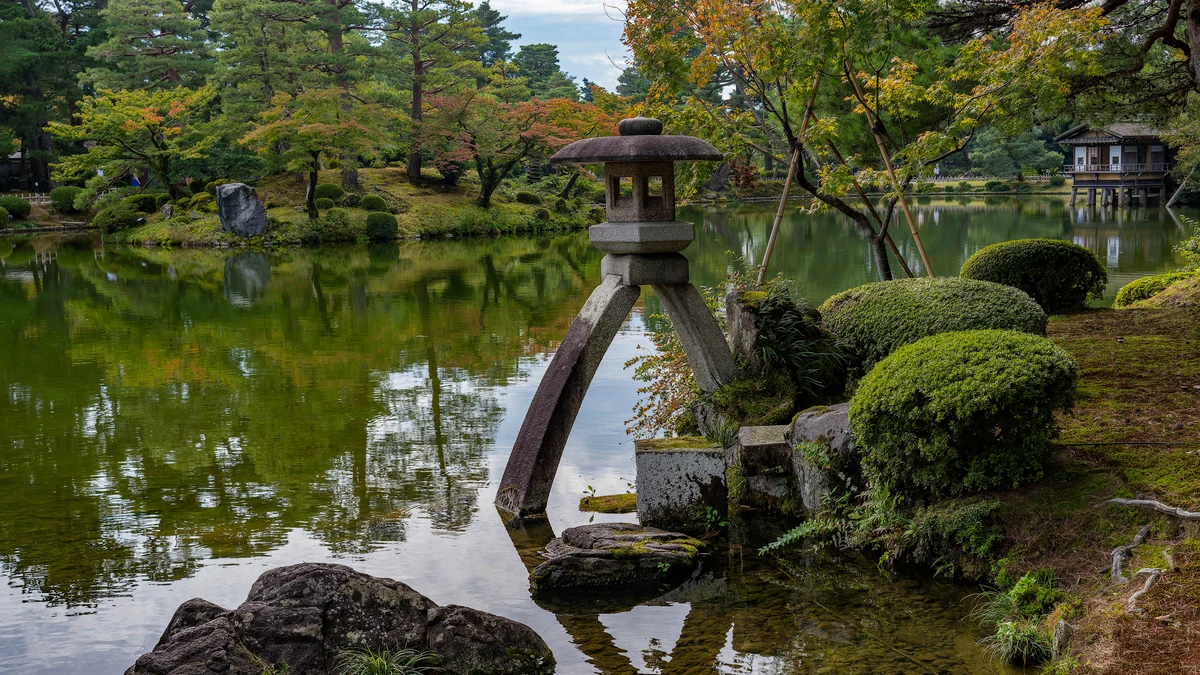
Kenrokuen is the city’s essential first-time attraction. Its ponds, bridges, pines, streams and carefully framed views reward an unhurried circuit rather than a quick photograph at the entrance.
Begin here early, before tour groups peak and before summer heat becomes uncomfortable. The garden includes slopes, gravel and steps, so choose the most suitable gate and route for the group rather than assuming the entire landscape is level.
Season changes the experience: blossom, fresh green, autumn colour and winter snow each create different highlights. Rain is not necessarily a reason to cancel, but wet stone and gravel require slower walking.
Kanazawa Castle Park
The castle grounds connect naturally with Kenrokuen across the road. Gates, reconstructed buildings, stone walls and open lawns provide a useful contrast to the detailed garden.
A first visit does not require every interior. Choose one building or gate complex, then keep time for a historic district. Interior routes can include shoe removal, stairs and polished floors, so check access needs before joining a queue.
The broad grounds are exposed in heat or rain. Use the shortest route between the garden and the next transport stop rather than circling the entire park solely to increase the attraction count.
Higashi Chaya District
The official Higashi Chaya guide describes the preserved teahouse district east of the Asano River. Wooden streets, craft shops and selected historic interiors make it the strongest cultural addition after the garden and castle.
Arrive before the busiest middle of the day or later after coach groups thin. The streets are compact, but popular cafés and gold-leaf shops can create queues. Choose one interior or tea stop instead of browsing every doorway.
Residential lanes remain part of a living neighbourhood. Keep voices low, respect no-photography signs and avoid blocking entrances for group photographs.
Nagamachi Samurai District
Nagamachi offers earthen walls, narrow lanes, canals and selected samurai residences. It is quieter in tone than Higashi Chaya and pairs well with the city centre or a craft-focused route.
Wet weather can make its lanes atmospheric, although some surfaces become slippery. The district is not a theme park: many properties remain private, so enter only clearly marked visitor sites.
Choose either Higashi Chaya or Nagamachi on a standard call unless the group moves efficiently. Seeing both briefly often produces more transport and less understanding.
Omicho Market and Lunch
Omicho Market is central, lively and well placed between the station and the main sights. Seafood, produce, prepared foods and small restaurants make it a useful lunch stop, but peak queues can be substantial.
Go early for browsing or eat slightly before the main lunch rush. A famous seafood bowl is not worth losing the final shuttle. Keep Japanese yen for small stalls even though many established businesses accept cards.
Follow food-import rules when returning to the ship. Fresh seafood and produce are better enjoyed locally than carried through customs or stored in a cabin.
21st Century Museum and Indoor Culture
The 21st Century Museum of Contemporary Art sits near Kenrokuen and can provide a strong modern contrast. Exhibitions, ticketed areas and the well-known swimming-pool installation have changing access arrangements, so check what is actually open.
Kanazawa also offers craft museums, the D.T. Suzuki Museum and cultural workshops. One carefully chosen indoor stop works better than treating museums as emergency fillers after the route is already overcommitted.
In summer heat or winter rain, an indoor visit creates a useful recovery period. Place it between outdoor districts rather than at the far end of the city.
Buses, Taxis and Moving Around Kanazawa
The official getting-around guide explains the loop buses and central network. Buses are useful between the station, Omicho, Kenrokuen and historic districts, but popular services can be crowded when ships and domestic visitors coincide.
Use an IC card or the current fare method stated locally, and board the correct direction. A taxi can save time for a small group moving from Higashi Chaya to the station or port shuttle, particularly in rain.
The official port access information should be checked with the ship’s shuttle notice. Do not assume a public city bus enters the cruise terminal or that the final ship shuttle waits for a delayed local service.
Regional Excursions: Shirakawa-go and Beyond
Shirakawa-go, the Noto Peninsula and mountain towns can appear in cruise excursion lists. They require substantial road time and should be treated as dedicated full-day choices, not additions to a Kanazawa city visit.
A ship excursion can make sense for a returning visitor whose priority is the wider region. Road conditions, winter weather and traffic must be built into the return, and the operator should have a clear alternative if the route is disrupted.
For a first call, Kanazawa itself offers more than enough. Spending the day on a coach while Kenrokuen and the historic districts remain unseen is a poor trade unless the regional destination is the explicit priority.
Payments, Language and Practical Services
Japanese yen remains useful for buses, market stalls and smaller shops. Cards and IC payments are increasingly common, but passengers should not assume every traditional business accepts them.
English signage is good at major sights and the station. Save attraction names in Japanese for taxis and keep the cruise-terminal address offline. Staff are helpful, yet a vague request for “the port” may not identify the correct passenger gate.
Public toilets are widely available in major attractions. Carry a small bag for rubbish because street bins can be limited, and avoid eating while walking through narrow residential districts.
Mobility and Accessibility
The terminal and central buses can be accessible, but Kenrokuen and castle routes include gravel, slopes and steps. Ask for the recommended accessible gate and identify which interiors require shoe removal or stairs.
A taxi-based route can connect Kenrokuen, Omicho and one historic district with less walking. Select a single district and allow seated breaks rather than using vehicle time to add more stops.
Rain, snow and summer humidity increase the effort required. Waterproof footwear, a compact umbrella and a slower route often matter more than the nominal distance.
Kanazawa Cruise Port Timing
Transfer into the centre early and begin with Kenrokuen. Continue through the castle, then choose Higashi Chaya, Nagamachi, Omicho or one museum according to the group’s interests.
Finish near Kanazawa Station or the confirmed shuttle point. If the ship shuttle is infrequent, arrive for the previous departure rather than treating the final one as the plan.
A shortened call should retain Kenrokuen and one adjoining area. Remove the second historic district or long lunch before compressing the return to the port.
CruisePing Recommended Kanazawa Port Day
Take the first practical shuttle or taxi into the centre and visit Kenrokuen, followed by a selected part of Kanazawa Castle. Continue to Higashi Chaya for one interior, craft stop or tea experience.
Use Omicho Market for lunch if queues are manageable, then return towards Kanazawa Station and the ship shuttle. In poor weather, substitute a museum without abandoning the city’s compact route.
Do not add Shirakawa-go to a first-time Kanazawa day. The city’s garden, castle, food and historic streets already form one of Japan’s most complete cruise-port experiences.
Common Kanazawa Cruise Port Mistakes
- Assuming the cruise terminal is inside the walkable historic centre.
- Missing the last shuttle because the group returned only to Kanazawa Station.
- Trying to visit Kenrokuen, both historic districts, several museums and Omicho in one short call.
- Ignoring rain because the season is described as pleasant.
- Using a famous restaurant queue as the final stop.
- Booking Shirakawa-go without accepting that it replaces the city.
- Assuming every bus or taxi destination called “port” reaches the cruise gate.
- Underestimating gravel, slopes and wet surfaces in the garden and castle.
A Realistic First-Time Kanazawa Schedule
Allow the first transfer from the port to absorb shuttle loading and city traffic. Begin at Kenrokuen, spend meaningful time in the garden and cross to a selected part of the castle rather than treating both as one photograph stop.
Choose Higashi Chaya or Nagamachi for the afternoon. Add Omicho for lunch only when the route and queues make sense. A museum can replace the second district in rain or summer heat without weakening the day.
Return towards Kanazawa Station or the confirmed shuttle point with a full departure in reserve. A final cup of tea near the transport hub is preferable to waiting for the last bus from a distant district.
Craft Culture and Meaningful Shopping
Kanazawa is known for gold leaf, lacquerware, ceramics, textiles and confectionery. A workshop or specialist shop can add context when it is selected deliberately, but a chain of commission stops will dilute the city’s stronger sights.
Ask whether a demonstration is included and how long it lasts. Gold-leaf decoration or a tea experience can work well after Higashi Chaya, while a substantial craft workshop requires its own reserved time.
Pack fragile ceramics carefully and check the ship’s rules for blades, alcohol and food. Traditional products are often expensive because of the labour involved; compare craftsmanship, not only souvenir size.
Kenrokuen Entrances and Route Choice
Different garden gates suit different arrivals. A taxi or coach can drop near a convenient entrance, while passengers coming from the castle or museum district may approach from another side. Choose the route that reduces backtracking.
Passengers with limited mobility should ask for the gentlest circuit and identify toilets and rest points. Seeing a carefully chosen section of Kenrokuen is better than attempting every path and arriving exhausted at the next attraction.
Crowds intensify around famous lantern and pond viewpoints. Move beyond the first cluster, then return only if time allows. The garden’s quieter paths often provide the most satisfying part of the visit.
Rain, Snow and Indoor Alternatives
Kanazawa’s rain is part of the destination rather than an exceptional event. Carry a compact umbrella, protect camera equipment and use shoes that can handle wet stone and gravel.
In sustained rain, pair Kenrokuen with one museum, market or craft centre. Do not spend the entire day moving between exposed districts simply because they were on the original list.
Winter snow can improve the garden’s appearance while slowing buses and walking. Allow more time for every transfer and avoid a regional road excursion when conditions are uncertain.
Kanazawa Station and the Final Port Connection
Kanazawa Station is a major landmark and often a shuttle hub, but the ship remains at the waterfront. Confirm the platform, bus bay or temporary cruise desk used for the return and do not assume every port-bound vehicle serves the terminal.
If the shuttle is crowded, be prepared to take a taxi, using the cruise-terminal address in Japanese. Keep enough yen for this fallback and show the ship name to the driver.
Passengers returning from Higashi Chaya or Omicho should calculate the journey to the shuttle point first, then the shuttle to the ship. Reaching the station at all-aboard time is already too late.
Food Beyond the Market
Omicho is the obvious food stop, but Kanazawa also offers sushi, seafood, seasonal kaiseki, curry and traditional sweets across the centre. A reservation can protect time for a group that wants a proper meal.
Choose lunch near the sightseeing route rather than crossing town for one restaurant. State the departure time before ordering and avoid a multi-course meal when the final shuttle is infrequent.
Tea and confectionery fit naturally with a historic district and usually require less time than a full restaurant. They can provide the cultural pause that a rushed attraction list lacks.
Kanazawa for Repeat Visitors
Returning passengers can focus on Nagamachi, a specialist museum, craft workshop or a neighbourhood beyond the standard loop. This produces a deeper city day without the road risk of a distant regional excursion.
A private guide can connect architecture, samurai history, tea culture and contemporary craft more effectively than adding more sites. Ask for a theme rather than an “all highlights” circuit.
The port transfer remains the same even for an experienced visitor. Confirm the berth and shuttle afresh, because confidence based on a previous call can be undermined by a different terminal arrangement.
A repeat visit also benefits from reserving one experience in advance. A timed museum, workshop or tea appointment gives the day a clear centre without recreating the full first-time circuit.
Kanazawa Cruise Port Checklist
- Confirm the berth and shuttle endpoint.
- Photograph the final shuttle time.
- Begin with Kenrokuen.
- Choose one historic district.
- Carry Japanese yen and a compact umbrella.
- Check garden and museum opening.
- Use buses or taxis between districts.
- Keep the last stop near the shuttle route.
- Treat regional excursions as full-day alternatives.
Useful Official Links
Use these official pages for the cruise terminal, port access, central transport, attractions and current weather.
- Kanazawa: Cruise Port Guide of Japan
- Kanazawa Port Cruise Terminal
- Kanazawa Port access information
- Official Visit Kanazawa website
- Official guide to getting around Kanazawa
- Official guide to Higashi Chaya
- Japan Meteorological Agency Kanazawa forecast
Kanazawa Cruise Port FAQ
Can I walk from Kanazawa cruise port to Kenrokuen?
It is several kilometres from the port. Use the ship shuttle, a taxi or arranged transport.
What should I see on a first visit?
Kenrokuen, part of Kanazawa Castle and one historic district make a strong core day.
Can I visit Shirakawa-go from Kanazawa?
Yes on a long, controlled excursion, but it replaces most or all of the city visit.
Is public transport easy?
Central loop buses are useful, although cruise-day crowds and the final port connection require planning.
What currency is used?
Japanese yen. Cards are common, but cash remains useful for buses and small businesses.
Is Kanazawa accessible?
A taxi-based route can work, but garden gravel, slopes, steps and wet or snowy surfaces require individual checks.
CruisePing Port Verdict
Kanazawa cruise port requires one transfer, then rewards passengers with a compact and exceptionally rich city. Kenrokuen, the castle and one historic district are enough to make the call memorable.
CruisePing would stay in Kanazawa on a first visit, use transport selectively and protect the final shuttle. The city deserves more than being treated as a departure point for somewhere else.
Ready to browse our article library?
Looking beyond Kanazawa? Explore more ports in the Asia region, or narrow it to Japan in particular. For cruise comparisons, planning shortcuts and value guides, head over to our main article archive.