
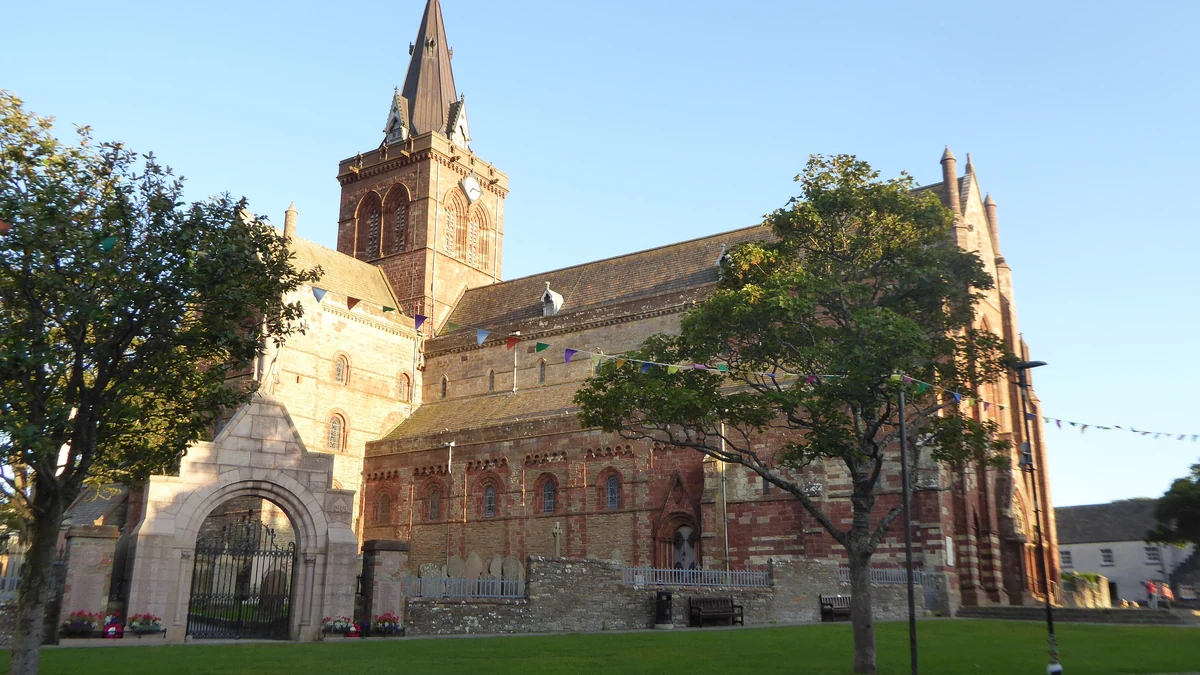
Kirkwall cruise port is the point where many passengers discover that Orkney is not a single attraction but a collection of competing days. You can stay in the island capital for St Magnus Cathedral, the Earl’s and Bishop’s Palaces, museums, shops and harbour views. You can head west for Skara Brae and the great Neolithic monuments. You can turn south towards Scapa Flow, the Churchill Barriers and the Italian Chapel. All three are worthwhile; squeezing all three into one call usually weakens the day.
Ships may berth at Hatston Pier, use Kirkwall Pier, or anchor in Kirkwall Bay and tender passengers ashore. That arrival detail changes the first and last part of the visit, but it does not change CruisePing’s main advice: decide before arrival whether your priority is Kirkwall itself, the Heart of Neolithic Orkney, or the wartime landscape south of town. The island road network is straightforward, yet distances and attraction bookings make casual improvisation less reliable than the map suggests.
Kirkwall Cruise Port at a Glance
| Port name | Kirkwall Cruise Port |
|---|---|
| Main cruise area | Hatston Pier, Kirkwall Pier or anchorage in Kirkwall Bay |
| Cruise region | British Isles |
| Country / Territory | UK |
| Currency | British pound (GBP) |
| Language | English; Orcadian Scots is also heard locally |
| Disembarkation | Docked or tender, depending on vessel and berth plan |
| Walkability | High from Kirkwall Pier or the tender landing; shuttle needed from Hatston |
| Shuttle required | Usually provided from Hatston; not normally needed from the town pier or tender landing |
| Main transport | Walking, shuttle, local bus, taxi, private tour or organised excursion |
| Best DIY option | Kirkwall centre, cathedral, palaces and museums |
| Main caution | Neolithic sites and Maeshowe can be busy or timed; do not build a fragile island circuit around unconfirmed entry |
Weather & Best Times to Visit Kirkwall
January to March
Typical high: 6–8°C
Typical low: 2–4°C
Rain / conditions: Cool, windy and frequently showery; winter daylight is limited and sea conditions can affect calls.
April to June
Typical high: 9–14°C
Typical low: 4–8°C
Rain / conditions: Longer days and often brighter spells, but exposed sites can still feel cold in wind.
July to September
Typical high: 13–16°C
Typical low: 9–11°C
Rain / conditions: Mild rather than hot; showers and brisk winds remain possible during the main cruise season.
October to December
Typical high: 7–12°C
Typical low: 3–8°C
Rain / conditions: Wetter, windier and increasingly short days; tender and exposed-site plans need flexibility.
Weather guide: CruisePing summary based on NASA POWER climate data for Kirkwall and Orkney Mainland. Check the latest forecast.
Wind matters more than the temperature number in Orkney. The Ring of Brodgar, Skara Brae and the Scapa Flow coast are exposed, while a wet or blustery day can make Kirkwall’s cathedral, museums and compact streets the more rewarding choice. Tender calls are also more vulnerable to sea conditions, so do not make a distant independent booking without understanding your ship’s landing procedure.
Where Cruise Ships Arrive in Kirkwall
The official Cruise Orkney arrival guidance lists three practical possibilities. Hatston Pier is the main cruise berth outside the centre. Kirkwall Pier is closer to the town, and ships may also anchor in the bay with tenders arriving at Kirkwall Harbour. Your daily programme or cruise-line notice is the deciding source because a berth can change.
Hatston is the one arrival that needs a transfer plan. Cruise Orkney states that a shuttle normally links the berth with Kirkwall Travel Centre, close to the shopping streets. Treat the published operating details as current guidance rather than a permanent promise; confirm the final bus and return arrangements on the day. From Kirkwall Pier or the tender landing, the centre is immediately useful and you can begin on foot.
Large-ship days can place considerable pressure on coaches, taxis and the best-known archaeological sites. An early departure is valuable if you have a fixed excursion. Passengers staying in town have more freedom: let the first rush leave, then walk to St Magnus Cathedral and the nearby palaces without turning the morning into a queue-management exercise.
Getting Around Orkney from the Port
Kirkwall is easy on foot, but Orkney’s headline sites are spread across the Mainland. Local buses exist and can be useful for residents and independent visitors, yet a cruise passenger must match the outward and return services to a fixed sailing. The island’s official transport information should be checked close to the call, especially on Sundays and public holidays. A route that works for a hotel guest may leave too little margin for a ship passenger.
Taxis and private guides are the flexible option for a small group. They let you choose a west-mainland archaeology circuit, a Scapa Flow and Italian Chapel route, or a shorter combination built around mobility and weather. Pre-booking is sensible on busy cruise days because the supply is finite. Agree the route, approximate duration and port return point before leaving.
Organised excursions earn their price where several remote sites are being combined, where admission is timed, or where the ship’s own return protection matters. The weakness is that a full coach can spend less time at each place than an independently booked driver. The best answer depends on whether you value control or low operational risk.
Best Cruise-Compatible Things to Do from Kirkwall
St Magnus Cathedral and Kirkwall’s historic core
Best for: A low-risk first visit with substantial history and no long transfer
Best way: Walk from the town pier or tender landing; use the Hatston shuttle first if berthed outside town
Watch: Check access for services or special events, and allow for uneven historic surfaces around the palaces
Skara Brae and Skaill Bay
Best for: Orkney’s best-known prehistoric settlement and a strong first-time excursion
Best way: Pre-booked tour, taxi or private guide; independent bus only when the current timetable fits comfortably
Watch: Entry can be timed and the west coast is exposed; do not assume a walk-up slot on a busy day
Ring of Brodgar and Stones of Stenness
Best for: Monumental Neolithic landscapes with less indoor time
Best way: Best combined by tour or taxi with other west-mainland sites
Watch: Wind, rain and coach congestion change the experience; protect footwear and time
Maeshowe Chambered Cairn
Best for: A focused archaeological visit with guided interpretation
Best way: Book an official timed visit and use a tour or taxi that respects the check-in arrangements
Watch: This is the least forgiving option for casual timing; missing the slot can collapse the plan
Scapa Flow, Churchill Barriers and Italian Chapel
Best for: Wartime history, causeways and a different side of Orkney
Best way: Organised south-island excursion or private driver
Watch: Do not bolt this onto a full west-mainland circuit unless your call is genuinely long
Orkney Museum, palaces and local shops
Best for: A calm weather-proof day in Kirkwall
Best way: Entirely DIY on foot from the centre
Watch: Opening patterns can vary; keep one outdoor loop available if a small site is closed
The West Mainland Decision: Skara Brae, Brodgar or Maeshowe
The Heart of Neolithic Orkney is the reason many people book this port, but the attractions do not behave as one interchangeable cluster. Skara Brae is a managed visitor site on the west coast with an indoor interpretation element and an exposed walk to the settlement. The Ring of Brodgar and Stones of Stenness are outdoor monuments. Maeshowe uses controlled, guided entry. Your route should be built around the least flexible booking, not around the order that looks neat on a map.
For most first-time passengers, CruisePing would choose Skara Brae plus one or both stone circles, then return to Kirkwall with time for the cathedral. That gives the day a clear centre without demanding every major site. Maeshowe is excellent for people who particularly value archaeology, but it needs a confirmed slot and a transport plan that will not be undermined by a delayed tender or shuttle.
A private guide can add context that a quick coach stop cannot, while a ship excursion removes much of the timing anxiety. Independent public transport is possible only when the current schedule lines up cleanly. Do the timetable work before sailing; Orkney is the wrong port for inventing a cross-island route while standing at the bus stop.
Kirkwall as a Complete Port Day
Staying in Kirkwall is not the consolation option. St Magnus Cathedral gives the town its visual and historical centre, and the nearby Bishop’s and Earl’s Palaces show how concentrated the old core is. Add the Orkney Museum, harbour streets, independent shops and a lunch stop, and the day has enough substance without a coach.
This local plan works particularly well for a shorter call, uncertain weather, reduced mobility or passengers who have already visited the Neolithic sites. It is also the sensible fallback when a pre-booked island tour is disrupted. You can keep the route compact, return to the ship easily and still experience distinctly Orcadian history rather than spending the day waiting for transport.
CruisePing would begin at the cathedral before group traffic peaks, continue through the palace ruins and museum area, then choose lunch and shopping after the main excursion departures. If the weather improves, extend towards the waterfront rather than forcing a late taxi trip across the island.
CruisePing Recommended Port Day
For a first visit with a full call, CruisePing would pre-book a west-mainland route covering Skara Brae and the Ring of Brodgar, with the Stones of Stenness if timing is sensible, then reserve the final part of the day for St Magnus Cathedral. That plan captures Orkney’s strongest archaeological identity and still gives Kirkwall a proper place in the day.
The best low-risk DIY day is Kirkwall itself. The cathedral, palaces, museum and shops sit close enough together to absorb a delayed arrival or an early all-aboard time. If archaeology is non-negotiable, pay for reliable transport. If the call is short or the wind is poor, skip the island circuit rather than turning every stop into a photograph from the coach door.
DIY or Organised Excursion?
Kirkwall town is emphatically DIY. The island beyond it is a more selective decision. A confident passenger can use a pre-booked taxi or local guide independently, but the popular sites, finite road capacity and timed access at Maeshowe make an improvised public-transport circuit fragile. CruisePing would not rely on several independent bus connections unless the current timetable leaves an unusually generous return margin.
A cruise-line excursion is strongest for a first visit to the west mainland or a south-island wartime route, particularly when the ship is tendering. A local small-group tour may give a better experience, but confirm its cancellation, tender-delay and return arrangements. Keep the operator’s contact details with you and know exactly where the vehicle will return you.
Mobility and Walking Reality
Kirkwall’s centre is compact, but historic surfaces, kerbs and weather can still matter. The cathedral and museum area is easier than an exposed archaeological circuit, where passengers may face grass, uneven paths and wind. Tendering can exclude some mobility equipment or require steps, while Hatston adds a shuttle transfer. Ask the cruise line about the actual disembarkation method rather than relying on a generic itinerary label.
For limited mobility, a private vehicle route can provide scenery and selected stops without demanding long outdoor walks. The town day is the most controllable option, especially if a companion can check entrances while the passenger rests near the cathedral or harbour. Do not assume that a site described as open-air will have a short, level route from the coach.
Choosing Between West Mainland and Scapa Flow
The west-mainland and south-islands routes answer different questions. West Mainland is the stronger choice for passengers who came to Orkney for prehistoric archaeology. Skara Brae gives the day a clear centre, while the Ring of Brodgar, Stones of Stenness and the surrounding landscape make more sense when seen together. The south route is about twentieth-century history and engineering: Scapa Flow, the Churchill Barriers and the Italian Chapel. CruisePing would not try to combine both unless using a private guide on a very long call, and even then the day risks becoming a sequence of photographs through a vehicle window.
A west-mainland route also needs decisions within the route. Skara Brae and the Ring of Brodgar are the obvious pair, but Maeshowe is not a casual roadside add-on because access is controlled and timed. The practical order depends on the booking time, road conditions and where your driver plans to meet you. If Maeshowe is the one site you care about most, secure it first and build the remaining stops around it. If it is unavailable, do not spend the day chasing a cancellation; Skara Brae, Brodgar and Stenness still form a coherent Orkney day.
The Scapa Flow route is usually less dependent on timed admission, but it can spread over a surprisingly large part of the southern road network. The barriers themselves are part of the story rather than merely roads between attractions. The Italian Chapel is small, and its value comes from understanding why Italian prisoners of war created it. A good guide earns the fare here by connecting the landscape, naval history and surviving structures. A rushed coach stop without that context can feel slight.
How Call Length Changes the Kirkwall Plan
On a call of around five hours ashore, stay in Kirkwall unless a ship excursion has been designed around the available time. The shuttle or tender process can consume more of the visit than the itinerary suggests, especially when a large ship releases several groups together. The cathedral, palaces, museum and harbour give a complete day without relying on rural transport. On a seven- or eight-hour call, one island circuit becomes realistic. Longer calls create room for a relaxed town finish, but they do not make two separate circuits sensible.
The advertised arrival and departure times are not the same as usable shore time. Tender tickets, immigration procedures where applicable, shuttle loading and the all-aboard requirement narrow the window. Independent passengers should work backwards from the ship’s required return, then subtract the rural drive, a delay allowance and the time needed to re-enter the port area. This calculation may feel conservative, but it prevents the final archaeological stop from becoming a nervous glance at the clock.
Food, Facilities and a Sensible Town Finish
Kirkwall is the easiest place to leave lunch flexible. Rural touring days can lose disproportionate time to a formal meal stop, while the town has cafés, bakeries and pubs within the central walking area. CruisePing would ask a private guide whether a short food stop can be built into the route or return to Kirkwall with enough time for lunch and a final walk. That also protects the day if weather closes in: you can shorten the outdoor circuit and recover value in town rather than remaining committed to a long coach schedule.
A town finish is useful for more than shopping. It gives passengers a buffer between the last rural attraction and the ship, provides access to toilets and indoor shelter, and lets tender passengers judge the queue before the final departure. The cathedral is particularly good as a late-day anchor because it is central and visually distinct. Check opening and service arrangements, however, because it remains a working place of worship rather than a museum operating solely around cruise calls.
Kirkwall When Several Ships Are in Port
Kirkwall’s transport pressure is not determined only by your own ship. Several calls on the same day can increase shuttle queues, fill taxis and concentrate visitors at Skara Brae and the stone circles. Check the published port schedule where practical and assume that the most obvious west-mainland stops will be busiest in the middle of the day. A private guide may be able to alter the order, but an independent passenger should not expect an empty taxi rank or unrestricted timed admission.
A crowded day makes the town plan more attractive, not less. St Magnus Cathedral and the central streets can absorb passengers more comfortably than a rural circuit built around scarce vehicles. Start early, visit the museum or palaces when a tour group enters the cathedral, and use lunch to avoid the busiest period. The important point is flexibility: keep the attraction order loose while keeping the ship return fixed.
Kirkwall Port-Day Pitfalls and Value Choices
- Booking Maeshowe too casually: it is a timed visit, so build the route around the official check-in requirement.
- Trying to combine west and south Orkney: the result is often a coach-heavy day with thin stops.
- Ignoring the arrival point: Hatston, Kirkwall Pier and a tender landing create different first-mile plans.
- Assuming taxis will be plentiful: reserve a driver in advance on high-capacity cruise days.
- Under-dressing for exposed sites: a mild forecast can still feel cold at Brodgar or Skara Brae in wind.
- Best-value choice: stay in Kirkwall for free or low-cost historic sights if excursion prices feel disproportionate to the call length.
Passengers collecting independent tours should photograph the meeting point and vehicle details before departure. Hatston and central Kirkwall are not interchangeable return locations, and an operator who says only “back to the port” may have misunderstood the ship’s berth. Confirm whether the driver will return to the shuttle area, the pier gate or the tender landing. This is a small question that prevents a surprisingly large final-hour problem.
Kirkwall Cruise Port Checklist
- Confirm whether the ship is at Hatston, Kirkwall Pier or anchor.
- Check the final shuttle or tender return time before leaving the arrival area.
- Pre-book any Maeshowe visit and verify the meeting point.
- Compare the west-mainland and Scapa Flow routes; choose one.
- Carry a windproof and waterproof layer even in summer.
- Keep St Magnus Cathedral and central Kirkwall as the fallback plan.
- Allow extra return time if using a private tour during a multi-ship day.
Useful Official Links
- Orkney Harbours cruise information
- Cruise Orkney arrival information
- Kirkwall cruise transport and shuttle guidance
- Visit Orkney
- Historic Environment Scotland: Skara Brae
- Historic Environment Scotland: Ring of Brodgar
- Historic Environment Scotland: Maeshowe
Kirkwall Cruise Port FAQ
Do cruise ships dock in Kirkwall?
Some ships berth at Hatston Pier or Kirkwall Pier, while others anchor in Kirkwall Bay and tender. Check the cruise line’s final notice because the arrival method controls whether you begin with a shuttle, a walk or a tender queue.
Can I walk into Kirkwall from the ship?
Yes from Kirkwall Pier or the normal tender landing. Hatston is outside the centre, so passengers usually use the arranged shuttle to Kirkwall Travel Centre.
Can I visit Skara Brae independently?
Yes with a pre-booked taxi, private tour or a carefully checked bus plan. The important points are current transport times, site admission and a large return buffer.
Is Maeshowe realistic on a cruise day?
It can be, but only with a confirmed timed booking and transport that reaches the official check-in point reliably. It is less suitable for a loose, improvised route.
What should I do if the weather is poor?
Use Kirkwall as the core day: St Magnus Cathedral, the Orkney Museum, historic streets and cafés. A wet and windy forecast reduces the appeal of exposed stone-circle stops.
Is Kirkwall suitable for limited mobility?
The town centre is the most manageable option, although historic surfaces remain. Tender access, shuttle boarding and open-air archaeological paths should be checked individually.
CruisePing Port Verdict
Kirkwall is one of the British Isles’ most rewarding cruise calls because the alternatives are genuinely different. For most first-time passengers, the strongest day is a pre-booked west-mainland archaeology route followed by a short Kirkwall visit. For anyone who dislikes coach-heavy sightseeing, the town itself is a credible, low-risk port day. The mistake is collecting Orkney place names instead of choosing a route with enough time to understand them.
Ready to browse our article library?
Explore more ports in the British Isles, browse CruisePing destinations in the UK, or head to the main article library for cruise-planning guides and comparisons.