
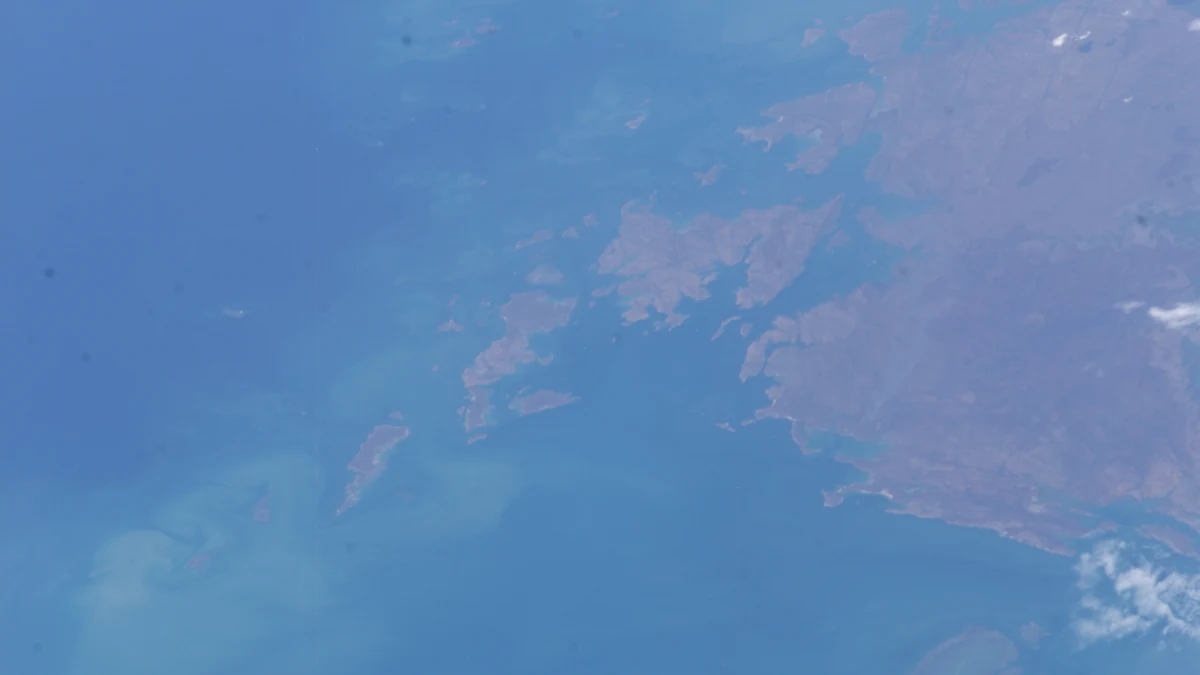
Kuri Bay cruise port is not a conventional port at all. Expedition ships anchor in remote Camden Sound and use Zodiacs to reach the operating pearl-farm site, with no town, public road, taxi, independent excursion desk or walk-off access.
The recommendation is therefore absolute: join the ship’s pearl-farm and nature programme. DIY does not exist here, and trying to arrange a private visit is neither practical nor appropriate. The only meaningful decision is whether to take the included landing, add a ship-operated scenic flight when offered, or remain onboard because the Zodiac transfer is unsuitable.
Kuri Bay Cruise Port at a Glance
| Port name | Kuri Bay |
|---|---|
| Main arrival area | Ship Zodiac landing at the Kuri Bay pearl-farm site |
| Cruise region | Australasia / Pacific Islands |
| Country / Territory | Australia |
| Currency | Australian dollar (AUD) |
| Languages | English |
| Port role | Day Call / Expedition Call |
| Disembarkation | Zodiac expedition landing |
| Walkability | Only within the supervised pearl-farm visit |
| Shuttle required | No |
| Main transport | Ship Zodiac, expedition team and optional ship scenic aircraft |
| Best first-time plan | Join the included pearl-farm landing and expedition interpretation; add a ship flight only if desired |
| Main caution | There is no independent port access, while weather, tides and expedition safety determine whether landing is possible |
Zodiacs land at the Kuri Bay pearl farm
The supervised expedition destination is the Kuri Bay pearl-farm site reached by Zodiac, not a public wharf from which passengers can walk into a settlement.
The expedition leader may alter the approach or cancel landing for tide, wind or operational reasons. A precise map does not create public access or override the ship’s safety decision.
DIY or organised tour? Only the ship programme exists
Kuri Bay is entirely an organised expedition call. There are no public taxis, roads, rental vehicles, independent guides or alternative attractions waiting outside a gate.
Join the ship’s landing if physically able and interested. If you decline it, remain onboard; there is no sensible independent substitute and no reason to search online for a private transfer.
The pearl farm is the headline and the whole point
The Western Australian Museum records that Australia’s first cultured pearl farm opened at Kuri Bay in 1956. The remote site remains central to the South Sea pearl industry.
This is not a token retail stop added to an otherwise richer port. Learning how oysters are selected, seeded, tended and harvested is the distinctive experience, and it deserves careful attention.
Farm staff provide the interpretation worth hearing
Expedition programmes can include direct explanation from people working in pearling. Their knowledge of the water, oysters and long production cycle adds more value than a generic lecture delivered far from the site.
Stay with the designated group, ask practical questions and avoid entering operational areas. The farm is a workplace with biosecurity and safety requirements.
A pearl reveal is theatre backed by years of work
Seeing a pearl removed from an oyster can be dramatic, but the moment represents years of husbandry, risk and environmental monitoring rather than instant treasure.
Listen for the explanations of grading, colour, lustre, shape and nacre. Passengers considering a purchase should understand quality rather than treating size alone as value.
Shopping is optional
Pearls may be displayed or offered through the ship or farm programme, but buying one is not necessary to justify the landing. The interpretation and setting are worthwhile without a purchase.
Ask about certification, treatment, setting, warranty and return arrangements before spending substantially. Do not let sales pressure shorten the educational part of the visit.
Nurse sharks are a possible sighting, not a promise
Cruise descriptions note tawny nurse sharks in the clear water around the farm. Their presence reflects the marine setting, but wildlife timing cannot be guaranteed.
Observe from the Zodiac or supervised area, follow the expedition naturalist and avoid treating the animals as a staged attraction. The pearl-farm visit remains worthwhile even when no shark appears.
The Zodiac ride is part of the experience
The transfer reveals the scale and isolation of Camden Sound, with red rock, islands, tidal water and farm infrastructure appearing gradually from the ship.
Dress for spray and sun, keep both hands available for boarding and follow the sailor’s instructions. Expensive cameras and phones should be protected before stepping into the craft.
A scenic flight is the only meaningful optional upgrade
Some sailings offer a ship-operated Mallard scenic flight over Kuri Bay and the Kimberley coast.
Choose it when aerial geography and photography justify the considerable cost. It should supplement the pearl landing only when timings are coordinated by the ship; no independent aviation arrangement is appropriate.
The flight is not accessible to everyone
Small aircraft can involve steps, restricted movement, weight limits and transfer from water or an expedition landing. The advertised duration does not include every boarding and safety stage.
Ask the excursion team about mobility, seating and camera restrictions. Passengers who find the aircraft unsuitable will still receive the essential Kuri Bay experience through the Zodiac landing.
There is no town to visit
Kuri Bay is a working remote outpost, not a settlement with cafés, museum, beach club or shopping street. Internet descriptions that imply passengers can wander independently misunderstand the call.
Do not plan a free period ashore. Follow the group for the complete landing and return in the assigned Zodiac.
No port access means exactly that
Cruise information may state that passengers not joining the included options have no port access. This is not an attempt to force excursion sales; it reflects private operational land, remoteness and the absence of public infrastructure.
Respect the boundary. Remaining onboard is the only alternative when the programme is unsuitable.
The Kimberley setting adds context
Kuri Bay lies within a remote marine landscape described in management material for the North Kimberley marine parks. Tides, islands, reefs and cultural values are part of the wider environment in which pearling operates.
Listen to expedition interpretation about geology, wildlife and Traditional Owner connections rather than viewing the farm as an isolated industrial installation.
Traditional Owner context should be treated carefully
The Kimberley coast contains enduring Aboriginal cultural landscapes. Access, interpretation and photography may be subject to permissions that are not obvious to visitors.
Use only information and routes presented by the expedition team and authorised hosts. Do not assume remote land is empty or available for unsupervised exploration.
Heat exposure begins in the Zodiac
The Bureau of Meteorology North Kimberley Coast forecast should be considered alongside the ship briefing. High temperature, humidity and reflected sun can affect passengers before they reach the landing.
Wear a hat that can be secured, use sun protection and carry water as instructed. The absence of a long walk does not make the activity physically trivial.
Tides and currents control operations
Kimberley tidal ranges and local water movement influence Zodiac loading, landing surfaces and the timing of activities. A calm-looking bay can still require exact small-boat handling.
Remain seated until instructed and do not request an unscheduled shore stop. The expedition team’s timetable is part of the safety system.
Marine wildlife requires distance
Fish, sharks, turtles, birds and other animals may be observed around the farm and islands. Working infrastructure can create close viewing opportunities without making wildlife tame.
Keep hands out of the water unless the team explicitly allows an activity, never feed animals and follow photography instructions.
Accessibility needs an honest Zodiac assessment
The principal barrier is the transfer between ship and Zodiac, followed by steps or uneven working surfaces at the farm. Wheelchairs and scooters may not be possible.
Ask the expedition team for a call-specific decision rather than relying on a generic activity label. Passengers unable to land may still benefit from onboard lectures and views of Camden Sound.
Medical support is ship-based
The farm is not a public town with emergency services available to visitors. The vessel remains the principal medical resource.
Carry essential medication, disclose relevant conditions before joining and return immediately if the team advises a health or weather change.
Photography should not obstruct operations
Pearl equipment, workers, Zodiacs and reflective water create excellent images, but walkways and working areas can be narrow.
Use the designated stopping points, ask before photographing staff closely and keep clear of oyster-handling operations. A photograph is never worth separating from the group.
What to skip in Kuri Bay
Skip searching for independent tours, skip expecting a town, skip wandering away from the farm group and skip treating wildlife as guaranteed. There are no hidden public attractions being withheld from passengers.
The included pearl-farm programme is the correct and sufficient port day. The only optional addition worth considering is the ship’s scenic flight.
The return Zodiac remains part of the excursion
The landing ends only when the passenger has reboarded the ship. Spray, tide and loading can make the return slower than the outward journey.
Keep belongings packed, stay with the assigned group and follow the same three-point boarding technique used on arrival. There is no independent late return.
The landing schedule may be split into groups
A small expedition ship can stagger Zodiac departures so farm staff and walkways are not overwhelmed. Passengers may receive a time rather than going ashore immediately after anchoring.
Use the waiting period for the expedition briefing, prepare clothing and arrive at the marina at the instructed time. Trying to join an earlier boat creates congestion without extending the supervised visit.
Pearl farming depends on environmental quality
South Sea pearl production requires healthy oysters and carefully managed water. Farm interpretation may cover cleaning, disease, predators and the long exposure to marine conditions.
This environmental dependence is one reason the setting matters. Look beyond the jewellery display and ask how water quality and weather affect cultivation.
Biosecurity protects a working farm
Footwear, equipment and movement may be controlled to reduce contamination or interference with oyster operations. Restrictions can appear stricter than at a normal tourist attraction.
Follow every cleaning and access instruction. Do not handle shells, ropes or farm gear unless invited, and never take material from the site.
A cancelled landing has no shore substitute
Strong wind, tide or a medical-operational issue can prevent Zodiac access. Because the pearl farm is the only organised landing, passengers cannot transfer to another public attraction.
Use onboard lectures, deck viewing and expedition recaps. Accepting a no-landing decision is part of travelling responsibly on the remote Kimberley coast.
CruisePing Recommended Port Day
Join the included Zodiac landing and pearl-farm interpretation. Give proper attention to the cultivation process, farm history and marine setting rather than viewing it as a shopping stop. Remain with the expedition group throughout. The farm visit is brief enough that there is no benefit in leaving the group or trying to extend the landing privately.
Add the ship-operated scenic flight only when aerial views justify the price and mobility requirements. Otherwise, the included landing is complete. Passengers unable to use the Zodiac should remain onboard and use the expedition lectures; no DIY option exists. Use binoculars or the ship’s observation areas if the landing is cancelled, because the surrounding islands and working farm can still provide context. Do not regard a safe cancellation as an invitation to seek an unofficial boat.
Weather & Best Time to Visit Kuri Bay
| Month / season | Typical high | Typical low | Rain / conditions |
|---|---|---|---|
| May–August | 31°C | 19°C | Dry season; hot sun, lower humidity and generally more settled expedition conditions |
| September–November | 35°C | 24°C | Very hot, building humidity and increasing storm risk |
| December–April | 34°C | 25°C | Wet season, high humidity, heavy rain and tropical-cyclone risk |
Kimberley expedition calls are most common in the dry season, but heat, tide and marine wind remain significant. The ship may alter or cancel Zodiac operations despite clear skies. Check the current official forecast before finalising the day.
Frequently Asked Questions
Where do passengers land at Kuri Bay?
Expedition ships use Zodiacs to reach the supervised pearl-farm site. There is no public cruise terminal.
Can you explore Kuri Bay independently?
No. There is no public road or town access. Passengers must join the ship programme or remain onboard.
Is the pearl farm worth visiting?
Yes. It is the defining Kuri Bay experience and provides direct insight into South Sea pearl cultivation at a historic remote site.
Can you see sharks at Kuri Bay?
Tawny nurse sharks may be observed, but wildlife sightings are not guaranteed.
Should you book the scenic flight?
It is an optional premium addition for aerial views. The included pearl-farm landing remains the essential first choice.
Useful Official Links
- Seabourn: Kuri Bay
- WA Museum: Growing pearls
- DBCA: North Kimberley marine parks visitor plan
- Bureau of Meteorology: North Kimberley Coast
CruisePing Port Verdict
Kuri Bay is an expedition landing, not a port to plan independently. Join the pearl-farm programme, listen to the people who work there and let the Zodiac journey reveal the wider Kimberley setting. Anything described as DIY is based on a false idea of the destination. Its remoteness is the value, and the organised limits are what make responsible access possible.
Ready to browse our article library?
Looking beyond Kuri Bay? Explore more ports in the Australasia / Pacific Islands region, or narrow it to Australia in particular. For cruise comparisons, planning shortcuts and value guides, head over to our main article archive.