
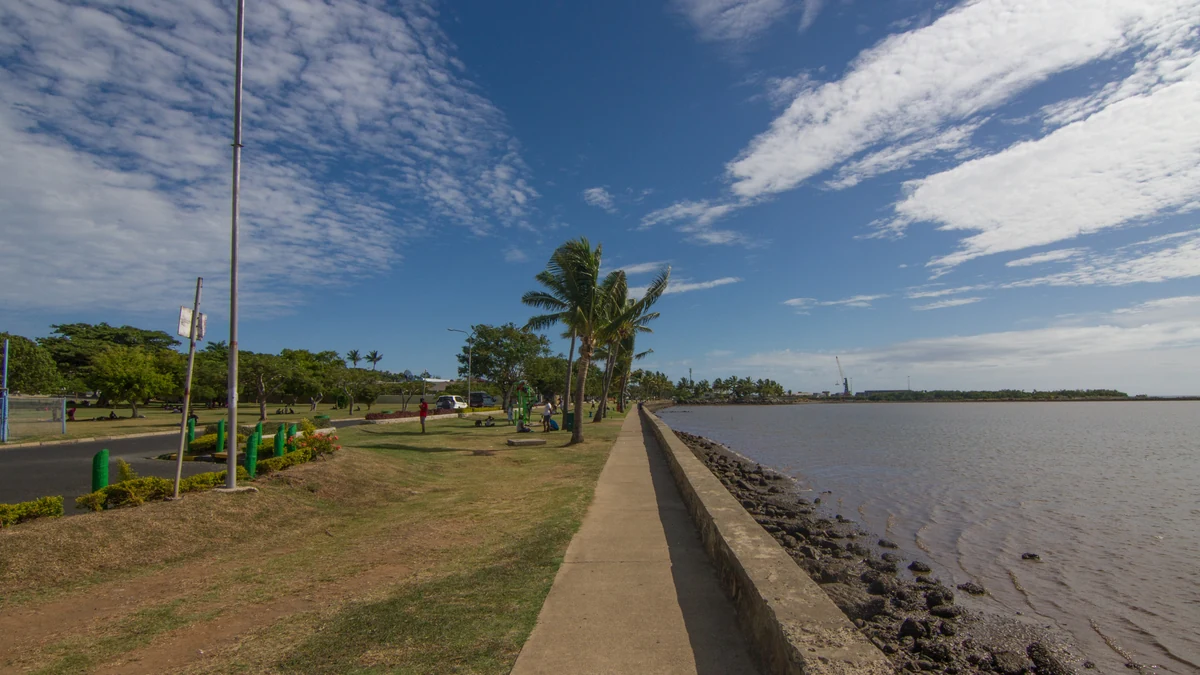
Lautoka cruise port is a working commercial harbour serving western Viti Levu. Ships normally berth rather than tender, but passengers leave through a controlled port route before reaching Fiji’s second city, its market and the sugar-growing countryside.
Our first-time recommendation is an organised western Viti Levu tour combining the Garden of the Sleeping Giant, Sabeto mud pools or a genuinely hosted village stop. Lautoka itself is easy enough independently, but the city is a better two-hour component than the whole day. Do not spend valuable time transferring all the way to Denarau merely to shop or board another generic resort boat.
Lautoka Cruise Port at a Glance
| Port name | Lautoka |
|---|---|
| Main arrival area | Lautoka commercial wharf with controlled passenger exit |
| Cruise region | Australasia / Pacific Islands |
| Country / Territory | Fiji |
| Currency | Fijian dollar (FJD) |
| Languages | English, Fijian and Fiji Hindi |
| Port role | Day Call |
| Disembarkation | Docked |
| Walkability | Moderate from the authorised port exit to the market and city centre |
| Shuttle required | A controlled transfer or shuttle may be used; excursions collect from the designated cruise area |
| Main transport | Walking, taxi, organised minibus and ship excursion |
| Best first-time plan | Organised Garden of the Sleeping Giant and Sabeto route, with a short Lautoka market stop |
| Main caution | Commercial-port controls, road traffic and limited same-day vehicle supply require a clear return plan |
Cruise ships use a working cargo harbour
Fiji Ports describes Lautoka as a major bulk-cargo port handling sugar, molasses, woodchips, petroleum and gas. That industrial role explains the controlled walking route, security and possibility of a shuttle even when the city appears close.
Follow the ship’s signs and remember the precise return gate. Do not cross operational areas or ask a taxi to leave you at an arbitrary fence simply because the vessel is visible.
DIY or organised tour? Organised touring wins for a first visit
The strongest first day leaves the city for one coherent western Viti Levu route. The garden, Sabeto valley, a village experience or Koroyanitu need transport and benefit from local explanation.
DIY remains appropriate for the market, central streets and a meal, but it does not unlock the most distinctive scenery. A general city coach is unnecessary; pay for access and interpretation, not merely a seat.
The Garden of the Sleeping Giant is the best gentle excursion
Fiji Tourism highlights the Garden of the Sleeping Giant for orchids, landscaped grounds and rainforest paths beneath the Nausori Highlands.
It suits first-time passengers, garden lovers and those wanting a manageable walk. We would choose it over a long shopping transfer to Denarau, particularly when paired with Sabeto rather than unrelated retail stops.
Sabeto mud pools are enjoyable when expectations are realistic
Fiji Tourism notes that the Sabeto and Tifajek mud pools are commonly paired with the garden and village sightseeing.
The experience is informal, messy and weather-dependent rather than a luxury spa. Bring suitable swimwear, check changing facilities and choose it because the social experience appeals, not because a tour markets it as therapeutic.
A village visit should be genuinely hosted
A respectful village programme can explain ceremony, daily life and the relationship between inland communities and the sugar coast. Its value depends on consent, local leadership and enough time for exchange.
Choose a recognised operator or ship excursion. Dress as instructed, follow photography guidance and avoid a tour that treats the village as a ten-minute performance between souvenir stops.
Koroyanitu is for active passengers, not the default
Fiji Tourism’s walking guide provides useful current context. The highland landscape east of Lautoka offers walking, viewpoints and village-based experiences, but trails, heat and road access make it a substantial commitment.
Select a protected excursion with a realistic fitness description. We would not combine a serious hike with the garden, mud pools and city; let the highlands be the entire headline.
Lautoka Market is the city priority
The municipal market provides colour, produce, spices and a better sense of everyday western Fiji than a shopping centre. It is the first independent stop we would make after leaving the port.
Carry small notes, ask before photographing vendors and keep valuables unobtrusive. Visit early or after an excursion, but avoid buying plant material that may cause ship or later-country biosecurity problems.
The central streets work as a short independent circuit
Lautoka’s grid, shops, places of worship and Marine Drive can fill a relaxed period without a guide. The city is functional rather than curated for cruise passengers, which is part of its interest.
Use ordinary traffic awareness, shade and a clear turnaround point. Do not expect every pavement to be even or every landmark to be signposted.
Marine Drive is a pleasant finish rather than a headline
The waterfront road gives sea views and a calmer contrast to the market, but the port and industrial coast limit the sense of a resort promenade.
Use it for a short walk or meal close to the return route. We would not sacrifice the Garden of the Sleeping Giant or a strong cultural visit for an extended waterfront circuit.
Nadi is possible but should have a purpose
Nadi can add the Sri Siva Subramaniya Temple, market or the garden-and-Sabeto corridor, but road time and traffic vary. A tour that merely labels itself Nadi may spend much of the call in shops.
Choose Nadi only when the itinerary names the sites and return margin. The garden and Sabeto are better reasons to travel south than a generic city transfer.
Port Denarau is a weak first-time objective from Lautoka
Denarau is useful as a marina and resort gateway, yet travelling there from Lautoka merely to browse restaurants or shops duplicates an experience available on many Fiji itineraries.
Use Denarau only to connect with a protected marine excursion that cannot start elsewhere. Do not take an independent public boat itinerary with a late return.
A Mamanuca boat day needs ship-level protection
Island cruises can be excellent, but the chain includes road transfer, marina check-in, boat loading, marine weather and the drive back to Lautoka. Each stage reduces resilience.
Book through the ship or a provider explicitly coordinating the cruise call. We would prefer a strong land day over an independently assembled boat schedule that only just fits on paper.
Sugar history explains the city
Lautoka’s identity as the Sugar City is visible in the port, rail remnants, cane landscape and commercial history. Even when industrial access is restricted, a good guide can connect the fields with export activity.
Look for a tour that explains the industry and community rather than offering a drive-by photograph of machinery. The story adds meaning to the working harbour.
A taxi is useful for targeted city movement
Short taxi rides can solve heat, mobility or the gap between the port exit and a chosen city stop. They are less suitable for an improvised all-day circuit when cruise demand is high.
Agree the fare, confirm card or cash payment and arrange the return before leaving the vehicle. Retain the designated cruise drop-off name.
Independent buses are not worth the uncertainty
Local buses are inexpensive and useful to residents, but routes, stopping patterns and the final commercial-port return are less intuitive for a short visitor.
We would not use them for the garden, Sabeto or Nadi on a cruise day. The saving is too small compared with the risk of waiting or returning to the wrong side of the port.
Food is best fitted around the market or excursion
Fijian, Indo-Fijian and Chinese influences give Lautoka a varied local food scene. A simple lunch can strengthen a city visit without becoming a formal food tour.
Choose a busy, reputable venue, carry cash and allow for service time. Do not place a long meal before a fixed excursion collection or final shuttle.
Shopping should remain secondary
Crafts, textiles and everyday goods can be interesting, but port-day shopping tours often consume time through several commission stops.
Buy directly where possible and verify materials. We would reject a tour dominated by shops unless shopping is the passenger’s explicit priority.
Heat is the main walking constraint
The Fiji Meteorological Service provides current forecasts and warnings. Humidity and direct sun can make the short city distance feel much longer.
Walk early, use shade and carry water. The garden has more shade than exposed city streets, while mud-pool visits require extra hydration and dry clothing.
Rain does not ruin the whole call
Tropical showers can be intense but localised. The market, places of worship and covered garden areas may remain usable while a highland walk becomes unsuitable.
Keep a city fallback and let the operator reorder the route. Do not pressure a guide to continue on slippery trails simply because the ship will not return soon.
Accessibility depends on the port transfer and tour vehicle
The berth may be level, but security transport, coach steps, garden paths and mud-pool surfaces create different barriers.
Ask for the complete chain before booking. A market-and-city day with a taxi can be more satisfying than sitting on a coach unable to access the advertised stops.
What to skip in Lautoka
Skip an unprotected Denarau boat connection, skip a generic shopping coach, skip independent buses to distant attractions and skip trying to combine Koroyanitu with a full Nadi circuit.
The best day has one clear theme: garden and Sabeto, highland culture, or a deliberately local city visit.
Return through the designated port entrance
Commercial security means the nearest gate may not admit cruise passengers. Road congestion can also build when several excursions return together.
Finish near the authorised drop-off, allow time for screening and do not make the final shuttle your planned arrival. A driver must understand the cruise entrance, not merely Port of Lautoka.
A village visit needs more than a photo stop
A credible village experience should explain the host community, the welcome protocol and how visitor payments are shared. The value is in conversation and context, not a rushed kava ceremony arranged between shopping stops.
Book through the ship or an established local operator. Dress modestly, remove hats when asked, wait for permission before photographing and do not wander away from the hosted area.
Nadi is possible but not the best use of Lautoka
Nadi has the Sri Siva Subramaniya Temple, markets and a larger tourism economy, but the road journey can become slow and duplicates what many passengers see before or after a Fiji cruise.
On a first Lautoka call, we would choose the Garden of the Sleeping Giant, Sabeto or a locally grounded village route. Visit Nadi only when the temple is a personal priority and the operator protects the return.
Vuda Point is a secondary coastal stop
Vuda Marina and the surrounding coast can provide a pleasant meal, yacht views and a calmer atmosphere than central Lautoka. It is not a stronger headline than the garden or hot springs.
Use it as part of a short private-driver circuit or for repeat visitors. Do not buy a full excursion merely to reach a marina when time ashore is limited.
A private driver should have a narrow brief
A pre-booked driver can combine the garden, Sabeto and one local stop while avoiding coach waiting. The danger is agreeing to an overambitious list that crosses repeatedly between Lautoka and Nadi.
Write the route and return time before departure. We would cap the day at two principal attractions plus lunch, with the final hour back in Lautoka rather than on the Queens Road.
The municipal market is best early
Produce stalls are most active before the day becomes hot, and an early visit reduces the chance that a later excursion return leaves only a hurried walk through closing stalls.
Carry small Fiji-dollar notes, ask before photographing vendors and avoid obstructing narrow aisles. Buy packaged spices or crafts only after checking the ship’s biosecurity guidance.
Sugar history needs interpretation
Lautoka’s identity as the Sugar City comes from cane fields, milling and labour history, not from a single polished attraction. A drive through the surrounding landscape can add context when the guide understands it.
Choose commentary over a fence-line photo of the mill. Operational access is restricted, and a tour should not imply that passengers can enter industrial areas without permission.
Temple and church visits should fit worship
Religious buildings in and around Lautoka are active community spaces. Access can change for services, ceremonies and maintenance, particularly on weekends or festival dates.
Dress respectfully, remove footwear where required and keep the visit short when worship is taking place. A driver should have an alternative rather than pressuring staff to admit a cruise group.
Cruise-day transport can tighten quickly
One ship can create strong demand for taxis, minibuses and local guides. Vehicles waiting outside the port are not automatically licensed, insured or cruise-aware.
Pre-book the excursion that matters. For a city-only day, establish the return point before walking away and ask the visitor team for current taxi advice rather than relying on a last-minute rideshare.
Families need shade and fewer transfers
Children are likely to enjoy the garden, mud pools and a village welcome more than a long panoramic coach circuit. Heat, waiting and repeated retail stops can turn an apparently easy tour into a tiring day.
Choose one active experience and one shaded stop. Bring water, sun protection and clothes that can cope with mud or rain, then finish near the ship.
A late berth should trigger a city-first plan
If clearance or berthing runs late, the Nadi-side attractions lose their return margin first. Trying to preserve the full itinerary by shortening every stop produces a poor visit.
Switch to Lautoka market, a local cultural stop and one nearby garden or village route. The city is a valid fallback, not a waiting room for a cancelled excursion.
The garden and mud pools need the right order
A combined tour works best when the garden is visited before passengers become muddy or wet at Sabeto. Changing facilities and vehicle cleanliness can otherwise become the practical issue that dominates the day.
Ask whether towels, showers and changing time are included. Wear simple clothing and protect valuables in a dry bag.
Shopping should remain close to the return
Central shops and the market are useful after a regional tour because they keep passengers within a short journey of the ship. A distant craft outlet added late to a coach route is less sensible.
Make major sightseeing decisions first, then use any spare time in Lautoka. Do not let a commission stop consume the port buffer.
Mobility needs a surface-by-surface check
The port exit, market, garden paths and mud-pool areas create different barriers. A tour described as easy may still involve wet steps, uneven ground and high minibus access.
Ask which stops can be viewed with minimal walking and whether the vehicle can carry mobility aids. A city and garden route can be adapted more readily than a village-and-pools circuit.
The final port entry may be controlled
Lautoka is a working port, and passengers may need to return through a designated gate, shuttle or security route rather than walking towards the visible ship.
Photograph the drop-off point and tell an independent driver the exact cruise return. Reach the port before the published buffer, not merely the city centre.
CruisePing Recommended Port Day
Take a cruise-compatible organised tour to the Garden of the Sleeping Giant and Sabeto valley, choosing either the mud pools or a genuinely hosted village component. Return to Lautoka with enough time for the municipal market and a short central walk. This balances Fiji’s landscape, culture and everyday city life without a fragile transport chain.
Stay DIY only when you prefer a low-cost, low-intensity day: follow the port transfer, visit the market, walk selected central streets and eat locally. Do not use that flexibility to improvise Nadi or Denarau late in the day. For active visitors, replace the whole plan with a protected Koroyanitu excursion rather than adding it. If the ship is late, remove Nadi first and keep the garden or Sabeto only when the operator can still return with a full port-security margin. A shorter western Viti Levu route is better than a hurried cross-city circuit.
Weather & Best Time to Visit Lautoka
| Month / season | Typical high | Typical low | Rain / conditions |
|---|---|---|---|
| December–April | 31°C | 23°C | Hot, humid and wetter; heavy showers and cyclone disruption possible |
| May–October | 29°C | 20°C | Drier trade-wind season; usually more comfortable for touring |
| November | 30°C | 22°C | Building humidity and increasingly changeable showers |
Lautoka is warm year-round. Heat, rainfall, road flooding and tropical-cyclone warnings matter more than small temperature differences. Check the current official forecast before finalising the day.
Frequently Asked Questions
Do cruise ships dock in Lautoka?
Most calls berth at the working commercial port, with passengers leaving through a controlled route or shuttle.
Can Lautoka be explored independently?
Yes. The market and central streets are manageable independently, but the best wider attractions require organised transport.
What is the best tour from Lautoka?
For most first-time visitors, combine the Garden of the Sleeping Giant with Sabeto mud pools or a properly hosted village experience.
Should you go to Denarau from Lautoka?
Only for a protected marine excursion with a strong return plan. Denarau shopping alone is not worth the road time.
Is Koroyanitu suitable for everyone?
No. It is an active highland option requiring suitable fitness, footwear and a cruise-aware guide.
Useful Official Links
- Fiji Ports: Port of Lautoka
- Fiji Ports shipping schedule
- Fiji Tourism: Nadi and Garden of the Sleeping Giant
- Fiji Tourism: walks and Sabeto
- Fiji Meteorological Service
CruisePing Port Verdict
Lautoka is a port where a good organised land tour earns its price. The city is useful and authentic but does not need the whole day; the garden, Sabeto valley or a serious highland experience provide the memorable contrast. Avoid diluted shopping itineraries and over-ambitious Denarau connections. The smartest first visit buys interpretation and transport only where they improve the garden, village or Sabeto experience.
Ready to browse our article library?
Looking beyond Lautoka? Explore more ports in the Australasia / Pacific Islands region, or narrow it to Fiji in particular. For cruise comparisons, planning shortcuts and value guides, head over to our main article archive.