
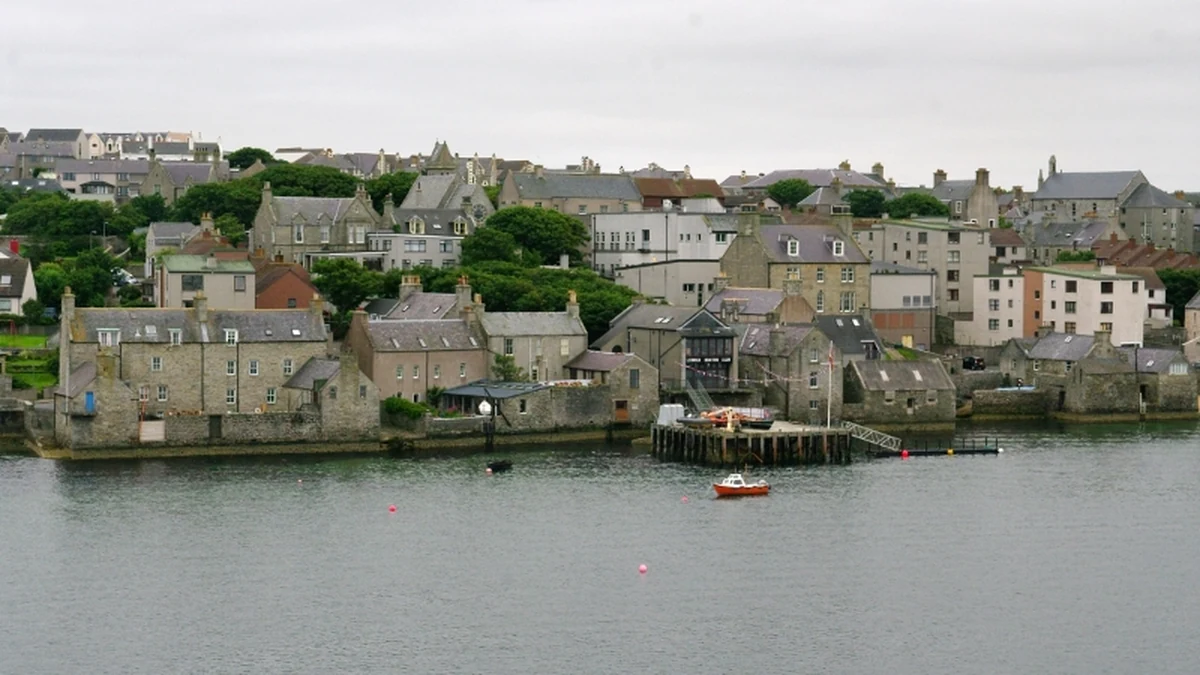
Lerwick cruise port can be used in two completely different ways. One is a compact independent day around the Shetland capital: the waterfront, Commercial Street, Fort Charlotte, the Shetland Museum and Archives and the Broch of Clickimin. The other is a road day into an island landscape of archaeological sites, sea cliffs, bird colonies, crofting communities and small harbours. Lerwick is strong enough to justify staying local, which is important when weather or a short call makes a wider tour less attractive.
The practical choice starts with the ship’s arrival. Lerwick Harbour handles cruise ships at berths and at anchor, so some passengers walk from a quay while others reach the town by tender. The town itself is easy to understand once ashore, but Shetland’s headline excursions are spread across Mainland. Jarlshof and Sumburgh lie to the south; Scalloway is west of Lerwick; Eshaness is a much longer northern commitment. Pick the direction before sailing rather than treating all of Shetland as one possible day.
Lerwick Cruise Port at a Glance
| Port name | Lerwick Cruise Port |
|---|---|
| Main cruise area | Lerwick Harbour berths or anchorage with tender landing near the town centre |
| Cruise region | British Isles |
| Country / Territory | UK |
| Currency | British pound (GBP) |
| Language | English; Shetland dialect is widely heard |
| Disembarkation | Docked or tender, depending on ship and berth allocation |
| Walkability | High for central Lerwick |
| Shuttle required | Usually no for central arrivals; arrangements vary for individual berths |
| Main transport | Walking, local bus, taxi, private tour or organised excursion |
| Best DIY option | Lerwick old town, waterfront and Shetland Museum and Archives |
| Main caution | Rural attractions are dispersed and public bus times may not align with a cruise call |
Weather & Best Times to Visit Lerwick
January to March
Typical high: 6–8°C
Typical low: 2–4°C
Rain / conditions: Cold, windy and often wet, with limited daylight and possible disruption to sea travel.
April to June
Typical high: 8–13°C
Typical low: 4–8°C
Rain / conditions: Lengthening days, cool air and changeable showers; coastal wind remains a constant planning factor.
July to September
Typical high: 12–15°C
Typical low: 8–11°C
Rain / conditions: The mildest cruise period, though rain, mist and strong wind can arrive quickly.
October to December
Typical high: 7–11°C
Typical low: 3–7°C
Rain / conditions: Shorter days, frequent wind and rain, and a greater chance of altered marine operations.
Weather guide: CruisePing summary based on NASA POWER climate data for Lerwick and central Shetland. Check the latest forecast.
Shetland weather changes the value of each route. Low cloud and wind can weaken a cliff or wildlife excursion, while archaeology and Lerwick’s museums remain worthwhile in poorer visibility. A calm, bright morning is the time to take the exposed excursion you booked; do not postpone it in the hope that the afternoon will be better. Tender passengers should also listen closely for revised landing or return arrangements.
Where Cruise Ships Arrive in Lerwick
The official Lerwick Harbour cruise information explains the port’s role as Shetland’s main cruise gateway. The harbour has several working quays and anchorages, and the assigned location depends on vessel size, port traffic and operational conditions. This means online accounts from a previous ship are not reliable enough to plan your first mile.
A central berth or tender landing makes Lerwick immediately accessible. Commercial Street and the older lanes rise behind the waterfront, while the museum is reached along the harbour edge. Passengers arriving at a less central working berth should follow the cruise line’s marked route or transfer instructions rather than walking through an industrial area. The daily programme is the practical source for gates, shuttle points and final return time.
Tendering matters because a nominal eight-hour call can deliver less usable time ashore. Ships normally control tender tickets and may prioritise their excursion groups. Independent passengers with a distant taxi or tour should tell the operator that the call is tendered and agree how delays will be handled. A reputable local operator will understand the problem; a rigid meeting time without a fallback is a warning sign.
Getting Around Lerwick and Mainland Shetland
Central Lerwick is best explored on foot. The distances are modest, but the town is built on slopes and some lanes are stepped or uneven. The harbour, museum, Market Cross, Commercial Street and Fort Charlotte form a workable circuit. Clickimin Broch is farther from the historic core but can be added by reasonably mobile passengers who are comfortable with a longer urban walk.
Shetland has a public bus network, and the official visitor transport guidance is the correct starting point. The problem for cruise passengers is not whether buses exist; it is whether the outward and return services create enough time at the attraction while leaving a safe margin for the ship. Sunday, school-day and seasonal patterns can differ. Never build a Jarlshof or Scalloway plan around a timetable copied from an undated travel blog.
Taxis and private tours are the strongest independent option for rural Shetland because they remove the timetable problem and allow stops to be adjusted for weather. Availability is the limiting factor. A large ship can create more demand than the local fleet can absorb, so pre-booking matters. Agree the route, duration, price basis and return point in writing. If your priority is wildlife, ask how the operator will adapt if birds are distant or sea conditions are poor.
Organised excursions make sense for the South Mainland and for longer northern routes. They provide a guaranteed transport chain and commentary, and ship tours normally protect the return if the vehicle is delayed. The trade-off is less flexibility at individual stops. CruisePing would pay for that security on an Eshaness route; Lerwick and Scalloway are easier to handle independently.
Best Cruise-Compatible Things to Do from Lerwick
Lerwick waterfront and old town
Best for: A low-risk first visit with local atmosphere rather than coach travel
Best way: Walk from the berth or tender landing through Commercial Street, Market Cross and the lanes behind the harbour
Watch: The centre has slopes and steps; allow more time in wet or windy conditions.
Shetland Museum and Archives
Best for: Island history, archaeology and a strong poor-weather plan
Best way: Walk along the waterfront and check the official opening information before arrival
Watch: Museum time can expand easily; decide whether it is the centre of your day or one stop.
Jarlshof and South Mainland
Best for: A broad sweep of Shetland archaeology and southern scenery
Best way: Pre-book a private tour or organised excursion; use public transport only after checking the exact cruise-day timetable
Watch: The route is distant enough that a missed bus or late departure creates real return pressure.
Sumburgh Head
Best for: Sea cliffs, lighthouse landscape and seasonal bird interest
Best way: Combine with a South Mainland tour rather than treating it as a separate taxi run
Watch: Wildlife sightings are seasonal and weather-dependent; avoid guarantees.
Scalloway
Best for: A smaller harbour settlement, castle history and a different side of Mainland
Best way: Taxi, private tour or a carefully timed local bus
Watch: A short call can leave an awkward wait for the return bus.
Eshaness and Northmavine
Best for: Dramatic coastal geology and a scenic road journey
Best way: Ship excursion or pre-booked private tour with a large return buffer
Watch: It is a long day from Lerwick, and mist or wind can reduce the value of exposed viewpoints.
Clickimin Broch
Best for: A practical archaeological add-on without leaving Lerwick
Best way: Walk or take a short taxi from the centre
Watch: The approach is less atmospheric than rural sites, but it is an excellent fallback when transport plans fail.
The South Mainland Decision: Jarlshof or a Broader Tour?
Jarlshof is the clearest single archaeological objective from Lerwick because the site contains evidence from several periods in one place. The official Historic Environment Scotland information should be checked for opening, access and admission arrangements. The attraction works best when paired with the drive south, Sumburgh Head and selected coastal or village stops. It becomes weaker when a tour promises too many additional stops and allows only a hurried circuit of the site.
CruisePing would choose a South Mainland tour for a first Shetland excursion if archaeology and landscape both matter. It gives the day a strong narrative and is more robust than trying to reach several unrelated attractions by bus. A private driver can vary the order around weather and crowding; a ship excursion reduces return risk. The decision between them is mainly about price and flexibility, not whether the destination itself is worthwhile.
Passengers who dislike long coach days should not feel they have settled for less by remaining in Lerwick. The museum provides the context that many rapid island tours lack, and the town’s historic waterfront is part of Shetland rather than simply a staging point. Add Clickimin Broch or a short taxi to a nearby viewpoint and the day still has range without sacrificing its return margin.
Lerwick as a Complete DIY Port Day
Begin with the Shetland Museum and Archives if it is open early enough for your schedule. It gives the clearest introduction to the islands and helps later street details make sense. From there, follow the waterfront towards the old town rather than racing directly to shops. The change from working harbour to tightly built lanes is one of Lerwick’s best features.
Commercial Street, Market Cross and Fort Charlotte can be explored without a rigid route. Allow time to look back towards the harbour, where fishing, ferries and cruise traffic share the same setting. This is also the practical area for a café or lunch. Prices and opening days vary, so avoid choosing one specific venue as the hinge of the plan.
In the afternoon, decide between more museum time, Clickimin Broch or a short taxi excursion. The broch works well for passengers who want archaeology but could not secure Jarlshof. It does not replace the South Mainland landscape, yet it adds substance to a town day and keeps the ship within reach. Return to the harbour early enough to absorb a tender queue or changed gate procedure.
CruisePing Recommended Port Day
For most first-time visitors with a full call, CruisePing would book a South Mainland tour covering Jarlshof and selected scenery, then keep the final hour for Lerwick. That plan shows why Shetland is distinctive without attempting the much longer Eshaness route. If the forecast is poor or the call is short, stay in Lerwick, use the museum as the centre of the day and add Clickimin Broch if conditions allow.
CruisePing would not try to visit Jarlshof and Eshaness on the same cruise day. They lie in opposite directions and the route turns the visit into transport. Nor would we depend on a public bus for a distant timed attraction unless the current timetable provides a comfortable return service. The low-risk fallback is unusually good here, which is one reason Lerwick rewards honest planning.
DIY or Organised Excursion?
DIY is strongest inside Lerwick. The town is readable on foot, the museum is a substantial attraction, and there is no need to buy a tour simply to say you have left the port. A pre-booked taxi or private guide is also a form of independent travel and often the best compromise for Scalloway or the South Mainland.
An organised excursion is better for Eshaness, for passengers who want a guaranteed Jarlshof transport chain, and for anyone uncomfortable with tender uncertainty. It is also sensible when several ships are expected and taxi availability is tight. Read the excursion description carefully: “Shetland highlights” can mean a long panoramic drive with brief stops, while a specialist archaeology tour may spend much more time at one site.
The cheapest option can become poor value if it depends on an infrequent return bus. Compare the usable time at the destination, not only the fare. A well-priced ship tour may be worth more than a low-cost bus plan that leaves no room for a delay, while a simple Lerwick walking day can cost very little and still feel complete.
Mobility and Accessibility Planning
Lerwick’s harbour area is relatively compact, but the old town climbs away from the water. Commercial Street is not the whole mobility story: side lanes, Fort Charlotte approaches and longer walks towards Clickimin add gradients and uneven surfaces. A passenger who can manage level waterfront walking may still prefer a taxi for the upper town or broch.
Rural sites vary. Jarlshof has outdoor surfaces and exposed sections; coastal viewpoints may involve grass, gravel and wind. Coach excursions can reduce walking but do not remove it, so ask for the longest walking segment and whether remaining on the vehicle is possible at selected stops. Tender boarding is a separate decision controlled by ship conditions and equipment.
Scalloway as the Middle-Distance Choice
Scalloway sits between a purely local Lerwick day and the long commitment of Jarlshof or Eshaness. It gives passengers another harbour, castle history and a different perspective on Mainland without consuming the whole call. That makes it useful when the weather is too uncertain for exposed northern cliffs but the group still wants to leave Lerwick. A taxi or private guide can combine Scalloway with a viewpoint and return through Lerwick; a bus plan needs the exact current service and a realistic wait at the destination.
Do not force Scalloway into a South Mainland route simply because it appears close on a small map. It lies west, while Jarlshof lies far south. The combination is possible by private vehicle on a long call, but it weakens the time at each place. CruisePing would use Scalloway as the centre of a half-day, then finish in Lerwick, rather than make it one more name in an island-wide circuit.
Eshaness: When the North Is Worth the Time
Eshaness is the excursion for passengers who value elemental coast more than archaeology. The road north is part of the day, and a good tour uses selected communities and landscape stops to break the journey. The exposed cliffs are most rewarding in usable visibility and manageable wind. Low cloud, driving rain or a shortened call can turn the same itinerary into a long coach journey for a brief, difficult outdoor stop.
Because the north route uses much of the call, CruisePing would choose a ship excursion or a private operator with a clear cruise-return record. Ask how much time is planned at Eshaness itself and whether the itinerary changes in poor conditions. A description that promises northern scenery, wildlife, villages and numerous photo stops may leave surprisingly little time at the headline coast.
Food, Shopping and the Final Hour in Lerwick
Lerwick is the best place to leave food flexible. Rural tours may include a refreshment stop, but a formal lunch can consume the time needed at Jarlshof or a viewpoint. Returning to town for a café, bakery or pub gives the driver a cleaner schedule and places passengers near the ship for the final part of the call. Check opening on Sundays and outside the main summer period rather than selecting one venue in advance.
Shetland knitwear and local crafts are a genuine reason to allow time in Commercial Street, but the final hour should not become a panicked shopping sprint. Tender passengers need to judge the landing queue, and berth passengers may have a controlled gate walk. CruisePing would return to Lerwick with at least an hour of usable time, shop only after the main visit is complete, then move towards the harbour before the excursion coaches arrive.
Lerwick Port-Day Pitfalls and Value Choices
- Planning from the wrong arrival assumption: a berth and a tender call create different meeting times.
- Using an old bus timetable: verify the exact date, day of week and return service.
- Booking opposite ends of Mainland: Jarlshof and Eshaness do not belong in one normal cruise day.
- Expecting guaranteed wildlife: birds and marine life are seasonal, mobile and weather-dependent.
- Leaving the museum until the final minutes: it deserves real time and may have limited opening hours.
- Best-value choice: walk Lerwick and use the museum rather than buying a generic panoramic coach tour.
Call length should also influence the wildlife plan. A short harbour or coastal boat trip may fit a full day, but sea excursions depend on conditions and can return wet, cold or later than an ordinary town walk. Confirm whether the boat departs from Lerwick Harbour, another marina or a coach transfer point. The distance to the boat is part of the excursion, and tender passengers need enough time to make the outbound connection.
Passengers arriving outside the main summer wildlife period should focus on landscape and history rather than treating seasonal species as the test of the day. Jarlshof, Scalloway, the museum and Lerwick remain strong when birds are dispersed. This keeps the itinerary honest and avoids paying for a tour whose marketing image is not representative of the call date.
If the ship stays late, use the extra time in Lerwick rather than extending a distant route to its absolute limit. Evening light can improve the harbour and old-town walk, while museums and shops may close earlier than the ship departs. Complete time-sensitive attractions first, then treat the late departure as a relaxed margin for the waterfront, food and return.
Save the harbour map before arrival. Working-quay gates and tender points can look similar from the water, and a clear saved reference helps when meeting a driver or returning independently.
Lerwick Cruise Port Checklist
- Confirm berth or tender status from the ship’s final information.
- Choose south, north, west or local Lerwick before arrival.
- Pre-book taxis and private guides on larger-ship days.
- Check Jarlshof opening and access on the official page.
- Download or save the current bus timetable if using public transport.
- Carry waterproof and windproof layers.
- Keep the museum and Clickimin Broch as the weather fallback.
- Return with enough time for a tender queue or harbour gate change.
Useful Official Links
- Lerwick Harbour cruise information
- Shetland cruise visitor information
- Explore Lerwick
- Official Shetland bus guidance
- Shetland Museum and Archives
- Historic Environment Scotland: Jarlshof
Lerwick Cruise Port FAQ
Do cruise ships dock in Lerwick?
Some ships berth and others anchor and tender. The method depends on the vessel and harbour plan, so use the final cruise-line information.
Is Lerwick walkable from the cruise arrival?
Central berths and the usual tender landing place passengers close to the town. A less central working berth may use a controlled walking route or transfer.
Can I visit Jarlshof independently?
Yes by pre-booked taxi, private tour or a bus plan checked against the current timetable. Most passengers will find a private or organised tour more robust.
Is Eshaness worth the long drive?
Yes for passengers who prioritise coastal geology and scenery and have a full call. It is not the best choice in poor visibility or when the port day is short.
What is the best poor-weather plan?
Use the Shetland Museum and Archives as the centre of a Lerwick walking day, with cafés, the old town and Fort Charlotte around it.
Can I see puffins from Lerwick?
Seasonal bird excursions may include suitable colonies, but sightings and proximity cannot be guaranteed. Check the operator’s current information and the time of year.
CruisePing Port Verdict
Lerwick works because it offers a genuine choice rather than a consolation prize. The South Mainland is the strongest first excursion for archaeology and scenery, while the town itself is one of the better local days in northern cruise itineraries. Choose one direction, respect Shetland’s weather and distances, and do not let a long attraction list turn a distinctive island call into a coach endurance test.
Ready to browse our article library?
Explore more ports in the British Isles, browse CruisePing destinations in the UK, or head to the main article library for cruise-planning guides and comparisons.