
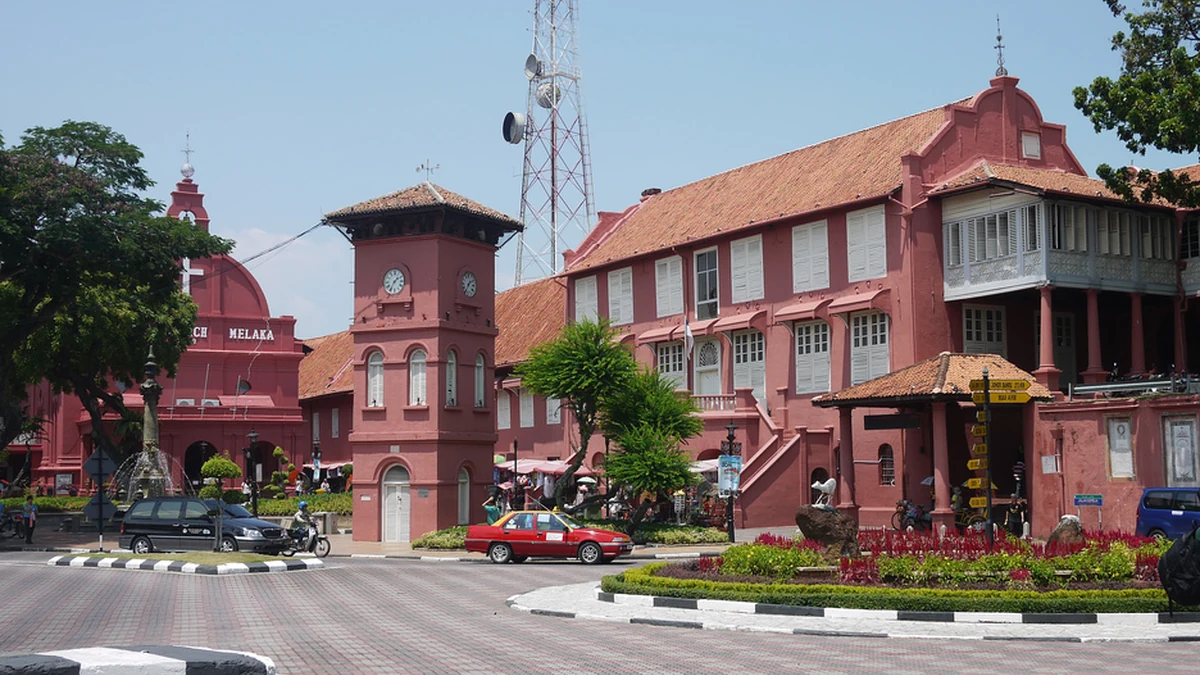
Malacca cruise port leads to one of Southeast Asia’s most concentrated historic centres, but the maritime arrival is less standardised than the sightseeing. Ships may use a tender or passenger-terminal arrangement, and passengers should follow the landing information issued for their sailing rather than assuming every call uses the same pier.
Once the group reaches the heritage core, the day becomes simple. Dutch Square, St Paul’s Hill, A Famosa, Jonker Street and the river sit close together. The strongest plan is a carefully paced walk with one museum or river cruise, not a coach journey out of a city that already contains the main attraction.
Malacca Cruise Port at a Glance
| Port name | Malacca Cruise Port |
|---|---|
| Main arrival area | Ship-specific tender or passenger-terminal landing near the historic Melaka waterfront |
| Cruise region | Asia |
| Country / Territory | Malaysia |
| Currency | Malaysian ringgit (MYR) |
| Languages | Malay and English, with Chinese languages, Tamil and Kristang also heard |
| Port role | Gateway to the compact UNESCO historic city of Melaka |
| Disembarkation | Tender or passenger-terminal operation; the ship’s notice must identify the current landing |
| Walkability | High around Dutch Square, Jonker Street and the river after the landing transfer |
| Shuttle required | Sometimes for the port connection; not normally needed within the central heritage route |
| Main transport | Walking, taxis, ride-hailing cars, trishaws, port transfers and the river cruise |
| Best first-time plan | Walk Dutch Square, St Paul’s Hill and Jonker Street, then use the river or a museum according to heat and time |
| Main caution | Do not assume a future or older terminal description matches the landing assigned to the ship |
Weather & Best Time to Visit Malacca
Malacca is hot, humid and prone to heavy showers throughout the year. The practical difference between seasons is usually the frequency and intensity of rain rather than a dramatic change in temperature. Check the METMalaysia forecast for Central Melaka and carry rain protection even when the tender ride begins in sunshine.
| Month / season | Typical high | Typical low | Rain / conditions |
|---|---|---|---|
| December–February | 31°C | 24°C | Hot and humid, with showers and occasional heavier monsoon rain |
| March–May | 33°C | 25°C | Very warm, with thunderstorms and strong midday heat |
| June–August | 32°C | 24°C | Warm with mixed sunshine and showers; exposed walking remains demanding |
| September–November | 31°C | 24°C | Often wetter, with intense downpours and temporary street flooding possible |
December to February
Use the cooler morning for St Paul’s Hill and keep a museum or river cruise available if rain becomes persistent.
March to May
The heritage route is compact, but heat reflects from paving and red-painted buildings. Start early, drink water and avoid climbing the hill at midday.
June to August
A parasol or compact umbrella helps with both sun and showers. Do not turn a comfortable short walk into a long city circuit simply because the sky is clear.
September to November
Heavy rain can affect the tender, trishaws and river cruise as well as walking. Protect electronics and use covered museums while roads drain.
Understanding the Malacca Cruise Arrival
Malacca’s landing arrangements are evolving. The Melaka Gateway developer describes the Malacca International Cruise Terminal, but its own wording is forward-looking and should not be read as proof that every current ship uses that terminal.
An established passenger reference point is the International Ferry Terminal and ICQS complex close to the historic waterfront. A ship may instead operate tenders to another approved landing. The cruise line’s daily programme must therefore control the address, transport and final tender time.
Photograph the landing and note whether the return involves a shuttle, security check or tender queue. Malacca’s heritage centre is close to the water, but the correct route back depends on the specific maritime operation.
Malacca or Melaka?
Malacca is the familiar English spelling and remains common in cruise itineraries. Melaka is the official Malay spelling used by the state and many local organisations. They describe the same city and state.
Searches, maps and signs may use either form. Save both spellings when looking for a terminal or attraction, but do not assume that “Melaka Gateway” and the old central passenger landing are the same facility.
The article title uses Malacca for search clarity while the body uses Melaka where it appears in official names. That distinction should not change the physical port-day plan.
Dutch Square and the Historic Core
The Tourism Malaysia guide to Dutch Square identifies the red Stadthuys, Christ Church and surrounding monuments at the centre of the visitor route. Arrive early if possible because coach groups and trishaws gather here.
The square is more useful as an orientation point than as a place to spend the whole morning. Read the building sequence, then move towards St Paul’s Hill, A Famosa or the river before the area becomes crowded and hot.
Trishaws are colourful and can help passengers who do not want a long walk, but routes, music and prices vary. Agree the duration and finish point before boarding rather than assuming a standard heritage circuit.
St Paul’s Hill and A Famosa
The Tourism Malaysia guide to St Paul’s Hill provides context for the ruined church and elevated site. The climb is short but exposed, with steps and uneven surfaces that become slippery after rain.
A Famosa’s Porta de Santiago sits below the hill and fits naturally into the same walking loop. These remains help explain the Portuguese phase of Malacca’s history before the Dutch and British layers represented elsewhere.
Passengers with limited mobility can see A Famosa and the lower heritage streets without completing the hill. Do not let one viewpoint turn the day into a physical test when the city offers strong ground-level history.
Why UNESCO Matters
The UNESCO listing for Melaka and George Town recognises centuries of trading and cultural exchange between Asian and European communities. Malacca’s value is therefore broader than a collection of colonial façades.
A good walking route notices mosques, temples, churches, shophouses, food and living neighbourhoods. It should not present the city as if history stopped when the Dutch buildings were painted red.
Use a guide or museum when the group wants deeper context. Without explanation, the compact centre can become a fast sequence of photographs whose connections are easy to miss.
Jonker Street and the Peranakan Story
Jonker Street and the streets around it contain shophouses, temples, cafés, antiques and businesses associated with Malacca’s Chinese and Peranakan heritage. The famous night market may not operate during a daytime cruise call, so do not plan around evening photographs.
A Peranakan museum or carefully chosen heritage house can add more depth than browsing every souvenir shop. Check opening days because some small museums close unexpectedly or limit entry.
Food is part of the story. Nyonya dishes combine regional ingredients and culinary traditions, but a full restaurant lunch needs time. Choose one meal rather than eating repeatedly at stalls while the main sights remain unseen.
Melaka River Cruise
The official Tourism Malaysia page for the Melaka River Cruise describes a route through the historic urban landscape. It offers shade from walking only in part; open sections can still be hot and bright.
Use the river cruise after the main heritage walk or as a substitute when mobility limits the hill. Queue, boarding location and operating conditions should be checked on the day rather than assumed from evening tourist schedules.
The river is not a replacement for Dutch Square and St Paul’s Hill if those are priorities. It shows a different perspective and modern riverfront redevelopment, so the two experiences complement rather than duplicate each other.
Museums: Choose One
The Stadthuys complex, maritime museums and smaller heritage houses create more museum choices than a cruise call can use. Select one according to the group’s interest: city history, maritime trade or domestic Peranakan culture.
The Tourism Malaysia overview of museums in Melaka is a useful starting point, but opening and gallery access should be rechecked locally.
A museum works best in the hottest or wettest part of the day. Do not visit three brief exhibitions simply to accumulate names; one well-chosen collection provides more understanding and a better physical break.
Food and Lunch Strategy
Chicken rice balls, Nyonya cuisine, cendol and Portuguese-Eurasian dishes are widely associated with Malacca. Famous venues can have long queues when domestic visitors and cruise groups arrive together.
Eat slightly before the main lunch period or choose a respected alternative one street away. A half-hour queue is only worthwhile when the meal is a major priority, not when it removes the museum or return margin.
Malaysian ringgit is useful for hawkers and small businesses. Cards are common in larger restaurants, but cash avoids losing time when a terminal or connection fails.
Walking, Trishaws and Ride-Hailing
The heritage centre is one of the most walkable cruise destinations in the region once passengers reach it. The challenge is heat, crowded pavements and traffic crossings rather than distance.
A trishaw can reduce walking and add colour, but it is not a regulated sightseeing bus with one fixed circuit. Confirm fare, duration and where the driver will finish.
Ride-hailing is useful for passengers whose landing is farther from Dutch Square or who want the Portuguese Settlement. Keep the precise return terminal in the app, because a generic search for Malacca port may select the wrong waterfront point.
The Portuguese Settlement and Outlying Stops
The Portuguese Settlement lies outside the compact heritage core and reflects the Kristang community’s continuing presence. It is most rewarding with a guide, meal or cultural context rather than a short drive-by.
Adding it means using a vehicle and giving up part of the central walk. It can be a strong choice for returning visitors, but Dutch Square, St Paul’s Hill and Jonker Street are the better first-call foundation.
Other outlying attractions should be judged against the same test. Malacca’s greatest advantage is concentration; leaving the centre should solve a clear interest, not fill an excursion coach.
Mobility and Accessibility
The flat riverfront and Dutch Square are manageable for many passengers, but kerbs, traffic, uneven shophouse entrances and the St Paul’s Hill steps require care. Rain makes tiled and stone surfaces slippery.
A trishaw or taxi-based route can connect Dutch Square, the river and a museum with less walking. Confirm whether a mobility aid can travel in the vehicle and whether the tender or landing is the more difficult stage.
Public toilets may require small change or be located inside attractions. Build regular seated stops into the route rather than waiting until heat has already exhausted the group.
CruisePing Recommended Malacca Port Day
Move directly from the confirmed landing to Dutch Square. Continue up St Paul’s Hill and down past A Famosa before the heat peaks, then cross towards Jonker Street for one temple, heritage house or museum.
Eat a focused local lunch and use the Melaka River Cruise if time and weather support it. Return towards the passenger landing early enough to absorb a shuttle or tender queue.
This route keeps the UNESCO city at the centre of the day. A coach excursion beyond Malacca is rarely a better first use of the call.
A Rainy Malacca Day
Heavy rain can begin quickly and overwhelm small umbrellas. Move into the Stadthuys museum complex, a heritage house or a covered restaurant rather than trying to complete St Paul’s Hill on wet stone.
The river cruise may pause or become less comfortable during thunderstorms. Keep it as an option, not the only remaining activity after a morning delay.
Street flooding is often local and temporary, but it can slow vehicles. Begin the return earlier instead of assuming the road will clear before the last tender.
How to Pace a Malacca Port Day
A comfortable first route needs about two hours for Dutch Square, St Paul’s Hill and A Famosa, followed by time on Jonker Street and one indoor attraction. Lunch and a river cruise can then be added if the landing and weather have not reduced the call.
When crowds build, move away from Dutch Square rather than waiting for a clear photograph. The surrounding streets contain the history that explains the square, and returning later may provide a quieter final view.
Finish on the waterfront side of the heritage area. The city is compact, but a final museum or café on the far side of traffic can still delay the tender connection when rain begins.
DIY or Organised Excursion?
Malacca is well suited to independent exploration once the landing point is known. The central route is compact, English is widely used and taxis or ride-hailing can cover any gap.
A guided excursion is worthwhile for deeper historical interpretation, limited mobility or a ship-specific terminal transfer. The guide should spend time in the heritage centre rather than moving passengers through multiple retail stops.
A shore excursion to Kuala Lumpur from Malacca is a poor first-time trade for most passengers. The long road journey abandons a UNESCO city immediately beside the port call.
Tender Cards and Local Time
Keep the tender card and ship time visible throughout the walk. Malaysia and the ship normally use the same local time, but passengers should still follow the onboard clock rather than a phone that has failed to update after a previous port.
Common Malacca Cruise Port Mistakes
The main mistake is assuming every ship uses a newly promoted cruise terminal. Use the landing stated by the current sailing and keep that return point saved offline.
Another is planning the Jonker Street night market during a daytime call. The street remains worth visiting, but the evening market atmosphere may not exist.
Finally, do not overfill the route with museums. Choose one collection and leave time to understand the streets between the buildings. Set one group alarm well before the required return to the landing and another at the decision point for leaving.
Protecting the Return to the Ship
The return may involve walking, a taxi, port security and a tender. Calculate from the final boarding stage, not from the distance between Dutch Square and the waterfront.
Photograph the pier or terminal entrance and record the ship’s local contact. A driver should be shown the map pin rather than asked for “cruise terminal” without a name.
If time slips, remove the river cruise or final shopping. The core heritage loop remains complete without them, while a missed tender cannot be recovered.
Malacca Cruise Port Checklist
Malacca is compact ashore, but passengers still need to establish the correct maritime landing before relying on the easy heritage walk.
- Confirm the ship-specific tender or terminal landing and final boarding time.
- Save both Malacca and Melaka spellings when searching maps and official information.
- Start with Dutch Square and St Paul’s Hill before midday heat.
- Choose one museum, heritage house or river cruise rather than all of them.
- Carry Malaysian ringgit, water and compact rain protection.
- Use the exact passenger landing for any taxi or ride-hailing return.
- Leave the heritage centre early enough for security and tender queues.
Useful Official Links
For Malacca, the ship’s landing notice comes first; official heritage and tourism pages then help build a compact route around the UNESCO centre.
- Melaka Gateway: Malacca International Cruise Terminal project
- UNESCO: Melaka and George Town
- Tourism Malaysia: Dutch Square
- Tourism Malaysia: St Paul’s Hill
- Tourism Malaysia: Melaka River Cruise
- Tourism Malaysia: museums in Melaka
- METMalaysia forecast for Central Melaka
Malacca Cruise Port FAQ
Do cruise ships dock in Malacca?
Arrangements vary. A call may use tenders or a passenger terminal, so the current ship notice must identify the landing.
Are Malacca and Melaka the same place?
Yes. Melaka is the official Malay spelling; Malacca remains common in English cruise itineraries.
Can you walk to the main sights?
Usually yes once you are delivered to the historic waterfront. Dutch Square, St Paul’s Hill, A Famosa and Jonker Street are close together.
Is the Melaka River Cruise worth doing?
It can add a different view of the city, but it should follow the main heritage walk or replace part of it when mobility or heat is an issue.
Can you visit Kuala Lumpur?
The road journey is long and usually a poor first-time choice when Malacca’s UNESCO centre is beside the port call.
What currency is used?
Malaysian ringgit. Cash is useful for food stalls, trishaws and small museums.
CruisePing Port Verdict
Malacca is one of the easiest Asian port cities to understand on foot after the landing. Dutch Square, St Paul’s Hill, Jonker Street and the river form a compact, coherent first visit.
The only unstable element is the maritime arrival. Follow the ship’s current terminal or tender instructions, then keep the sightseeing local instead of surrendering the day to a long coach excursion.
Ready to browse our article library?
Looking beyond Malacca? Explore more ports in the Asia region, or narrow it to Malaysia in particular. For cruise comparisons, planning shortcuts and value guides, head over to our main article archive.