
Malé cruise port is an anchorage call in one of the world’s most densely built capital cities. Ships commonly remain offshore and send passengers by tender or launch to a harbour landing. Once ashore, the main city sights fit into a compact walk, but the tender and any second boat excursion control the timetable.
The first decision is whether to explore Malé itself or leave immediately for a resort, sandbank or snorkelling trip. A city day offers markets, mosques, the National Museum and everyday Maldivian life. A marine excursion offers the postcard landscape, but it requires another operator, another boat and a more protected return.
Malé Cruise Port at a Glance
| Port name | Malé Cruise Port |
|---|---|
| Main arrival area | Ship-specific tender landing around Malé’s northern and western harbourfront |
| Cruise region | Indian Ocean |
| Country / Territory | Maldives |
| Currency | Maldivian rufiyaa (MVR); US dollars are widely used in tourism |
| Languages | Dhivehi; English is widely used in tourism, transport and many city businesses |
| Port role | Capital-city anchorage with access to Malé, local islands, resorts and marine excursions |
| Disembarkation | Tender or launch from the anchored ship; the landing and boat schedule are sailing-specific |
| Walkability | High within compact Malé, but narrow pavements, traffic and heat reduce comfort |
| Shuttle required | Usually unnecessary for central Malé; boats or vehicles are required beyond the city island |
| Main transport | Ship tenders, walking, taxis, local ferries, excursion boats and organised transfers |
| Best first-time plan | Walk the markets, Hukuru Miskiy area, Sultan Park and National Museum, then return to the harbour early |
| Main caution | A resort or snorkelling excursion depends on another boat and cannot be improvised like a city taxi trip |
Weather & Best Time to Visit Malé
Malé is hot and humid throughout the year. The north-east monsoon is generally drier, while the south-west monsoon brings more frequent rain, squalls and rough water. The exact sea state matters because cruise passengers depend on tenders and many excursions use small boats. Check the Maldives Meteorological Service forecast shortly before the call.
| Month / season | Typical high | Typical low | Rain / conditions |
|---|---|---|---|
| January–March | 31°C | 26°C | Generally sunnier and drier, with warm seas and occasional showers |
| April–June | 31°C | 27°C | Hot and humid, with the south-west monsoon bringing heavier rain and squalls |
| July–September | 30°C | 26°C | Changeable, with showers, wind and rougher small-boat conditions possible |
| October–December | 30°C | 26°C | Transition towards drier weather, though thunderstorms and heavy rain still occur |
January to March
These months often give the best conditions for a city-and-snorkel combination, but sun exposure on boats is intense. Carry water and reef-safe sun protection.
April to June
A squall can arrive quickly and reduce visibility. Use an operator with a clear weather policy and do not insist on a sandbank landing when the boat crew recommends a substitute.
July to September
The city remains visitable during showers, while exposed boat trips can become uncomfortable or unsafe. Keep the Malé walking route as the practical fallback.
October to December
Conditions can vary sharply during the monsoon transition. Check the forecast on the morning of the call and leave extra time for wet tender boarding.
Arriving by Tender in Malé
Maldives Ports Limited identifies Malé Commercial Harbour as the country’s principal port on the north-west side of Malé. Cruise ships may anchor outside the harbour and use a landing chosen for the ship’s operation rather than placing passengers directly on the commercial quay.
Follow the tender group and landing map issued onboard. Malé has several harbour areas, ferry points and jetties, and a driver or boat operator needs the precise collection point. “Malé port” is not a sufficient meeting instruction.
The first tender can involve clearance and a crowded landing. Start the sightseeing clock when passengers reach the street, not at the ship’s published arrival time. Photograph the return gate and note whether the final boat is a tender or local launch.
A Compact Walking Route through Malé
The official Visit Maldives website presents the country mainly through its islands and experiences, while Malé itself is small enough to cross on foot. It is not a pedestrian resort island: motorbikes, taxis and delivery vehicles use narrow streets, pavements can disappear and midday humidity makes short distances tiring.
A useful route links the fish and produce markets, Republic Square, the Islamic Centre, Sultan Park, National Museum and Hukuru Miskiy area. Choose the order according to the tender landing and opening times rather than following a fixed tourist loop.
Dress modestly from the start. Beachwear is inappropriate in the capital, especially around mosques and government buildings. Lightweight clothing that covers shoulders and knees is comfortable and respectful.
Fish Market and Local Produce
The fish market and nearby produce market show how a nation of dispersed islands supplies its capital. The area is busy, wet and operational rather than staged for visitors. Keep out of working lanes and ask before photographing people at close range.
Morning activity can be strongest, but exact timing depends on fishing and deliveries. A guide helps explain tuna processing, island produce and the relationship between Malé and the outer atolls.
Do not buy fresh fish or produce for the ship without confirming import and storage rules. Use the market to understand the city and eat prepared food at a suitable café instead.
Hukuru Miskiy and Mosque Etiquette
The Visit Maldives page for Hukuru Miskiy describes the seventeenth-century coral-stone mosque and its historic minaret. It is an active place of worship with cultural significance, not simply an architectural attraction.
Visitor access may be restricted during prayers or require permission. Shoes must be removed where instructed, clothing should be modest and photography should never interrupt worship. Exterior viewing remains worthwhile if the interior is unavailable.
The nearby Islamic Centre and Grand Friday Mosque represent a different architectural period. Seeing both helps passengers understand that Maldivian culture is not confined to resorts or traditional coral-stone buildings.
National Museum and Sultan Park
The Maldives Ministry of Arts, Culture and Heritage website identifies the National Museum on Chaandhanee Magu. Check current opening and ticket arrangements because government hours and public access can change.
The museum provides context for the pre-Islamic, sultanate and modern history of the islands. It is the strongest indoor choice during heat or rain and gives a cruise visit more substance than a market-and-souvenir walk alone.
Sultan Park beside the museum offers shade and a brief pause. Use it as part of the route rather than travelling across the city solely for a park stop.
Republic Square, Waterfront and the Islamic Centre
Republic Square and the northern waterfront are close to several likely landing areas. The area is useful for orientation, public buildings and views of the harbour traffic that sustains the capital.
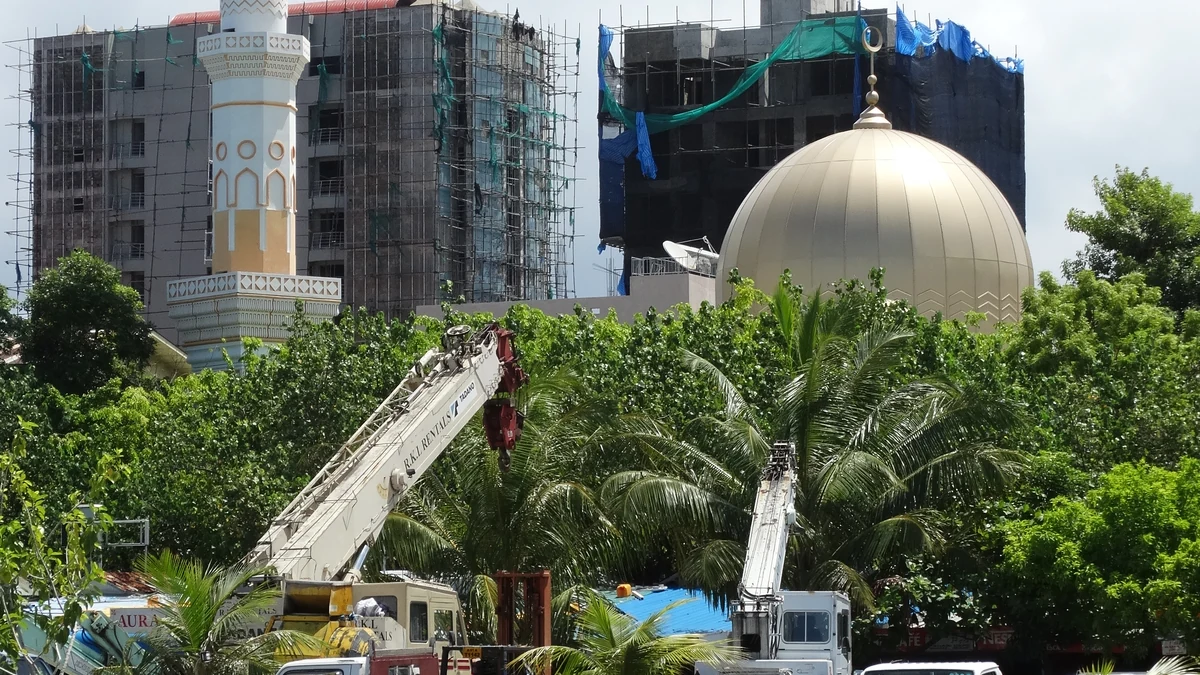
The Islamic Centre’s golden dome is a major city landmark. Access depends on prayer times, dress and current rules. A respectful exterior visit fits easily between the harbour, park and market.
Security restrictions can apply around government buildings. Follow signs, avoid photographing guarded entrances and accept that a route may be diverted without warning.
Resort Day versus City Day
A resort excursion can deliver the beach, pool and reef experience associated with the Maldives, but resort islands are private operations with controlled transfers. Passengers cannot simply arrive by public ferry and buy access at the gate.
The booking should name the resort, departure jetty, boat type, inclusions, return time and weather policy. Check whether food, drinks, towels, snorkel equipment and taxes are included, because the complete cost can be far higher than the headline day-pass price.
A city day is less photogenic but more independent and culturally informative. First-time visitors who already have beach days elsewhere may find Malé more distinctive than another resort compound.
Snorkelling, Sandbanks and Dolphin Trips
Small-boat trips can visit reefs, sandbanks or dolphin areas, but route quality depends on weather, tide and responsible wildlife practice. A sandbank may be submerged or crowded, and dolphin sightings should never be guaranteed.
Ask about lifejackets, shade, toilet arrangements, swim supervision and the maximum group size. Passengers who are not confident swimmers need a clear alternative to jumping from the boat in open water.
Book through the ship or an operator that confirms cruise collection and return in writing. A general airport-transfer or hotel-tour company may not understand tender timing from an anchored vessel.
Local Islands and Public Ferries
Nearby inhabited islands can offer a different perspective from Malé and resorts, but public ferries are designed for local transport rather than cruise excursions. Timetables, terminals and frequency must be checked on the day.
Villingili or Hulhumalé may be reached relatively easily in the wider capital area, yet each creates another connection. The benefit should be clear: quieter streets, a beach or a specific meal, not simply leaving Malé because it feels busy.
More distant islands are unsuitable for an improvised day. Speedboat services can change with weather, and the final public return may not protect the ship’s departure.
Hulhumalé and the Airport Island
Hulhumalé is connected by road across the Sinamalé Bridge and offers wider streets, cafés and beaches. It can suit passengers who want a less dense urban environment, but it is not the historic capital.
A taxi route should account for bridge traffic and the exact cruise landing. Do not confuse Hulhumalé with Hulhulé, the airport island, or assume a resort launch departs from either one.
For a normal port day, central Malé and one nearby area are enough. Crossing the bridge should solve a specific interest rather than fill spare time.
Food, Cafés and Alcohol Rules
Malé offers local cafés and restaurants serving tuna, coconut, rice, flatbreads and South Asian influences. Ask about chilli and allergens, and choose a venue with enough time for service rather than ordering just before the tender return.
Alcohol is not generally available in Malé city. It is served under licence at resorts and some tourist operations. Passengers should not carry alcohol ashore or expect a city restaurant to serve it.
Maldivian rufiyaa is useful for taxis, cafés and markets. US dollars may be accepted in tourism, but change and exchange rates can be unfavourable for small purchases.
Shopping and Responsible Souvenirs
Chaandhanee Magu and other central streets contain souvenir shops, but not every item is made in the Maldives. Ask about origin before paying a premium for imported products presented as local crafts.
Avoid coral, shells and products derived from protected marine life. The environmental and customs risks outweigh any souvenir value. Lacquer work, textiles, books and locally designed items are safer choices when provenance is clear.
Bargaining may be possible in some shops, but it should remain polite. Compare quality and total price rather than turning the final hour into a contest over a small discount.
Taxis, Traffic and Navigation
Malé taxis are useful when heat, mobility or a distant landing makes walking uncomfortable. The island is compact, but one-way streets and traffic can make a short ride slower than expected.
Agree the fare or use the current official system available locally. Show the exact jetty on the return and keep the ship card accessible. A taxi driver may know the commercial harbour but not the temporary cruise landing.
Walking is often faster through the centre, yet passengers should use crossings carefully and avoid stepping into motorbike lanes while looking at maps.
Mobility and Accessibility
Tender boarding is usually the most significant barrier. The city itself is flat, but pavements are narrow, kerbs are uneven and traffic leaves limited space for wheelchairs.
A taxi-based museum and waterfront route can reduce walking. Mosque interiors, boat excursions and local-island jetties require separate checks rather than being assumed accessible because the city is level.
Heat makes mobility harder. Schedule an indoor museum, café or air-conditioned stop before fatigue affects the final tender boarding.
CruisePing Recommended Malé Port Day
Take an early tender and walk from the confirmed landing to the markets, Republic Square, Hukuru Miskiy area and Sultan Park. Visit the National Museum when it is open, then eat a local lunch before returning through the harbourfront.
Passengers who want the classic Maldives water experience should replace the city route with one pre-booked resort or snorkelling excursion. Do not attempt a full city visit after a distant boat trip unless the call is unusually long.
The two plans answer different questions. Malé explains the country; a resort or reef delivers the landscape. Trying to force both into a normal call risks a rushed version of each.
Malé Cruise Port: DIY or Organised Excursion?
Central Malé is suitable for independent walking when passengers are comfortable with heat, traffic and modest dress. A local guide adds useful historical and religious context but is not essential for navigation.
An organised excursion is strongly preferable for resorts, sandbanks, snorkelling or local islands. The key value is control of the boat, weather decision and return to the cruise tender.
Do not judge a marine excursion only by price. A cheaper operator without shade, clear safety equipment or a written cruise return is poor value in an anchorage port.
Using a Guide without Losing the City
A local guide is most valuable for the markets, mosque history and the relationship between Malé and the outer atolls. The city does not need a coach tour; a small walking group can move more naturally through narrow streets and adjust around prayer times.
Agree whether museum admission, taxis and food are included. A guide who meets at the precise tender landing removes uncertainty, while a generic meeting at the commercial harbour may create a difficult start.
Keep enough independent time for a café, market or waterfront walk. Interpretation should deepen the city rather than turn a compact capital into a sequence of scheduled photo stops.
A Wet or Windy Malé Day
During heavy showers, use the National Museum, a mosque exterior when appropriate and a long lunch. The compact city allows passengers to shorten walking without losing the whole day.
Wind may cancel or alter resort and snorkelling boats while the city tender still operates. Accept the operator’s safety decision and use Malé as the fallback instead of searching the harbour for another boat.
Protect phones and ship documents in a dry pouch. Wet tender steps and polished city entrances require more care than the rainfall itself.
Tender Cards, Time and Connectivity
Keep the tender card, landing photograph and ship time available offline. Mobile service is strong in Malé, but a resort boat or reef stop can move beyond reliable data coverage, and the operator’s return instruction must not depend on one passenger’s phone.
Common Malé Cruise Port Mistakes
The first mistake is arranging a meeting at “Malé harbour” without a jetty or map pin. The city has multiple maritime facilities and temporary cruise arrangements.
The second is assuming resort islands welcome independent day visitors. Access and transport are controlled and must be booked.
The third is wearing beach clothing in the capital. Malé is a working Muslim city, and modest dress is expected beyond designated tourist resorts. A second adult should also hold the operator and ship contact details.
Protecting the Tender Return
Return to the named landing before the final tender window. Boat loading, security and harbour traffic are part of the journey, not spare minutes after sightseeing.
For a marine excursion, require the operator to state the cruise return time rather than only the duration. The excursion boat may use a different jetty from the ship tender, creating a final transfer across the city.
If weather worsens, leave the outer island or reef early. A conservative return is more valuable than one final snorkel stop when the ship remains at anchor.
Malé Cruise Port Checklist
Malé is compact, but every cruise day still depends on identifying the correct tender landing and deciding whether the day belongs to the city or to another island.
- Confirm the tender landing, final boat time and any separate excursion jetty.
- Choose central Malé or one organised marine/resort excursion as the main plan.
- Wear modest lightweight clothing and carry sun and rain protection.
- Check museum and mosque access around government hours and prayer times.
- Use a written return arrangement for every resort, reef or local-island boat.
- Carry rufiyaa for small purchases while confirming where US dollars are accepted.
- Return to the cruise landing before harbour and tender queues become critical.
Useful Official Links
For Malé, use current port, weather and cultural sources because cruise landings, government opening and small-boat operation can change independently.
- Maldives Ports Limited: Malé Commercial Harbour
- Maldives Ports Limited: current vessel movements
- Visit Maldives official website
- Visit Maldives: Hukuru Miskiy
- Ministry of Arts, Culture and Heritage
- Maldives Meteorological Service forecast
- Maldives Meteorological Service climate information
Malé Cruise Port FAQ
Do cruise ships dock in Malé?
Many cruise ships anchor offshore and use tenders or launches. The exact landing is confirmed by the ship.
Is Malé walkable?
Yes. The city is compact and flat, but heat, traffic and narrow pavements require care.
Can you visit a resort independently?
Only when the resort accepts day visitors and the boat transfer is booked. You cannot assume access on arrival.
Is alcohol available in Malé?
Not normally in the city. Licensed resorts and certain tourist operations may serve it.
What should passengers wear?
Modest clothing covering shoulders and knees is appropriate in the capital, especially around mosques.
What currency is used?
Maldivian rufiyaa. US dollars are widely used in tourism, but local cash is practical for taxis, markets and cafés.
CruisePing Port Verdict
Malé is more culturally valuable than its resort-focused reputation suggests. The markets, mosques, museum and harbour explain how the Maldives functions beyond holiday islands.
Passengers who prefer reef and beach scenery should book one protected boat excursion and let it replace the city route. The tender and second-boat connection make overloading the call an unnecessary risk.
Ready to browse our article library?
Looking beyond Malé? Explore more ports in the Indian Ocean region, or narrow it to Maldives in particular. For cruise comparisons, planning shortcuts and value guides, head over to our main article archive.