
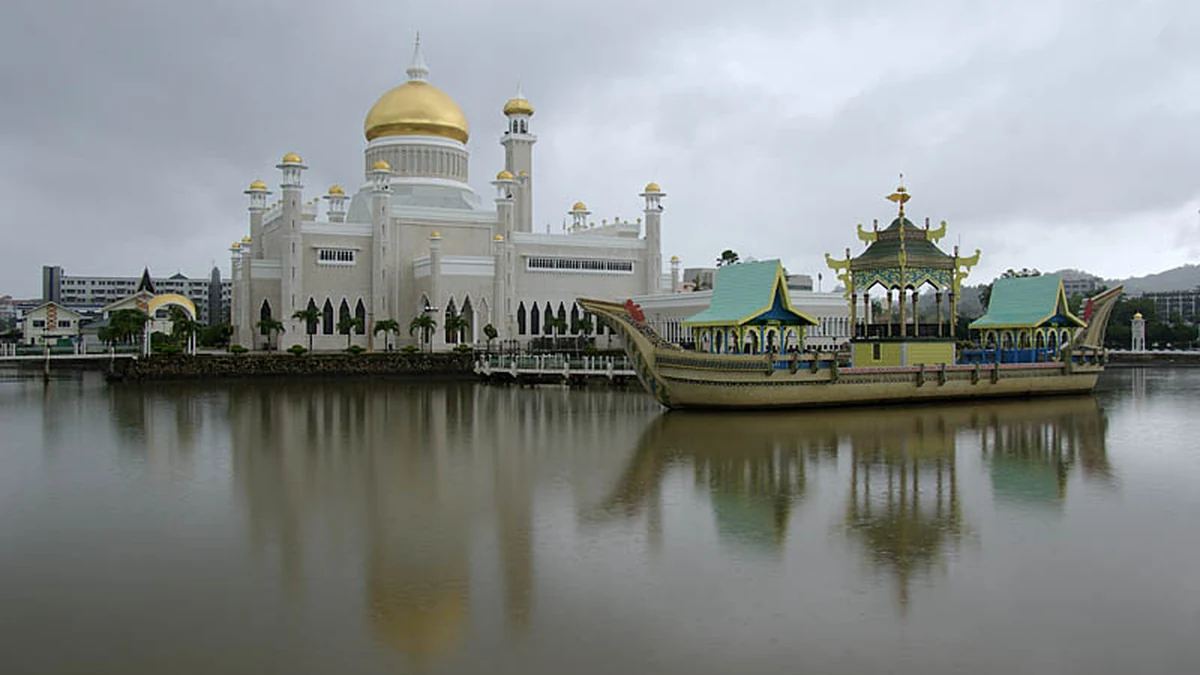
Muara cruise port is Brunei’s principal cruise gateway, but the ship arrives in an industrial harbour rather than beside the sights of Bandar Seri Begawan. The first decision is therefore transport: secure a reliable way to cover the roughly 27-kilometre road transfer before choosing mosques, museums or a water-village trip.
A focused day suits Brunei. The capital is compact once you reach it, and its strongest sights—Omar Ali Saifuddien Mosque, the riverfront and Kampong Ayer—can be combined without turning the call into a race. The weak plan is to improvise at the port and hope a scarce taxi appears.
The official Muara Port Company cruise-centre page confirms that passengers use the Cruise Ship Centre inside the conventional terminal. Treat the ship’s own arrival instructions and shuttle arrangements as the operational source of truth.
Muara Cruise Port at a Glance
| Port name | Muara Cruise Port |
|---|---|
| Main arrival area | Muara Port Cruise Ship Centre within the conventional terminal, about 27–28 km from Bandar Seri Begawan |
| Cruise region | Asia |
| Country / Territory | Brunei Darussalam |
| Currency | Brunei dollar (BND; Singapore dollars are commonly accepted at par) |
| Languages | Malay; English is widely understood in visitor settings |
| Port role | Day call |
| Disembarkation | Docked at a controlled commercial port |
| Walkability | Poor beyond the terminal; the port is not a city-centre arrival |
| Shuttle required | Yes for most independent sightseeing; use the ship shuttle, excursion or pre-arranged vehicle |
| Main transport | Ship shuttle, organised tour, pre-booked car or taxi; water taxi within Bandar Seri Begawan |
| Best first-time plan | Transfer to Bandar Seri Begawan, combine the central mosques with Kampong Ayer, and return with a generous road buffer |
| Main caution | Do not assume taxis or public buses will be waiting at the secure port gate |
Official Sources for the Day
For Muara, use Muara Port Cruise Ship Centre to confirm the arrival context, Brunei Tourism: Brunei-Muara for the main destination choice, Brunei Tourism: getting around for access or attraction detail, and Brunei Meteorological Department for live weather or service changes. Keep the Muara ship programme open as well: public pages cannot override the berth, shuttle, tender or all-aboard instructions issued for this call.
Where Cruise Ships Arrive
Muara’s Cruise Ship Centre sits inside a working, access-controlled terminal on Brunei Bay. Read the daily programme before disembarking and note the final shuttle time. Walking independently through a commercial-port environment may be prohibited or impractical. To retain a clean transfer from gangway to booked transport, put the pickup point and latest departure in the same plan and preserve the return margin when a late start shortens the visit.
Muara to Bandar Seri Begawan
The capital is around 27–28 kilometres from the port and the drive commonly takes about 30–45 minutes in normal conditions. For this route, allow at least an hour each way in the day plan, even when the outbound journey looks quick. Road delays, loading queues and an unfamiliar pickup point can consume the margin. If the outbound leg runs late, drop an optional follow-on stop before moving the ship return later, leaving enough time in the capital without gambling on all-aboard.
Ship Shuttle or Private Driver
A ship shuttle is usually the simplest route when it operates to a central drop-off, while a private driver gives control over the sequence. A cheaper unconfirmed taxi plan can leave you stranded at either end. The practical response is to compare the shuttle’s final return with the price and certainty of a pre-booked car. The full timetable—port exit, visit and return through security—must fit; otherwise certainty rather than maximum theoretical flexibility is only a best-case assumption.
Public Transport Reality
Brunei has public buses, and the official tourism guide describes inexpensive urban services, but the cruise terminal is not an easy place to begin a bus-based itinerary. Use buses only after reaching the capital and only when the route is clear. Allow for the possibility that frequency and stop information can be difficult to judge within a short call. Share the collection point and departure time with the whole group; that avoids losing the margin needed for low-cost local travel without making the port transfer fragile.
Omar Ali Saifuddien Mosque
The lagoon-side mosque is the capital’s defining landmark and sits close to the central waterfront. Work backwards from all-aboard time and check prayer times, dress modestly and accept that interior access can close without fitting a visitor schedule. Religious observance always takes priority over sightseeing. Treat this stage as a timed commitment even when no ticket is required; a written turnaround makes later changes easier and gives you a respectful architectural visit that does not depend on entering every space.
Jame’ Asr Hassanil Bolkiah Mosque
Brunei’s other major mosque lies outside the most compact riverfront walking loop. Add it by vehicle when mosque architecture is a main priority. Combining both mosques with several museums and a long boat trip spreads the day thin. If the stop becomes a rushed extra, remove it before reducing the port-security, shuttle or tender buffer, keeping a coherent capital circuit rather than a checklist intact.
Kampong Ayer by Water Taxi
Kampong Ayer is the historic water-village community across the Brunei River from the centre. A workable cruise-day choice is to agree the route, duration and total fare before boarding a licensed water taxi. A casual boat offer may turn into a longer wildlife or mangrove trip than the cruise timetable permits. Ask the operator which stage is most likely to cause delay and what alternative they will use; a clear answer supports direct river perspective with controlled timing.
Kampong Ayer Gallery
The official tourism site describes a cultural and tourism gallery that explains water-village life. Confirm opening status locally and treat it as a useful complement rather than the sole reason for crossing. Build the return around the fact that small attractions can close, change hours or be affected by tides and local events. Agree the total fare, waiting arrangement and final drop-off before setting off, which gives context for what you see from the boat.
Royal Regalia and Museums
Bandar Seri Begawan’s museum choices add political and cultural context, but opening days can be restrictive. Set the limit before setting off: verify current hours before building the route around a museum interior. An unexpected closure can waste the most valuable part of a short capital visit. If access changes, use the nearest named fallback rather than searching while already on the road, leaving room for an easy substitution between museum, mosque exterior and waterfront.
Brunei River and Proboscis Monkeys
Longer river outings may search mangroves for proboscis monkeys beyond the central water village. Book a defined-duration trip and tell the boat operator your hard turnaround time. Since wildlife is never guaranteed and a search can extend far beyond the original promise, distinguish the last comfortable departure from the last theoretically possible one and use the earlier time. That protects a nature component without sacrificing the return transfer.
Istana Nurul Iman Viewpoint
The royal palace is generally viewed from outside rather than toured on an ordinary cruise day. Map distance and operational ease can differ. Treat a roadside or river view as a brief contextual stop. Driving to gates and waiting for a perfect photograph adds little when access is closed. Keep the route geographically compact and add a second distant stop only when the return calculation still supports time for places where visitors can actually engage.
Muara Beach and a Local Day
Muara Beach offers a closer alternative for passengers who do not want the capital transfer. Use one clear priority and confirm whether a shuttle or driver will wait and check facilities before committing. Heat, limited shade and uncertain onward transport make an improvised beach stop less simple than it appears. Decide before arrival what a successful visit requires; any extra stop should preserve a lower-intensity day close to the ship.
Money and Payment
Brunei uses the Brunei dollar, and Singapore dollars are commonly accepted at equal value, although change may be returned locally. Carry small notes and ask before relying on cards in boats, markets or small cafés. A card-only plan is vulnerable when terminals or connections fail. To retain quick transactions without over-exchanging cash, put the pickup point and latest departure in the same plan and preserve the return margin when a late start shortens the visit.
Dress and Behaviour
Brunei is conservative, and modest clothing is appropriate at mosques, government buildings and traditional communities. For this route, cover shoulders and knees and follow local instructions about footwear and photography. A beach-oriented cruise wardrobe may not be suitable for religious interiors. If the outbound leg runs late, drop an optional follow-on stop before moving the ship return later, leaving respectful access and fewer awkward changes of plan.
Food During a Short Call
The capital offers Malay dishes, rice plates and cafés, but a formal lunch can consume sightseeing time. Waiting for a slow service near the deadline creates unnecessary stress. The practical response is to choose a reliable central café after the main sights or eat before the return transfer. The full timetable—port exit, visit and return through security—must fit; otherwise local flavour while preserving the road buffer is only a best-case assumption.
Heat, Humidity and Storms
Brunei is hot and humid throughout the year, with heavy showers and thunderstorms possible in any month. Carry water, sun protection and a compact rain layer. Allow for the possibility that a short downpour can flood kerbs, slow traffic and disrupt small-boat plans. Share the collection point and departure time with the whole group; that avoids losing the margin needed for comfort without abandoning the entire itinerary.
Mobility and Accessibility
The port transfer is vehicle-based, while waterfront paths, boat steps and mosque thresholds vary in accessibility. Work backwards from all-aboard time and ask the cruise line about accessible shuttles and use a driver for door-to-door stops. Water taxis and small jetties can be unsuitable for wheelchairs or limited balance. Treat this stage as a timed commitment even when no ticket is required; a written turnaround makes later changes easier and gives you a realistic route built around accessible highlights.
A Four-Hour Call
A short call leaves little room for both the capital and a wide river excursion. Choose the central mosque, riverfront and one brief Kampong Ayer crossing. Every extra stop compounds transfer and loading risk. If the stop becomes a rushed extra, remove it before reducing the port-security, shuttle or tender buffer, keeping a memorable core experience rather than rushed fragments intact.
A Full-Day Call
A longer stay can support both major mosques, Kampong Ayer and one museum or nature element. A workable cruise-day choice is to keep the final hour-plus protected for the drive and port processing. The apparent abundance of time encourages overbooking early in the day. Ask the operator which stage is most likely to cause delay and what alternative they will use; a clear answer supports depth in three themes rather than superficial coverage of six.
Independent or Ship Excursion
Independent travel is feasible with confirmed transport, but the ship excursion transfers operational risk to the cruise line. Favour the excursion when the call is short, the shuttle is unclear or mobility needs are significant. Build the return around the fact that a bargain tour without port access knowledge may not reach the controlled pickup point. Agree the total fare, waiting arrangement and final drop-off before setting off, which gives the right balance between cost, freedom and return protection.
Return-to-Ship Buffer
The return drive should begin well before the final published shuttle or private-car deadline. Set the limit before setting off: aim to reach Muara at least 60–90 minutes before all-aboard unless the cruise line directs otherwise. Traffic is usually manageable, but a single delay matters when there is no nearby fallback. If access changes, use the nearest named fallback rather than searching while already on the road, leaving room for a calm re-entry through port security.
If the Shuttle Drop-Off Changes
Cruise shuttles may use different central hotels, malls or waterfront points from one call to another. Photograph the stop, obtain the final return time in writing and pin the location offline. Since a verbal description is easy to misunderstand in an unfamiliar city, distinguish the last comfortable departure from the last theoretically possible one and use the earlier time. That protects an unambiguous route back.
Photography at Religious Sites
Mosques are visually striking, but visitor access and photography rules can differ between exterior grounds and prayer spaces. Map distance and operational ease can differ. Ask before photographing people or interiors and put the camera away when requested. Ignoring local guidance can close access for your group and cause offence. Keep the route geographically compact and add a second distant stop only when the return calculation still supports good photographs without treating worship as a performance.
Mobile Data and Ride Apps
A local data connection can help with maps and communication, yet ride availability at Muara is not guaranteed. Use one clear priority and download offline maps and retain the driver’s number rather than depending on a fresh app request. Secure terminals and low driver supply can defeat an otherwise useful app. Decide before arrival what a successful visit requires; any extra stop should preserve navigation support without false confidence.
Planning Scenarios for Muara
When the capital shuttle starts late
A delayed port departure should shorten the sightseeing sequence, not the road buffer back to Muara. Keep Omar Ali Saifuddien Mosque and the riverfront as the core. Remove a secondary museum, shopping stop or distant viewpoint first, then retain the agreed vehicle and collection point for the return.
A mosque-closure fallback
Interior access at a mosque can change around prayer, events or visitor rules. The day still works if the route values the exterior, lagoon or city setting rather than treating entry as guaranteed. Pair the stop with the riverfront or Kampong Ayer so one closed doorway does not stall the whole capital visit.
Controlling a Kampong Ayer boat
A water-taxi trip should have a named boarding point, an agreed duration and a return landing that the road driver understands. A longer wildlife or mangrove extension may be worthwhile, but it must replace another capital stop. Keep a second adult aware of the fare, operator and shore-side meeting point.
Cash, cards and small purchases
Brunei’s modern malls and larger venues may accept cards, while water taxis, markets and small purchases can still be easier with local cash. Carry modest Brunei-dollar notes rather than relying on a large denomination. Confirm the total boat or driver price before departure and keep enough cash for the final transfer.
Heat, dress and indoor pauses
Lightweight modest clothing solves two problems at once: it suits the climate and reduces delays at religious sites. Carry a layer or covering rather than depending on loan items being available. An air-conditioned museum, café or mall can be used as a planned midday pause without changing the capital route.
The final handover at Muara
The last stage is not complete when the vehicle reaches the port road. Allow for the secure gate, passenger checks and any shuttle between the terminal and gangway. Ask the driver to use the exact return point supplied by the ship, and arrive before the final rush of coaches and private cars.
Keeping the route geographically sensible
Bandar Seri Begawan is compact, but adding coastal stops or a long river safari changes the shape of the day. Choose either a concentrated capital circuit or a wider private tour with fewer city interiors. Repeatedly crossing the same roads adds little and weakens the return plan to Muara.
Weather & Best Time to Visit Muara
| Month / season | Typical high | Typical low | Rain / conditions |
|---|---|---|---|
| January–March | 31°C | 24°C | Hot, humid and showery; thunderstorms remain possible |
| April–May | 32°C | 25°C | Very warm with high humidity and convective storms |
| June–August | 32°C | 24°C | Mixed sunshine and showers; strong sun between rain |
| September–December | 31°C | 24°C | Generally wetter with heavier downpours at times |
Average temperatures change little across the year. The operational issue is the combination of heat, sudden tropical rain and a road transfer: keep mosque clothing breathable, protect electronics on a water taxi and do not use a passing shower as a reason to delay the return journey.
Useful Official Links
- Muara Port Cruise Ship Centre
- Brunei Tourism: Brunei-Muara
- Brunei Tourism: getting around
- Brunei Meteorological Department
CruisePing Port Verdict
Muara is a rewarding gateway when transport is solved first. CruisePing’s first-choice plan is a confirmed transfer to Bandar Seri Begawan, a compact mosque-and-river itinerary, and a deliberately early return. Passengers who leave the port hoping to negotiate everything on arrival are taking the wrong kind of risk.
Ready to browse our article library?
Looking beyond Muara? Explore more ports in the Asia region, or narrow it to Brunei Darussalam in particular. For cruise comparisons, planning shortcuts and value guides, head over to our main article archive.