
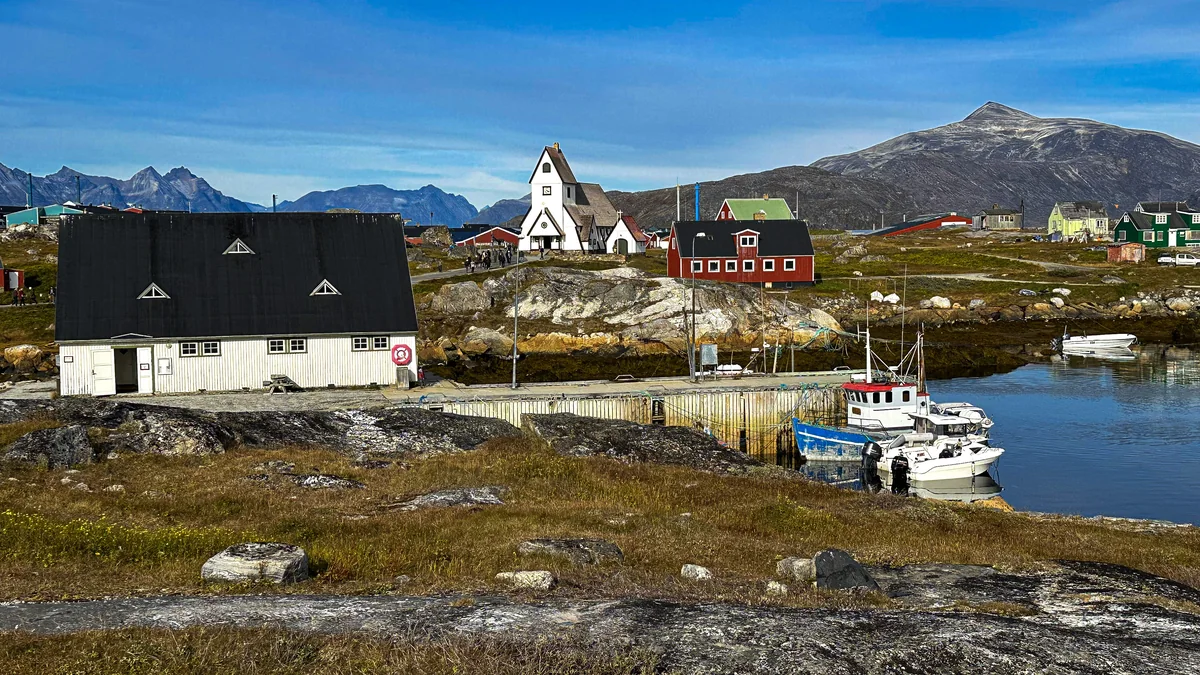
Nanortalik cruise port offers one of Greenland’s most intimate cruise days. Ships normally anchor off the settlement and tender passengers into a small harbour where colourful houses, rocky shorelines and steep mountains immediately set the scene. There is no long transfer to a headline city and no need to manufacture a complicated itinerary. The appeal lies in walking through a lived-in South Greenland community, understanding its history and leaving enough time to absorb the landscape rather than treating the call as a race between attractions.
The harder choice is whether to keep the day local or commit to a boat excursion into the surrounding fjords. Nanortalik’s museum complex and old harbour make a strong independent plan, while Tasermiut Fjord and other boat routes can reveal a scale of scenery that the town alone cannot. Those trips are weather-sensitive and operator-dependent. CruisePing would only book one with a reputable provider whose departure and return are explicitly matched to the ship’s tender operation.
Nanortalik Cruise Port at a Glance
| Port name | Nanortalik Cruise Port |
|---|---|
| Main cruise area | Anchorage off Nanortalik with tender landing in the small harbour |
| Cruise region | Antarctic / Arctic |
| Country / Territory | Greenland |
| Currency | Danish krone (DKK) |
| Languages | Greenlandic and Danish; some English in visitor services |
| Disembarkation | Tender |
| Walkability | High within the settlement |
| Shuttle required | No |
| Main transport | Walking, tender, local boat or organised excursion |
| Best DIY option | Old harbour, Nanortalik Museum and a self-guided town walk |
| Main caution | Weather and sea conditions can change tender and small-boat plans quickly |
Weather & Best Times to Visit Nanortalik
January to March
Typical high: -2–2°C
Typical low: -7–-3°C
Rain / conditions: Cold, changeable and often snowy; winter cruise calls are uncommon and daylight is limited.
April to June
Typical high: 3–10°C
Typical low: -1–5°C
Rain / conditions: Days lengthen quickly; late snow, cold wind and occasional rain remain possible.
July to September
Typical high: 8–13°C
Typical low: 4–8°C
Rain / conditions: The main cruise period is cool and relatively mild, with rain, low cloud and brisk winds still possible.
October to December
Typical high: 0–7°C
Typical low: -5–2°C
Rain / conditions: Temperatures fall, storms become more likely and daylight shortens rapidly.
Weather guide: CruisePing summary based on NASA POWER climate data for the Nanortalik area. Check the latest forecast.
Low cloud can hide the upper slopes even when conditions in town feel calm. That matters most if you have paid for a scenery-led boat trip, because the value of Tasermiut Fjord comes from the wider mountain setting as much as the water itself. On a wet or windy day, the museum buildings, church, harbour and shorter shoreline walks provide a more dependable plan. Pack a waterproof outer layer even when the morning looks settled.
How Cruise Passengers Arrive in Nanortalik
Nanortalik does not have a large cruise pier. Vessels generally remain at anchor and use tenders to bring passengers ashore. The landing puts you close to the historic harbour area, but the tender timetable is controlled by the ship. Listen for information about ticket groups, last tender and any priority given to organised excursions. A call that appears long on the itinerary can lose useful time if sea conditions slow the transfer.
The harbour is small enough to understand quickly. Once ashore, the museum area, church, shops and residential streets are all within a compact walking zone. There is no need to search for a port shuttle. The main practical issue is the surface underfoot: some routes use uneven gravel, short slopes or rocky edges rather than smooth urban pavements.
Tender operations are vulnerable to wind and swell. A ship may shorten, delay or cancel a landing even when Nanortalik itself looks inviting from the deck. Independent passengers should never assume that a private operator will wait indefinitely if the first tenders are late. Share your ship details when booking and ask how the provider handles delayed landings or an early all-aboard.
The community receives a concentrated influx when a ship arrives. Keep doorways, working harbour areas and private gardens clear. Photography is part of the pleasure here, but homes and residents are not exhibits. A slower, observant visit creates a better experience than moving through the settlement as though it were an outdoor theme park.
Exploring Nanortalik Independently
Nanortalik is one of the stronger Greenland calls for a simple DIY day because the town itself is the destination. Start near the old harbour and use the waterfront as your orientation point. The museum occupies several historic buildings rather than one large modern gallery, so allow time to move between them and check what is open on the day.
The official Nanortalik Museum information describes collections connected with local history, hunting, kayaks and Norse material. Opening can be seasonal or aligned with cruise arrivals, so treat the museum as a planned visit rather than an automatic guarantee. It is the best place to add context to what you see outside.
From the museum area, a town walk can include the church, harbour views, colourful houses and modest shops. Nanortalik means “the place of bears”, but the settlement is not a wildlife park and passengers should not expect a polar bear sighting. The name is part of the place’s cultural and linguistic identity, not a promise of animals near the landing.
The road system is local rather than inter-town. Greenlandic settlements are not joined by a conventional national road network, so you cannot improvise a taxi trip to another community in the way you might on a European island. Wider exploration is mainly by boat, and that is why excursion capacity can be limited.
A short walk towards the edge of the settlement gives broader views back over the harbour and towards the surrounding peaks. Choose routes that are clearly established and suited to your footwear. Do not wander onto steep or remote ground simply because it looks close. Weather changes, rough surfaces and the absence of urban services turn a casual detour into a more serious decision than the map suggests.
Best Cruise-Compatible Things to Do from Nanortalik
Nanortalik Museum and old harbour
Best for: Local history, historic buildings and the easiest meaningful independent visit
Best way: Walk from the tender landing and allow unhurried time across the museum complex
Watch: Opening arrangements can be seasonal; check the information provided on arrival.
Town, church and waterfront walk
Best for: A low-risk introduction to the settlement and its mountain setting
Best way: Follow the compact streets on foot, keeping working areas and private property clear
Watch: Surfaces are not uniformly paved and rain can make gravel or rock slippery.
Tasermiut Fjord boat excursion
Best for: Large-scale South Greenland scenery and a more adventurous cruise day
Best way: Pre-book a reputable local or ship excursion with explicit return arrangements
Watch: Wind, visibility and sea state can alter or cancel the route.
Short coastal or viewpoint walk
Best for: Photography and a quieter view beyond the central harbour
Best way: Use an established local route and turn back early if weather deteriorates
Watch: Do not treat an unmarked hillside as an easy extension of the town walk.
Local craft and cultural encounters
Best for: A more personal connection with contemporary Nanortalik
Best way: Use official visitor information and buy directly where local sellers are operating
Watch: Be respectful around residents and avoid photographing people without consent.
Stay aboard for sail-in and sail-away views
Best for: Passengers with limited mobility or a disrupted tender call
Best way: Use the ship’s open decks when conditions permit
Watch: The best mountain views may be affected by cloud, rain or operational restrictions.
What a Tasermiut Fjord Excursion Really Involves
Tasermiut Fjord is the headline excursion associated with Nanortalik, framed by steep mountains and remote valleys. It is not a short harbour cruise. The exact route depends on the boat, weather, sea state and time available, and different operators may use the name for trips of different length. Ask what the itinerary actually includes rather than buying on the strength of the destination name alone.
Small boats can feel cold even in summer. Wind over the water lowers the effective temperature, and passengers may spend long periods seated with limited shelter. Wear layers, waterproof protection, a warm hat and gloves. A camera or phone should be protected from spray. People prone to seasickness should ask about the vessel and route before committing.
The strongest reason to choose the excursion is that it reveals a landscape unavailable on foot from town. The compromise is that it uses most of the call and leaves little room for the museum. For a first visit, CruisePing would choose the boat only when the forecast, operator and call length all line up. In doubtful weather, the local day is not a consolation prize; it is the more robust choice.
Private bookings require a disciplined return buffer. Tendering means you must be back at the landing before the final boat to the ship, not merely back in Nanortalik at the advertised all-aboard time. A cruise-line excursion may provide greater operational protection if the route is long or the landing window is short.
Wildlife can appear in South Greenland waters, but sightings are incidental. Choose the trip for the fjord, geology and scale of the surroundings. Any wildlife should be treated as a bonus. Operators should maintain appropriate distance and follow local guidance rather than chasing animals for photographs.
CruisePing Recommended Port Day
For most first-time visitors, CruisePing recommends a town-first day. Leave the tender landing, visit Nanortalik Museum early if it is open, then walk through the harbour and settlement at a relaxed pace. This gives the call a clear centre and protects you from turning a distinctive community into a brief staging point for a boat journey.
Add a short established viewpoint or shoreline walk only after understanding the weather and your mobility. Return towards the harbour with enough time for a local purchase, a second museum building or simply watching everyday activity around the waterfront. The settlement rewards pauses; it does not need a checklist of ten sights.
Choose Tasermiut Fjord instead when the excursion is a genuine priority, the operator has a strong return plan and the ship’s call is long enough to absorb tender delays. Treat it as the day, not as one item to combine with everything else. The most common planning mistake is assuming there will be a full town visit after a long small-boat trip.
The low-risk fallback is the harbour, museum and church zone. Even passengers who land late can build a worthwhile visit without transport. If the museum is closed, concentrate on the settlement’s setting and use official interpretation available near the landing rather than wandering into private or unsafe areas.
Passengers with limited mobility should ask the ship about tender steps and assistance before deciding whether to go ashore. The town is compact, but the transfer into the tender and the rougher local surfaces may be more demanding than the distances suggest.
DIY or Organised Excursion?
Nanortalik itself is emphatically DIY-friendly. No guide is needed to walk between the harbour, museum, church and central streets, and there is no useful shuttle to buy. Independent exploration also lets you adjust the pace around rain, wind and museum opening.
The balance changes for travel beyond town. Fjord routes need a boat and a reliable operator. A cruise-line excursion is the simplest option when tender priority, long sailing time or uncertain weather makes a private booking fragile. A local independent operator can work well when the meeting point, cancellation terms and ship-aware return are clear in writing.
CruisePing would not book a loosely described “scenic tour” from an unverified seller at the landing. Capacity, safety equipment, shelter and communication matter in this environment. The cheapest seat is not good value if the boat is unsuitable or the return plan depends on everything running perfectly.
A guided town walk can add cultural depth, particularly when led locally, but it is optional rather than necessary for navigation. The strongest reason to pay is interpretation and community benefit, not transport.
Do not try to recreate a fjord excursion by negotiating an ad hoc boat after arrival unless the cruise line or official visitor staff can confirm the provider. Remote-water decisions deserve more scrutiny than an ordinary taxi ride.
Mobility, Tendering and Practical Comfort
The tender is the first mobility test. Passengers may need to manage steps, a moving platform and a gap between ship and boat. Assistance policies vary by cruise line and sea conditions can make a transfer unavailable even when a passenger normally uses a wheelchair or walking aid independently. Ask the ship before the morning of arrival.
Once ashore, distances are short, but surfaces can include gravel, uneven paving and slopes. A compact folding walking stick may help, while narrow or rough sections can be awkward for small-wheeled mobility equipment. The harbour and central streets still allow a shorter visit without tackling higher ground.
Public toilets, seating and indoor shelter are more limited than in a large city port. Use facilities when available and carry essential medication, water and a warm layer. Do not assume every museum building has modern step-free access.
Small-boat excursions are a separate judgement. Ask about boarding, seating, toilet provision and time exposed to the weather. An operator describing a trip as “easy” may be referring to the absence of hiking rather than accessible boarding.
Port-Day Pitfalls and Value Choices
Booking too much: A long fjord excursion and a full museum visit may not fit once tender time is included. Decide which is the main event.
Underestimating cold: The summer air temperature can look mild, while wind and spray on a small boat feel much colder.
Expecting urban services: Nanortalik is a small community. Cash, card acceptance, opening and connectivity can vary, so carry a modest backup payment option without relying on extensive shopping.
Ignoring local boundaries: Homes, boats and working areas remain private. Stay on public routes and follow signs or local instructions.
Chasing a distant photograph: Mountains appear close across open ground. Unmarked terrain, wet rock and fast weather changes make an improvised hike a poor cruise-day gamble.
How to Match Nanortalik to Your Call Length
On a short call, keep the plan entirely within Nanortalik. Tender ashore, check the museum opening, walk the old harbour and return through the central streets. There is little value in spending scarce time trying to arrange a last-minute boat. A short visit can still feel complete because the settlement and landscape begin at the landing rather than at the end of a transfer.
With a normal half-day or full-day call, the decision becomes more interesting. A town visit can comfortably absorb several hours when the museum buildings are open, especially if you add a careful shoreline or viewpoint walk. This is the best format for passengers who enjoy photography, local history and the texture of a place more than a tightly scheduled excursion.
A long call makes a fjord trip more realistic, but the extra hours do not remove the need for a return buffer. Ask whether the excursion’s advertised duration includes loading, safety briefing and any transfer from the tender landing. If the boat arrives back shortly before the final tender, the plan remains fragile regardless of the overall call length.
Families should be realistic about cold, boat seating and toilet access. Children who enjoy boats may love the fjord, while those who become uncomfortable when wet or confined may get more from the town and museum. Nanortalik’s scale makes it easy to shorten the day without feeling that the main destination has been missed.
Photographers should resist spending the whole visit chasing a single elevated view. Harbour reflections, working boats, colourful buildings and shifting cloud over the peaks provide strong subjects close to the landing. The light can change quickly, so the best scene may appear during a pause rather than at a distant viewpoint.
If the ship announces an early departure or deteriorating sea conditions, follow the revised tender guidance immediately. Nanortalik is not a place to test the margin. Returning on an earlier tender may sacrifice half an hour ashore, but it protects the rest of the voyage and avoids putting local or ship crews under pressure.
Food choices can be limited during a busy call, so do not structure the day around finding a particular restaurant. Eat when a suitable local option is open, carry a small ship-approved snack if permitted, and leave room for a locally made purchase rather than expecting a conventional tourist district.
That flexibility is part of Nanortalik’s appeal on a cruise itinerary too.
Nanortalik Port-Day Checklist
- Check whether the ship is tendering and how landing groups will be allocated.
- Confirm the last tender rather than relying only on the headline all-aboard time.
- Choose town or fjord as the main priority before arrival.
- Check museum opening information at the landing.
- Wear waterproof layers and footwear suited to gravel and wet rock.
- Carry a warm hat and gloves for any boat trip.
- Use only a verified excursion provider with clear return arrangements.
- Keep private homes, boats and working harbour areas clear.
- Ask before photographing residents at close range.
- Return to the landing early if wind or swell begins to build.
Frequently Asked Questions
Do cruise ships dock in Nanortalik?
Most cruise ships anchor offshore and tender passengers into Nanortalik. The final arrangement depends on vessel size, weather and the ship’s operational plan, so check the daily programme.
Can you walk from the tender landing?
Yes. The harbour, museum area, church and central settlement are close enough for a useful independent visit. Surfaces can be uneven, and higher viewpoints require more care.
Is Nanortalik worth visiting without an excursion?
Yes. The old harbour, museum complex, community and mountain setting form a substantial local day. A fjord excursion adds scale but is not required to justify going ashore.
Should I pre-book Tasermiut Fjord?
Pre-booking is sensible because local boat capacity is limited. Use an operator that understands the ship’s tender schedule and explains its weather and cancellation policy.
Are polar bears commonly seen in town?
No sighting should be expected. Nanortalik’s name is connected with bears, but passengers should not interpret that as a promise of wildlife around the settlement.
What happens if the weather is poor?
Tendering or small-boat trips may be delayed, changed or cancelled. A shorter town visit, museum and harbour walk is the strongest fallback if landing remains possible.
Can wheelchair users go ashore?
That depends first on the cruise line’s tender policy and sea conditions. The settlement is compact, but boarding the tender and uneven local surfaces may be limiting.
Do I need Danish kroner?
Greenland uses the Danish krone. Cards may be accepted in some visitor businesses, but service availability in a small settlement can vary, so carry a modest backup rather than relying on one payment method.
CruisePing Port Verdict
Nanortalik works because it does not demand an elaborate plan. The smart first visit is the harbour, museum and settlement, taken slowly enough to notice where you are. Tasermiut Fjord can elevate the call when weather and logistics are strong, but it should replace the local day rather than be crammed on top of it.
CruisePing’s choice for most passengers is to go ashore independently, support local visitor services and keep the return uncomplicated. Book the fjord only when it is the clear priority and the operator has removed the avoidable risks.
Useful Official Links
- Visit Greenland: Nanortalik
- Nanortalik Museum
- Greenland cruise call information
- DMI Greenland weather
Ready to browse our article library?
Explore more ports in the Antarctic and Arctic, or narrow it to Greenland in particular. For cruise comparisons, planning shortcuts and value guides, head over to our main article archive.