
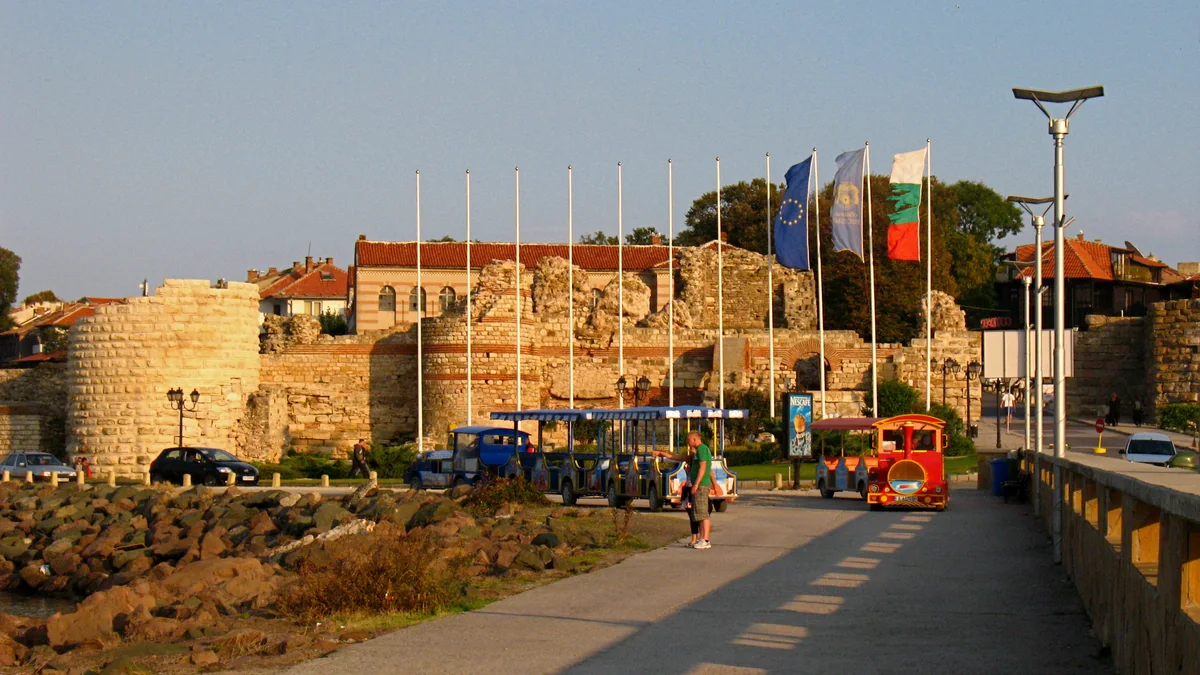
Nessebar cruise port places passengers beside one of the Black Sea coast’s most concentrated historic landscapes. Old Nessebar occupies a small peninsula linked to the modern town by a narrow causeway, with medieval churches, timber-and-stone houses, sea views and archaeological remains packed into a walkable area. The port day is less about covering distance than deciding how deeply to explore the old town before crowds and summer heat build.
Ships may berth or tender depending on vessel size and the day’s port plan. Once ashore, most first-time visitors can stay local and have a full, satisfying day without a coach. Sunny Beach is nearby and Burgas is possible, but CruisePing would prioritise Nessebar itself unless the old town is already familiar. It is the distinctive reason for the call and the simplest option to control around a variable arrival.
Nessebar Cruise Port at a Glance
| Port name | Nessebar Cruise Port |
|---|---|
| Main cruise area | Port of Nessebar beside the Old Town peninsula, or offshore anchorage with tender landing |
| Cruise region | Mediterranean |
| Country / Territory | Bulgaria |
| Currency | Euro (EUR) |
| Language | Bulgarian; English is used in many visitor businesses |
| Disembarkation | Docked or tender |
| Walkability | High within Old Nessebar |
| Shuttle required | No for the old town |
| Main transport | Walking, taxi, local bus or organised excursion |
| Best DIY option | Old Nessebar churches, lanes and waterfront |
| Main caution | Cobbles, steps, summer heat and changing church opening times |
Weather & Best Times to Visit Nessebar
January to March
Typical high: 6–12°C
Typical low: 0–5°C
Rain / conditions: Cool and often windy, with rain and occasional wintry weather.
April to June
Typical high: 16–27°C
Typical low: 8–18°C
Rain / conditions: Increasingly warm and bright; late spring is comfortable for long old-town walks.
July to September
Typical high: 24–30°C
Typical low: 17–21°C
Rain / conditions: Hot, sunny and busy, with strong sun on exposed lanes and the causeway.
October to December
Typical high: 8–20°C
Typical low: 3–12°C
Rain / conditions: Mild at first, then cooler and wetter with brisk Black Sea winds.
Weather guide: CruisePing summary based on NASA POWER climate data for Nessebar and the southern Bulgarian Black Sea coast. Check the latest forecast.
In July and August, heat changes the order of the day. Visit the more exposed archaeological sites and church interiors early, then use shaded lanes, a café or a waterfront pause during the hottest part of the afternoon. Wind can make the sea edge feel cooler, but it does not reduce ultraviolet exposure. In spring and autumn, a light waterproof layer is more useful than beachwear.
Where Cruise Ships Arrive in Nessebar
The Port of Nessebar serves the historic peninsula and its immediate waterfront. Smaller ships may berth, while larger vessels can anchor and tender passengers ashore. The cruise line’s daily information is the reliable source for the exact landing point because operational arrangements can vary with ship size, weather and local traffic.
A docked arrival gives quick access to the old town. A tender call adds waiting time and may involve numbered landing groups, but it still leaves passengers close to the main sights. There is no reason to buy a transfer simply to reach Old Nessebar unless the ship uses an unusual arrangement.
The port area remains a working waterfront. Follow marked pedestrian routes and do not assume that every quay or vehicle lane is open to visitors. On the return, leave room for a queue at security or the tender landing, especially when several excursions come back together.
Passengers joining a coach excursion may be directed away from the centre before seeing the peninsula. That can be efficient for a regional tour, but it is worth checking whether the itinerary includes meaningful time in Old Nessebar. A generic “panoramic” stop can leave less time in the UNESCO-listed area than an independent walk.
Walking Old Nessebar
Old Nessebar is compact but not smooth. Cobbled lanes, worn stone, steps and occasional gradients make it slower than its size suggests. Comfortable footwear matters more than distance. The peninsula can also become crowded around the main entrance, the windmill and the best-known church ruins, so begin with the places you most want to see.
The UNESCO World Heritage listing covers a settlement with layers from Thracian and Greek origins through Byzantine and medieval periods. You do not need to memorise every date, but the variety explains why one church or ruin should not be treated as interchangeable with the next. Some are active museums, some are preserved exteriors and others are archaeological fragments woven into the streets.
A practical route begins near the causeway and windmill, continues through the central lanes towards the Church of Christ Pantocrator and the Church of St Stephen, then loops towards the seaward edges. Exact opening and ticket arrangements vary, so use the official visitor information or posted notices rather than assuming every interior is accessible.
The waterfront path provides breathing space from the central lanes and wide views across the bay. It is also more exposed to sun and wind. If mobility is limited, choose a shorter loop through the flatter central area instead of trying to trace the entire perimeter.
Shops and restaurants occupy many historic buildings. They are part of today’s town, but commercial signs can distract from the architecture. Slow down, look above ground-floor level and allow time for courtyards, timber upper storeys and sea views between buildings.
Best Cruise-Compatible Things to Do from Nessebar
Old Nessebar walking circuit
Best for: First-time visitors who want the port’s strongest history and atmosphere
Best way: Walk independently from the berth or tender landing, using official interpretation where available
Watch: Cobbles and heat slow the route; prioritise rather than trying to inspect every church.
Church of St Stephen and museum interiors
Best for: Frescoes, medieval art and deeper historical context
Best way: Check which church museums are open and buy the appropriate local ticket on the day
Watch: Opening, conservation access and ticket combinations can change.
Archaeological Museum
Best for: A structured introduction before exploring the ruins and churches
Best way: Visit early if open, then use the collection to inform the town walk
Watch: Indoor time competes with the old town on short calls.
Causeway, windmill and waterfront
Best for: Easy orientation, photographs and a lower-cost local plan
Best way: Combine the entrance landmarks with a relaxed harbour or seafront loop
Watch: The entrance area can be congested when tours arrive.
Sunny Beach
Best for: Passengers who want resort facilities or beach time rather than a history-heavy day
Best way: Use a confirmed taxi or current local bus after seeing Old Nessebar
Watch: Traffic, heat and the return journey reduce the value on a short call.
Burgas or regional excursion
Best for: Repeat visitors seeking a wider Black Sea coast experience
Best way: Choose an organised excursion or pre-arranged transport with a clear return
Watch: Do not sacrifice Old Nessebar for a generic coach circuit unless the regional destination is a genuine priority.
Which Churches Should You Prioritise?
Nessebar contains more historic church sites than most cruise passengers can properly appreciate in one visit. The answer is not to tick off every name. Select one or two interiors if they are open, then view several contrasting exteriors as part of the walking route. This creates a clearer sense of the town’s development without turning the day into a sequence of ticket desks.
The Church of St Stephen is often valued for its painted interior, while Christ Pantocrator is one of the old town’s most recognisable medieval buildings. The Church of St John Aliturgetos occupies a dramatic position near the sea. Access and conservation arrangements vary, so these examples should guide priorities rather than function as a guaranteed opening list.
The archaeological museum is useful for passengers who prefer context before architecture. On a hot day, it also provides an indoor pause. CruisePing would choose it on a longer call or in poor weather, but not at the cost of missing the peninsula itself.
Photography is usually strongest early, when the lanes are quieter and light reaches the stone and brick façades from a lower angle. By midday, organised groups concentrate around the principal routes. Move to the edges of the peninsula rather than fighting the same narrow lane as every tour.
Religious sites deserve normal respectful behaviour even when they are presented as museums. Dress reasonably, follow photography restrictions and keep voices down. A church’s value is not reduced because the visit takes ten minutes; the point is to notice what distinguishes it.
CruisePing Recommended Port Day
CruisePing would do Nessebar independently. Start as soon as practical and walk directly into the old town before the main tour groups settle into the central lanes. Choose an interior or museum early, then build a loose circuit through the churches, houses and waterfront.
Take a break away from the busiest entrance zone. A café or seaward bench gives the town more texture than moving continuously between ruins. Lunch can work well here, but restaurants with a view may take longer than expected, so agree timing before ordering if the call is short.
Add Sunny Beach only when beach time is a genuine priority and the return transport is simple. It is not an essential extension for a first visit. The old town already provides enough content for several hours, and splitting the day can make both places feel rushed.
On a very short or delayed tender call, concentrate on the windmill, one central church area and a waterfront loop. That is more satisfying than hurrying through the full peninsula and watching the clock on every lane.
Passengers with limited mobility should use the port entrance as a flexible turning point. The central old town can still be experienced through a shorter route, while the full perimeter and rougher side lanes are optional.
DIY or Organised Excursion?
Nessebar is a natural DIY port because the main attraction begins beside the arrival point. Navigation is simple, and independent passengers can choose which church interiors, museum and viewpoints deserve time. A guide adds interpretation but is not needed for transport.
An organised walking tour becomes worthwhile for passengers who want the archaeological and religious history explained in sequence. The quality depends on the guide and the amount of free time. Avoid a tour that spends most of the visit in souvenir stops or leaves no room to wander independently.
Regional coach trips make more sense for repeat visitors or passengers determined to see Burgas, a rural site or another part of the coast. The trade-off is time away from the most distinctive place immediately beside the ship.
For Sunny Beach, a taxi or local bus can be cheaper than a ship excursion, but only if current service information and return timing are clear. A beach transfer sold by the ship may be poor value for confident travellers yet useful for families who want a fixed pickup and no negotiation.
CruisePing would not pay for a panoramic bus tour of Old Nessebar itself. The peninsula is best understood at walking speed, and large vehicles cannot reproduce the experience of its lanes.
Mobility and Summer Comfort
The old town’s difficulty comes from surfaces rather than distance. Cobble, uneven slabs, steps into church buildings and sloping lanes can be tiring for passengers who normally walk comfortably on level pavement. A walking pole or stable shoes may help.
Wheelchair users should ask the port or cruise line about the precise landing and accessible route. Parts of the central area may be manageable, but the historic fabric does not provide consistent step-free access. Tendering can be the limiting factor before the town is reached.
In summer, carry water and schedule indoor or shaded stops. The sea breeze can disguise dehydration. The causeway and exposed waterfront have little shade, while the central lanes offer more protection at the cost of heavier crowds.
Public toilets and seating are available in the visitor area, but not at every church site. Use facilities when convenient rather than waiting until the far side of the peninsula.
Port-Day Pitfalls and Value Hacks
Following the crowd automatically: The first lane after the windmill is not the only route. Turn towards the waterfront when groups bunch together.
Buying every church ticket: Choose the interiors that add the most value and enjoy the remaining sites from outside.
Leaving beach transport vague: Agree the taxi return or check the current bus before relaxing at Sunny Beach.
Wearing beach sandals for the whole day: Smooth soles and old cobbles are a poor combination.
Using the advertised all-aboard as your arrival target: Return earlier for a tender call or when several excursions are due back together.
How Call Length Changes the Plan
With three useful hours ashore, stay entirely in Old Nessebar. Walk from the landing to the central church area, choose one interior if open, continue to a sea view and return through a different lane. There is no need to add transport.
A normal half-day allows the archaeological museum or a longer waterfront circuit, plus a relaxed drink or meal. This is the sweet spot for the port because it gives enough time to move beyond the entrance without creating a complicated return.
A full day creates space for Sunny Beach, but only after the old town. Take the beach extension as a deliberate second chapter and keep a generous buffer for traffic. The resort can be busy and is less distinctive than the peninsula, so it should not automatically consume the best morning hours.
Families with children may prefer the windmill, shorter church route and waterfront followed by beach time. History-focused adults can spend the whole call among the museum and church sites. Both are valid; the mistake is forcing every member of the group through the same dense itinerary.
In rain, prioritise the museum and any open interiors, then use short outdoor links between them. In strong summer heat, reverse the logic: cover exposed sights first and save indoor visits or lunch for midday.
Food, Shopping and Spending Time Well
Old Nessebar has many restaurants and souvenir shops, but a cruise day does not need to be organised around them. Choose a meal for location and timing rather than accepting the first menu beside the entrance. Waterfront tables can be pleasant, while service may be slower at peak lunch time. Tell staff when you need to leave and keep the final tender or boarding time in mind.
Local crafts and food products can make better purchases than generic resort souvenirs. Check labelling, price and whether an item can be taken back aboard. Browsing also works as a useful midday pause when the lanes are hottest, but do not let a long sales demonstration consume the time reserved for the historic sites.
The best value in Nessebar remains the town itself. Much of its atmosphere, architecture and sea edge can be enjoyed without a costly excursion. Spend selectively on an interior, museum, guide or meal that adds something specific rather than buying a package simply because the ship sells one.
Nessebar Port-Day Checklist
- Confirm whether the ship is docked or tendering.
- Start with Old Nessebar before the main coach groups arrive.
- Check current church and museum opening at the visitor information point.
- Wear shoes with grip for cobbles and worn stone.
- Carry water and sun protection in summer.
- Choose one or two interiors rather than trying to enter everything.
- Use a confirmed taxi or current bus information for Sunny Beach.
- Keep cash or a backup payment method for small purchases.
- Allow extra time for security or tender queues on return.
- Respect active religious sites and posted photography rules.
Frequently Asked Questions
Can you walk from Nessebar cruise port to the old town?
Yes. The historic peninsula is beside the port or tender landing, making this one of the easiest Black Sea calls for an independent walking day.
Do ships dock or tender in Nessebar?
Both arrangements are possible. Ship size, berth availability and conditions determine the final plan, so check the cruise line’s daily notice.
Is Old Nessebar free to visit?
Walking the streets and viewing many exteriors is free. Individual museum or church interiors may charge admission and opening arrangements can vary.
Is Sunny Beach worth adding?
It can suit passengers who want resort beach time, but first-time visitors should normally prioritise Old Nessebar. Add the beach only when transport and call length make it comfortable.
How difficult is the walking?
Distances are short, but cobbles, steps and heat create a medium mobility challenge. A shortened central route is possible for passengers who do not want the full perimeter.
Do I need an organised tour?
No for navigation. A guided walk is useful for historical interpretation, while wider regional excursions need transport and stronger return planning.
What currency is used?
Bulgaria uses the euro (EUR), having joined the euro area on 1 January 2026. Cards are widely useful in visitor businesses, but a modest cash backup can help with small purchases.
What should I do if the tender is late?
Stay in the old town and reduce the number of interiors. The best sights are close enough to produce a worthwhile visit without a transfer.
CruisePing Port Verdict
Nessebar is a port where the easy option is also the right one. Walk into the old town, choose a few churches and viewpoints carefully, and allow the peninsula to unfold at its own pace. There is no prize for leaving quickly on a coach.
CruisePing would keep the first visit local and independent. Sunny Beach is an optional extra, not the main event, and a regional tour should be reserved for passengers who already know why they want to leave Nessebar behind.
Useful Official Links
- Port of Nessebar
- Official Nessebar tourism
- UNESCO Ancient City of Nessebar
- Bulgaria tourism information
- Bulgarian weather service
Ready to browse our article library?
Explore more ports in the Mediterranean, or narrow it to Bulgaria in particular. For cruise comparisons, planning shortcuts and value guides, head over to our main article archive.