
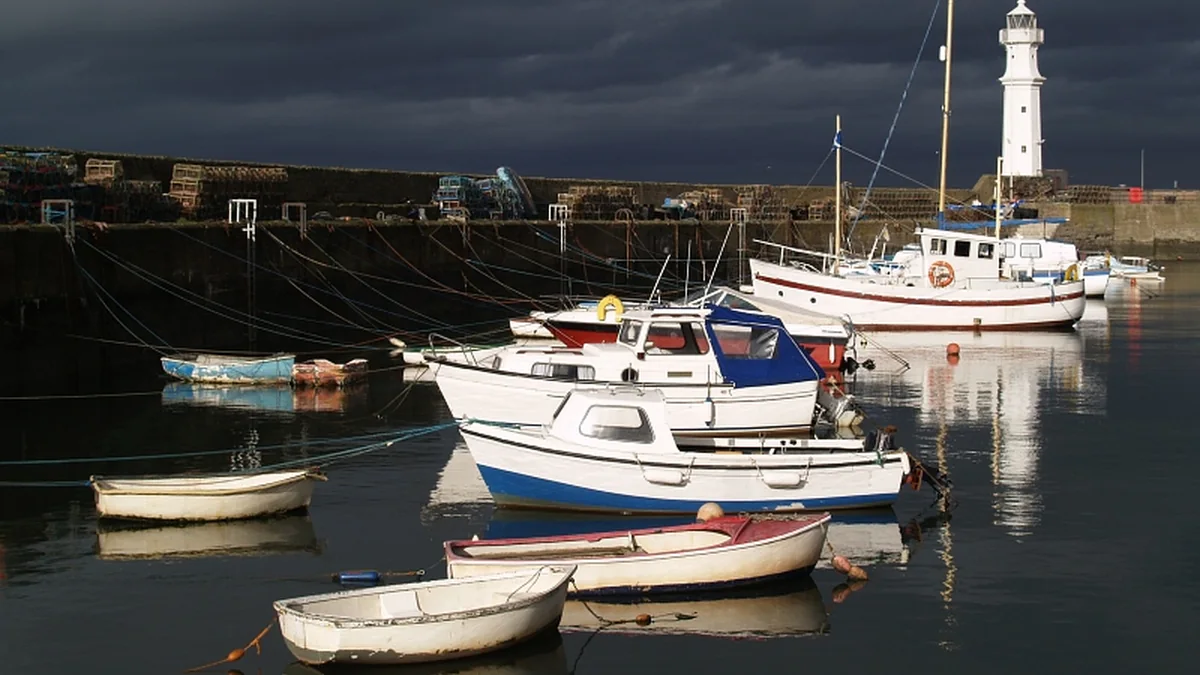
Newhaven Edinburgh cruise port is an offshore gateway to Edinburgh, not a berth in the city centre. Ships anchor in the Firth of Forth and tenders bring passengers into Newhaven Harbour, north of the main historic core. From there, the tram and local buses make independent travel realistic, while taxis, shuttles and organised excursions offer alternatives. The tender is the first piece of the day to plan because it can shorten the useful time ashore before you have even started towards the castle.
Edinburgh then presents a second problem: there is too much that could fit and not enough that should. A first visit works best around one anchor attraction and a coherent neighbourhood. Edinburgh Castle with the Royal Mile is the obvious historic plan; the Royal Yacht Britannia and Leith form a lower-gradient alternative; the National Museum and Old Town suit uncertain weather. CruisePing would not try to combine the castle, Britannia, Holyrood, Arthur’s Seat and a full New Town circuit in one tender call.
Newhaven Edinburgh Cruise Port at a Glance
| Port name | Newhaven Edinburgh Cruise Port |
|---|---|
| Main cruise area | Offshore anchorage with tender landing at Newhaven Harbour |
| Cruise region | British Isles |
| Country / Territory | UK |
| Currency | British pound (GBP) |
| Language | English |
| Disembarkation | Tender |
| Walkability | Low for central Edinburgh; useful locally around Newhaven and Leith |
| Shuttle required | Sometimes; public tram, bus and taxi alternatives are available |
| Main transport | Tender, tram, local bus, taxi, cruise shuttle or organised excursion |
| Best DIY option | Tram or bus into Edinburgh for one major attraction plus a focused walking route |
| Main caution | Tender queues, city crowds, hills, cobbles and return time to Newhaven |
Weather & Best Times to Visit Edinburgh from Newhaven
January to March
Typical high: 6–10°C
Typical low: 1–4°C
Rain / conditions: Cool, often windy and showery, with occasional frost or wintry conditions.
April to June
Typical high: 11–18°C
Typical low: 4–10°C
Rain / conditions: Longer days and brighter spells, but rapid changes and cool Forth winds remain common.
July to September
Typical high: 16–20°C
Typical low: 10–13°C
Rain / conditions: Mild rather than reliably warm; August can be busy and showers remain possible.
October to December
Typical high: 7–14°C
Typical low: 2–8°C
Rain / conditions: Increasingly wet, windy and dark, with exposed viewpoints feeling colder.
Weather guide: CruisePing summary based on NASA POWER climate data for Newhaven and central Edinburgh. Check the latest forecast.
Edinburgh weather often changes within the same port day. A waterproof jacket is more useful than an umbrella on exposed streets, while wind at Newhaven or the castle can feel much colder than the temperature suggests. Heavy rain strengthens the case for the National Museum, Britannia or an indoor-focused Old Town route. Low cloud and strong wind weaken Arthur’s Seat and other exposed viewpoints, even when they remain technically open.
How the Newhaven Tender Works
Cruise Forth describes Newhaven as a tender port. The crossing is usually short once passengers are aboard, but the full process includes waiting for a tender group, loading, the harbour approach and disembarkation. Large ships can need repeated boat movements, and rougher conditions can slow or interrupt the operation.
The landing is in Newhaven Harbour rather than beside Waverley Station or the Royal Mile. That distinction matters when reading tour descriptions. “Edinburgh” may appear as the port on the itinerary, but there is still an urban transfer after the tender. The final tender time is the deadline that matters on return.
Cruise-line excursions may receive priority landing, while independent passengers can be allocated tickets or called by group. Do not book a tightly timed castle entry assuming you will be ashore at the itinerary’s arrival time. A later admission window or flexible ticket is safer.
On return, plan to reach Newhaven before the latest permitted tender rather than at the ship’s headline all-aboard time. Several buses or trams arriving together can create a queue at the harbour. Build slack for the walk from the stop, security and boarding.
The tender itself can be a mobility barrier. Sea conditions, steps and the gap between ship and boat determine whether assistance can be offered. Passengers using wheelchairs or mobility aids should ask the cruise line for its specific tender policy before making non-refundable plans.
Getting from Newhaven to Central Edinburgh
The tram is the clearest independent option for many passengers. The Newhaven stop is a short walk from the harbour area, and services run through Leith towards the city centre and airport corridor. The exact walking route may be marshalled on cruise days, so follow port signs rather than cutting through working harbour space.
For the Old Town, Princes Street or St Andrew Square provide practical city-centre arrival points. From there, the Royal Mile and castle involve an uphill walk. The tram solves the distance from the port; it does not remove Edinburgh’s gradients. Passengers who want to reduce climbing can take a taxi farther uphill or structure the day to walk downhill later.
Lothian Buses also serves the Newhaven and Leith area. Route numbers and diversions can change, especially during events or roadworks, so use the operator’s current journey planner rather than relying on an old cruise blog. Contactless payment and ticket rules should also be checked on the day.
A taxi is useful for groups, limited mobility or a timed attraction. Ask to be dropped at a practical access point rather than simply saying “city centre”. Edinburgh Castle, the Royal Mile, the National Museum and Holyrood each need a different approach, and vehicle restrictions can prevent a door-to-door drop.
Cruise shuttles vary by line and sailing. Some may terminate near central shopping streets rather than the Old Town. Confirm the pickup point, last return and whether the ticket allows flexible travel. A shuttle is convenient only when its timetable matches your chosen attraction.
The transfer from Newhaven to the centre should be treated as a door-to-door journey of several stages: tender, harbour exit, walk to tram or bus, city ride, then the final uphill or cross-centre walk. An advertised tram journey time never includes all those steps.
Best Cruise-Compatible Things to Do from Newhaven
Edinburgh Castle and the upper Royal Mile
Best for: First-time visitors who want the city’s defining historic sight
Best way: Pre-book a sensible entry time, travel into the centre independently or use a transfer, then walk the Royal Mile
Watch: Timed admission, security, steep approaches and festival crowds can consume more time than expected.
Royal Mile to Holyrood
Best for: A structured downhill city walk through the Old Town
Best way: Start near the castle or upper Royal Mile and finish towards Holyrood before returning by taxi, bus or tram
Watch: The street is long, sloping and crowded; do not add every close and museum.
Royal Yacht Britannia and Leith
Best for: Maritime history and a lower-pressure day closer to Newhaven
Best way: Use tram, bus or taxi to the Ocean Terminal area and pre-book if required
Watch: Allow time inside the ship; do not assume Britannia is a quick photo stop.
National Museum of Scotland
Best for: Families, poor weather and broad Scottish history
Best way: Travel to the Old Town and use the museum as the main indoor anchor
Watch: The collection is large; choose galleries rather than trying to see everything.
New Town and Princes Street Gardens
Best for: Architecture, shopping and easier access from central tram stops
Best way: Arrive by tram and build a walking route around the gardens, George Street and viewpoints
Watch: Some routes still involve slopes and busy crossings.
Arthur’s Seat or Salisbury Crags
Best for: Active passengers seeking an elevated view and open landscape
Best way: Attempt only with suitable weather, footwear and ample time, preferably after a direct transfer
Watch: Exposed paths, steep ground and mud make this a poor casual add-on.
Rosslyn Chapel or wider Scotland excursion
Best for: Repeat visitors or passengers with a specific out-of-city priority
Best way: Use a ship excursion or private vehicle with a strong return buffer
Watch: Road traffic and distance make public-transport improvisation fragile on a tender call.
Planning Edinburgh Castle and the Royal Mile
Edinburgh Castle is the obvious first-time anchor, but it should be treated as a timed visit rather than a building you can casually pop into. Entry slots, security and the internal site all take time. Book only after allowing for tender uncertainty, and do not choose the earliest slot unless the ship can confirm priority landing.
The approach from Princes Street or St Andrew Square rises towards the Old Town. Waverley’s bridges and surrounding streets can confuse first-time visitors because Edinburgh’s levels overlap. Use a live map, but pay attention to stairs and gradients rather than assuming the shortest route is the easiest.
Inside the castle, choose priorities. The Crown Jewels, Great Hall, military history, viewpoints and exhibitions can fill several hours. A one-hour dash followed by a full Royal Mile walk is possible only if queues are light; it is not the experience CruisePing would recommend.
After the castle, walk downhill along the Royal Mile and select a few closes or buildings. St Giles’ Cathedral, the Writers’ Museum area and viewpoints towards the New Town can provide variety without a major detour. The Palace of Holyroodhouse is at the far end, so adding it properly creates a second substantial visit.
A sensible first day often stops before Holyrood, turns towards the National Museum or descends to a transport connection. Passengers determined to reach Holyrood should consider starting there and walking uphill only as far as energy allows, or using a taxi to avoid duplicating the route.
During the Edinburgh festivals, street performance, barriers and crowds can slow every part of the Old Town. The atmosphere may be excellent, but timed attractions and return travel need more margin. Event days are when a shorter, clearer itinerary becomes most valuable.
Royal Yacht Britannia and Leith as an Alternative
Britannia is closer to Newhaven than the castle and avoids much of the Old Town climbing. That makes it particularly useful for passengers interested in maritime or royal history, repeat visitors and anyone who wants a more contained attraction. The visit is indoors for much of the time, although access between decks still involves movement through the ship.
The attraction sits in the Leith waterfront area, reached by tram, bus or taxi. Do not confuse proximity on the map with being beside the tender landing; a transfer is still needed. The route is simpler than crossing Edinburgh to the castle, and the return to Newhaven is shorter.
Allow enough time for the audio-guided route. Britannia is not best experienced as a hurried walk through the entrance decks. Check accessibility information directly because lifts and routes may not reproduce every part of the original ship in exactly the same way.
Leith can add a meal or waterfront walk, but cruise passengers should keep the day focused. A long lunch plus Britannia works; Britannia plus the castle usually does not. The two attractions sit in different parts of the city and require a deliberate transfer.
CruisePing would choose Britannia over the castle when weather is poor, mobility makes Old Town slopes unattractive, or the passenger has already seen central Edinburgh. It is not a second-rate fallback; it is a distinct port-day strategy.
CruisePing Recommended Port Day
For most first-time visitors, CruisePing recommends a city-centre day built around Edinburgh Castle and part of the Royal Mile. Use the tram or a direct transfer from Newhaven, enter the castle at a realistic time, then walk downhill without committing to every attraction. Return from a convenient central stop with at least one service in reserve.
The best DIY version uses the tram in both directions. Keep tickets or payment ready, note the Newhaven stop and save the route offline. The tram gives more control than waiting for a fixed shuttle, provided you are comfortable with the harbour walk and city gradients.
Choose Britannia and Leith instead for a calmer day. This is the stronger plan for repeat visitors, wet weather or passengers who want to minimise cross-city travel. It also reduces the risk of being caught on the far side of the Old Town when return time approaches.
Skip Arthur’s Seat on a normal first call unless it is the main objective and conditions are excellent. The climb, descent, mud or wind can use the energy needed for the city and create a rushed return. A viewpoint from the castle or Calton Hill may fit more naturally, though Calton Hill still involves steps and slopes.
The low-risk fallback is Newhaven and Leith. A delayed tender need not trigger a frantic dash to the castle. The local waterfront, a short tram ride to Britannia or a meal in Leith can produce a worthwhile day with a much safer return.
DIY or Organised Excursion?
Central Edinburgh is practical independently because the tram and bus network connects Newhaven with the city. DIY gives control over attraction choice and avoids spending the day following a coach through streets that are best explored on foot. It is the default CruisePing recommendation for confident passengers.
An organised transfer becomes more attractive when the ship tenders late, a passenger has limited mobility or a timed attraction must be reached with minimal navigation. Read the description carefully: “Edinburgh on your own” may provide transport only, while a guided city tour may include little time inside the castle.
A ship excursion is strongest for destinations beyond Edinburgh, such as Rosslyn Chapel or a wider scenic route. The return protection is valuable when road travel and tendering are combined. Independent public transport to an outlying site can be technically possible but still a weak cruise-day choice.
Private taxis suit small groups who want a tailored route, perhaps Britannia followed by selected city viewpoints. Agree whether the price covers waiting, parking and return to Newhaven. Edinburgh traffic can make a driver’s itinerary optimistic if too many stops are included.
Hop-on hop-off buses can help orientation once in the centre, but they do not solve the tender or Newhaven transfer. Queues and slow city traffic may reduce their value on a short call. Use one only when the route aligns with a simple plan rather than as a way to see everything.
Mobility, Hills and Surfaces
Edinburgh’s challenge is vertical movement. Streets climb from the New Town towards the Old Town, closes contain steps, and the castle sits on elevated ground. A route that looks short can be strenuous. Plan around accessible entrances and drop-off points, not distance alone.
The tram is step-free at platforms and useful for reducing the long transfer, but the final city route may not be. Check the accessibility information for the chosen attraction. The castle, Britannia and National Museum each have different limitations and assistance arrangements.
Tender boarding remains the decisive issue for some passengers. Even an accessible city plan is irrelevant if the cruise line cannot safely transfer a wheelchair or mobility scooter in the day’s sea conditions. Obtain ship-specific advice before purchasing attraction tickets.
Cobbles can be uncomfortable for wheelchairs and walking aids. The Royal Mile’s main line is easier than many narrow closes, while Princes Street and parts of the New Town provide smoother alternatives. A taxi between upper and lower locations can preserve energy.
Public seating is available but not continuous. Build indoor pauses into the day and use cafés or museums deliberately rather than waiting until fatigue becomes a problem.
Return Buffers from Edinburgh to Newhaven
The return should be planned backwards from the final tender. Allow time to leave the attraction, reach the tram or bus stop, wait for a service, travel to Newhaven, walk to the harbour, clear any security process and join the tender queue. None of those stages is individually dramatic; together they can consume a large margin.
CruisePing would aim to reach Newhaven at least one tender cycle earlier than strictly necessary, and more on festival days or when weather is deteriorating. A tram cancellation or crowded vehicle should not become a ship-missing emergency.
Save the Newhaven stop and harbour location on your phone. Do not assume every passenger heading north is returning to the same tender point, because Edinburgh can host calls at Leith, Rosyth, South Queensferry and Newhaven.
If the ship provides a shuttle, note whether the last departure is earlier than the final tender. The shuttle timetable, not the tender, becomes your effective deadline.
When a timed attraction runs late, cut the next item rather than borrowing from the return buffer. Edinburgh will always offer one more close, viewpoint or shop; the ship will not wait for an independent passenger who chose it.
Port-Day Pitfalls and Value Choices
Booking the castle too early: The itinerary arrival time is not the time you will stand at the gate. Tender and transfer come first.
Assuming Edinburgh is flat once the tram arrives: The Old Town rises sharply from the central stops.
Combining Britannia and the castle casually: They are separate substantial visits in different parts of the city.
Using an old bus number: Check Lothian Buses and Edinburgh Trams for current routes and disruptions.
Leaving the return to one final service: Travel back with an alternative tram, bus or taxi window still available.
Paying for transport you do not need: A cruise transfer can be useful, but the tram is often the better-value choice for confident independent passengers.
Matching the Day to Your Call Length
With fewer than five useful hours ashore, choose one anchor. Britannia is the lower-risk option because it is closer; central Edinburgh remains possible if the tender runs promptly, but the castle must be timed carefully. Do not add an out-of-city excursion.
A normal seven- to eight-hour call supports the castle and a partial Royal Mile, or Britannia plus Leith. This is the best balance between ambition and return control. A meal should sit within the chosen area rather than create another cross-city move.
A long call can include the castle and National Museum, or a fuller Royal Mile route to Holyrood. Even then, the tender remains a fixed endpoint. Additional hours encourage better depth, not a reason to create a five-attraction checklist.
Families may get more from the National Museum, castle highlights or Britannia than from a long guided city walk. Build in food and toilet stops before children are tired.
Passengers arriving during August should treat crowding as a time cost. A long call on paper may behave like a shorter one when pavements, attractions and transport are under festival pressure.
Food, Toilets and Small Decisions That Save Time
Edinburgh has no shortage of places to eat, but crossing the city for a particular restaurant is rarely a good use of a tender call. Eat within the area you have already chosen: the Old Town for a castle day, Leith for Britannia, or around the National Museum for a weather-led visit. A quick meal can still become a long stop when festival crowds fill cafés.
Use attraction toilets when available and do not wait until the return journey. Public facilities are less obvious than many visitors expect, and a search for them can disrupt a carefully timed route. The same applies to water: carry some, especially when walking uphill or during warmer festival days.
Shopping is easiest around Princes Street, the Royal Mile and Leith, but it should be secondary to the anchor attraction. Large or fragile purchases have to travel back by tram, through the harbour and onto a tender. A small, locally made item is usually more practical than carrying bulky souvenirs through every stage of the return.
Mobile signal is generally good, yet crowds can slow data or drain a battery through constant map use. Save the Newhaven location, tram route and attraction ticket offline. A portable charger is a better cruise-day tool here than a printed list of extra sights.
Newhaven Edinburgh Port-Day Checklist
- Confirm the tender group and final tender time.
- Do not book the earliest castle slot without priority landing.
- Check current tram, bus and event information.
- Choose one anchor attraction before leaving the ship.
- Save Newhaven Harbour and the tram stop on your phone.
- Wear waterproof layers and shoes suited to cobbles.
- Use a taxi strategically if hills threaten the plan.
- Allow more time during festivals and major events.
- Return with at least one transport option in reserve.
- Keep the harbour walk and tender queue inside the buffer.
Frequently Asked Questions
Do cruise ships dock at Newhaven?
No. Newhaven is normally an offshore tender call, with passengers landing in the harbour before travelling onward into Edinburgh.
How far is Newhaven from Edinburgh city centre?
Newhaven is within the city but north of the historic centre. The tram or bus ride is only part of the journey; allow for tendering, walking to the stop and the final walk to your attraction.
Is the tram easy to use from the cruise landing?
It is one of the strongest independent options. The stop is a short walk from the harbour area, but follow current signs and check live service information.
Can I visit Edinburgh Castle independently?
Yes. Pre-book a realistic entry time and allow for the uphill approach, security and tender uncertainty.
Can I combine the castle and Royal Yacht Britannia?
It is possible on a long, well-run call, but CruisePing would normally choose one. The transfer between them and time inside each attraction make the combination less efficient than it looks.
Is Newhaven suitable for passengers with limited mobility?
The tender may be the limiting factor. Once ashore, tram and taxi options help, but Edinburgh’s slopes, cobbles and attraction-specific access still need planning.
What is the best bad-weather plan?
Britannia, the National Museum or an indoor-focused Old Town route is stronger than Arthur’s Seat or exposed viewpoints.
How early should I return?
Aim to reach Newhaven before the final permitted tender, with a spare transport service in hand. Exact margins depend on the cruise line and conditions.
CruisePing Port Verdict
Newhaven is a good gateway when passengers respect the tender and reduce Edinburgh to a coherent day. The city is entirely practical independently, but only after the hidden stages between ship and attraction are counted honestly.
CruisePing’s first-time choice is tram or transfer to the castle and Royal Mile, with a deliberately limited route. Britannia is the smarter alternative for poor weather, repeat visitors or anyone who wants less climbing. The weak plan is the one that treats all of Edinburgh as a single walkable attraction.
Useful Official Links
- Cruise Forth: Newhaven transit information
- Cruise Forth: getting around Newhaven
- Edinburgh Trams
- Lothian Buses cruise arrival guidance
- VisitScotland Edinburgh
- Edinburgh Castle
- Royal Yacht Britannia
- Met Office Edinburgh forecast
Ready to browse our article library?
Explore more ports in the British Isles, or narrow it to the United Kingdom in particular. For cruise comparisons, planning shortcuts and value guides, head over to our main article archive.