
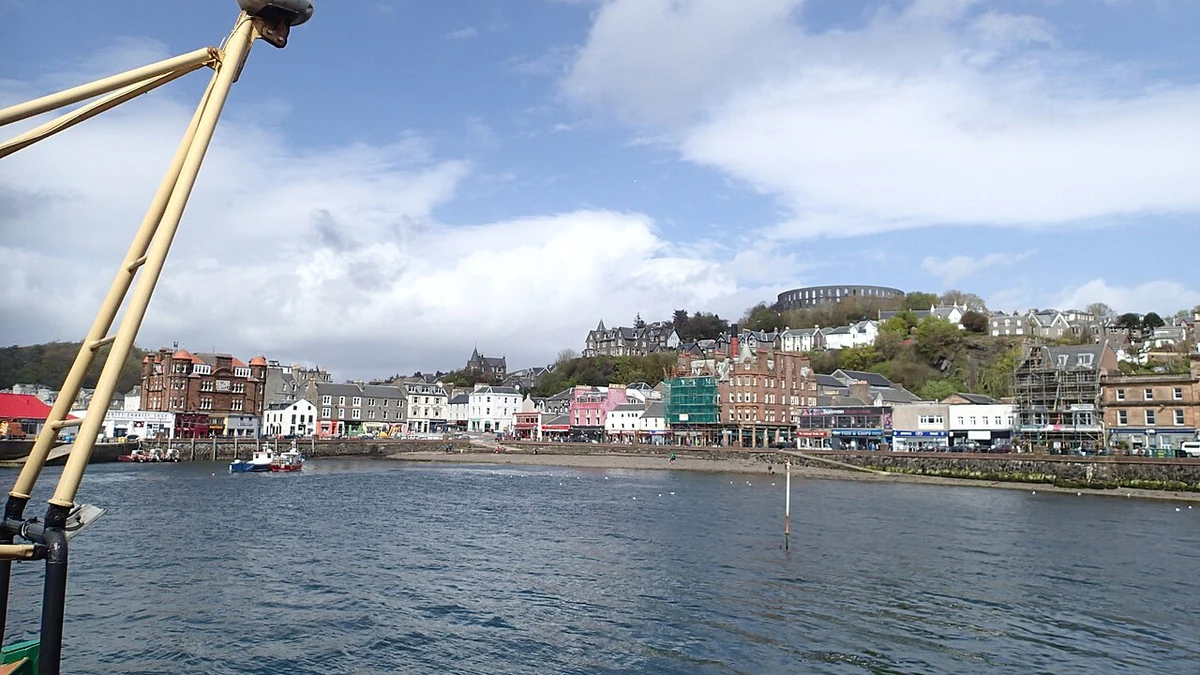
Oban cruise port gives passengers something many west-coast Scottish calls do not: a useful town immediately beside the tender landing. Oban is a working ferry hub, a seafood town and a launch point for the Inner Hebrides, yet the smartest cruise day is often much simpler than an ambitious island-hopping plan. McCaig’s Tower, the harbourfront, Oban Distillery, Dunollie and a good lunch can fill a satisfying day without spending hours in a vehicle.
Most visiting cruise ships anchor in Oban Bay and tender passengers to the North Pier area. The official North Pier information places the pontoons in the heart of town, close to shops, the railway station and ferry links. That makes Oban a strong independent port, but it also creates temptation: ferries leave for islands that look close on a map, while their timetables are designed for local transport rather than your ship’s all-aboard time.
Oban Cruise Port at a Glance
| Port name | Oban Cruise Port |
|---|---|
| Main cruise area | Anchorage in Oban Bay with tender landing around North Pier |
| Cruise region | British Isles |
| Country / Territory | UK |
| Currency | British pound (GBP) |
| Language | English; Scottish Gaelic is part of the region’s culture |
| Disembarkation | Usually tender |
| Walkability | High for the town centre; steep for McCaig’s Tower and Dunollie approaches |
| Shuttle required | No for central Oban |
| Main transport | Walking, taxi, local bus, train, ferry, boat trip or organised excursion |
| Best DIY option | Harbourfront, McCaig’s Tower, distillery or museum, and lunch in town |
| Main caution | Do not treat a CalMac ferry as a cruise excursion without checking the full return timetable and tender deadline |
Weather & Best Times to Visit Oban
January to March
Typical high: 7–10°C
Typical low: 2–5°C
Rain / conditions: Cool, wet and often windy; short daylight and rougher seas can affect tendering.
April to June
Typical high: 10–16°C
Typical low: 4–9°C
Rain / conditions: Longer days with brighter spells, though showers can arrive quickly from the west.
July to September
Typical high: 15–18°C
Typical low: 9–12°C
Rain / conditions: Mild rather than hot, with changeable rain and cloud during the main cruise season.
October to December
Typical high: 8–13°C
Typical low: 3–8°C
Rain / conditions: Wetter, windier and increasingly dark; exposed viewpoints and boat plans need flexibility.
Weather guide: CruisePing summary based on NASA POWER climate data for Oban and the Firth of Lorn. Check the latest forecast.
The main Oban weather choice is vertical. McCaig’s Tower is far better when the bay and islands are visible, while low cloud or hard rain makes the climb less rewarding. A wet day still works well because the distillery, War and Peace Museum, shops and cafés are close to the tender landing. Boat trips and Kerrera plans depend on wind and sea state as much as rainfall.
Where Cruise Passengers Arrive in Oban
The tender landing is usually the practical centre of the day. North Pier sits beside the esplanade, and the town unfolds in both directions around the bay. The railway station and CalMac ferry terminal lie towards the southern end; the distillery is just inland from the waterfront; the route towards Dunollie runs north. Your first task is not finding transport but understanding the tender schedule. On a large ship, early landing groups and return queues can alter how much usable time you have.
A tender port always carries more operational uncertainty than a fixed berth. Wind can delay boats, the ship may change the last tender, and passengers using mobility aids may face restrictions set by the captain. Read the ship’s notice before making a timed booking. CruisePing would place a distillery reservation after allowing for the tender process rather than choosing the earliest session available.
Oban is also a busy ferry port. Large CalMac vessels, local boats, fishing activity and cruise tenders share a compact waterfront. Stay inside marked pedestrian routes and do not assume every pier is open to visitors. The advantage is atmosphere: this feels like a real transport hub rather than a cruise enclave, and watching ferries work the bay is part of the appeal.
Getting Around Oban Independently
Walking is the default. The level waterfront links the North Pier, station, ferry terminal and many shops, but the town rises sharply behind the bay. McCaig’s Tower involves a sustained uphill walk through residential streets. The view is the reward, yet passengers with limited stamina may prefer a taxi uphill and a gentler walk back down. Wet pavements and traffic at road crossings deserve attention.
Dunollie Castle and its museum grounds sit north of the centre. The route is achievable for confident walkers, but it is longer and less level than the harbour circuit. A short taxi removes the least interesting part and protects time for the site itself. Check Dunollie’s official opening information because access and events are seasonal.
Local buses and trains can extend the day, though they are rarely necessary for a first visit. Rail is more useful for passengers beginning or ending a wider Scottish trip than for a short port call. Taxis are valuable for Dunstaffnage, nearby gardens or a tailored coast circuit. Agree the return arrangement before leaving town; supply can tighten when a ship and regular summer visitors arrive together.
Ferries require the most discipline. The CalMac Kerrera information shows the island is reached from Gallanach, south of central Oban, not simply by stepping onto a ferry beside the cruise tender. You need transport to the crossing, the outward and return sailings, walking time on Kerrera and a contingency if a service changes. Mull is a bigger commitment again. For most cruise passengers, a ship or specialist excursion is the sounder way to combine a ferry with island sightseeing.
Best Cruise-Compatible Things to Do from Oban
Oban waterfront and harbour
Best for: An easy first visit with ferries, shops, seafood and maritime character
Best way: Walk directly from the tender landing and keep the route flexible
Watch: The promenade is level, but summer crowds can make the immediate pier area busy.
McCaig’s Tower
Best for: The classic panorama over Oban Bay and the islands
Best way: Walk uphill if fit, or take a taxi up and descend on foot
Watch: The climb is steep and the view loses value in low cloud or heavy rain.
Oban Distillery
Best for: Whisky history in the centre of town
Best way: Pre-book an official tour that starts comfortably after tender arrival
Watch: Timed admission can be missed if tendering is slow; alcohol rules and mobility vary by tour.
Dunollie Museum, Castle and Grounds
Best for: Clan history and a quieter coastal setting
Best way: Walk if you enjoy a longer route, otherwise use a short taxi
Watch: Seasonal opening and uneven ground need checking.
Kerrera
Best for: A small-island walk and a stronger sense of the Firth of Lorn
Best way: Attempt only with confirmed road transfer and ferry timings, or use an organised option
Watch: The ferry does not leave from the central cruise landing and a missed connection can compromise the return.
Dunstaffnage Castle or local coast circuit
Best for: A focused half-day beyond town without committing to a major island
Best way: Taxi, private guide or organised excursion
Watch: Public transport may not align cleanly with a cruise call; confirm opening and return transport.
Mull and wider islands
Best for: Passengers who have already seen Oban and want a larger Hebridean experience
Best way: Choose a ship excursion or established cruise-compatible operator
Watch: Ferry schedules, road distances and tender deadlines make casual DIY fragile.
CruisePing Recommended Port Day
For a first visit, CruisePing would stay local. Begin with McCaig’s Tower while visibility is good, return through the town for the distillery or a museum, then use the waterfront for lunch and a slower final hour. This plan makes Oban itself the destination rather than treating it as a waiting room for somewhere else.
The best DIY variation replaces the distillery with Dunollie. Take a taxi north if the climb and distance would consume too much energy, then walk back along the waterfront. Passengers who dislike hills can keep the whole day near sea level and still have a worthwhile call by combining the harbour, shops, museum and a short boat trip whose timing is explicitly built around the ship.
CruisePing would book an organised excursion for Mull, Iona or a complex island circuit. Those trips may be excellent, but the value lies partly in someone else holding the ferry, vehicle and return plan together. Kerrera is the one independent island possibility, although it should be the day’s main objective rather than an afterthought.
DIY or Organised Excursion?
Oban town is unequivocally DIY. You gain little by paying for a coach to move between attractions that can be reached on foot or by a short taxi. An organised walking tour can add local history, but it is an enrichment choice rather than a logistical necessity.
Beyond town, the answer changes according to connections. A taxi to Dunstaffnage is manageable if you secure the return. A wildlife boat trip is sensible when the operator publishes a cruise-compatible duration and weather policy. Mull and Iona involve too many linked stages for CruisePing to recommend casual independent travel on a normal call. The cheap-looking ferry fare is not the whole cost once transfers, waiting and return risk are included.
Private guiding can be good value for two to four people who want a specific route, especially where one passenger has mobility limits. Ask for a written itinerary that begins at the actual tender landing, not at a hotel, and finishes with a generous margin. Avoid drivers who promise several castles, an island ferry and a long lunch in one compressed loop.
Food, Ferries and the Rhythm of Oban Harbour
Food is part of the port day rather than a gap between attractions. Oban’s harbour economy gives seafood a natural place on the itinerary, from simple shellfish and fish-and-chips to longer restaurant lunches. The practical question is queue time. A famous counter beside the ferry terminal may have a line when a ship lands, so do not surrender an hour automatically because one venue appears in every guide.
The ferry timetable creates visible pulses in town. Cars queue, foot passengers gather and the esplanade becomes busier before a major sailing. That rhythm can help planning: visit McCaig’s Tower early, eat outside the biggest ferry departure period, and return to the North Pier before the final cruise tender crowd forms. It is a small adjustment that makes the day feel calmer.
Independent shops and local food purchases also keep more visitor spending in the town. Oban can receive many day visitors at once, so courtesy matters. Keep doorways clear, ask before photographing people at work around the harbour and resist treating ferry queues as tourist displays. This is transport infrastructure serving island communities.
Mobility and Accessibility Planning
The central waterfront is Oban’s easiest terrain. It is mostly level, with seating and regular places to pause, though kerbs, busy crossings and wet surfaces remain. The tender transfer is the first barrier: the cruise line decides whether conditions permit passengers with wheelchairs or limited mobility to board the small boats. No town plan can override that operational judgement.
McCaig’s Tower and Dunollie both add gradients. A taxi can turn either into a more realistic visit, but ask about the final surface and distance from drop-off to entrance. The distillery occupies a historic working site and its visitor route may include restrictions; check the official accessibility information before buying a timed ticket.
A low-mobility day can still be strong: waterfront views, a short museum visit, a comfortable lunch and ferry-watching give a genuine sense of place. CruisePing would choose that over a coach itinerary with repeated steps and rushed photo stops. State your needs when booking any excursion, including the ability to board boats and the distance you can walk unaided.
Oban Port-Day Pitfalls and Value Hacks
- Do not confuse North Pier with the CalMac ferry terminal. They are close, but island trips may depart elsewhere and Kerrera requires reaching Gallanach.
- Book the distillery with tender uncertainty in mind. A later slot is often safer than the first available tour.
- Use a taxi strategically for hills. Paying for the uphill leg to McCaig’s Tower or Dunollie can preserve energy for the parts worth seeing.
- Make one island the whole plan. Kerrera is not a casual extra; Mull and Iona deserve organised logistics on a cruise day.
- Check the view before climbing. If cloud closes over the bay, move indoor attractions forward and reassess later.
- Return before the final tender crush. Oban’s compact centre makes an early return painless because cafés and views remain close to the landing.
Oban Cruise Port Checklist
- Confirm the anchorage, tender-ticket process and last tender in the ship’s daily programme.
- Check the latest Met Office forecast, especially wind and visibility.
- Pre-book Oban Distillery only after allowing for tender arrival.
- Download or photograph any ferry timetable used in your plan and identify the actual departure point.
- Arrange return transport before taking a taxi beyond town.
- Carry a light waterproof layer even when the morning looks settled.
- Allow extra time on steep or wet routes to McCaig’s Tower and Dunollie.
- Keep the last part of the day close to North Pier.
Frequently Asked Questions
Is Oban a tender port?
Most cruise calls use an anchorage in Oban Bay and tender passengers to the North Pier area. Confirm the arrangement for your sailing because marine operations can change.
Can you walk from the tender landing into Oban?
Yes. North Pier is in the centre, and the waterfront, shops, station and many attractions are immediately accessible. McCaig’s Tower and Dunollie involve more distance or gradient.
Is Oban good for independent sightseeing?
Very good. It is one of the stronger DIY Scottish calls if you focus on the town. The risk rises when you add ferries or a long island circuit.
Can I visit Mull independently from a cruise ship?
It may be possible on some long calls, but CruisePing would normally use an organised excursion because ferry schedules, onward road transport and the tender deadline create several failure points.
Is McCaig’s Tower worth the climb?
In clear weather, the view over Oban Bay is the town’s strongest free attraction. In low cloud or heavy rain, use a taxi or switch to an indoor plan.
What is the safest low-pressure Oban day?
Stay in town: waterfront, museum or distillery, lunch and a viewpoint chosen according to weather. You remain close to the tender throughout.
CruisePing Port Verdict
Oban is a port where restraint improves the day. The tender delivers you to a real west-coast town with enough character, food and views to justify staying put. For most first-time passengers, McCaig’s Tower, one indoor attraction and the harbourfront are a better use of time than collecting ferry connections.
An island excursion can be the right choice, especially for repeat visitors, but it should be booked as the central purpose of the call. CruisePing’s verdict is straightforward: do Oban DIY, use taxis to remove unnecessary hills, and pay for organised logistics when the plan depends on ferries beyond the town.
Planning by Call Length
On a short call, stay entirely in Oban and avoid timed ferries. McCaig’s Tower, one indoor attraction and the waterfront are enough. On a longer call, Dunollie or a local boat can be added, but the return should still finish near North Pier. A late-evening departure does not justify a fragile island plan if the ferry connection remains poor.
Passengers beginning or ending a small-ship voyage in Oban have different needs from day visitors. Rail, hotels, luggage storage and the ferry terminal become important, while the sightseeing plan may fit around embarkation. Confirm where baggage is accepted; North Pier is not automatically the check-in point for every operator.
A Better Way to Use Extra Time in Oban
Extra time in Oban is best spent deepening the local day rather than adding another transport connection. Walk beyond the immediate pier to see how the town curves around the bay, pause where the ferry movements are visible and give McCaig’s Tower enough time for the climb and the view. If visibility improves later, reverse the usual order and make the tower the final substantial stop before returning downhill towards North Pier.
Passengers interested in local history can pair the War and Peace Museum with Dunollie rather than treating both as quick shelters from rain. The first introduces Oban’s wartime and maritime stories in the centre; the second places clan history in a coastal setting north of town. A taxi to Dunollie and a walk back is often the most efficient sequence because it avoids retracing the steepest approach and finishes naturally beside the harbour.
A longer lunch can also be a legitimate cruise-day choice here. Oban’s connection with ferries, fishing and island communities gives seafood more meaning than a generic meal stop. Ask what is local, expect popular counters to queue and choose a venue according to the time available. Sitting beside the harbour while ferries manoeuvre can tell you more about the town than another rushed coach photograph.
The final judgement remains weather-led. When the bay is clear, prioritise height and water views. When rain settles in, use the distillery, museum and food options, then take short waterfront walks between showers. Oban’s strength is that the fallback remains recognisably Oban; there is no need to invent a distant excursion simply to fill the timetable.
When the Tender Day Starts Late
A late first tender should simplify the plan, not accelerate it. Drop any ferry idea, walk the waterfront, choose either McCaig’s Tower or Dunollie and keep timed admissions secondary. Oban’s compact centre means a reduced call can still include a viewpoint, local history and food without an anxious return.
Useful Official Links
- Oban North Pier
- Visit Oban
- VisitScotland Oban guide
- CalMac Kerrera information
- Dunollie Museum, Castle and Grounds
- Oban Distillery
Ready to browse our article library?
Explore more ports across British Isles, browse CruisePing destinations in UK, or head to the main article library for cruise planning guides, port comparisons and practical ideas.