
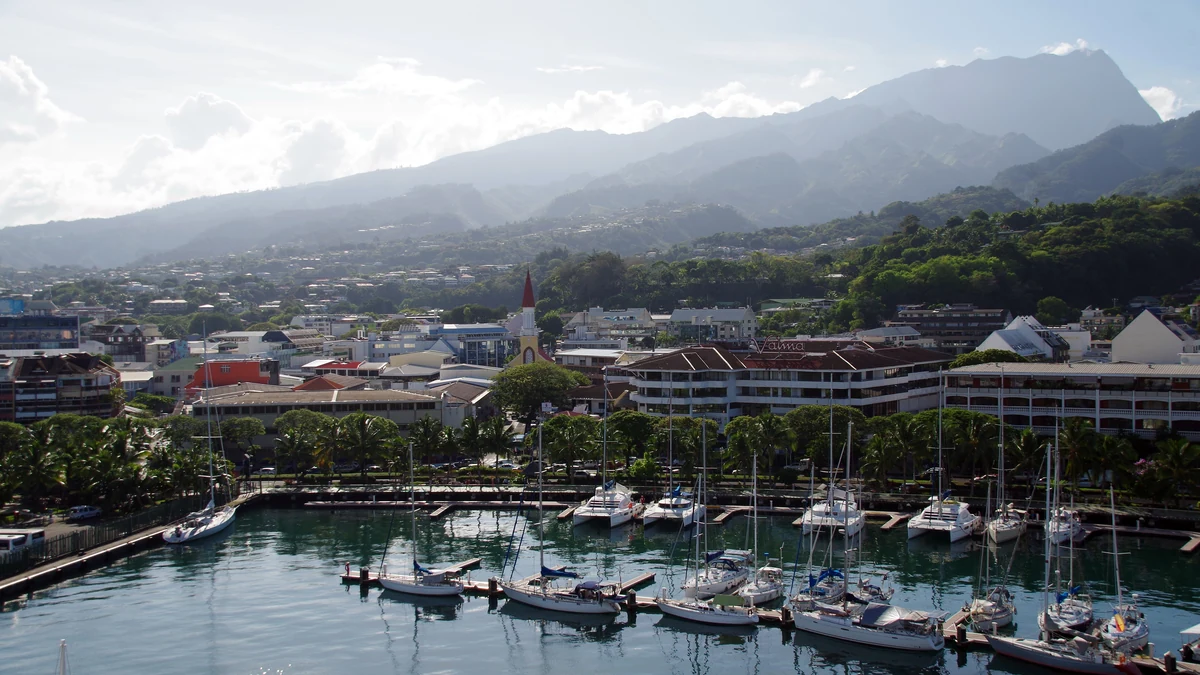
Papeete cruise port is both a central city berth and French Polynesia’s principal cruise gateway. That combination creates three different planning problems: a passenger visiting for one day, a traveller embarking or disembarking with luggage, and an overnight guest using the ship as a city hotel. The Te Anuanua terminal and waterfront place the market, ferry terminal, Place Vaiʻete and central streets within easy reach, but Tahiti’s airport, beaches, waterfalls and island roads remain separate journeys.
The right Papeete plan begins by identifying the call type. A day visitor can walk the capital and add one controlled island circuit. A turnaround passenger must protect airport, hotel, check-in and baggage windows. An overnight guest can use the evening for roulottes and the second day for Tahiti beyond town. Check the Port Autonome vessel forecast and the cruise line’s terminal instructions because berth, processing and access can vary with the ship.
Papeete Cruise Port at a Glance
| Port name | Papeete, Tahiti |
|---|---|
| Main arrival area | Te Anuanua cruise terminal on the central waterfront |
| Cruise region | Australasia / Pacific Islands |
| Country / Territory | French Polynesia |
| Currency | CFP franc (XPF) |
| Languages | French and Tahitian; English common in tourism |
| Port role | Day call, turnaround and overnight port |
| Disembarkation | Docked |
| Walkability | Excellent for central Papeete; low for the wider island |
| Shuttle required | Not for the city centre; transport required for airport and island touring |
| Main transport | Walking, taxis, buses, rental cars, private tours, ferries and ship transfers |
| Best first-time plan | Walk the market and waterfront, then take one half-day east- or west-coast circuit |
| Main caution | Turnaround logistics and Tahiti traffic can consume more time than the central berth suggests |
Papeete Has Three Different Cruise Days
A day call starts and ends at the ship, so the central berth is a major advantage. An embarkation day begins at an airport or hotel and ends with terminal processing. A disembarkation day may include an early cabin exit, stored luggage and a flight many hours later. An overnight call adds evening access but can have its own gangway, security and transport limits. Advice that ignores these differences is unreliable.
Write the four fixed times on one page: ship arrival, permitted disembarkation or check-in, all-aboard, and any flight or hotel transfer. Only then add attractions. Papeete’s map encourages optimistic combinations because the terminal looks close to everything. It is close to the city centre, not to the whole of Tahiti. A good plan uses the port’s centrality without pretending that Faaʻa airport, Point Venus and the peninsula are neighbouring stops.
Te Anuanua Is a Genuine City-Centre Terminal
The Te Anuanua cruise terminal provides modern passenger facilities on the waterfront. The tourist office counter is scheduled to open during cruise calls, making it a useful place to confirm current city information, taxi arrangements and local events. From the terminal area, central streets, the market, marina, ferry terminal and Place Vaiʻete are reached without a long shuttle.
Terminal access is still controlled. Embarking passengers should follow the cruise line’s luggage and document instructions rather than arriving whenever convenient. Day visitors must carry required ship identification for re-entry. When multiple ships or ferries are active, the waterfront becomes busy and vehicle collection points can shift. An independent guide should specify the exact terminal or agreed landmark, not simply “Papeete port”.
The Market Is the Natural First City Stop
Marché de Papeete is close to the waterfront and provides an immediate introduction to produce, flowers, crafts, food and Polynesian textiles. Early morning is the strongest time for atmosphere and selection, while some activity reduces later in the day. It is a market used by residents as well as visitors, although cruise calls naturally increase the souvenir trade. Opening patterns differ by day, particularly on Sunday.
Use the market as part of a city route rather than treating it as a full-day attraction. Compare pearl and craft quality carefully, ask about provenance and keep receipts for higher-value purchases. The upper and lower levels may not offer identical accessibility. A short market visit before an island tour works well because the terminal is nearby; a long shopping session before a timed vehicle collection does not.
Cathedral, Streets and Waterfront Make a Compact City Loop
A central walk can connect the market, Notre-Dame Cathedral, municipal buildings, shaded streets, marina and waterfront gardens. Papeete is a working capital rather than a preserved old town, so traffic, offices and modern commercial life sit alongside churches and public spaces. The interest comes from seeing how French Polynesia functions, not from expecting every block to be a postcard.
Start early before the heat builds. Cross roads carefully and use shade where available. Some public buildings are best appreciated externally, and church access depends on services. A guide can add political and cultural context, but independent passengers can navigate the centre easily. The route is a particularly good choice for a short call, reduced mobility or a day when island weather is poor.
Paofai Gardens Extend the Waterfront Without a Vehicle
The Paofai Gardens continue west along the waterfront with paths, lawns, cultural features and views across the harbour. They provide breathing space after the dense market streets and can form a pleasant walk from the cruise terminal. The distance is manageable for many passengers, but heat and humidity make it feel longer than the flat map suggests.
The gardens pair well with the Musée de la Perle area, a café or a taxi return. They are not a substitute for Tahiti’s mountain landscape, yet they reveal how residents use the waterfront. Carry water and watch the time on an afternoon visit because the walk back is exposed. Passengers with mobility limits can use a taxi one way and retain the easier section near the terminal.
Place Vaiʻete Comes Alive in the Evening
Place Vaiʻete sits near the terminal and ferry area and is best known for evening roulottes—food trucks serving grilled fish, steaks, crêpes, Chinese-influenced dishes and local favourites. An overnight ship makes this one of Papeete’s easiest authentic evening choices. The setting is informal, popular and weather-dependent. Not every vendor operates every night, and opening builds later than a normal cruise lunch.
Confirm the ship’s evening gangway arrangements and carry local currency or a card accepted by the chosen vendor. Portions can be large, and ordering conventions may be unfamiliar; ask before assuming accompaniments. Day-call passengers with an early departure should not distort the whole itinerary trying to catch a night market that starts after they leave. Save it for an overnight, pre-cruise or post-cruise stay.
The Airport Is Close on the Map but Traffic-Dependent
Tahiti-Faaʻa International Airport lies west of Papeete. Under light traffic the road transfer is short, but congestion, flight waves, terminal queues and cruise embarkation traffic can enlarge the journey. There is no reason to gamble with a close flight because the airport appears only a few kilometres away. Follow the airline’s required check-in time and add road margin before choosing a final city activity.
Cruise-line transfers are simple but may operate to group timings. A taxi gives more control; a private transfer can include a short tour when luggage and flight time permit. Public transport is not the best answer with large cases and a fixed international departure. Disembarking passengers should identify where luggage can be stored and when it must be collected before they walk into town.
Embarkation Day Should Be Built Around Baggage
Embarking passengers often arrive before cabins or terminal check-in are available. The first practical question is where luggage is accepted, not which attraction is closest. Cruise lines, hotels and transfer operators have different arrangements. Do not leave cases unattended at the waterfront or assume the terminal offers public storage. Confirm the earliest bag drop and the latest safe check-in directly.
Once baggage is controlled, a short market and waterfront loop is ideal. A half-day island tour can work after an early flight only when the operator stores luggage, monitors delays and delivers passengers to the correct terminal. Fatigue and heat should be considered. The stronger pre-cruise strategy is often a hotel night, especially after a long journey from Europe or North America.
Disembarkation Day Needs a Real Plan for the Gap
Flights from Tahiti frequently leave late, creating a long interval after passengers leave the ship. A day room, hotel pool pass, stored-luggage tour or private vehicle can turn that gap into useful time. Simply sitting near the terminal with cases is uncomfortable in heat and limits access to the city. Book the solution before sailing, particularly when several ships or flights coincide.
A half-day island circuit followed by airport delivery is efficient when the operator is equipped for luggage and the vehicle is secure. Keep passports, medication and valuables with you. If the flight is earlier, stay in Papeete and transfer directly. The aim is not to maximise attractions after a cruise; it is to protect the flight while avoiding an unnecessarily difficult final day.
Choose an East-Coast or West-Coast Half Day
Tahiti’s ring road allows island touring, but a cruise day should normally choose one side. The east-coast direction can include Point Venus, black-sand coastline, waterfalls and lush valleys. The west-coast direction can include gardens, cultural sites, viewpoints and drier coastal scenery depending on the operator’s route. A complete island circuit is long and vulnerable to traffic, stops and road conditions.
Ask for named stops and realistic time at each. “Island tour” can mean anything from a four-hour focused circuit to a long coach lap with brief photographs. A private guide can adapt to rain and congestion; a ship excursion provides return protection. The central berth lets passengers combine a half-day route with Papeete, which is more balanced than spending the whole call inside a vehicle.
Point Venus Is the Strongest Historic Coastal Excursion
Point Venus at Matavai Bay combines a black-sand shoreline, lighthouse, navigation history and associations with European voyaging and scientific observation. It lies east of Papeete and fits naturally into a half-day coastal tour. The site is open and exposed, so sun, showers and wind affect comfort. A guide adds value by explaining Tahitian history rather than reducing the stop to Captain Cook and a photograph.
The road through the urban north-east can be busy. Pair Point Venus with one or two nearby stops rather than a distant waterfall on the opposite side of the island. Beach conditions and swimming suitability should be assessed locally; this is primarily a cultural and scenic visit. The return towards Papeete should begin with enough margin for city traffic.
Waterfalls and the Interior Depend on Recent Conditions
Tahiti’s valleys and waterfalls are most dramatic after rain, but the same weather can affect roads, paths and visibility. Faarumai Waterfalls and other east-side stops are commonly included in tours, subject to access. Confirm whether the route involves walking, steps or slippery surfaces. A photograph in a brochure does not guarantee the same water flow or access on the day.
Interior 4WD trips can reach valleys beyond ordinary road tours and show a very different Tahiti from the waterfront. They are bumpy, weather-sensitive and unsuitable for some back or mobility conditions. Ask about vehicle seating, river crossings and return contingency. Treat the interior as the day’s main excursion, not an addition to a complete coastal circuit.
Do Not Treat Moorea as an Easy Extra
The ferry terminal is close to the cruise berth, and fast ferries cross to Moorea. That makes an independent island jump look tempting. It also creates a chain of risks: ferry availability, check-in, crossing, transport from Vaiare, the return sailing and re-entry to the ship. A delay at any stage can defeat the final all-aboard. The fact that residents commute does not make the journey cruise-protected.
Passengers with a long overnight or a pre-cruise stay can visit Moorea properly. Day-call passengers should stay on Tahiti unless the ship or a highly controlled operator explicitly offers the excursion. Papeete and Tahiti provide enough for a full day. The ferry is useful information, but good planning recognises when not to use it.
Choosing Transport Beyond the City
Public Buses Work Best for Simple Local Journeys
Tahiti has buses around the coastal road, but frequency, stop information and service span are not equivalent to a metropolitan visitor network. A bus can support a single journey for passengers who confirm the current route and return, yet it is a weak foundation for waterfalls, viewpoints and several timed stops. Sunday and holiday patterns deserve particular attention.
The central city is walkable, so public transport is not needed for the market and waterfront. For island touring, a taxi, rental car or organised guide offers more control. Rental driving is on the right, but traffic and parking reduce the apparent freedom. Use a bus because the chosen destination aligns with it, not because it is the cheapest item on a transport list.
Taxis Need a Price and Return Agreement
Taxis serve the terminal, ferry area, hotels and airport, but supply and pricing should be confirmed before departure. Ask whether the quote is per vehicle, whether waiting is included and how overtime is charged. For an island circuit, agree the stops and final return time in writing where possible. A driver hired for an airport transfer is not automatically available for a sightseeing detour.
Taxis are particularly useful for passengers with luggage, limited mobility or a short call. They can also connect Paofai, a museum and a restaurant without a full tour. At a remote waterfall or beach, keep the vehicle or arrange a firm collection. Do not rely on finding another taxi outside the city simply because the outbound journey was easy.
A Rental Car Is More Useful Before or After the Cruise
A car offers flexibility for Tahiti’s coast, but collection, urban traffic, parking and terminal return reduce its efficiency during a normal day call. It makes more sense for a hotel stay or overnight when the driver can start early and avoid terminal processing. Cruise passengers should confirm whether the rental office collects at the port and whether after-hours return is available.
If driving, choose one side of the island and download the route. Do not leave luggage visible. Fuel, traffic and vehicle return belong inside the schedule. A car does not make a full Tahiti circuit short; it merely removes the guide. For a first call, a well-designed half-day tour usually provides better context and fewer logistical distractions.
Money, Pearls and Shopping Need Deliberate Choices
The CFP franc is the local currency. Cards are widely accepted in established shops and restaurants, but cash remains useful for markets, roulottes and smaller transport. Papeete is a major place to buy cultured pearls, yet quality, grading, treatment and setting differ. Buy from a reputable seller, request documentation and understand the cruise line or home-country customs rules before spending heavily.
Local textiles, monoi products, carving and food gifts can be more accessible purchases. Ask where an item was made rather than assuming every tropical design is Polynesian. The market is easiest early; waterfront shops may remain open later. Keep high-value purchases secure and do not allow shopping to push a booked airport or ship transfer into traffic.
Sunday and Public Holidays Change the City
Papeete is quieter on Sundays and some shops, market sections, museums and services close or reduce hours. The city can feel calm rather than empty, and churches, waterfront walking and an organised island tour still work. Public holidays also affect buses, offices and commercial opening. Check the actual call date rather than relying on standard weekday advice.
The tourist office at Te Anuanua is intended to open during cruise calls, but it cannot make closed attractions open. A Sunday route should prioritise confirmed outdoor sites and a pre-booked vehicle. Food should also be planned: resort hotels and selected restaurants may operate when city businesses do not. An overnight Saturday-to-Sunday call needs separate plans for each day.
Mobility Is Easy in the Terminal but Mixed in the City
Docking removes the tender barrier, and central Papeete is relatively flat. Heat, broken pavements, kerbs, market aisles and road crossings can still make walking tiring. The terminal tourist office can help identify current accessible options. Museums, boats and island-tour vehicles have different standards; ask about ramps, lifts and steps before booking.
A private taxi or minibus circuit can deliver the market, Paofai and coastal viewpoints with limited walking. The airport transfer should be booked with enough space for mobility equipment. Passengers using wheelchairs should not assume inter-island ferries or every excursion boat can accommodate them without advance notice. Papeete offers good low-mobility possibilities when the day remains central and controlled.
Overnight Calls Should Use the Evening, Not Repeat the Day
An overnight transforms Papeete because the roulottes, waterfront and evening city become available without sacrificing a daytime tour. Use the first daylight period for Tahiti’s coast or interior, return to the ship, then walk to Place Vaiʻete after the heat eases. Confirm the terminal gate and ship security arrangements, and carry the documents required for late re-entry.
The second day can focus on the market and city, or reverse the sequence when weather favours an early tour. Avoid using both days for similar coach circuits. An overnight is also the best context for a carefully planned Moorea ferry trip, but only when ferry schedules, island transport and ship departure leave generous protection. The additional time should reduce risk, not encourage a more complicated chain.
Long-Haul Arrival Fatigue Should Change Embarkation Plans
Many passengers reach Papeete after a long flight and a large time-zone change. An ambitious island tour immediately after landing can look efficient on paper while producing an exhausting start to the cruise. Heat, immigration, baggage collection and a delayed room or terminal opening all add friction. Build food, water, shade and somewhere secure to sit into the plan rather than treating every pre-boarding hour as sightseeing time.
A hotel night before sailing is the most reliable solution and also protects against missed embarkation after an airline disruption. When same-day arrival is unavoidable, use a cruise-line or private transfer that monitors the flight and handles luggage. Keep sightseeing central and optional. Papeete is easy to revisit during an overnight or future call; the embarkation deadline is not flexible.
CruisePing Recommended Port Day
For a first-time day call, begin early at the market and cathedral, then take a pre-booked four-hour east-coast circuit with Point Venus and one landscape stop. Return to Papeete with at least ninety minutes before all-aboard for Paofai, the marina or a relaxed waterfront finish. This gives the capital and the island separate space without attempting a complete lap.
Turnaround passengers should simplify further: control luggage, transfer and check-in first, then add only a central walk or a cruise-compatible private tour. Overnight passengers should reserve the evening for Place Vaiʻete and use the daylight for the island. CruisePing would not recommend an independent Moorea dash during an ordinary day call.
Weather & Best Time to Visit Papeete
Papeete is hot and humid throughout the year. The austral winter from roughly May to October is generally less humid and somewhat drier, while November to April brings warmer nights and heavier tropical downpours. Rain can be intense and localised. Tahiti’s mountains create different conditions around the island, so a dry terminal does not guarantee a dry valley.
Carry water, strong sun protection and a compact rain layer. Traffic can worsen in heavy rain, which matters for airport and ship returns. Check Météo-France Polynésie close to the call, but use the operator’s route-specific assessment for 4WD, waterfall and marine activities.
| Month / season | Typical high | Typical low | Rain / conditions |
|---|---|---|---|
| January–March | 31°C | 25°C | Hot, humid and among the wettest months; intense showers possible |
| April–June | 30°C | 24°C | Warm with gradually lower humidity and mixed showers |
| July–September | 29°C | 23°C | Usually drier and slightly cooler; trade winds common |
| October–December | 30°C | 24°C | Increasing heat, humidity and tropical rainfall |
Practical Questions for a Papeete Cruise Call
Is the cruise terminal in central Papeete?
Yes. Te Anuanua is on the waterfront within walking distance of the market, ferry terminal and central streets.
How far is the airport?
Faaʻa airport is only a few kilometres west, but traffic and check-in time mean the transfer needs a proper margin.
Can I visit Moorea independently?
It is possible by ferry, but not recommended for an ordinary day call because several unprotected transport links sit between the ship and the return.
What should I do with luggage after disembarkation?
Book cruise-line storage, a hotel day room, a transfer tour or another confirmed secure arrangement before the voyage.
Is Papeete walkable?
The market, waterfront and central streets are walkable. Tahiti’s beaches, waterfalls and viewpoints require transport.
What is best on an overnight call?
Use daylight for an island route and the evening for Place Vaiʻete, roulottes and the waterfront.
Useful Official Links for Papeete and Tahiti
These sources help confirm the berth, terminal services, city information, ferry context and live weather.
- Port Autonome vessel forecasts
- Te Anuanua cruise terminal
- Cruise-terminal tourist office
- Papeete ferry terminal
- Papeete waterfront tourist office
- Things to do in Papeete
- Paofai Gardens
- Météo-France French Polynesia
CruisePing Port Verdict
Papeete succeeds because it is both usable on foot and connected to a much larger island. The market, waterfront and city give day visitors a secure base, while Tahiti’s coast and valleys justify one organised route. Turnaround passengers face a different test: the central berth does not remove airport, baggage and processing logistics.
The strongest split is Papeete on foot, one half-day Tahiti circuit by vehicle, and no speculative Moorea detour. On embarkation or disembarkation day, logistics take precedence over sightseeing. That discipline turns a potentially hectic gateway into one of the most flexible ports in the Pacific.
Ready to browse our article library?
Explore more ports in the Australasia / Pacific Islands region, narrow the library to French Polynesia cruise ports, or return to the main CruisePing article library.