
Patmos cruise port usually brings passengers by tender into Skala, the island’s main harbour. The waterfront is easy to explore independently, but Patmos’s defining sights sit higher on the island: the Cave of the Apocalypse, Chora and the fortified Monastery of Saint John. Reaching them requires a bus, taxi, private vehicle or organised excursion, followed by walking on steep, uneven ground.
This is a port where a focused half-day route works better than an island checklist. The monastery, cave and Chora form a coherent UNESCO-listed cultural landscape associated with the Christian tradition of Saint John and the Book of Revelation. Visit them early, then return to Skala for lunch, shopping or a beach. Boat trips and distant beaches are attractive on a long call, but wind and tendering make the final sea-based connection the wrong place to gamble.
Patmos Cruise Port at a Glance
| Port name | Patmos Cruise Port |
|---|---|
| Main arrival area | Tender landing in Skala harbour |
| Cruise region | Greece / Greek Islands |
| Country / Territory | Greek Islands |
| Currency | Euro (EUR) |
| Languages | Greek; English widely used in tourism |
| Port role | Day Call |
| Disembarkation | Tender |
| Walkability | High in Skala; low between Skala, the Cave and Chora |
| Shuttle required | No in Skala, but transport is needed for the main heritage sights |
| Main transport | Walking, local bus, taxi, private minibus, local boat and organised excursion |
| Best first-time plan | Cave of the Apocalypse, Chora and Monastery of Saint John, then Skala |
| Main caution | Tender deadlines, monastery opening, modest dress, steep lanes and wind-dependent boats |
Weather & Best Time to Visit Patmos
January to March
Typical high: 14–17°C
Typical low: 9–11°C
Rain / conditions: Mild but windy and unsettled, with rain and limited seasonal services.
April to June
Typical high: 19–28°C
Typical low: 13–20°C
Rain / conditions: Warm, bright and increasingly dry, with comfortable conditions for Chora before midsummer.
July to September
Typical high: 27–30°C
Typical low: 21–23°C
Rain / conditions: Hot, dry and often windy, with intense exposure on monastery steps and harbour quays.
October to December
Typical high: 16–25°C
Typical low: 11–19°C
Rain / conditions: Warm early autumn can give way to stronger wind, rain and shorter opening periods.
Weather guide: CruisePing summary based on NASA POWER climate data for Patmos and the northern Dodecanese. Check the latest Patmos forecast before the call.
Patmos is exposed to Aegean wind. The breeze can make Skala comfortable while complicating tendering, local boats and beach conditions. Chora and the monastery still become hot because pale stone reflects the sun and shade is limited. Visit the heritage route early, carry water and avoid building the return around the last local boat when your ship also requires a tender.
Where Cruise Passengers Come Ashore
Cruise ships normally anchor off Patmos and tender passengers into Skala. The harbour is compact, but ferry, excursion and local-boat traffic can create several boarding points. Follow the ship’s signs, photograph the tender station and check whether passengers need a numbered return ticket or simply join a queue.
Skala is the island’s commercial centre, with cafés, shops, churches, vehicle hire and excursion sellers close to the water. The main heritage sites are visible indirectly through the fortified monastery high above Chora, but they are not a comfortable walk from the harbour for most cruise passengers. Use transport and save walking energy for the sites themselves.
Tender conditions can change during the day. A calm morning is not proof that the last transfer will be equally quick. Return to Skala well before the published final tender, especially if the ship has warned about wind. Local ferries and excursion boats use their own schedules and cannot be assumed to connect with the cruise operation.
Passengers with mobility restrictions should discuss tender boarding with the cruise line before arrival. Once ashore, Skala’s main waterfront is relatively manageable, but kerbs, irregular paving and busy vehicle movement remain. The monastery and cave each have distinct access limitations that a generic “island tour” description may not explain.
Why Patmos Matters
UNESCO lists the historic centre of Chora, the Monastery of Saint John the Theologian and the Cave of the Apocalypse as a World Heritage property. The designation recognises the relationship between the fortified monastic complex, the settlement and the cave traditionally associated with Saint John’s visions and the Book of Revelation.
The island is therefore important as a living religious landscape, not simply a place with one famous cave. Pilgrims, clergy, residents and ordinary visitors share the spaces. The monastery continues to function, services take place and access can change around religious events. Respectful behaviour matters more here than racing through because a coach is waiting.
Historical and religious interpretation should be handled carefully. The association with Saint John is a central Christian tradition and part of the island’s identity; archaeology and documentary history provide a different kind of evidence. A good guide can explain both without turning belief into a crude attraction claim or dismissing the significance the sites hold for pilgrims.
Patmos also has ordinary island life: fishing boats, beaches, farms, cafés and white settlements. The heritage route deserves priority on a first visit, but returning to Skala afterwards prevents the island from feeling like a sequence of religious interiors. The contrast between austere monastery, white Chora and active harbour is the complete experience.
The Cave of the Apocalypse
The Cave of the Apocalypse lies between Skala and Chora. Tradition identifies it as the place where Saint John received the visions recorded in Revelation. The site is incorporated into a religious complex, and the visit is brief in distance but substantial in meaning for many passengers.
Access involves steps and enclosed historic spaces. The number and steepness can be difficult for visitors with limited mobility, and vehicle access does not remove the final approach. Ask the tour operator specifically about steps, handrails, seating and whether a passenger can wait in a shaded area if unable to enter.
Dress modestly and maintain quiet. Photography may be restricted, and services or pilgrim groups can alter the flow. A guide should explain the cave before entering rather than speaking loudly inside. Do not touch sacred surfaces or block the narrow route while arranging group photographs.
The cave is commonly visited on the road between Skala and Chora. That sequence is efficient, but the order may be reversed according to monastery opening and group traffic. An independent taxi can wait, continue uphill or collect at an agreed time. Public bus users must check the stop location and current schedule, then allow for the walk back to the road.
For non-religious visitors, the cave remains worth considering because it helps explain why Patmos developed as a monastic centre. If enclosed steps or the devotional setting do not appeal, spend more time in Chora and at the monastery rather than entering without interest or respect.
Monastery of Saint John the Theologian
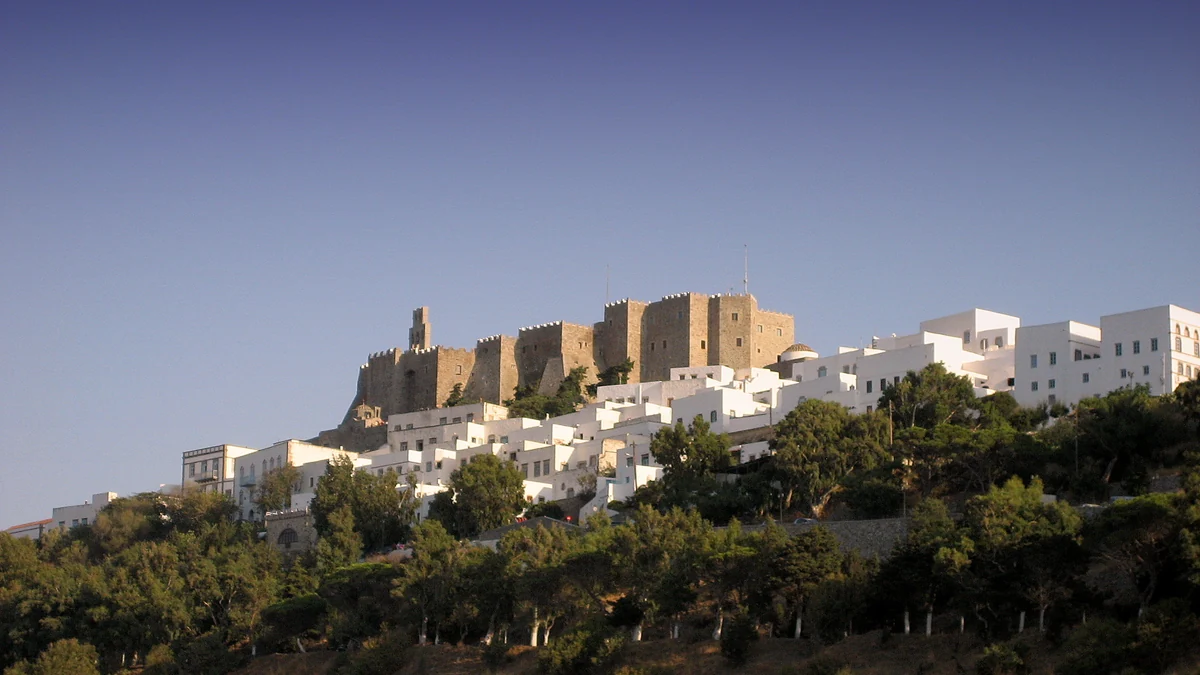
The fortified monastery crowns Chora and dominates the island’s skyline. Its walls give the appearance of a castle, reflecting the need for protection in the medieval Aegean. Inside are courtyards, chapels, icons and collections whose access can vary. The monastery is not a large open palace; visitors move through a functioning religious complex with controlled spaces.
Opening hours are often concentrated in the morning and can change for worship, feast days or operational reasons. This is why the monastery should normally be the first fixed item in the day. Check the current official or ship information and do not assume that a late-afternoon arrival will gain entry simply because the building remains visible.
The final approach through Chora includes slopes, steps and irregular stone. Coaches and taxis stop at designated points rather than at every doorway. Wear shoes with grip and expect to walk. In high summer, take water but follow site rules about eating and drinking within sacred areas.
Modest dress is required. Shoulders and knees should be covered, and local coverings may be provided only subject to availability. Visitors should not treat a borrowed wrap as a guaranteed solution for an entire group. Plan clothing before leaving the ship.
The museum or treasury, when open, may contain manuscripts, icons and ecclesiastical objects. Admission, photography and room access can differ from the main monastery visit. Ask whether a tour includes these spaces or only the courtyard and church. A shorter guided visit with context is better than wandering quickly without understanding what is accessible.
Views from the monastery area extend across the island’s narrow ridges and bays. Take time to look outward after the interiors. The geography explains both the site’s defensive character and Patmos’s fragmented coastline. Wind can be strong at exposed viewpoints, so secure hats and avoid leaning over low walls for photographs.
Chora and the Windmills
Chora surrounds the monastery with whitewashed houses, lanes, chapels and small squares. Its beauty is quieter than a resort town because vehicle access is restricted and the settlement retains a residential and religious character. The best way to explore is to leave a little unstructured time after the monastery rather than following the guide directly back to the bus.
The lanes include polished stone, steps and sudden gradients. Comfortable shoes matter, and navigation can be confusing because high walls hide landmarks. Keep a map offline and agree a meeting point near a church, square or vehicle drop. Mobile messages are not reliable when a group is scattered through narrow streets.
Traditional windmills stand on the ridge near Chora and form one of Patmos’s most recognisable views. Reaching them may involve additional walking and exposure. Include them when time, heat and mobility allow, but do not sacrifice the monastery opening or safe return for a distant photograph. A panoramic vehicle stop may give a good view without completing the full path.
Cafés and small shops in Chora can provide a pause, though opening is more variable than in Skala. Residents live behind the photogenic doors. Keep voices down, avoid entering private courtyards and ask before photographing people. The settlement’s value depends on remaining a place to live, not merely a cruise-stage backdrop.
Passengers who have visited the monastery previously may make Chora the focus, exploring architecture and viewpoints at a slower pace. A private guide can discuss the settlement’s growth around the monastery and identify buildings that a fast island tour passes without explanation.
Skala: Harbour, Churches and an Easy Finish
Skala is often treated only as the tender point, but it deserves the final part of the call. The harbour, shops, bakeries and cafés show everyday island activity, while nearby churches and historic buildings add interest. Remaining here after the heritage route removes transport risk and provides a flexible place for lunch.
Walk the waterfront and side streets rather than staying beside the excursion desks. The town is small enough to explore without a plan, but note the tender station before turning inland. Ferry arrivals can briefly fill the road and cafés; wait a few minutes rather than fighting through passengers with luggage.
Shopping includes religious items, jewellery, ceramics, textiles, food and standard island souvenirs. Product origin varies. Ask about local makers, particularly for ceramics and art, and pack fragile items for tender boarding. Religious objects should be handled with the same respect expected in a church rather than treated as novelty props.
A harbour lunch is practical, but tell staff your tender time. Greek island meals are better when not rushed, so begin before the final hour. Grilled fish may be priced by weight; ask before ordering. Patmos cheese pies, seafood, vegetables and local sweets offer lighter options than a long multi-course meal.
Use the final thirty to forty-five minutes on the harbour side of the main road. Tender queues may be called by group or ticket. Join when instructed and do not assume another boat will be added because people remain in cafés.
Beaches near Skala and around Patmos
Meloi is one of the more convenient beach options near Skala, reached by road or a longer walk depending on the route and heat. It can suit passengers who want a swim after the monastery circuit. Arrange the return before settling, particularly outside peak season when taxis may not wait nearby.
Grikos lies farther south in a sheltered bay and offers a more resort-like stop. A bus or taxi may connect it with Skala, but schedules are seasonal. The beach and waterfront can make a pleasant alternative for repeat visitors, provided the return reaches Skala well before the final tender.
Kampos and other northern beaches require more island travel. They can be worthwhile on a long call with a private driver, but famous beach names should not be combined indiscriminately. Patmos roads are not long, yet vehicle availability, stops and tendering still create a deadline.
Wind direction affects which bay feels comfortable. Ask local drivers or tourism staff where conditions are best rather than following a pre-selected photograph. Use beaches with facilities if changing and transport are important. A remote cove is not relaxing when the group has no signal and an uncertain taxi.
Beachwear should be changed before churches and the monastery. It is easier to complete the religious route first, then swim, than to carry wet clothing and find suitable dress on the way uphill. Keep sand and damp towels contained for the tender.
Island Boat Trips and Sea Conditions
Local boats may offer excursions around Patmos or towards nearby islets, beaches and coves. These trips can be beautiful, especially for repeat visitors, but they duplicate the sea dependency of the ship tender. The departure point, vessel, route, swimming stops and actual return time must be clear.
Do not book a boat that returns close to the final tender. Wind can lengthen the trip or move the landing. Even if the operator promises to return “before the ship”, responsibility for the independent connection remains with the passenger. Choose a morning trip that finishes with several hours in Skala.
Ask whether the trip includes shade, toilets, water and suitable boarding for your mobility. Small wooden boats can require a step across a moving gap. Sea conditions that are acceptable to the captain may still be uncomfortable for passengers prone to motion sickness.
If the wind cancels the boat, switch to a road plan rather than searching for another operator. Chora, the cave, Grikos or an island drive remain available. A cancelled boat can improve the day if the replacement is chosen decisively instead of consuming an hour at the quay.
Best Things to Do from Patmos Cruise Port
Monastery of Saint John
Best for: Patmos’s defining religious, historical and architectural site.
How to do it: Visit early by excursion, taxi or current local bus.
Watch: Morning opening, modest dress, steep approaches and internal restrictions.
Cave of the Apocalypse
Best for: Understanding the island’s association with Saint John and Revelation.
How to do it: Combine with Chora on the uphill or downhill road route.
Watch: Steps, enclosed space, services and photography rules.
Chora
Best for: White lanes, monastic landscape and island views.
How to do it: Leave free time around the monastery rather than returning immediately.
Watch: Uneven stone, getting separated and residential privacy.
Skala
Best for: An easy independent finish with food, shops and harbour life.
How to do it: Walk after the heritage route and remain near the tender.
Watch: Ferry traffic and waiting too long to join the return queue.
Grikos or Meloi Beach
Best for: A swim after sightseeing or a relaxed repeat visit.
How to do it: Use a checked bus or arranged taxi with a fixed return.
Watch: Seasonal transport, wind direction and changing before the tender.
Patmos Boat Trip
Best for: Coast, coves and swimming on a long call.
How to do it: Choose an early trip that finishes several hours before final tender.
Watch: Wind, small-boat boarding and a sea-to-sea connection risk.
CruisePing Recommended Patmos Port Day
Go uphill soon after landing. Use a ship excursion, taxi, private minibus or verified bus to reach the monastery while it is open and before heat and groups intensify. Visit Chora at a measured pace and add the windmills only if time and mobility permit. Do not let the vehicle depart without a clear collection arrangement.
Stop at the Cave of the Apocalypse on the return towards Skala. Reversing the order may be sensible if monastery traffic or opening requires it, but the two sites should remain the fixed morning core. Carry clothing suitable for both from the start; changing modesty plans at the entrance wastes time and may prevent admission.
Return to Skala for lunch and an independent waterfront walk. On a long call, use a taxi or current bus to Meloi or Grikos for a short swim, returning to the harbour with at least ninety minutes before final tender. A shorter call should remain in Skala after lunch.
Repeat visitors can replace the heritage circuit with a private island drive or early boat trip, but should still reserve the final portion for Skala. The ship requires a tender, so the best itinerary removes all other transport dependencies before the last hour.
DIY or Organised Excursion?
Skala is simple independently; the heritage route requires planning. Local buses and taxis can connect the cave and Chora, but the timetable and monastery opening must align. An organised excursion is valuable because it controls uphill transport and provides interpretation at sites whose meaning is not obvious from architecture alone.
A private taxi or minibus gives flexibility, particularly for passengers who need shorter walks or want to include a viewpoint. Agree whether the driver waits at each site and where vehicle access ends. A driver can reduce the road climb but cannot remove monastery or cave steps.
Large tours can feel rushed in narrow Chora lanes and devotional spaces. Ask how much free time is included and whether the guide enters the monastery and cave or speaks outside. A small group may cost more but can move more respectfully and adapt to opening changes.
Boat trips are better treated as a separate repeat-visitor plan. A ship excursion provides return protection, while an independent operator should finish early. Do not attempt the full UNESCO route after a long boat excursion unless the call is exceptionally long and the monastery’s opening supports it.
Mobility, Dress and Respectful Visiting
The tender is the first accessibility issue. Sea conditions, gangway angles and crew assistance determine whether a passenger can transfer safely. Confirm with the cruise line rather than relying on general port descriptions. Once in Skala, the waterfront is comparatively easy, but streets can still have uneven edges.
The Cave of the Apocalypse involves steps and a confined historic interior. Chora and the monastery involve slopes, steps and irregular stone from vehicle drop-off onwards. A wheelchair-accessible vehicle does not make the sites wheelchair-accessible. Request exact walking distances and the availability of a waiting area.
Modest clothing is essential at religious sites. Cover shoulders and knees, remove hats where requested and avoid loud conversation. Services and pilgrims take priority. Photography restrictions should be obeyed without argument; the absence of a visible sign in one room does not override a guide or caretaker’s instruction.
Visitors who cannot enter the cave or monastery can still have a meaningful panoramic route. Chora viewpoints, the exterior monastery setting, Skala and selected churches show the island’s character. A good private guide should adapt the interpretation rather than treating non-entry as a failed excursion.
Useful Official Links
Use these official and authoritative pages to check details that can change before a Patmos call, including arrival arrangements, transport, opening information and local access.
- Municipality of Patmos
- Municipality of Patmos visitor brochure
- Visit Greece guide to Patmos
- Visit Greece guide to Patmos spiritual sites
- UNESCO World Heritage listing for Patmos
Frequently Asked Questions
Where do cruise tenders land in Patmos?
They normally land at Skala harbour. Follow the ship’s signs because local ferries and excursion boats use nearby quays, and record the final tender time.
Can you walk from Skala to the monastery?
The monastery is high above Skala and the route is steep and exposed. Most cruise passengers should use a bus, taxi or excursion and save their walking for Chora and the site.
What should you wear at the Patmos monastery?
Cover shoulders and knees and follow local instructions. Carry suitable clothing from the ship rather than assuming wraps will be available.
Is the Cave of the Apocalypse accessible?
It involves steps and an enclosed historic route. Vehicle access reaches only part of the way. Ask for precise details if stairs or balance are difficult.
Can you visit Patmos independently?
Yes. Skala is easy, and the main sights can be connected by checked bus or taxi. An organised tour adds interpretation and reduces the risk of missing monastery opening.
How long do you need for the main Patmos sights?
Allow a substantial half day for transport, the monastery, Chora and the cave. Rushing all three in under two hours gives little time for context or the site conditions.
Is there a beach near Patmos cruise port?
Meloi is relatively close to Skala, while Grikos and other beaches need road transport. Arrange the return and account for changing before the tender.
Are boat trips safe on a cruise day?
They can be suitable if conditions are good and the trip returns early. Avoid an independent boat that finishes close to the final tender because both operations depend on the sea.
CruisePing Verdict
Patmos is a small island with a concentrated reason to visit. The cave, monastery and Chora belong together and deserve more than a sequence of coach photographs. Visiting them early, respectfully and with realistic expectations about steps creates a powerful half-day that remains distinct from the rest of a Greek-island itinerary.
The port becomes stressful only when too many sea and road connections are added. Keep the heritage route as the fixed core, return to Skala for the flexible part and finish near the tender. Patmos rewards attention rather than distance: one ridge, one cave, one fortified monastery and enough harbour time to let the island settle before sailing.
Ready to browse our article library?
Looking beyond Patmos? Explore more ports in the Greece / Greek Islands region, or narrow it to Greek Islands in particular. For cruise comparisons, planning shortcuts and value guides, head over to our main article archive.