
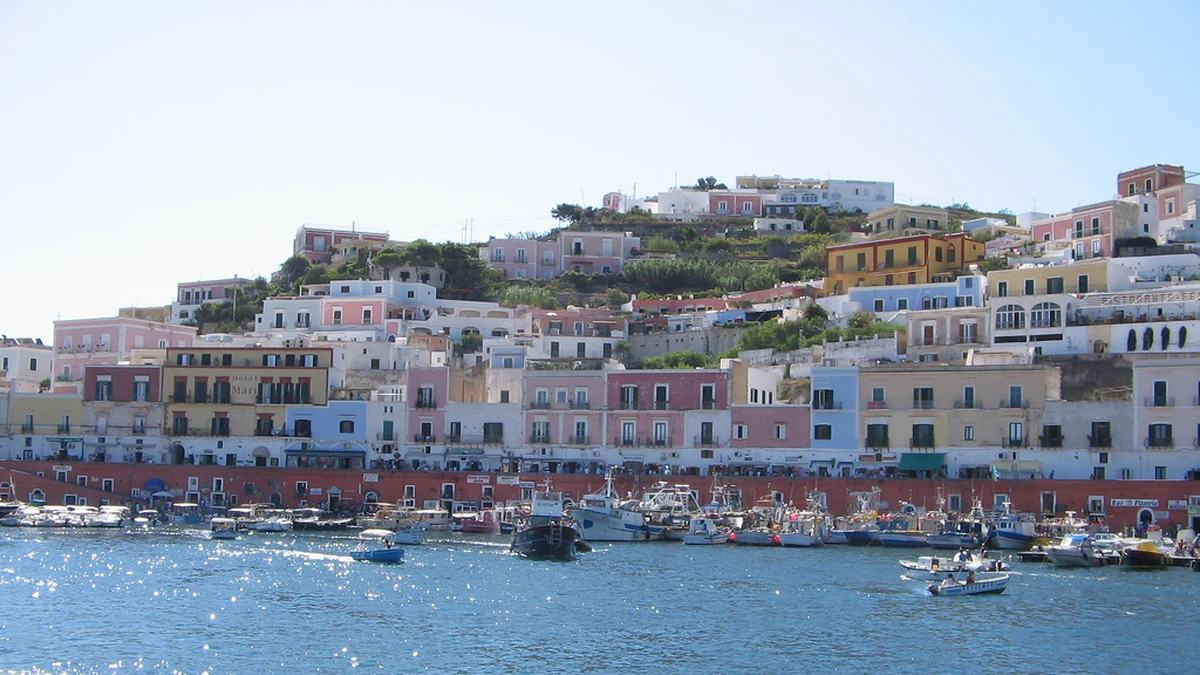
Ponza cruise port delivers passengers into one of the most theatrical harbours in the Tyrrhenian Sea. Pastel houses curve around the water, fishing boats and ferries work beside excursion craft, and the first useful part of the island begins at the tender landing. You can have a satisfying call by staying close to the port, but the cliffs, sea caves and hidden coves that define Ponza are best understood from the water.
That creates a clear choice rather than a long sightseeing list. A calm day favours a properly timed island boat circuit, with the harbour kept for the flexible final hours. A windy or shortened call favours a land-based plan using the waterfront, the Roman cisterns or viewpoint roads. The weak plan is to book a late independent boat, add a distant beach and then rely on the final tender to absorb every delay.
Ponza Cruise Port at a Glance
| Port name | Ponza Cruise Port |
|---|---|
| Main arrival area | Tender landing in Ponza harbour, close to the pastel waterfront |
| Cruise region | Mediterranean |
| Country / Territory | Italy |
| Currency | Euro (EUR) |
| Languages | Italian; English is used by many visitor businesses |
| Port role | Day Call |
| Disembarkation | Usually tender, with small-ship arrangements varying by call |
| Walkability | High around the harbour; low for the wider island |
| Shuttle required | No at the tender landing, but transport is needed beyond the port district |
| Main transport | Walking, local bus, taxi, scooter, local boat and organised excursion |
| Best first-time plan | Harbour and old town, then either an island boat circuit or one carefully chosen land viewpoint |
| Main caution | Wind, tender deadlines, seasonal crowding and allowing enough time to return from a boat or distant beach |
Weather & Best Time to Visit Ponza
January to March
Typical high: 12–16°C
Typical low: 7–10°C
Rain / conditions: Cool, changeable and often windy, with limited seasonal boat and visitor services.
April to June
Typical high: 17–27°C
Typical low: 11–19°C
Rain / conditions: Increasingly warm and bright; late spring usually suits walking and coastal boat trips before peak crowds.
July to September
Typical high: 26–31°C
Typical low: 20–24°C
Rain / conditions: Hot, dry and busy, with strong sun, crowded quays and occasional wind affecting small boats.
October to December
Typical high: 14–25°C
Typical low: 9–19°C
Rain / conditions: Early autumn can remain warm; later calls are more exposed to rain, wind and reduced services.
Weather guide: CruisePing summary based on NASA POWER climate data for Ponza and the Pontine Islands. Check the latest forecast for the call.
Wind matters more than a small change in temperature. A bright forecast can still be poor for exposed coves or a small-boat circuit if the sea state is uncomfortable. Ask the operator which side of the island is sheltered, whether the route may be shortened and when the boat will be back at the harbour rather than when the advertised excursion ends.
In July and August, heat and quay congestion make the first tender valuable. Use it for a pre-booked boat or the uphill parts of a land route, then return to the waterfront for lunch and an easy final hour. Shade is limited on many boats and viewpoints, so carry water, sun protection and footwear that grips on wet steps.
Where Cruise Passengers Come Ashore in Ponza
Most cruise calls use tenders because the harbour is compact and already busy with ferries, fishing boats and local excursion craft. The landing normally places passengers close to the central waterfront, but the exact pier and tender sequence are controlled by the ship and local harbour conditions. Photograph the ship notice and record the last tender time before leaving the landing area.
The harbour is immediately useful. Cafés, ticket desks, shops and the first bus stops sit around the curved waterfront, while narrow streets climb behind the port. This is not an industrial arrival that requires a shuttle to reach the destination. The practical risk is the opposite: the harbour feels so easy that passengers may leave decisions about boats, buses and the return until every popular option is full.
Ferry traffic can briefly interrupt pedestrian movement on the quay. Keep to the marked route and do not assume the shortest line across a working pier is permitted. On the return, allow enough time for a queue at the tender security point; the last boat shown by the ship is a deadline, not the time to arrive from a beach bus.
Why the Island Looks Different from the Water
Ponza is long, narrow and deeply indented. White and yellow tuff cliffs, stacks, caves and coves create an island whose best-known scenery is often hidden from the road. Laziomar’s destination information highlights bays reached only from the sea, while the municipality publishes nature and archaeological itineraries that show how closely the landscape and human history are connected.
A complete circumnavigation can reveal the island’s changing geology, the western cliffs, Cala Feola and the natural pools, the northern reaches around Le Forna and the harbour approaches. The precise route depends on wind and swell. A responsible operator should be willing to alter the programme rather than force a photogenic cove in unsafe or uncomfortable conditions.
The sea view also explains why a short land taxi tour can feel fragmented. Roads run along the inhabited spine, while many famous coves sit far below or around headlands. Land transport is useful for viewpoints, villages and a selected beach, but it cannot replicate the continuous cliff panorama of a boat. Decide which experience matters more before paying for both.
Choosing a Ponza Boat Trip without Creating Return Risk
A local boat trip is the headline independent choice, but duration labels need translating into a cruise-day timetable. Ask for the actual departure point, boarding time, expected harbour return, swimming stops, shade, toilet arrangements and the policy if conditions change. A “half-day” product that returns shortly before the final tender is not robust enough, even when the sailing time looks comfortable on paper.
For a normal call, the stronger booking returns at least ninety minutes before you need to join the ship’s tender queue. That margin gives room for a slow disembarkation from the excursion boat, a changed landing, a drink or meal and one unexpected delay. Passengers who need assistance should ask about the gap between quay and boat, ladders used for swimming and whether staff can help on wet or moving steps.
Private boats provide more control but require a clear written agreement. Confirm the total price, fuel, route, cancellation terms and the latest safe return. Do not let an enthusiastic skipper turn an agreed short circuit into an all-island marathon. The best private trip is not the longest; it is the one that gives you the scenery and gets you back with the harbour still relaxed.
The Harbour, Santa Maria and a Walkable Local Day
Passengers who stay local can build a good route around the port’s architecture, churches, lanes and viewpoints. Begin with the harbour curve before excursion traffic peaks, then climb gradually through the streets behind the waterfront. The elevation gives changing views over the ferries and pastel buildings without committing you to a remote road transfer.
Santa Maria lies around the bay from the main harbour and offers a quieter waterfront character. The route can be walked by reasonably fit passengers, but road sections, heat and gradients make a taxi or bus sensible for anyone conserving energy. Treat the harbour and Santa Maria as one flexible zone rather than a checklist of monuments.
This local day works particularly well in uncertain weather. You can shorten the route, shelter in cafés, visit a small historical site when open and remain close to the tender. It also suits passengers who have already spent several itinerary days on boats and beaches. Ponza’s harbour is not merely the waiting room for an excursion; it is one of the island’s strongest visual experiences.
Roman Cisterns, Tunnels and Archaeological Detail
Ponza’s Roman remains are easy to miss because many sit within or beneath the modern settlement. The island supported villas, water systems, fishponds and harbour infrastructure, and the municipality’s archaeological guide describes a landscape shaped by ancient engineering. Visits may involve controlled access, guides or limited opening rather than casual walk-in entry.
The cisterns are the most distinctive option for passengers who want more than scenery. Their chambers and hydraulic purpose add substance to a compact harbour day, but conditions can be damp, enclosed and uneven. Check whether advance booking is required and whether the route suits anyone with claustrophobia, balance problems or difficulty on steps.
Do not plan several small archaeological sites as if each were a conventional museum. Access can change, and the value comes from interpretation. One guided cistern or tunnel visit paired with the harbour is stronger than racing between locked gates. Store the official municipal guide on your phone before sailing because mobile reception inside underground spaces may be poor.
Chiaia di Luna: Viewpoint Rather than Guaranteed Beach
Chiaia di Luna is the image many visitors associate with Ponza: a sweeping crescent beneath a high pale cliff. Access restrictions have affected the beach because of rockfall risk, so cruise passengers should not build the day around walking onto the sand. The reliable experience is the view from the sea or an authorised viewpoint, subject to current local rules.
A taxi or bus can place you near land viewpoints, while boat trips may pass the bay when sea conditions permit. Ask what is legally accessible on the day rather than relying on old photographs or reviews. Barriers and closures are safety measures, not inconveniences to walk around for a better angle.
This is a useful example of Ponza planning: the famous name is not always the best standalone excursion. If your boat route includes Chiaia di Luna, enjoy it as part of the island circuit. If you are staying on land, combine a viewpoint with the harbour or another accessible place rather than spending a large share of the call chasing one restricted beach.
Le Forna, Cala Feola and the Northern Island
Le Forna spreads along the northern part of Ponza and gives access to a different rhythm from the main port. Local buses and taxis connect the settlements, while paths and steps lead towards Cala Feola and the natural pools. The journey is not long in mainland terms, but summer traffic, full buses and steep final approaches can make the return less predictable.
The natural pools are attractive in calm conditions, yet the approach and water entry are not suitable for everyone. Wear secure footwear, avoid carrying unnecessary valuables and check whether sea conditions make the rocks slippery or the swimming uncomfortable. A taxi arrangement with a fixed collection time is more dependable than assuming another vehicle will be waiting.
Most first-time cruise passengers should choose either the northern land outing or the full boat circuit, not both. Combining them creates duplicated coastal scenery while increasing transport exposure. Le Forna is a good choice for repeat visitors, confident swimmers or passengers who prefer a village-and-cove day to a long excursion boat.
Food, Ferries and the Working-Harbour Rhythm
Ponza’s waterfront is busiest when ferries arrive, excursion boats board and lunch service begins at the same time. That atmosphere is part of the visit, but it can make a leisurely restaurant meal unexpectedly slow. Tell staff that you are returning to a cruise tender and choose a simple order when the quay is crowded.
Seafood, pasta, local vegetables and island wines fit the setting, although the most prominent harbour restaurants may charge for the view as much as the cooking. Walk one or two streets back before deciding. A bakery, takeaway counter or short aperitivo can be better value when the ship provides dinner and time ashore is limited.
Keep a small reserve of cash even though cards are widely used. Boat kiosks, buses and small businesses may have temporary connection problems during the busiest hours. Separate the money needed for the return from spending cash, and never assume the public ferry timetable is relevant to your ship’s tender operation.
A Ponza Call-Length Plan that Stays Realistic
On a five-hour call, keep the day local unless a short boat is pre-arranged to return very early. Harbour, Santa Maria, one viewpoint and lunch already fill the useful window once tendering is included. On a seven- or eight-hour call, a morning island circuit becomes realistic, followed by a relaxed waterfront finish.
When the first tender is delayed, remove the most fragile element rather than compressing every stop. A boat operator may be able to shorten the route; a land plan can drop the northern island. The harbour is a strong fallback, so there is no need to protect a weak booking at the expense of the ship’s return margin.
If wind cancels independent boats, avoid spending the morning comparing operators who all face the same sea. Switch quickly to a bus or taxi circuit, an archaeological visit and the harbour. The passengers who enjoy disrupted Ponza calls are usually those who accept the island that conditions allow rather than pursuing the itinerary they imagined the night before.
Best Cruise-Compatible Things to Do in Ponza
Ponza harbour
Best for: The island’s most immediate architecture, atmosphere and easy photographs
How to do it: Walk directly from the tender landing and explore before the midday ferry rush
Watch: Working-pier traffic and a tender queue that can grow late in the call
Island boat circuit
Best for: Cliffs, caves, coves and the clearest understanding of Ponza’s shape
How to do it: Pre-book a morning departure with an early confirmed harbour return
Watch: Wind, limited shade, swimming ladders and vague “half-day” timings
Roman cisterns
Best for: Ancient engineering and a more substantial cultural visit
How to do it: Use an authorised guided opening and check the meeting point
Watch: Enclosed spaces, damp surfaces, steps and variable access
Chiaia di Luna viewpoint
Best for: The classic crescent-bay image without relying on beach access
How to do it: Use a legal land viewpoint or see the bay during a boat circuit
Watch: Rockfall restrictions and old online information about access
Le Forna and Cala Feola
Best for: A quieter northern-island day with swimming and village scenery
How to do it: Use a checked bus or pre-arranged taxi and set the return first
Watch: Steep approaches, full summer buses and slippery rock around natural pools
Santa Maria waterfront
Best for: A low-pressure extension from the main harbour
How to do it: Walk, bus or take a short taxi depending on heat and mobility
Watch: Road walking and gradients can make the map distance deceptive
CruisePing Recommended Ponza Port Day
For a first visit in calm weather, take an early boat circuit that is scheduled back well before the final tender window. The sea is where Ponza’s cliffs, caves and inaccessible bays become coherent. Choose an operator who discusses conditions and return time plainly rather than promising every named cove regardless of wind.
After the boat, keep the second half deliberately loose. Walk the harbour, have lunch away from the busiest boarding point and add Santa Maria or a short archaeological visit only if time remains. This order protects the headline experience while ensuring the final part of the day happens close to the ship.
In poor sea conditions, reverse the emphasis: harbour first, then a land viewpoint, cistern visit or checked bus trip towards Le Forna. Do not treat a cancelled boat as a failed call. Ponza’s compact port, colour and layered history can still produce a distinctive day without gambling on rough water.
DIY or Organised Excursion in Ponza?
Ponza is well suited to independent passengers who are comfortable comparing local boat operators, reading ship tender times and changing plans with the weather. The harbour requires no transfer, and a morning boat plus local walk can be arranged without paying for a cruise-line coach.
An organised excursion is worth considering when the tender window is short, mobility needs require a vetted boat, or the ship offers a protected island circuit with a clearly stated return. It also reduces the effort of finding a reliable operator during peak season, when the best departures may be full before the first tender arrives.
CruisePing would stay DIY on a normal long call, but only with an early booking and a large return margin. The value disappears if the cheapest boat returns late or leaves passengers to solve a changed landing independently.
Ponza Pitfalls and Value Choices
Most problems arise from linking two weather- or transport-sensitive plans when one strong choice would be enough.
- Late boat returns: ask for the time back at Ponza harbour, not merely the excursion duration.
- Assuming Chiaia di Luna beach is open: use current municipal information and treat the viewpoint or sea view as the dependable option.
- Full buses from Le Forna: set a taxi collection or leave on an earlier service than the last theoretically possible one.
- Paying for duplicated scenery: a full boat circuit and a long north-island taxi tour may repeat the same coastline from different angles.
- Restaurant delay on the quay: order simply or eat away from the ferry boarding rush when the tender deadline is close.
- Ignoring tender weather: even a completed local excursion still has to connect with the ship’s own small-boat operation.
Ponza Cruise Day Checklist
Set the sea and tender timings before spending money on the rest of the day.
- Record the final tender and the location of the return queue.
- Confirm the excursion boat’s actual harbour return and weather policy.
- Carry sun protection, water and secure footwear for wet steps.
- Check current access for Chiaia di Luna and any archaeological site.
- Arrange a return vehicle before committing to Cala Feola or Le Forna.
- Keep the final hour close to Ponza harbour.
Useful Official Links
Use these official and authoritative pages to check details that can change before a Ponza call, including arrival arrangements, transport, opening information and local access.
- Comune di Ponza island and visitor information
- Ponza public transport and connections
- Laziomar Ponza destination and timetable links
- Comune di Ponza archaeological guide
- Comune di Ponza natural-history guide
Ponza Cruise Port FAQ
Do cruise ships dock in Ponza?
Most calls use tenders into the central harbour, although arrangements depend on ship size and local operations. Follow the current ship notice rather than assuming the landing from a previous visit.
Is a boat trip worth doing from Ponza cruise port?
Yes, in calm conditions it is the strongest first-time experience because many cliffs and coves are best seen from the sea. Choose an early trip with a confirmed return well before the final tender.
Can you walk around Ponza from the tender landing?
The harbour and nearby streets are walkable, but the island is long, hilly and served by narrow roads. Le Forna, Cala Feola and distant viewpoints require a bus, taxi or boat for most passengers.
Can you visit Chiaia di Luna beach?
Access has been restricted because of rockfall risk. Check current official information and plan around a viewpoint or boat view rather than assuming the sand is open.
What happens if boat trips are cancelled?
Use the harbour, Santa Maria, a legal viewpoint, an archaeological visit or a checked bus route. The central port is attractive enough to support a good fallback day.
Is Ponza suitable for passengers with limited mobility?
The harbour is relatively manageable, but boats, cobbled or sloping streets, wet steps and beach approaches can be difficult. Ask the ship and operator for exact boarding and assistance arrangements.
How much return time should an independent boat allow?
Aim to be back at the harbour at least ninety minutes before you need to join the final tender queue, and allow more when wind, crowds or mobility needs may slow the transfer.
CruisePing Port Verdict
Ponza is at its best when the day has one clear centre. In calm weather, make that the coastline from a well-timed boat and use the harbour as the relaxed finish. In wind, make it the harbour, history and one land extension rather than chasing a cancelled sea itinerary.
The island does not need a packed schedule. Its visual strength comes from the relationship between the pastel port, pale cliffs and dark blue water. Protect the return, choose the right viewpoint and leave enough time to enjoy the harbour before the tender pulls away.
Ready to browse our article library?
Looking beyond Ponza? Explore more ports in the Mediterranean region, or narrow it to Italy in particular. For cruise comparisons, planning shortcuts and value guides, head over to our main article archive.