
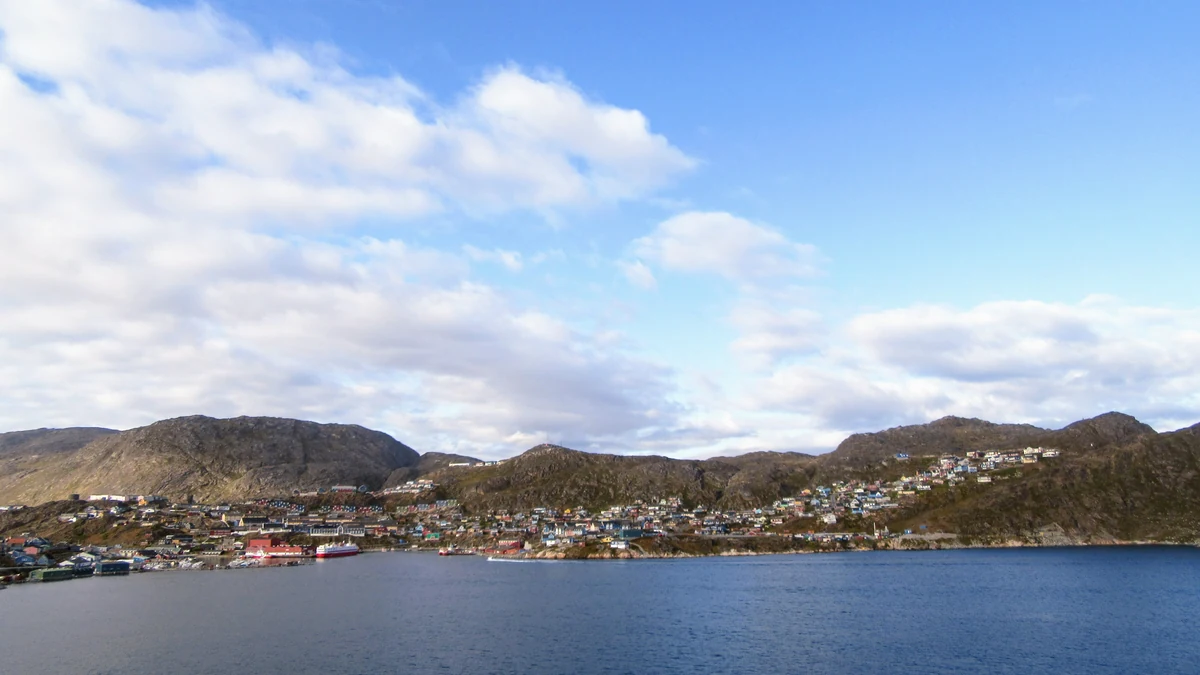
Qaqortoq cruise port is one of Greenland’s strongest independent town calls. Tenders place passengers close to a compact centre where colourful houses rise around the harbour, the historic fountain anchors the square, Qaqortoq Museum occupies old colonial buildings and the Stone & Man project turns exposed rock into an open-air art route. You do not need a coach to have a meaningful day.
The harder choice is whether to leave town by boat. Hvalsey’s Norse church ruins, Uunartoq hot springs and fjord outings can be memorable, but each becomes the main excursion rather than an extra. Weather, operator capacity and tender timing determine what is realistic. For most first-time visitors, CruisePing would explore Qaqortoq on foot and add only a locally organised short activity that returns well before the ship’s final tender.
Qaqortoq Cruise Port at a Glance
| Port name | Qaqortoq Cruise Port |
|---|---|
| Main cruise area | Anchorage in Qaqortoq harbour with tender landing near the centre |
| Cruise region | Antarctic / Arctic |
| Country / Territory | Greenland |
| Currency | Danish krone (DKK) |
| Languages | Greenlandic and Danish |
| Disembarkation | Tender |
| Walkability | High in the centre, with steep streets and uneven rock on longer routes |
| Shuttle required | No for town |
| Main transport | Walking, tender, locally arranged boat or organised excursion |
| Best DIY option | Town square, Stone & Man, museum area and harbour |
| Main caution | Boat excursions are weather-dependent and limited; book one as the day’s main plan |
Weather & Best Times to Visit Qaqortoq
January to March
Typical high: -4 to 0°C
Typical low: -10 to -5°C
Rain / conditions: Cold, snowy and windy, with limited daylight and possible sea-ice disruption.
April to June
Typical high: 2–10°C
Typical low: -3 to 4°C
Rain / conditions: Rapidly lengthening days with snowmelt, cold rain and mixed walking surfaces.
July to September
Typical high: 8–13°C
Typical low: 3–7°C
Rain / conditions: Cool summer conditions with rain, fog and brisk winds possible at any time.
October to December
Typical high: -2 to 6°C
Typical low: -8 to 1°C
Rain / conditions: Cooling quickly with shorter days, snow and an increasing risk of marine disruption.
Weather guide: CruisePing summary based on NASA POWER climate data for Qaqortoq and southern Greenland. Check the latest forecast.
Qaqortoq’s colourful centre still works in low cloud, which gives it an advantage over viewpoint-only calls. Rain and wet rock make the Stone & Man route more slippery, while fog can weaken a boat excursion or hide the fjord scenery. Wear layers and waterproof shoes. Sun can feel surprisingly strong when it reflects from water and pale rock.
Tendering into Qaqortoq
Cruise ships generally anchor and tender passengers into the harbour. The exact pontoon and landing sequence are set by the ship and local operation. Expedition vessels may land groups quickly; a large ship can create queues and pressure around a compact waterfront. Note the final tender and any ticket procedure before walking uphill.
The central square and museum area are close to the harbour, so a delayed landing does not ruin the day. That proximity also makes Qaqortoq a sensible place to return early: you can browse locally and remain within sight of the water rather than waiting on the ship. If conditions worsen, the crew may accelerate tender operations. Respond to announcements promptly.
Working quays are not sightseeing platforms. Fishing and local passenger activity continue during cruise visits. Follow barriers, avoid blocking ramps and do not photograph people at close range without permission. Qaqortoq is a town receiving visitors, not a recreated heritage village.
Walking Qaqortoq Independently
Start in the central square, where the fountain and older buildings give the town an easy orientation point. From there, the harbour, church and museum area can be linked in short loops. Visit Greenland’s Qaqortoq guide describes the main visitor appeal, while the ship may provide a more precise call-day map.
Qaqortoq Museum occupies historic buildings and is a useful first stop when open. The collection and setting help explain the town beyond its bright façades. Opening, capacity and payment can be arranged around cruise calls, but should not be assumed. Carry a card and some Danish kroner, and be patient if a large group reaches a small entrance at once.
Stone & Man is the signature independent experience. Greenlandic artist Aka Høegh initiated the project, and works by artists are carved into rock and placed through the town. The official Stone & Man information provides context. The art is not confined to a ticketed sculpture park, so allow yourself to notice pieces rather than racing between numbered points.
The route adds hills and uneven surfaces. Some works are easy to reach near the centre; others require more climbing. Rain can make exposed stone slippery, and snow patches may persist outside midsummer. A shorter accessible route can still include the square, harbour and several sculptures. Ask local staff which streets are best for your mobility level.
Best Cruise-Compatible Things to Do from Qaqortoq
Stone & Man art walk
Best for: The town’s most distinctive cultural route and a flexible DIY experience
Best way: Walk independently with a map or join a local guided walk
Watch: Hills, wet rock and scattered works mean the full route takes more effort than the centre alone.
Qaqortoq Museum and old town
Best for: Local history, colonial-era buildings and context for southern Greenland
Best way: Visit when open and combine with the square and harbour
Watch: Opening and capacity can be call-specific; avoid crowding doorways.
Town square and Mindebrønden fountain
Best for: An easy orientation point and a relaxed introduction to Qaqortoq
Best way: Walk directly from the landing
Watch: The square can become crowded immediately after a large tender wave.
Hvalsey Church ruins
Best for: A major Norse site in the wider Qaqortoq region
Best way: Use a ship excursion or established local boat operator
Watch: Marine weather, landing conditions and the return make it a dedicated excursion.
Uunartoq hot springs
Best for: A rare outdoor bathing experience in a remote setting
Best way: Book a properly equipped boat excursion matched to the ship call
Watch: Boat time, changing facilities, water temperature, weather and limited capacity require careful confirmation.
Fjord or iceberg boat trip
Best for: Southern Greenland scenery from the water
Best way: Choose a verified operator or cruise-line excursion
Watch: Ice, wind and fog alter routes; never expect a particular iceberg or wildlife encounter.
Local guided cultural walk
Best for: Interpretation of art, buildings and contemporary town life
Best way: Choose a community guide scheduled for the call
Watch: Group size matters in residential streets; follow photography guidance.
Short hillside viewpoint
Best for: Harbour views in clear weather without a full excursion
Best way: Follow a locally confirmed route and turn back early if conditions worsen
Watch: Steep, uneven ground and fog make informal scrambling unsuitable.
CruisePing Recommended Port Day
CruisePing would keep a first Qaqortoq visit in town. Begin with the museum if it is open, use the square to orient yourself, then follow a selective Stone & Man route through the centre and lower hillside. Pause for local food or crafts and return by the harbour. This plan is flexible enough to absorb a tender delay and still feels specific to Qaqortoq.
The best organised alternative is Hvalsey for passengers strongly interested in Norse history, or Uunartoq for those prioritising the hot springs. Do not try to combine both unless the cruise line offers a credible long excursion. Each requires boats, landing time and weather margin. A generic fjord trip can also be worthwhile, but the operator should state what the trip does rather than promise wildlife or ice.
If weather cancels boats, the town is the proper fallback, not a consolation. Move the museum and local interpretation forward, shorten the steepest art route and enjoy the harbour. Qaqortoq’s advantage is that its main identity remains available on foot.
DIY or Organised Excursion?
Qaqortoq is strongly DIY within town. Transport would add little between the landing, square, museum and central sculptures. A local walking guide earns their fee through interpretation, not because the route is difficult to find. This is a good place to spend directly with a community guide or locally run museum.
Beyond the harbour, organised travel is essential. Boat capacity is limited, weather decisions need local knowledge and remote landings require equipment. Book through the ship or an established operator who knows the cruise schedule. Confirm clothing, boarding, toilet provision, walking surface and what happens if the excursion is cancelled.
Avoid arranging an informal last-minute boat with no written details. A low price does not compensate for uncertain safety equipment, communication or return. CruisePing would rather miss a remote site than build the day around an operator who cannot explain the vessel and weather policy.
Stone & Man Without Turning It into a Treasure Hunt
The art project works best when it changes how you look at Qaqortoq. Carved faces, animals and forms emerge from retaining walls and natural rock. They connect the built town with the geology beneath it. Finding every piece is less important than seeing several in their setting and understanding that the work is part of public space.
A guided walk can explain artists and themes, but an independent route is equally valid. Use a map as a prompt, not a stopwatch. Stop at viewpoints, look back towards the harbour and notice ordinary town life between sculptures. This pace reduces pressure on narrow streets and makes the route more than a series of photographs.
Do not climb onto carvings or touch fragile surfaces unnecessarily. Public art is accessible, not disposable. Children should be supervised around steep rock and roads. In rain, shorten the upper route rather than risking a fall to complete a list.
Hvalsey, Uunartoq and the Boat-Excursion Choice
Hvalsey offers a tangible Norse history that cannot be replicated in central Qaqortoq. The church ruin is the headline, but the value comes from its landscape and guided context. The boat crossing, landing and site time make it a substantial excursion. Ask whether the operator provides a guide and how much walking is involved from the landing.
Uunartoq is a different type of day. The attraction is bathing in naturally warm water in a remote setting, not conventional sightseeing. Passengers need swimwear, towels, warm layers and realistic expectations of changing facilities. Capacity can be tight, and weather may cancel the boat even when the ship can still tender into Qaqortoq.
A general fjord trip offers more flexibility because the route may be adapted to ice and wind. It should still have a defined duration and return margin. Wildlife sightings are a bonus. Operators who promise whales or a particular iceberg are selling certainty the environment cannot provide.
For most first-time visitors, these excursions involve a trade-off: you give up much of Qaqortoq town. That can be worthwhile, but make the choice deliberately. CruisePing would not rush through Stone & Man before boarding a long boat and then claim to have done both properly.
Responsible Visiting and Local Capacity
Qaqortoq can receive a large number of passengers relative to its centre. Spread out after landing rather than following the same flag into the square. Visit the museum in smaller groups, keep residential entrances clear and ask before photographing people. Brightly painted homes are private property.
Local spending is valuable when it is respectful. Buy crafts from genuine sellers, check what materials are legally exportable and do not pressure small businesses over card connectivity or queues. Danish kroner can be useful, though card acceptance varies. Do not expect every shop to extend its hours for an unscheduled or weather-delayed arrival.
Waste and water capacity are finite. Carry refillable water where practical, take packaging back to the ship when requested and use public facilities responsibly. Never remove stones, plants, bones or cultural material from the landscape. The regional cruise conservation guidance is worth reading before any Greenland landing.
Mobility and Accessibility Planning
Tender boarding is the first accessibility issue. Conditions can prevent wheelchair or walker transfers even when the town itself appears manageable. Ask the cruise line in advance and follow the captain’s day-of-call decision. The landing and harbour surface may be wet.
The central square and lower town offer a useful shorter route, but Qaqortoq rises steeply and the full art walk includes uneven stone. A passenger with limited mobility should not feel compelled to reach every sculpture. Ask for a lower-level map or guided route and use rest stops.
Boat excursions add steps, narrow seating and remote landings. Uunartoq also requires changing and movement over natural ground. State limitations before booking and ask for photographs or precise boarding information. “Easy” in an excursion label may refer only to the amount of hiking, not to getting in and out of the boat.
Qaqortoq Port-Day Pitfalls and Practical Choices
- Do not treat remote boat trips as add-ons. Hvalsey and Uunartoq each consume most of a call.
- Check museum opening on the day. Small-community attractions can adapt to calls but are not guaranteed.
- Wear shoes with grip. The art route includes hills, rock and wet surfaces.
- Avoid guaranteed wildlife or iceberg claims. Conditions and sightings are variable.
- Respect residential space. Keep groups moving and ask before photographing people.
- Return before tender conditions deteriorate. Wind or fog can change operations more quickly than in a fixed-berth port.
Qaqortoq Cruise Port Checklist
- Confirm the tender landing, ticket system and final boat.
- Check DMI weather and the operator’s marine decision.
- Decide between a town day, Hvalsey, Uunartoq or a fjord trip.
- Wear warm waterproof layers and shoes suitable for rock and slopes.
- Carry a card plus a modest amount of Danish kroner.
- Ask before photographing residents or private property.
- Confirm museum and cultural-programme opening for the call.
- Leave remote ground and natural objects undisturbed.
Frequently Asked Questions
Is Qaqortoq a tender port?
Yes. Cruise ships generally anchor and use tenders to reach the harbour near the centre.
Can I explore Qaqortoq independently?
Yes. The square, museum area, harbour and much of Stone & Man are suitable for a self-guided town day.
What is Stone & Man?
It is an open-air art project with works carved into and placed among Qaqortoq’s rock and streets. It is dispersed through the town rather than contained in one gallery.
Can I visit Hvalsey from a cruise ship?
Yes when a suitable boat excursion operates, but it should be the main plan and remains subject to weather and landing conditions.
Are the Uunartoq hot springs easy to reach?
No. They require a boat excursion and a remote landing, with limited capacity and natural surfaces. Check the physical requirements carefully.
What is the best bad-weather plan?
Stay in town, prioritise the museum if open, follow a shorter lower-level art route and remain flexible around the harbour.
CruisePing Port Verdict
Qaqortoq is a rare Greenland port where the independent fallback is also the main recommendation. The town’s art, harbour, museum and steep colourful streets give passengers enough substance without depending on a vehicle or boat.
CruisePing would walk Qaqortoq on a first visit and choose Hvalsey or Uunartoq only when that experience matters more than seeing the town. Whichever plan you choose, respect local capacity, treat weather as decisive and never compress two remote excursions into one fragile day.
Planning by Call Length
A short call is still enough for the square, harbour and a selective Stone & Man walk. A normal day allows the museum and a broader route. A long call creates space for Hvalsey or Uunartoq, but the boat must be booked as the central activity. Duration cannot overcome poor marine conditions.
Several expedition ships may be moving through southern Greenland in the same period. Local boats and guides are finite. A sold-out excursion is not a reason to use an unverified substitute; the town remains a strong independent alternative.
Making the Town Day More Than a Quick Circuit
A Qaqortoq town day becomes richer when the museum, art and harbour are treated as connected stories. The museum explains how people have lived and worked in southern Greenland; Stone & Man places art directly into the rock of the settlement; the harbour shows the contemporary fishing and transport economy. Moving between them slowly gives more understanding than photographing the fountain and immediately returning to the tender.
Choose part of the art route according to conditions. In dry weather, climb higher for works set into rock and for views back across the coloured houses. In rain, remain on the lower streets and look carefully at the pieces near the centre. A guided walk can identify details that are easy to miss, but independent visitors should leave space around the guide group rather than following closely without joining.
Local food and craft can add a fourth layer when services are open. Ask sellers about materials and makers, and check any export restrictions before buying items derived from animals. Card facilities may be affected by connectivity, so a failed transaction should be handled patiently. The purchase is most useful when it supports a genuine local business rather than an anonymous souvenir supply chain.
The harbour is the right final stop. It keeps passengers close to the tender, provides a view of the ship and allows time to respond if boats begin returning early. Watching local craft and tenders share the water also reinforces the town’s scale. Qaqortoq should feel like a place where people live and work, not merely the departure point for a remote excursion.
A Practical Stone & Man Route by Energy Level
Passengers who want an easy route can remain around the square, harbour and lower streets, where several works and historic buildings are accessible without committing to the highest slopes. A moderate route adds selected uphill pieces and viewpoints before descending through residential streets. The full route is best for confident walkers with time, dry conditions and a map. There is no prize for finding every work.
Start by asking at the museum, visitor point or ship landing whether a current route map is available. Construction, local works or weather damage can change access. Follow public streets and paths, and do not cut between houses because a sculpture appears close on the map. The town’s topography can make a short straight-line distance involve a steeper and longer approach.
Pause where the art interacts with natural rock. Some pieces are easiest to understand from a few metres away rather than close up. Avoid standing on roads to frame a photograph, and let residents pass before assembling a group. In a busy call, small acts of spacing make the route more comfortable and reduce the sense that the town has been taken over.
When a Boat Excursion Is Cancelled
Boat cancellation is a normal possibility in southern Greenland, not evidence of poor organisation. Wind, fog, ice or landing conditions can make a route unsafe even when the ship remains anchored. Reputable operators will make that decision conservatively. Ask about the refund process and fallback before departure, then accept the judgement without pressuring the crew to sail.
Use the unexpected town day well. Join a guided art walk if space is available, visit the museum, take a lower viewpoint route and spend time in locally run businesses. The ship’s team may arrange an additional programme, but Qaqortoq does not need an emergency entertainment schedule to remain worthwhile. Its strongest attractions are already close to the harbour.
Use the extra town time to revisit the square after the first tender crowds disperse. The same streets often feel different once groups have spread uphill or returned to the ship, and the quieter period is better for looking at carvings, speaking with a guide or making a purchase without blocking a small shop.
Useful Official Links
- Visit Greenland: Qaqortoq
- Visit Greenland: Stone & Man
- Greenland cruise call list
- Regional cruise conservation guidance
- DMI Greenland weather
Ready to browse our article library?
Explore more ports across Antarctic / Arctic, browse CruisePing destinations in Greenland, or head to the main article library for cruise planning guides, port comparisons and practical ideas.