
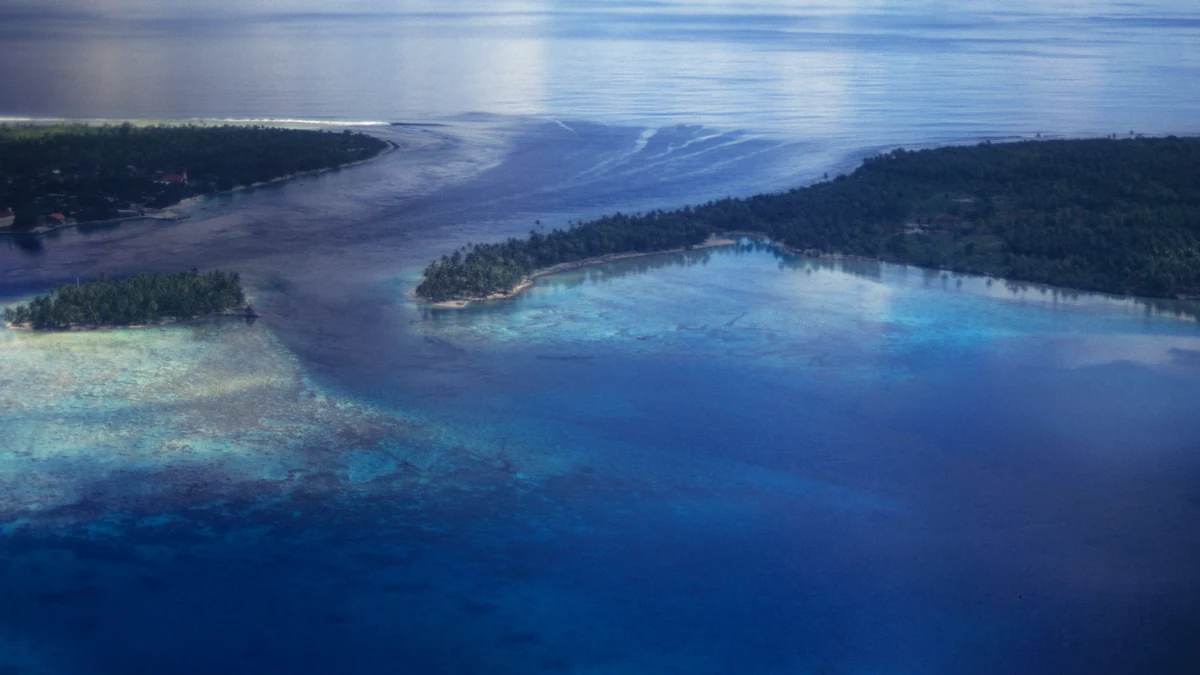
Rangiroa cruise port is a tender call inside one of the world’s great atoll lagoons. Ships most often use Ohotu Pier near Tiputa Pass, although Avatoru Wharf can be substituted. The arrival location matters because Rangiroa is long and thin, with no conventional town centre beside every landing.
For experienced water users, the best first choice is an organised Tiputa Pass snorkel or dive timed to the current. For everyone else, the stronger day is a bicycle or transfer between Ohotu, Avatoru, a pearl farm and the pass viewpoint. The Blue Lagoon is exceptional but normally too long and fragile for independent cruise planning; use it only as a ship-protected full-day excursion.
Rangiroa Cruise Port at a Glance
| Port name | Rangiroa |
|---|---|
| Main arrival area | Ohotu Pier near Tiputa Pass on many calls; Avatoru Wharf is an alternative |
| Cruise region | Australasia / Pacific Islands |
| Country / Territory | French Polynesia |
| Currency | CFP franc (XPF) |
| Languages | French and Pa’umotu; some English in tourism |
| Port role | Day Call |
| Disembarkation | Tender |
| Walkability | Limited around the landing; bicycle or organised transport is useful |
| Shuttle required | No dependable public shuttle |
| Main transport | Organised lagoon boat, dive boat, bicycle, scooter and pre-arranged transfer |
| Best first-time plan | Guided Tiputa Pass activity for capable swimmers; bicycle and pearl-farm route for non-divers |
| Main caution | Pass currents are powerful and the Blue Lagoon is generally a full-day journey |
Ohotu Pier is the primary mapped landing
The red-marker coordinate identifies Ohotu Pier on the Avatoru motu beside Tiputa Pass. Cruise operations can still tender to Avatoru Wharf, so the ship notice must be checked before meeting an independent operator.
Write the actual pier into the booking. Rangiroa’s two landing areas are not interchangeable on foot, and a boat waiting at the wrong wharf can consume the entire activity window.
DIY or organised tour? Split the decision by water risk
Use an organised operator for pass snorkelling, diving and distant lagoon trips. Current, tide, vessel support and entry points make DIY water activity unsafe.
Use DIY for cycling, village exploration, dolphin viewing from shore and selected land visits. That division is clearer and more useful than declaring the whole atoll either easy or difficult.
Tiputa Pass is the headline experience
Tahiti Tourisme describes Tiputa Pass as a biodiversity hotspot for dolphins, sharks, rays, turtles and tropical fish.
The pass deserves priority for capable snorkellers and divers, but the exact route must follow the tide. A famous name does not make every current suitable for every passenger.
Incoming and outgoing tides create very different water movement, visibility and wildlife behaviour. A professional operator should explain which phase is being used, where guests enter and exit and how the boat tracks the group throughout the drift.
Passengers who do not enter the water can still appreciate the pass from land, particularly when dolphins are active near the channel. Shore observation is not an inferior consolation; it avoids current risk and leaves the day flexible.
Pass snorkelling must be guided
A drift can move quickly through or beside the pass. Boat positioning, flotation, group spacing and exit timing are part of the excursion rather than optional support.
Disclose swimming confidence before departure. Beginners should choose the calmer Aquarium or a lagoon snorkel instead of accepting a pass drift merely because it is the headline product.
The guide should brief the group before the boat reaches the entry point, identify the expected drift line and explain the signal for ending the swim. Passengers must be able to reboard promptly rather than relying on a beach exit.
A mixed-ability group can weaken safety if stronger swimmers move ahead and less confident guests are left behind. Ask whether the operator separates groups or provides additional guides and flotation.
The Aquarium is the best moderate snorkel
The official Rangiroa activity guide highlights the natural Aquarium near Tiputa, where sheltered water can hold abundant reef fish.
For families and ordinary swimmers, this often provides a better day than the strongest pass current. Ask whether the operator includes a guide, flotation and a boat-based return.
The site is commonly reached by a short boat transfer rather than by simply walking from the pier. Confirm the boarding point and whether the trip returns to the same landing used by the ship.
Families and less experienced swimmers should ask about depth, current, flotation and how closely the guide supervises the group. A calm-looking lagoon can still be tiring when sun and repeated entries are added.
Scuba divers need recent current experience
Rangiroa is a major dive destination, but certification alone does not prove readiness for current, negative entry or blue-water conditions.
Tell the centre about recent dives and equipment familiarity. A responsible operator may choose an easier profile, and that decision should be treated as professionalism rather than disappointment.
Discuss the likely pass direction, maximum depth, negative-entry procedure and pickup method before paying. Divers who normally use calm resort reefs should not discover the operational style during the final briefing on the boat.
One well-planned dive may be a better cruise choice than a rushed two-dive programme. Equipment return, surface interval and the tender queue must all fit after the underwater time.
Dolphin viewing from shore is a strong free option
Dolphins may play in the waves and current near Tiputa Pass. The viewpoint can be reached from Ohotu without booking a boat, although sightings remain unpredictable.
Watch from a safe public area and do not interpret absence as a failed visit. The moving water, boats and scale of the pass are interesting even when no dolphin appears.
The pass viewpoint can be visited more than once because activity changes with tide and boat movement. Bring binoculars, remain behind safe edges and avoid assuming that a missed morning sighting means the dolphins will not appear later.
The Blue Lagoon is normally too much for independent cruise planning
Tahiti Tourisme describes the Blue Lagoon as roughly an hour by boat from the main inhabited area and usually a full-day excursion with lunch.
Book it only through the ship or an operator offering a clearly protected return. We would not combine it with a pass activity, pearl farm or village circuit. Its beauty does not shorten the journey.
The long small-boat crossing can be exposed, and the comfort of shade, seating, toilet arrangements and drinking water matters. Ask these questions before comparing only lunch, snorkelling and photographs.
Weather can make the outward journey possible and the return unpleasant or slow. Ship protection is valuable because the operator and vessel then sit within the cruise line’s timing decision rather than leaving the passenger to absorb the risk.
Reef Island is another full-day commitment
Reef Island’s fossilised coral formations and remote motu setting make it attractive during a longer stay. The boat journey and picnic programme consume most of a cruise call.
Treat it like the Blue Lagoon: one organised full-day choice, not an add-on. On a first short call, Tiputa and the inhabited motu provide a better risk-reward balance.
A pearl farm is the best cultural land stop
Gauguin’s Pearl explains grafting, oyster care and the long production cycle behind Tahitian cultured pearls.
Book or confirm the transfer, because the farm is not necessarily beside the tender. The educational visit is worthwhile without a purchase; compare certification and quality calmly if buying.
The presentation should explain grafting, nucleus insertion, oyster cleaning and the years required to produce a marketable pearl. That process is the attraction; the showroom is optional.
When buying, ask about grade, treatment, certification and the material used in the setting. A calm comparison after the demonstration is more sensible than assuming the largest or darkest pearl is automatically the best value.
The winery is distinctive but secondary
Rangiroa’s vineyard and tasting room are unusual because vines grow on coral land. It is a genuine atoll story rather than a generic tasting stop.
Include it on a bicycle or transfer route when opening and return time align. We would not displace the only pass or pearl-farm opportunity for a long sales-focused visit.
Vin de Tahiti is unusual because grapes are grown on a coral atoll, but the visit requires transport and a scheduled tasting. It is best suited to passengers already choosing a land day.
Do not add the winery after a long boat excursion. Pearls, cycling and one tasting can form a coherent independent route, while combining all of them with Tiputa water activity makes the day too dependent on transfers.
Cycling is the best non-water DIY plan
The official itinerary recommends a bike ride between settlements and lagoon views.
The road is flat, but heat and distance still matter. Hire early, check brakes and tyres, carry water and set a firm turn-back time based on the actual tender pier.
Choose the route according to the actual landing. From Ohotu, the pass and nearby lagoon viewpoints are natural priorities; from Avatoru, the village, church and western side become easier.
The atoll road is flat but exposed. Carry water, secure purchases and turn around before fatigue begins because a headwind can make the return much slower than the outward ride.
A scooter adds range but also risk
A scooter can reach pearl, wine and village stops quickly, but licence, insurance, helmet fit and road familiarity must be confirmed.
For most first-time passengers, an e-bike or pre-arranged transfer is the better choice. Rangiroa rewards slow observation more than speed.
A scooter can reduce heat and extend the route between settlements, but licence, helmet, road familiarity and parking still matter. The limited road network does not eliminate accident risk.
For most first-time passengers, a bicycle or booked transfer provides enough range. Hire a scooter only with genuine riding experience and a firm turn-back time.
Avatoru and Ohotu offer different useful details
Avatoru has more everyday services, shops and ATMs, while Ohotu is closer to Tiputa Pass and many marine operators. Neither is a dense sightseeing town.
Choose the village that supports the day’s activity rather than travelling merely to say both names. If the ship lands at Avatoru, allow real time for a transfer towards Tiputa.
Ohotu is the practical base for Tiputa Pass and nearby water operators, while Avatoru offers village life, church, shops and access towards the western pass. Neither settlement is a full urban centre.
Use the landing side as the day’s anchor rather than treating both villages as compulsory. Crossing the inhabited strip several times adds heat and waiting without revealing a different atoll.
Small beaches near the pier are not resort beaches
Pockets of sand and lagoon access can be attractive, but coral, depth and boat traffic vary. There may be no lifeguard or changing facility.
Ask locally where swimming is sensible that day. Do not enter the pass or a fast hoa because it looks close to shore.
Shoreline areas can be coral, narrow or affected by boat traffic. Ask locally where swimming is suitable and do not assume that clear water beside the road offers easy entry.
Use nearby water only as a flexible addition after the main activity. A guided lagoon snorkel is the better choice when equipment, current and access are uncertain.
Wildlife is never guaranteed
Dolphins, manta rays, sharks and turtles are part of the atoll’s reputation, but current, season and chance determine each encounter.
Book for operator quality and the marine environment, not a guarantee. Avoid providers who encourage chasing or crowding animals.
Boat quality matters on a long lagoon day
Shade, seating, ladder design, drinking water, toilets and passenger numbers can determine whether a Blue Lagoon or Reef Island trip is comfortable.
Ask those questions before paying. A shorter route on a better vessel often delivers more useful water time than a crowded full-day boat.
Cash and connectivity need preparation
ATMs are limited and small operators may prefer CFP cash. Mobile data can be weak away from the settlements.
Download confirmations and carry the operator’s contact details offline. Keep only modest cash on a boat and protect it from spray.
Sun exposure is relentless
Rangiroa’s low land provides little natural shade, and reflected light from lagoon and coral intensifies UV. A bicycle or open boat can feel hotter than the forecast.
Carry water, cover skin and use reef-conscious sun protection. Do not underestimate heat merely because the trade wind feels cooling.
Accessibility depends on the exact boat
Tender steps may be followed by a small speedboat, deep ladder or beach landing. A passenger who manages one stage may be unable to complete the next.
Ask for vessel photographs, boarding method and toilet information. A pearl-farm transfer and pass viewpoint can form a strong alternative to entering the water.
Ask about the height of the pier-to-boat step, ladder angle, shade, seating and whether passengers must wade ashore. Two excursions with similar names can involve completely different transfer demands.
Those unable to manage a small boat can still build a worthwhile land day using a vehicle, pass viewpoint and pearl-farm interpretation. Rangiroa should not be presented as valuable only to divers.
Medical backup is limited
Rangiroa is remote from Tahiti’s major medical facilities. Diving, current snorkelling and heat require conservative self-assessment.
Carry essential medication, tell the operator about relevant conditions and ensure insurance covers the planned activity.
What to skip on a normal call
Skip entering Tiputa Pass unguided, skip independently booking the Blue Lagoon on a tight call, and skip trying to combine diving, pearls, wine and cycling.
We would also skip an unverified boat offered only after landing. The operator must know the ship, pier and final tender before taking payment.
A late tender should trigger a local plan
When the ship lands late, distant motu trips and fixed dives lose their safe margin. The pass viewpoint, Aquarium, bicycle route and pearl-farm transfer may still work.
Switch decisively rather than asking an operator to compress a full-day itinerary. Rangiroa’s best fallback remains authentically tied to the atoll.
Operators should state the latest departure at which the booked activity remains safe and worthwhile. If that threshold is missed, passengers need a refund or a shorter alternative rather than a compressed version of the same trip.
The local fallback is strong: pass viewing, a short guided snorkel, cycling and pearl interpretation. Accepting it early preserves the day instead of spending the morning negotiating with a distant boat.
Return to the correct pier early
Equipment return, bicycle handover and boat unloading all sit before the tender queue. The alternate Avatoru and Ohotu landings make location as important as time.
Reach the named pier early and use the final period for a nearby market or pass view. Do not rely on a last-minute road transfer between wharves.
Passengers finishing a dive or lagoon trip should change, settle payments and return equipment before travelling to the ship’s pier. These small tasks can consume the entire apparent buffer when several boats arrive together.
If the ship changes from Ohotu to Avatoru after the booking was made, the operator must confirm the revised road transfer before departure. Do not accept an assumption that another vehicle will be available at the end of the day.
Keep the pier name written in French as well as English and show it to the driver before setting off. On an atoll with two common landing areas, a small language misunderstanding can become a long road transfer at exactly the wrong time.
Carry the ship card and ask the boat operator to repeat the pier and final return time before departure. That final confirmation is especially important when several excursion boats are using different jetties on the same call.
The actual tender side changes bicycle logic
Ohotu and Avatoru lie on the same inhabited motu but are separated by meaningful road distance. A bicycle collected near one wharf may need to be returned there even if the ship changes the landing.
Confirm the rental location after the ship announces the pier. Do not prepay a rigid collection that assumes every call uses Ohotu.
Do not plan to collect a bicycle at one village before confirming where the ship has landed. A transfer between Ohotu and Avatoru can consume the very flexibility that makes cycling attractive.
Photograph the pier, note the settlement name and ask the rental provider where equipment must be returned. Reaching the correct village is not enough when the tender is using the other wharf.
Post-dive recovery still matters on a cruise call
Cruise passengers do not face the post-flight diving restriction that affects arriving air travellers, but they still need enough surface time, hydration and medical suitability.
Follow the dive centre’s profile and do not add another strenuous water activity immediately afterwards.
Food fits best into the land day
Guesthouses and small eateries may serve poisson cru, grilled fish and local produce, but service times can be slow when a ship arrives.
Order with the tender in mind and carry a backup snack for medical diets. A leisurely lunch is best on the cycling day, not before a fixed pass boat.
Small eateries and guesthouses may offer fish, poisson cru, coconut dishes and simple snacks, but opening and capacity vary with the call. Order early enough that preparation does not collide with bicycle return or a fixed boat departure.
On a full water excursion, rely on the organised lunch and carry any essential medical snack. Trying to add a separate restaurant across the atoll can turn an already complicated boat day into a fragile road transfer.
CruisePing Recommended Port Day
Experienced swimmers and divers should book a cruise-aware Tiputa Pass activity, with the operator confirming the tide, actual tender pier and early return. Ordinary snorkellers should choose the Aquarium or a calmer guided lagoon route rather than treating the strongest drift as compulsory.
Non-divers should combine a bicycle or transfer route with Tiputa Pass viewing and a pearl-farm visit, adding the winery only when timing is comfortable. Use the ship for the Blue Lagoon or Reef Island. Those full-day journeys are too fragile to improvise independently.
Weather & Best Time to Visit Rangiroa
| Month / season | Typical high | Typical low | Rain / conditions |
|---|---|---|---|
| May–October | 28°C | 23°C | Drier season with trade winds and variable pass conditions |
| November–April | 30°C | 25°C | Hotter, wetter and more humid; heavy showers possible |
| Year-round lagoon | Warm | Warm | Tide, current, visibility and marine wind control water activity |
Rangiroa remains warm. Pass current and marine conditions matter far more than small seasonal temperature changes. Check the current official forecast before finalising the day.
Frequently Asked Questions
Where do cruise tenders land in Rangiroa?
Most often at Ohotu Pier near Tiputa Pass, but Avatoru Wharf may be used.
Can you snorkel Tiputa Pass independently?
No. The current requires a specialist guide and boat support.
Is the Blue Lagoon suitable for a cruise day?
Only as a protected full-day excursion with a conservative return.
What is the best non-water plan?
Bicycle or transfer between Ohotu and Avatoru, with a pearl farm and pass viewpoint.
Should beginners snorkel the pass?
Usually choose the calmer Aquarium or another guided lagoon site instead.
Useful Official Links
- Tahiti Tourisme: Rangiroa
- Things to do in Rangiroa
- Tiputa Pass
- Gauguin’s Pearl
- Météo-France Polynésie: Rangiroa
CruisePing Port Verdict
Rangiroa is easy on land and specialist in the water. Experienced passengers should use a qualified operator for Tiputa Pass, while ordinary swimmers may be better at the Aquarium. Cycling, pass viewing and a pearl farm make the strongest independent alternative.
The Blue Lagoon and Reef Island are full-day commitments that need ship-level timing protection. Do not stack distant boat trips, diving, pearls and cycling. Let the actual tender pier and the tide determine the day.
Ready to browse our article library?
Looking beyond Rangiroa? Explore more ports in the Australasia / Pacific Islands region, or narrow it to French Polynesia in particular. For cruise comparisons, planning shortcuts and value guides, head over to our main article archive.