
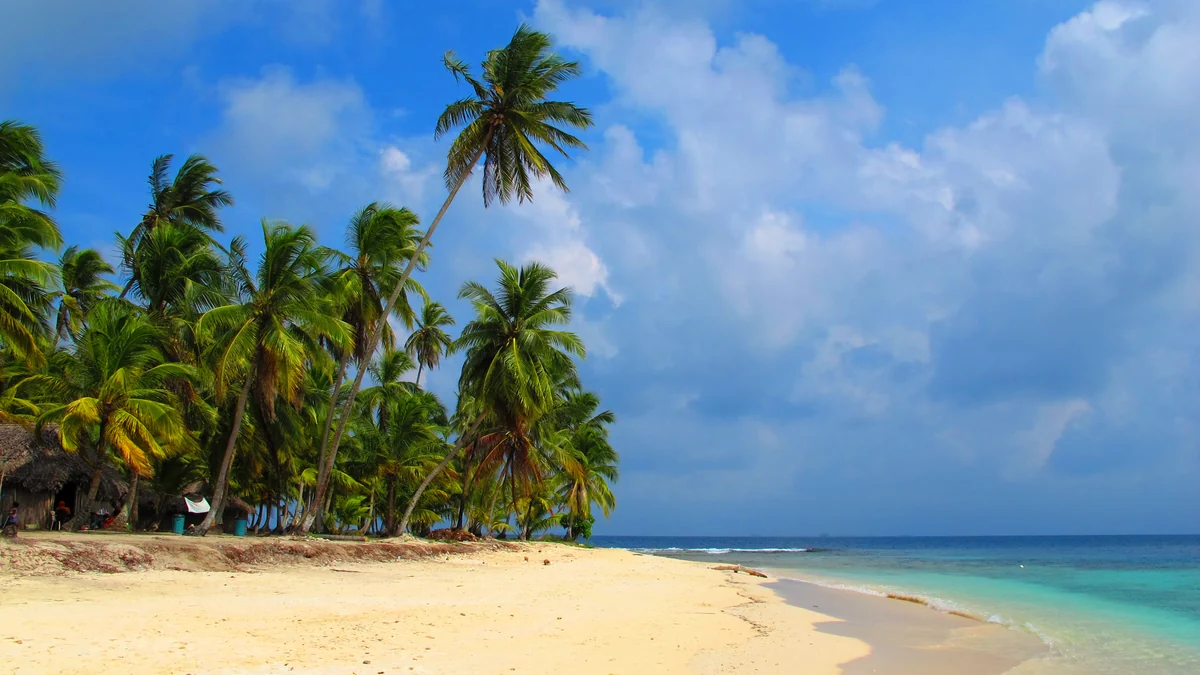
The San Blas Islands cruise port is not a conventional port at all. Cruise ships and expedition vessels enter the Guna Yala archipelago and choose an island, community or anchorage according to the itinerary, permissions and sea conditions. Some calls focus on a small cay and beach; others include a Guna community or several Zodiac landings. The red map pin below marks El Porvenir, which Panama’s maritime authority lists as a state port, but it must be treated as a geographic reference rather than a promise that your ship will land there.
This distinction controls the whole day. You cannot sensibly plan San Blas as though a taxi rank, ferry timetable or public road network waits beside the tender. CruisePing recommends following the ship’s programme unless the cruise line explicitly approves a local arrangement. The reward is a rare combination of clear Caribbean water, reef scenery and Guna culture; the price is accepting that weather, community permission and marine operations outrank a fixed sightseeing checklist.
San Blas Islands Cruise Port at a Glance
| Port name | San Blas Islands |
|---|---|
| Main arrival area | Sailing-specific cay or Guna community; El Porvenir is used here only as the stable map reference |
| Cruise region | Mexico / Central America / Panama Canal |
| Country / Territory | Panama |
| Currency | US dollar (USD); Panamanian balboa (PAB) at parity |
| Languages | Guna and Spanish; limited English in some visitor settings |
| Port role | Day Call |
| Disembarkation | Ship tender, Zodiac or local boat; landing point varies by sailing |
| Walkability | Only within the selected island or community |
| Shuttle required | No road shuttle; boat transport controls the call |
| Main transport | Ship tender or Zodiac, local boat and short walks |
| Best first-time plan | Take the ship-led cultural and beach programme, choosing one respectful community visit and one water-based experience |
| Main caution | There is no universal terminal, facilities are minimal and landings can change or be cancelled with little notice |
First Confirm Which Island Your Ship Is Using
The official Panama Maritime Authority port list identifies El Porvenir as a state port, but cruise itineraries may name Holandes Cayes, Dog Island, a community island or simply “San Blas”. Read the daily programme and listen to the expedition briefing for the actual anchorage, landing sequence and cut-off time. A pin found online cannot replace those instructions.
Ask whether the day uses a dry pier, a beach landing or a Zodiac step into shallow water. That answer determines footwear, bags and mobility far more than the island name. When the ship changes its planned cay after a weather assessment, treat the change as normal marine operations rather than a failure to deliver the port.
The Ship Programme Is Usually the Right Choice
Operators such as PONANT describe different island experiences across the archipelago, illustrating why a fixed independent route is unrealistic. The vessel already holds local permissions, tenders, safety cover and a return system. In this port, those operational advantages matter more than the flexibility normally associated with DIY sightseeing.
CruisePing recommends the ship-led landing for first-time visitors. An independent local boat should be considered only when it is expressly permitted, booked with a traceable operator and tied to the ship’s exact anchorage. A verbal promise from someone on the beach is not adequate return protection in an archipelago with no road alternative.
Understand Guna Yala Before Taking Photographs
The official Panama tourism introduction to the Guna explains that Guna Yala is an autonomous Indigenous territory with a living political and cultural system. Visitors are guests in communities, not consumers entering an open-air attraction. Follow the host’s instructions, ask before photographing people and accept that some buildings, ceremonies or activities are private.
Molas and other crafts are meaningful cultural work as well as souvenirs. Buy directly where possible, ask the price before handling several pieces and avoid bargaining aggressively over skilled labour. A respectful conversation and a fairly paid purchase are more valuable than collecting photographs of people who have not consented.
A Community Visit Needs Time and Restraint
Small community islands can feel crowded when several tenders arrive together. Stay with the assigned group, keep lanes and doorways clear and avoid treating homes as scenery. The strongest visits include interpretation from a Guna host, an explanation of community organisation and time to look at craft without pressure.
Do not expect a polished museum narrative or extensive visitor facilities. Toilets, shade and seating may be limited, and the surface can be sand, packed earth or narrow concrete paths. CruisePing would choose a shorter well-hosted visit over a longer unstructured wander that intrudes on daily life.
Beach Time Is Simple but Not Facility-Rich
The official San Blas visitor overview rightly emphasises beaches and islands, but a cruise landing may offer little more than sand, palms and a basic shelter. Bring water, sun protection and everything required for a short stay, while obeying the ship’s rules on food and waste. Do not assume loungers, changing rooms, showers or card payments.
The absence of resort infrastructure is part of the appeal, yet it demands discipline. Keep belongings above the tide line, use a dry bag and return all rubbish to the ship unless local staff provide a clear disposal system. Shade is scarce on many cays, so alternate swimming with covered rest rather than staying exposed for the full call.
Snorkelling Quality Depends on the Exact Site
Reef condition, current, visibility and boat traffic vary across the archipelago. Ask the expedition team whether snorkelling is from the beach, a Zodiac or a dedicated boat, and whether flotation, fins and a safety watch are provided. A beautiful aerial image of San Blas says nothing about the conditions at your assigned reef that morning.
Use reef-safe behaviour: never stand on coral, chase wildlife or collect shells. Less confident swimmers should remain within the supervised zone and use flotation. CruisePing prefers a shorter properly controlled snorkel to a longer informal swim with no clear boundary, especially when current or wind is building.
Wet Landings Change What You Wear
For a beach landing, expect to step into water and move quickly away from the boat while a crew member stabilises it. Closed water shoes with grip are more useful than loose flip-flops. Shorts or quick-drying trousers simplify the landing, while a waterproof pouch protects medication, phone and ship card.
Keep both hands available and follow the crew’s sequence. Pass bags forward when asked rather than trying to jump while carrying them. Passengers with balance or joint problems should describe their limitations before joining the tender; the team may offer an easier boat, additional assistance or advise that the landing is unsuitable.
Mobility Decisions Must Be Made Before Boarding
There may be no accessible gangway, paved promenade or vehicle fallback at the landing. Even a dry jetty can involve a moving tender, steep steps and uneven planks. Ask the ship about every transfer in the chain, including how the passenger returns if conditions deteriorate.
Remaining aboard can be the correct decision, not a defeat. The anchorage itself may provide striking island views, and expedition teams sometimes offer scenic boat rides that avoid a beach step. CruisePing would not recommend attempting a wet landing simply because the island walk is short; boarding is usually the hardest element.
Cash Is Useful, but Carry Small Notes
Craft sellers and small local services may prefer US dollars in cash. Bring clean small-denomination notes and agree prices before a purchase. Do not rely on an ATM, card terminal or mobile signal at the landing. Keep a modest amount accessible and the remainder secured out of sight.
Avoid changing money informally or producing large notes that a seller cannot break. If the ship arranges a community contribution or landing fee, confirm whether it is already included. Paying twice is less serious than arguing publicly, but clear briefing should prevent confusion.
Food and Drink Require Conservative Choices
Some programmes include coconut, fruit, fish or a simple local meal. Follow the ship or host’s guidance on what is included and where it was prepared. Passengers with allergies should carry translated details and never assume ingredients are obvious in a communal dish.
Drink sealed or ship-provided water and avoid overloading on alcohol before a small-boat return. A locally prepared snack can add warmth and context to the visit, but San Blas is not the place to improvise a long restaurant lunch. There may be no reliable kitchen, menu or timed service near the landing.
Weather Can Rewrite the Call Quickly
Use Panama’s national meteorological service together with the ship forecast, but expect the bridge and expedition leader to make the decisive marine assessment. Squalls, swell and wind can affect the anchorage even when the sky over one island appears bright.
A changed landing can preserve the day by moving to a more sheltered cay. A cancelled landing protects passengers and local boats when no safe transfer exists. Keep expectations flexible and attend the briefing; the least satisfactory response is to miss a replacement programme because you were waiting for the original plan.
Rain Does Not Automatically Ruin the Experience
Tropical showers can be short and intense. A lightweight waterproof cover for the bag matters more than a heavy jacket, and quick-drying clothing is preferable to cotton that remains wet. Photography often improves after a shower as cloud softens the glare and water colour deepens.
Lightning, persistent wind or poor visibility are different matters and may stop boating. When the crew pauses the programme, wait in the designated shelter or return boat rather than wandering to another side of the island. The ship needs to account for every passenger before operations resume.
Do Not Over-Schedule Multiple Islands
Distances that look tiny on a map involve loading boats, checking passengers, crossing exposed water and obtaining permission at each landing. A programme that promises several beaches, a village, snorkelling and lunch can spend too much of the call moving.
For a first visit, choose depth over island-counting: one interpreted community encounter and one carefully managed beach or snorkel period. CruisePing recommends dropping a third stop rather than shortening the cultural visit or using the final boat as the planned return.
Children Need Close Supervision Around Boats
Cays often have shallow water, but that does not make the tender edge, currents or boat propellers harmless. Children should wear the flotation specified by the operator and remain beside an adult during every boarding. Bring sun protection that can be reapplied after swimming.
A community-and-beach programme can be excellent for families when it is paced gently. Avoid a long multi-boat itinerary for a child who struggles with heat or motion. The simplest island day often produces the best memories because adults are not constantly checking the time.
Wildlife Encounters Should Remain Wild
Fish, rays, starfish and seabirds may be visible, but sightings are not guaranteed and animals should not be handled for photographs. Do not lift starfish from the water, feed fish or follow turtles. Reject any operator who creates a staged encounter.
The reef is more important than a close-up. Use a zoom, maintain distance and let the guide explain the habitat. CruisePing would rather leave without a perfect wildlife photograph than support behaviour that damages the ecosystem supporting the whole archipelago.
The Final Tender Is a Hard Operational Boundary
Tender loading may slow if wind rises, and a distant anchorage leaves no land route to the ship. Be at the stated assembly point before the cut-off with shoes on, bag packed and purchases complete. Do not disappear for a final swim after the return group forms.
Ship staff may advance the deadline or consolidate boats. Follow the new instruction immediately. San Blas rewards a relaxed attitude during the visit, but the return requires precision; missing a tender here creates a marine emergency, not a taxi problem.
What to Skip on a Short Call
Skip any independently advertised island-hopping trip that cannot name the ship anchorage, permissions and return protocol. Also skip staged wildlife handling, rushed visits that treat community members as props, and promises of guaranteed clear water regardless of weather.
CruisePing would not chase a famous photographed cay if the ship has selected another safe landing. The archipelago’s value lies in the actual sea, culture and community in front of you, not proving that your day matched a social-media location tag.
Know What the Island Name on the Itinerary Means
Cruise schedules may use a regional label, the name of a cay group or an English spelling that local hosts do not use. That label helps passengers recognise the call, but it does not confer access to every nearby island. The captain and local authorities still determine where boats can anchor and land on the day.
Save the ship programme rather than building an external route from a search result. When staff announce a different island, listen for what the replacement actually offers: village interpretation, swimming, snorkelling or a scenic Zodiac circuit. CruisePing recommends judging the revised experience on its own merits instead of comparing every detail with the original marketing line.
Community Capacity Should Limit Group Behaviour
A small island cannot absorb unlimited visitors without pressure on lanes, toilets, craft spaces and daily routines. Ships may stagger tender groups or restrict time ashore for this reason. Honour the assigned departure, even when the next group has not yet appeared, because the timetable helps local hosts manage the flow.
Avoid forming a crowd around one person, house or craft table. Step aside after a purchase and let others speak. The most respectful visitors notice when their presence is blocking movement and correct it without needing to be told. This simple awareness matters more than performing interest through constant photography.
Reef-Safe Sunscreen Is Only Part of Protection
Choosing a reef-conscious product is helpful, but physical cover, shade and timing reduce the amount entering the water altogether. Apply sunscreen well before boarding, wear a rash vest and avoid spraying product beside other passengers or directly over the sea.
Do not assume any “natural” label guarantees harmless ingredients. Follow the ship’s environmental guidance and avoid oils that leave a visible slick. CruisePing recommends a long-sleeved swim top because it protects skin, reduces repeated application and makes a windy Zodiac return more comfortable.
Bring Your Own Essential Medication Ashore
There may be no pharmacy, clinic or dependable refrigeration on the selected island. Carry prescribed medication, allergy treatment and anything required for the expected shore period in a waterproof container. Tell a travelling companion where urgent medicine is kept.
The ship’s medical team remains the principal support, which is another reason not to disappear on an unapproved local boat. If heat, breathing difficulty or a sting causes concern, alert the expedition staff early rather than waiting for the next scheduled tender.
A Scenic Zodiac Cruise Can Be the Best Alternative
When a beach step is unsafe or a community landing reaches capacity, the expedition team may offer a boat circuit among cays. This can reveal village edges, reef colour, sailing canoes and the scale of the archipelago without adding pressure ashore. It is not merely compensation for a failed landing.
Use sun and spray protection, remain seated when instructed and keep hands inside the boat. Passengers with limited walking may find this the most satisfying version of San Blas, provided they can manage Zodiac boarding. CruisePing recommends taking the controlled scenic option over remaining disappointed aboard because the original beach was unavailable.
Leave Nothing Behind on a Low-Lying Cay
Small islands have little capacity to absorb packaging, cigarette ends, wet wipes or broken beach equipment. Bring reusable water containers where the ship permits, keep every wrapper controlled in wind and return waste to the designated collection point. “Biodegradable” does not mean an item belongs in the sea or sand.
Check the area before joining the tender line, including beneath towels and where bags rested. CruisePing recommends leaving shells, coral fragments and sand in place as well as removing rubbish. The most convincing sign of respect is that the next group cannot identify where yours sat.
CruisePing Recommended Port Day
Attend the full ship briefing, confirm the exact landing method and take the organised cultural-and-beach programme. Begin with the Guna-hosted community element while the group is fresh, then move to the designated swimming or snorkelling area only under the crew’s conditions.
Carry a dry bag, water shoes, small US-dollar notes, sun protection and no unnecessary valuables. Buy molas or other craft directly and respectfully, ask before taking portraits and return all waste to the ship.
CruisePing recommends one meaningful community visit plus one marine experience. Do not add an independent island hop unless the ship has explicitly approved its meeting point and return system. Be at the final tender assembly early.
Before leaving the cabin, confirm whether towels, snorkel equipment and drinking water are supplied by the ship. Carry only what the announced landing needs; every unnecessary item complicates a wet transfer and creates more to protect from sand and spray.
Weather & Best Time to Visit San Blas Islands
| Period | Typical high | Typical low | Cruise-day implication |
|---|---|---|---|
| January to March | 30°C | 24°C | Drier period with strong sun; northerly trade winds can still make tendering lively. |
| April to June | 30°C | 25°C | Heat and humidity rise, with increasing showers and variable visibility. |
| July to September | 30°C | 25°C | Intermittent rain and squalls; sheltered landings become especially important. |
| October to December | 29°C | 24°C | Wetter and changeable, although bright calm windows remain possible. |
Check the Panama meteorological service and, more importantly, the ship’s marine briefing. The bridge assesses swell, wind and anchorage exposure at the actual cay, which a city forecast cannot capture.
Sun is intense even through cloud, while shade and fresh water may be limited ashore. Bring protection for both heat and a sudden shower, and treat a revised or cancelled landing as a safety decision rather than an invitation to arrange a private substitute.
San Blas Islands Cruise Port FAQs
Where do cruise ships land in the San Blas Islands?
There is no single landing. The ship selects a cay or Guna community according to its itinerary, permissions and sea conditions. El Porvenir is only the map reference used in this guide.
Can I explore San Blas independently?
Usually not in the conventional sense. There are no roads between islands, and independent boats must match the ship anchorage, permissions and return deadline. The ship programme is normally the best option.
Do I need cash?
Small US-dollar notes are useful for molas, crafts and minor purchases. Do not expect ATMs or reliable card payment.
Is San Blas suitable for reduced mobility?
Often difficult. Tender steps, wet landings, sand and limited facilities create barriers. Ask the ship about the exact landing and scenic alternatives before boarding.
What should I wear?
Quick-drying clothes, secure water shoes, sun protection and a light rain layer. Protect medication, electronics and the ship card in a dry bag.
Can a San Blas call be cancelled?
Yes. Wind, swell, visibility or local operational requirements can change or cancel a landing, sometimes after arrival.
Useful Official Links
- Panama Maritime Authority state ports
- Official San Blas tourism overview
- Official Guna culture overview
- PONANT San Blas call information
- Windstar San Blas planning article
- Panama meteorological service
CruisePing Port Verdict
San Blas is one of the most distinctive calls in the region precisely because it refuses normal cruise-port logic. There is no central terminal, no road tour and no dependable list of facilities. A good day comes from accepting the ship-selected island, listening closely and engaging with Guna hosts as guests.
CruisePing recommends the organised landing without hesitation. Prioritise cultural respect, a controlled swim or snorkel and an early tender return. Skip improvised island-hopping, wildlife handling and any plan that assumes the map pin is your guaranteed landing.
Ready to browse our article library?
Looking beyond San Blas Islands? Explore more ports in the Mexico / Central America / Panama Canal region, or narrow it to Panama in particular. For cruise comparisons, planning shortcuts and value guides, head over to our main article archive.