
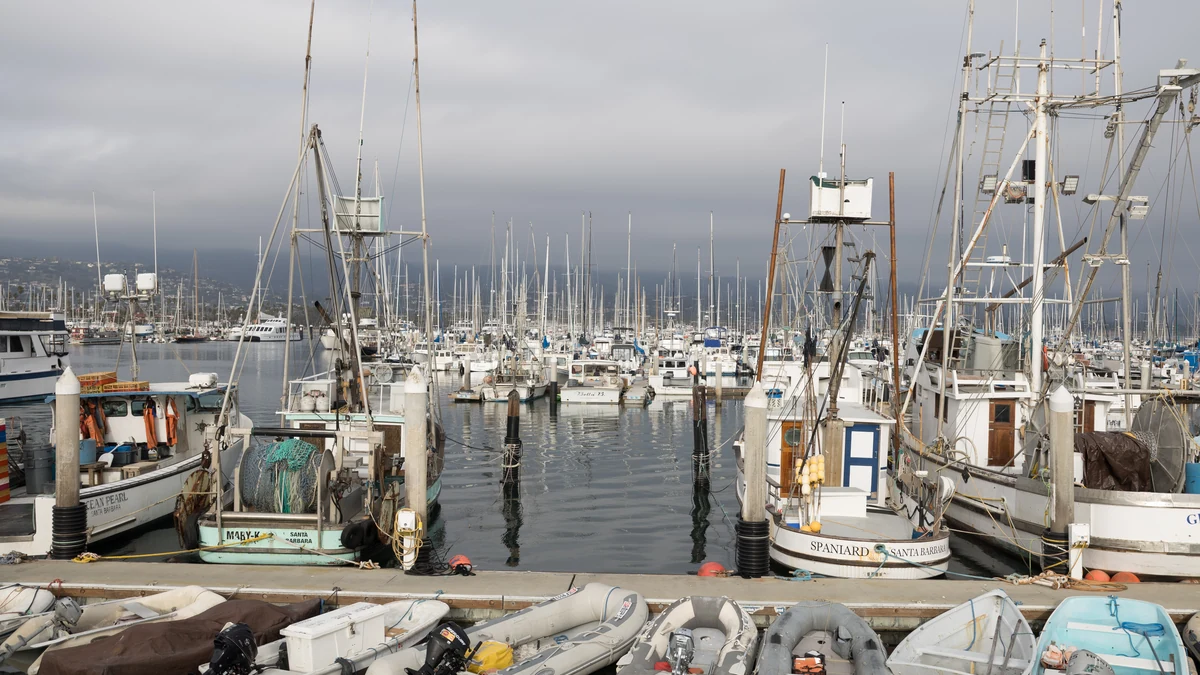
Santa Barbara cruise port is a tender call that lands passengers at Sea Landing in the working harbour, close to the waterfront but not directly on State Street. The City of Santa Barbara cruise programme schedules calls mainly in autumn, winter and spring and warns that dates and times can change. Ships usually anchor offshore, so tender queues and sea conditions shape the first and last part of the day.
Once ashore, Santa Barbara is unusually flexible. You can walk through the harbour and Stearns Wharf, continue into the lower State Street area, use a current shuttle or local bus for the courthouse and mission, or book a wine-country or coastal excursion. The mistake is assuming that every option belongs in one easy loop. Choose a waterfront-and-downtown day or one regional journey, then protect the final tender.
Santa Barbara Cruise Port at a Glance
| Port name | Santa Barbara, California |
|---|---|
| Main arrival area | Tender landing at Sea Landing in Santa Barbara Harbor |
| Cruise region | Alaska / North America / Canada |
| Country / Territory | USA |
| Currency | US dollar (USD) |
| Languages | English; Spanish is also widely spoken |
| Port role | Day call |
| Disembarkation | Tender |
| Walkability | Good for the harbour, waterfront, Stearns Wharf and lower State Street |
| Shuttle required | No for the waterfront; current transit or taxi useful for the courthouse, mission and farther districts |
| Main transport | Walking, seasonal Downtown–Waterfront Shuttle, MTD buses, taxis, rideshare, bicycles and organised excursions |
| Best first-time plan | Combine the harbour, Stearns Wharf, State Street and one historic sight, or choose a dedicated wine-country excursion |
| Main caution | Seasonal shuttle operation and tender timing must be checked on the day; do not rely on an old timetable |
The Tender Landing Starts in the Working Harbour
Visit Santa Barbara’s cruise-arrival guidance places the tender at Sea Landing, where local hospitality staff normally provide maps and current information. The landing sits among marinas, fishing businesses and excursion operators. It is an attractive start, but passengers should stay within public paths and avoid treating operational docks as a promenade.
Tender duration is short compared with many offshore calls, yet boarding order and swell can still delay independent exploration. Note the final tender time before walking away, and identify the precise return point. Sea Landing is not the same as Stearns Wharf, even though both are on the waterfront and appear close on a tourist map.
A Waterfront Walk Is the Safest First Hour
From Sea Landing, walk through the harbour towards West Beach and Stearns Wharf. This route immediately gives sailboats, fishing vessels, palms and mountain views without committing to transport. It also lets you judge the weather and tender operation before making a longer move inland.
The harbour is not a polished cruise enclave. That is part of its appeal, but surfaces, working vehicles and marina access points require attention. A relaxed waterfront start works well after a late tender; a rushed passenger can continue directly towards State Street or use transport from the waterfront once the day’s timings are clear.
Stearns Wharf Is a Landmark, Not the Whole Port Day
Stearns Wharf extends from the foot of State Street and provides broad views along the coast. Shops, food and small attractions can occupy an hour, especially for passengers who want an easy day. It is also a useful orientation point between the harbour and downtown.
Avoid spending the entire morning there by default. The wharf can become crowded and the strongest Santa Barbara architecture lies inland. Use it as a scenic link or lunch stop, then decide whether to continue up State Street, visit the courthouse or return along the waterfront.
State Street Connects the Waterfront with the Historic Centre
State Street is Santa Barbara’s main urban spine. The lower section begins near the waterfront and leads towards shops, restaurants, galleries and civic landmarks. The distance is manageable for active walkers, but the gradual inland movement and warm sun can make the return feel longer than expected.
Do not judge the whole street by one block. Select a destination such as the courthouse or a dining area and walk with a purpose. Construction, pedestrianisation arrangements and transit patterns can change, so use the hospitality map supplied on the day rather than an old route screenshot.
The County Courthouse Is the Strongest Downtown Landmark
The Santa Barbara County Courthouse is one of the city’s most distinctive Spanish Colonial Revival buildings, with courtyards, murals and elevated views when public access is available. It gives a clear architectural payoff without requiring a regional excursion.
Check opening conditions and security access, particularly on weekends, holidays or public-event days. The courthouse pairs naturally with State Street and can be reached on foot by strong walkers or by current local transport. It does not pair as naturally with a rushed mission visit and a long waterfront lunch unless the call is generous.
Old Mission Santa Barbara Needs a Transport Decision
Old Mission Santa Barbara sits above the central grid, beyond the easiest waterfront walk. Its church, grounds and museum make it a substantial historic visit rather than a quick photograph. A taxi, rideshare or local bus reduces the time and uphill effort; active walkers can continue from downtown if they allow for the return.
Confirm visitor hours and any service restrictions. The mission is an operating religious and cultural site, so dress and behaviour should be respectful. If it is the day’s priority, visit it before a long lunch or shopping session and return through the courthouse or State Street rather than adding a distant beach.
The Downtown–Waterfront Shuttle Is Seasonal, Not Guaranteed
The city announced a return of the all-electric Downtown–Waterfront Shuttle for summer 2026. Cruise calls, however, are often scheduled outside the main summer period, and operating days, hours and stops can change. Confirm service with the port hospitality team or Santa Barbara MTD before relying on it.
When running, the shuttle can simplify the connection between the harbour, waterfront, State Street and central attractions. When it is not running, walking, regular buses and short taxi or rideshare journeys are the alternatives. Build a route that still works if the seasonal service is unavailable.
Wine Tasting in Town Is Different from Wine Country
Santa Barbara has urban tasting rooms within or near the central districts, allowing passengers to sample regional wine without travelling to the Santa Ynez Valley. This can fit after the courthouse or waterfront, provided drinking remains moderate and the venue is open during the call.
A true wine-country excursion involves a substantial road transfer, multiple tasting appointments and a fixed return. Choose one or the other. Trying to visit a distant vineyard and then repeat the experience in town adds cost and reduces time. Passengers should also check age requirements, identification rules and what is included in an organised tour.
Santa Ynez Valley Should Be the Main Excursion, Not an Add-On
The Santa Ynez Valley and towns such as Solvang offer vineyards, rural scenery and a different cultural setting from the coast. Traffic through the passes and tasting schedules make this a full excursion choice. A ship tour or reputable private operator provides the safest transport chain, particularly when alcohol is involved.
Ask how much time is spent driving and whether the itinerary focuses on wine, Solvang or both. A long list of tasting rooms may leave little opportunity to see the landscape. Return to the harbour with at least ninety minutes before the final tender, more if the operator is independent.
Beaches Are Close but Conditions Shape Their Value
West Beach and East Beach are close to the landing and can be combined with the waterfront. Leadbetter Beach lies near the harbour and is popular for water activities. These are convenient coastal spaces rather than guaranteed warm-water swimming beaches; the Pacific can be cool, surf and currents vary, and marine conditions may be unsuitable.
A beach plan works best as a relaxed final component, not as a full resort day. Facilities, lifeguard coverage and water quality should be checked locally. Protect belongings, carry sun protection and return to Sea Landing before the tender queue builds.
Whale Watching Creates a Second Marine Timetable
The City’s waterfront visitor-activities page lists harbour operators offering coastal and whale-watching trips. These can be rewarding in the Santa Barbara Channel, but they add another boarding deadline and return time to an already tender-dependent day.
Only choose a departure explicitly compatible with the ship’s call. Confirm the meeting point, duration, sea-sickness risk and cancellation policy. Leave a large gap after the boat returns; a late wildlife trip does not guarantee that the cruise ship will wait. In rough conditions, keep the day on land.
The Channel Islands Are Too Ambitious for Most Independent Calls
Channel Islands National Park is a major regional attraction, yet public boat schedules are designed as full-day or overnight experiences rather than simple cruise-shore transfers. Reaching an island, spending useful time there and returning through tender operations is too fragile for most calls.
Choose a cruise-line-protected excursion if one is specifically offered and operationally realistic. Otherwise, save the islands for a land stay. A harbour cruise or coastal viewpoint can provide context without creating multiple long marine connections.
The Maritime Museum and MOXI Are Useful Weather Fallbacks
The Santa Barbara Maritime Museum sits in the harbour district and provides local marine history without requiring another transfer. Near the railway station, MOXI, The Wolf Museum of Exploration + Innovation is a family-friendly indoor option between the waterfront and downtown. Both can rescue a windy or wet day, but current opening hours and ticket arrangements should be checked.
Choose the museum that fits the route rather than trying to collect indoor attractions. The Maritime Museum belongs naturally with the harbour and Stearns Wharf; MOXI works with State Street and the train-station area. A museum visit is especially sensible when the tender runs late because it keeps the plan compact and reversible.
Cycling Can Extend the Waterfront but Does Not Simplify Downtown Traffic
Rental bicycles and e-bikes can cover the waterfront efficiently and reach beaches beyond a comfortable walk. Use dedicated paths where available, wear a helmet and understand where the cycle must be returned. An hourly rental becomes risky if the tender schedule changes or the return shop closes before all aboard.
Cycling inland among traffic, pedestrians and changing street layouts requires more confidence. It is not the ideal method for visiting the mission in formal clothes or carrying purchases. For most cruise passengers, a short waterfront ride is more enjoyable than treating the bicycle as the transport for the entire city.
Food Works Best Along the Existing Route
Seafood around the harbour, cafés near State Street and restaurants throughout downtown give many choices. Decide whether the meal is part of the waterfront experience or a break during the historic walk. Crossing back and forth between districts for a particular restaurant wastes more time than the city’s compact appearance suggests.
Bookings may be helpful for a special lunch, but a flexible café is safer after tender delays. Cards are widely accepted; a small amount of US cash is useful for tips and minor purchases. California restaurant prices normally attract tax and gratuity beyond the displayed menu amount.
DIY Is Excellent in the City; Regional Touring Needs Control
Santa Barbara’s harbour, wharf, State Street and courthouse form a strong independent day. Maps are easy to understand, short rides can close the gaps and the port hospitality team can explain current transport. There is little reason to buy a generic city coach tour unless mobility or commentary makes it valuable.
Wine country, Solvang and more distant coast or mountain locations are different. Their success depends on vehicle availability, traffic and reservation times. Use a ship excursion or a well-reviewed private operator with a cruise return commitment. Do not depend on finding a rideshare in a rural vineyard area.
Mobility Planning Must Cover the Tender and the Hills
Tender steps and movement are the first accessibility issue. Ask the cruise line whether wheelchairs or mobility scooters can be accommodated and what assistance is available at Sea Landing. Once ashore, the waterfront is relatively level, but some marina surfaces and transitions are uneven.
State Street rises gradually inland, and the mission is higher again. A current shuttle, accessible taxi or local bus can protect energy for the attraction itself. The courthouse, mission and wharf each have their own access arrangements; verify them directly rather than assuming that an historic building is fully step-free.
Morning Cloud and Afternoon Sun Can Change the Feel of the Day
Santa Barbara often begins with coastal cloud or haze before brighter conditions develop. The pattern is not guaranteed, and winter storms can bring rain, wind and rough tender conditions. Carry a light layer for the boat and early waterfront, then use sun protection once inland.
Mountain views may improve later, but do not postpone every outdoor activity until the afternoon. Build the route so that museums, shops or a tasting room can absorb a shower. If the ship announces deteriorating sea conditions, return to the tender early even when the town weather still looks calm.
CruisePing Recommended Port Day
Walk from Sea Landing through the harbour to Stearns Wharf, continue along State Street to the courthouse using the current shuttle or a short ride if needed, then return through downtown for lunch. Add Old Mission Santa Barbara only when the call is long and transport is controlled. Finish on the waterfront close to the tender.
Choose Santa Ynez wine country instead when vineyards or Solvang are the main priority. In that case, make it the day’s sole large excursion and do not plan a separate downtown programme. Santa Barbara is most satisfying when its city day remains leisurely or its regional day remains disciplined.
Weather & Best Time to Visit Santa Barbara
Santa Barbara has a mild coastal climate, but cruise calls can occur in the wetter winter and shoulder seasons as well as sunny spring and autumn periods. Offshore wind and swell matter more to tendering than the temperature on State Street.
Check the National Weather Service forecast and listen for ship announcements. A waterproof layer, sun protection and comfortable walking shoes cover most conditions.
| Month / season | Typical high | Typical low | Rain / conditions |
|---|---|---|---|
| January–March | 19°C | 8°C | Mild but within the wetter season; Pacific storms and rougher seas possible |
| April–June | 22°C | 11°C | Generally mild with morning cloud, brighter afternoons and occasional showers |
| July–September | 25°C | 15°C | Warmest and driest period, though cruise calls are less common in high summer |
| October–December | 21°C | 10°C | Warm autumn days giving way to cooler, more changeable winter weather |
Practical Questions for a Santa Barbara Cruise Call
Where do cruise tenders land?
At Sea Landing in Santa Barbara Harbor. Follow the ship’s final instructions and note the precise return point.
Can I walk to State Street?
Yes. The waterfront end of State Street is close, while the courthouse and upper downtown require a longer walk or transport.
Does the Downtown–Waterfront Shuttle run on every cruise day?
No. It is seasonal and operating days can change. Confirm current service at the hospitality tent.
Can I visit the mission independently?
Yes, using a taxi, rideshare, local bus or a longer uphill walk. Check visitor hours before setting out.
Is wine country realistic?
Yes as a dedicated organised or pre-booked private excursion. It should not be combined with an ambitious city itinerary.
Is Santa Barbara a beach port?
The beaches are convenient, but Pacific water is cool and conditions vary. Treat the beach as one part of the waterfront rather than a guaranteed resort day.
Useful Official Links for Santa Barbara
Use these sources to confirm the cruise call, tender arrival, transit, attraction access and live weather.
- City of Santa Barbara Cruise Ship Program
- Visit Santa Barbara cruise-arrival information
- Santa Barbara waterfront activities
- Santa Barbara County Courthouse
- Old Mission Santa Barbara
- Santa Barbara MTD
- National Weather Service forecast
CruisePing Port Verdict
Santa Barbara provides one of California’s more satisfying independent tender days because the harbour, wharf and downtown form a natural sequence. The city is easy only when passengers respect the gap between the waterfront and the inland landmarks and verify whether the seasonal shuttle is actually operating. That simple geographic logic is what keeps an attractive day from becoming a sequence of unnecessary rides. It also preserves time for an unhurried waterfront return. before the final tender. arrives safely.
Our first choice is a waterfront-to-courthouse route with an optional mission visit. Wine country is the strongest alternative, but it must replace the city day rather than sit on top of it. Tender timing remains the non-negotiable boundary.
Ready to browse our article library?
Explore more ports in the Alaska / North America / Canada region, browse USA cruise ports, or return to the main CruisePing article library.