
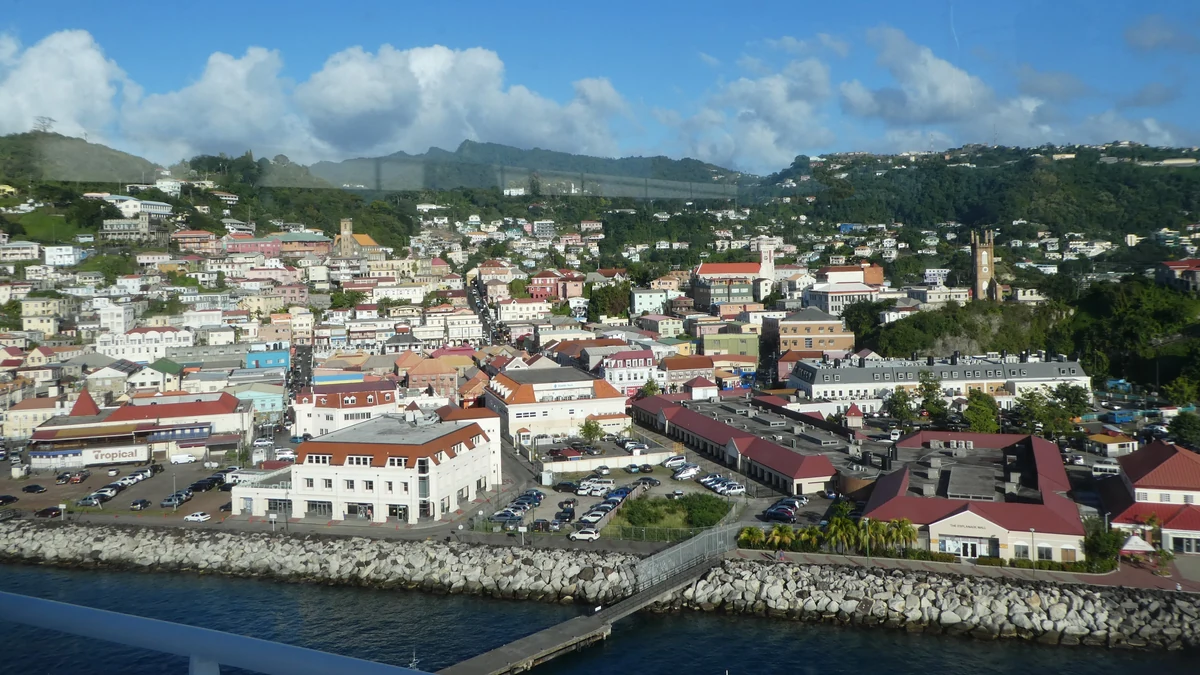
St George’s Grenada cruise port gives passengers an unusually immediate introduction to the island. The terminal sits beside the lower capital, with the market, waterfront and the enclosed Carenage harbour close enough for a practical walk rather than a compulsory transfer.
The easy arrival can be misleading. The city rises sharply behind the waterfront, Grand Anse is a separate journey, and the island’s waterfalls, spice estates and rainforest roads require controlled transport. A strong port day chooses one main direction instead of treating Grenada as a collection of quick stops.
St George’s Cruise Port at a Glance
| Port name | St George’s Cruise Port (Grenada) |
|---|---|
| Main arrival area | Melville Street Cruise Terminal beside the Esplanade and lower St George’s |
| Cruise region | Caribbean & Bahamas |
| Country / Territory | Grenada |
| Currency | East Caribbean dollar (XCD) |
| Languages | English and Grenadian Creole English |
| Port role | Capital-city day-call port and gateway to beaches, forts and the island interior |
| Disembarkation | Normally docked at Melville Street Cruise Terminal; tendering is possible when berth arrangements require it |
| Walkability | High for the terminal, lower town and Carenage; low for Grand Anse and hilltop forts |
| Shuttle required | No general shuttle is needed for the lower town; taxis, minibuses and tours serve beaches and inland sights |
| Main transport | Walking, route minibuses, taxis, private drivers, excursion buses and boats |
| Best first-time plan | Walk the Carenage and lower town, then take a confirmed taxi or bus to Grand Anse |
| Main caution | The waterfront is close, but forts and upper streets involve steep climbs and beach-return traffic can build |
Weather & Best Time to Visit St George’s
Grenada is warm throughout the year, with trade winds making the coast feel more comfortable than the inland valleys. The drier part of the cruise season is usually the easiest for a mixed town-and-beach day, while tropical showers remain possible in every month. Check the current forecast before the call, especially when combining Grand Anse with the steep city, because tropical showers can slow roads and walking.
| Month / season | Typical high | Typical low | Rain / conditions |
|---|---|---|---|
| January–March | 29°C | 23°C | Drier and breezier, with strong beach conditions and occasional short showers |
| April–June | 30°C | 24°C | Hotter, with humidity and rainfall gradually increasing |
| July–September | 31°C | 25°C | Wet-season pattern, stronger sun and a higher chance of heavy showers |
| October–December | 30°C | 24°C | Rain risk eases gradually; seas and roads can still be affected after storms |
January to March
This is the most forgiving period for combining the city, Grand Anse and one further viewpoint. The sun is still strong, so an early fort or market visit is preferable to a midday climb.
April to June
Humidity becomes more noticeable. Keep the itinerary compact and carry water; a beach finish is more comfortable than scheduling two inland stops after lunch.
July to September
A heavy shower can slow hillside roads and reduce visibility in the rainforest. Use a driver who understands the ship deadline and avoid building the day around several exposed viewpoints.
October to December
Conditions often improve as the year closes, but recent tropical weather matters more than monthly averages. Check whether waterfalls, trails or coastal water have been affected.
Arriving at St George’s Cruise Port
The Grenada Ports Authority identifies Melville Street Cruise Terminal as the principal cruise facility in St George’s. Passengers normally emerge into the Esplanade shopping area, with the lower town immediately beyond. The official berth information confirms that this is a working port as well as a visitor arrival point.
The Carenage lies on the other side of the Sendall Tunnel or around the waterfront streets. Walking is straightforward at sea level, but heat, traffic and broken pavements can slow the route. Photograph the terminal entrance before leaving so the final return is unambiguous.
Tendering is less common but can occur. When it does, the landing and security route may not reproduce the standard terminal experience. Use the ship’s notice for the actual gangway, tender deadline and pickup point rather than assuming a previous Grenada call will operate identically.
Exploring St George’s on Foot
The lower capital rewards a measured circuit through the market district, church streets and the Carenage. The harbour’s arc of working boats and pastel buildings provides the city’s best atmosphere, while the upper streets reveal why apparently short distances can feel demanding.
Fort George occupies the hill above the harbour. Access and restoration work can change, so confirm opening rather than building the entire day around entry. Even without a full visit, the surrounding gradients explain why a taxi can be sensible for passengers who want a viewpoint without a strenuous climb.
The market is most useful early, when produce and spice stalls are active and the heat is lower. Agree prices before purchasing, keep small East Caribbean dollar notes, and remember that packaged spices are easier to carry home than fresh plant material that may face customs restrictions.
Grand Anse Beach from the Cruise Terminal
Grand Anse is the default beach choice because it combines a long sand beach with hotels, food, water sports and relatively easy road access. In light traffic the journey can be short; on a busy ship day or late afternoon, the return can take materially longer.
The official Grenada getting-around guide explains the island’s route minibus system and published fare bands. Minibuses are inexpensive and sociable, but they are not a timed cruise shuttle. Confirm the route, the boarding point and where to leave the bus for the beach before relying on it.
A taxi is more expensive but gives the group a clearer return arrangement. Agree whether the price is per vehicle or per person, specify the exact beach area, and choose a collection landmark that both driver and passengers can identify. Leave the beach before the final hour becomes vulnerable to road congestion.
Forts, Waterfalls and the Grenada Interior
Fort Frederick and Richmond Hill provide broad views over St George’s and the south-west coast. They work best with a driver because the roads are steep and the sites sit above the easy walking zone. Combine them with the capital rather than adding them to a full beach-and-rainforest itinerary.
Annandale Falls is a common short inland stop. Its accessibility and visitor facilities make it easier than a remote hike, but crowding can reduce the experience when several coaches arrive together. A driver who can adjust the order is more valuable than a long list of nominal inclusions.
Grand Etang and the central rainforest bring cooler air and lush scenery. Roads are winding, and rain can slow the journey. Passengers prone to motion sickness should sit near the front, while anyone with limited mobility should ask exactly how far the vehicle stops from the viewpoint or trail.
Spice, Chocolate and Island Tours
Grenada’s spice identity is more than a souvenir theme. Nutmeg, mace, cocoa and tropical agriculture give a guided island drive real context, particularly when the visit includes a working estate or a demonstration rather than only a retail stop.
Long north-island loops can consume most of the call. Gouyave, Belmont and the far coast may be worthwhile on a long day, but they should not be combined casually with Grand Anse and the capital. Ask for a realistic door-to-door schedule, not just attraction names.
A private driver is most useful when the group wants to adjust for weather and interest. State the non-negotiable ship return time at the start and ask the driver to remove a stop if the roads are slower than expected. That produces a better day than compressing every planned visit.
Transport, Taxis and Payments
Taxis gather at the terminal and tour desks. Use authorised operators, agree the currency and total cost, and write down the vehicle or driver details. US dollars are widely understood in visitor areas, but change may be given in East Caribbean dollars and the conversion may not be favourable.
Route minibuses are practical for confident passengers travelling to a simple destination such as Grand Anse. They are less suitable for a chain of inland attractions because transfers, waiting and route knowledge consume time. Sunday and public-holiday service can be thinner.
Card payment is common in established businesses, while markets, buses and small beach vendors often prefer cash. Carry modest denominations and keep the return fare separate. An ATM search should not become the first task after leaving the ship.
CruisePing Recommended St George’s Port Day
Start with the market and lower city while temperatures are manageable, then walk to the Carenage for the harbour view. This creates a worthwhile city experience before committing to transport and keeps the first part of the day independent of road conditions.
Next, take a confirmed taxi or correctly identified minibus to Grand Anse. Choose one beach base, swim and have lunch. A late-morning arrival is still early enough to avoid turning the beach into a brief photo stop.
Return to the terminal with at least an hour in reserve. Use spare time for the Esplanade, a drink or a final waterfront walk. Do not add an inland waterfall after the beach unless the call is long and the driver has already demonstrated that the schedule remains comfortable.
Mobility, Families and Practical Comfort
The terminal and lower city are manageable for many wheelchair users, although pavements and crossings are inconsistent. The upper town, forts and some attraction paths are steep. Ask whether a tour vehicle can reach the entrance rather than accepting a general claim that a site is accessible.
Families should decide whether the day is primarily beach or touring. Grand Anse is easier for mixed ages than a long winding drive. For an inland itinerary, keep food, toilets and motion sickness in the plan rather than assuming every scenic stop has visitor facilities.
Carry water, sunscreen and rain protection. Grenada can shift quickly from strong sun to a tropical shower, and shaded waiting areas are not guaranteed at roadside stops. Light footwear is suitable for the beach; secure shoes are better for forts, markets and wet paths.
Common St George’s Cruise Port Mistakes
- Trying to walk to Grand Anse: it is a separate road journey, not an extension of the city stroll.
- Underestimating the hills: the capital looks compact on a map but rises sharply behind the harbour.
- Booking too many inland stops: winding roads make a short attraction list more reliable.
- Returning from the beach too late: traffic can build when tours and local commuters move together.
- Assuming US dollars remove all payment questions: confirm the currency, total and expected change.
How Long Do St George’s Excursions Really Take?
A city-only visit can occupy two to three hours at a comfortable pace because the market, Carenage, churches and waterfront are close together. The complication is vertical movement: a fort or upper-town viewpoint adds both a climb and recovery time, even when the horizontal distance looks modest.
Grand Anse normally needs a separate outward and return journey. Allow time to find the correct taxi or bus, settle on the beach and change after swimming. A four-hour window is far more useful than treating the beach as a ninety-minute stop between inland attractions.
Rainforest and spice routes commonly use half the call once road travel, admissions and guide explanations are included. Ask the operator for the latest sensible departure from the furthest point. A tour that cannot answer that question is relying on optimism rather than planning.
Alternative Beaches and Coastal Choices
Grand Anse is the easiest all-round beach, but it is not the only coastal option. Magazine Beach can suit passengers who want a shorter beach stop nearer the airport side of the south coast, while Morne Rouge offers a smaller bay when conditions and access are suitable. Taxi supply for the return should be agreed before the driver leaves.
The official destination site from the Grenada Tourism Authority provides current beach and activity context. Use it to identify facilities, then verify the exact drop-off and pickup with a local driver. A beach name alone may cover several hotel, public-access or roadside points.
Snorkelling and underwater-sculpture trips require a reputable marine operator and clear pickup arrangements. The official diving and marine guide gives destination context, but the ship-day decision still depends on current sea state, equipment and the operator’s return margin.
Crowds, Multiple Ships and Port-Day Timing
St George’s feels very different with one small ship and with several large vessels sharing the destination. Taxis, beach chairs and popular waterfalls can become scarce quickly. Leave the ship early when a specific inland tour matters, or deliberately use the city first while the main coaches depart.
The market and Carenage absorb independent visitors better than narrow waterfall sites. When several ships are listed, a city-and-beach plan is more resilient than a fixed chain of coach stops. Confirm the current cruise operation through the Grenada cruise terminal information rather than relying on an old calendar.
The final return is easiest when the group is back in the lower town before the last hour. From there, the terminal is visible and spare time remains usable. From Grand Anse or the rainforest, the same spare time is only a traffic buffer.
If the Grenada Call Is Shortened
When clearance or tendering reduces the day, keep the capital and remove the inland component first. The market, Carenage and lower streets remain worthwhile within a two- or three-hour window, while a beach transfer becomes increasingly sensitive to traffic and changing facilities.
A short call can still include Grand Anse when the group leaves immediately by confirmed taxi and accepts a brief beach stay. Set the pickup before entering the water and return directly to the terminal rather than adding shopping in another district.
Passengers who remain in St George’s should use the extra time for a proper lunch, harbour photography and one carefully chosen upper viewpoint by taxi. This retains local character without pretending that a waterfall or rainforest loop can be compressed safely.
Port-Day Communication
Mobile data normally works around the capital, but a driver’s number, ship contact and terminal photograph should be stored offline. Agree whether the collection uses local time and whether the driver will wait after a delayed attraction. When travelling by public minibus, tell another passenger or conductor that the group is returning to the cruise terminal, not simply central St George’s. These small checks matter more than adding another attraction because they preserve a workable fallback if the planned vehicle or meeting point fails.
St George’s Cruise Port Checklist
- Confirm dock or tender arrangements.
- Photograph the terminal return point.
- Choose city plus beach, or city plus inland tour.
- Agree taxi price, currency and collection point.
- Carry small East Caribbean dollar or US-dollar notes.
- Allow for steep streets and tropical heat.
- Protect at least a one-hour return margin.
Useful Official Links
Use these current official sources for berth information, local transport and destination planning before the call.
- Port of St George’s official information
- Grenada cruise terminal information
- Grenada getting-around guide
- Pure Grenada official destination site
- Pure Grenada activity and attraction guide
St George’s Cruise Port FAQ
Can you walk from the cruise port into St George’s?
Yes. The terminal is beside the lower town, market area and waterfront. The main difficulty is the steep climb to upper streets and forts.
How do you reach Grand Anse Beach?
Use an authorised taxi or the correct route minibus. Confirm the boarding point and leave enough time for the return traffic.
Is Grenada a tender port?
Most calls use Melville Street Cruise Terminal, but tendering is possible when berth or ship arrangements require it.
What currency should cruise passengers carry?
Grenada uses the East Caribbean dollar. US dollars are widely accepted in visitor areas, but small local notes are useful for buses and minor purchases.
Can you visit a waterfall and the beach in one day?
Yes on a sufficiently long call with controlled transport, but the schedule should contain only one or two inland stops before the beach.
Is St George’s suitable for passengers with limited mobility?
The terminal and lower waterfront are the easiest areas. Forts, upper streets and some nature sites involve steep gradients or uneven surfaces.
CruisePing Port Verdict
St George’s is an excellent independent arrival because the capital begins at the terminal rather than after a shuttle. The best value comes from using that walkability first and paying for transport only when the plan moves to Grand Anse or the interior.
CruisePing would combine the lower city and Carenage with Grand Anse on a first visit. Choose an inland spice or rainforest route instead when scenery and local production matter more than beach time, but keep the stop list disciplined.
Ready to browse our article library?
Looking beyond St George’s? Explore more ports in the Caribbean & Bahamas region, or narrow it to Grenada in particular. For cruise comparisons, planning shortcuts and value guides, head over to our main article archive.