
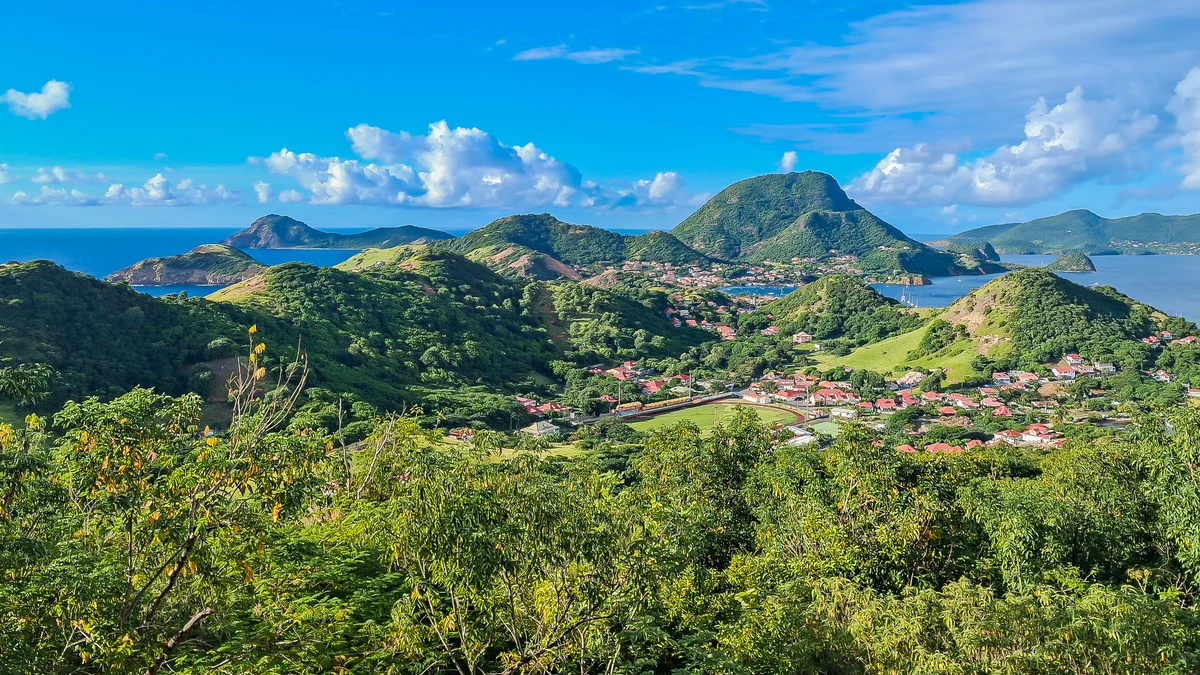
Terre-de-Haut is the compact, hilly main visitor island of Les Saintes, south of Guadeloupe. Cruise ships normally anchor and tender passengers into the small harbour beside Le Bourg. The landing immediately opens onto cafés, shops, scooter and electric-cart hire, but the island’s viewpoints, Fort Napoléon and beaches involve steep roads that are more demanding than the short distances suggest.
A good first visit begins early at Fort Napoléon, continues through the village and finishes at one beach. The official Les Saintes activity guide supports that full-day balance rather than a rushed circuit. The island is too small to justify a complicated excursion, yet it is easy to lose time collecting a vehicle, searching for parking or walking in midday heat. Choose a simple circuit and return to the tender before the compact harbour becomes crowded.
Terre-de-Haut Cruise Port at a Glance
| Port name | Terre-de-Haut Cruise Port |
|---|---|
| Main arrival area | Tender landing at Le Bourg, normally close to the village centre |
| Cruise region | Caribbean & Bahamas |
| Country / Territory | Guadeloupe |
| Currency | Euro (EUR) |
| Languages | French and Saintois Creole |
| Port role | Small-island tender port for Les Saintes |
| Disembarkation | Normally tender into Le Bourg; small-vessel arrangements may vary |
| Walkability | High in Le Bourg; moderate to difficult on steep roads to fort and beaches |
| Shuttle required | No general shuttle; electric carts, scooters, taxis and bicycles are available |
| Main transport | Walking, electric carts, scooters, bicycles, taxis and excursion boats |
| Best first-time plan | Visit Fort Napoléon early, explore Le Bourg and finish at one beach |
| Main caution | Steep gradients, heat and early attraction closing can compress the day |
Weather & Best Time to Visit Terre-de-Haut
January to March
Typical high: 27–29°C
Typical low: 21–24°C
Rain / conditions: Warm, breezy and generally drier; exposed roads and the tender can still be windy.
April to June
Typical high: 29–31°C
Typical low: 23–26°C
Rain / conditions: Hotter and more humid, with short showers and strong sun on the hills.
July to September
Typical high: 30–32°C
Typical low: 25–27°C
Rain / conditions: Tropical-storm season can disrupt tenders, ferries and small-boat activities.
October to December
Typical high: 28–31°C
Typical low: 23–26°C
Rain / conditions: Variable showers and humidity, with breezier weather developing towards winter.
Weather guide: CruisePing seasonal planning ranges for Les Saintes. Check the Météo-France Terre-de-Haut forecast close to the call.
Wind can alter the tender and make scooters less comfortable, while rain turns steep roads and stone steps slippery. If Fort Napoléon is clouded in, wait briefly or begin in Le Bourg; if the tender is delayed, remove the farthest beach rather than rushing the entire circuit.
Arriving by Tender in Le Bourg
The tender landing sits beside the island’s main settlement. Le Bourg is immediately useful for cafés, bakeries, shops, the tourist office and vehicle hire. Photograph the landing and note the final tender time before moving away. Ferries from mainland Guadeloupe also use the harbour, so not every queue leads to the cruise ship.
The official Terre-de-Haut visitor guide recommends an early approach to Fort Napoléon and notes the steep climb. That sequence suits cruise passengers because the fort can close earlier than restaurants and beaches.
Best Things to Do in Terre-de-Haut
Fort Napoléon
Fort Napoléon occupies the hill above the village, with a museum, garden and wide views over Les Saintes. Walking from the landing can take around 30 minutes uphill in heat. An electric cart, scooter or taxi saves energy for the site itself, but parking and vehicle availability should be checked early.
Go first because the fort’s visitor hours may finish around midday or early afternoon. Check the current opening rather than relying on a general island itinerary. The view alone is worthwhile, but the museum adds military and cultural context that distinguishes the visit from a simple viewpoint stop.
Le Bourg
Le Bourg has bright houses, a church, narrow streets, small shops and a relaxed waterfront. It is compact enough to explore between the fort and beach. The best approach is to wander without trying to photograph every lane, then choose a café or bakery close to the tender for the final part of the day.
Tourment d’amour, a small local tart, is associated with Les Saintes and can sell out. Buy it when found rather than expecting the same bakery to have stock later. Ask about fillings and allergens, and keep food purchases protected from heat.
Pain de Sucre
Pain de Sucre is one of the island’s most attractive swimming and snorkelling areas, backed by a distinctive hill. Access involves a road journey and a final path that can be uneven. It suits confident walkers and passengers able to carry their own water and beach equipment.
The small beach can feel crowded when boats and land visitors arrive together. Snorkel only in conditions appropriate to your ability, avoid standing on coral and keep belongings compact. A taxi or hired vehicle should have a clear return arrangement because transport is less immediate than in Le Bourg.
Pompierre Beach
Pompierre provides a broader beach setting and can suit families who prefer more space. Seaweed, wind and facilities vary. Check the current condition locally before travelling across the island; a famous beach is not automatically the best one on a particular morning.
Shade can be limited or occupied early. Carry water and do not leave food where animals can reach it. If the return vehicle is not waiting, allow enough time to walk or find another option without endangering the tender margin.
Marigot Bay and Island Viewpoints
Marigot and roadside viewpoints show the island’s dry hills, bays and neighbouring islets. They fit naturally into an electric-cart or scooter circuit. Stop only where the vehicle can be parked safely; narrow roads are used by residents, taxis, delivery vehicles and visitors.
A circuit should remain short. Terre-de-Haut’s value lies in the views and atmosphere, not in completing every road. Fort Napoléon, one beach and Le Bourg give a complete first visit.
Walking, Scooters and Electric Carts
Walking works within Le Bourg and for fit visitors tackling one hill. It becomes tiring when a plan combines the fort and a distant beach. Roads can be steep, exposed and busy despite the island’s small size. Wear shoes with grip and carry more water than the map distance appears to require.
Electric carts suit small groups and passengers who want independence without balancing a scooter. Demand can be high on cruise and ferry days, so reserve where possible and confirm licence, insurance, charging expectations and the latest return time. Photograph the vehicle before leaving the hire point.
Scooters offer flexibility but are suitable only for experienced riders. Helmets, road surface, wind and unfamiliar gradients matter. Do not learn to ride on a cruise day, and never use a scooter after drinking alcohol.
Terre-de-Haut Cruise Port: DIY or Organised Excursion?
Terre-de-Haut is naturally suited to DIY exploration because the landing, village and hire businesses are close together. A pre-booked cart or taxi is useful when the fort and beach are both priorities. Keep the route simple and return the vehicle well before the final tender.
An organised island tour helps passengers with limited time, mobility concerns or no confidence driving. Boat excursions can add snorkelling or views of the archipelago, but they introduce another weather-dependent transfer. Confirm whether the boat returns directly to the cruise tender area or to the public harbour.
CruisePing Recommended Terre-de-Haut Port Day
Go directly to Fort Napoléon after landing, preferably by electric cart, taxi or scooter if the climb is unsuitable. Return through Le Bourg for a short walk and early lunch. Spend the final part of the day at Pain de Sucre or Pompierre according to current access and beach conditions.
If the call is short, omit the beach and enjoy the fort and village properly. If the fort is closed, choose one beach plus Le Bourg rather than driving around the island searching for substitutes. Be back near the harbour before public ferry and cruise queues overlap.
Mobility, Families and Practical Comfort
The tender may require steps and a moving platform. Beyond the harbour, gradients are the main issue. Wheelchair users should ask the cruise line about tender eligibility and arrange suitable local transport before assuming the island is accessible because it is small.
Families should choose one beach and a fixed meeting place. Children need close supervision near roads, water and rocky snorkel areas. A cart can reduce fatigue but must be driven responsibly and parked without blocking residents.
Carry euros, water, sunscreen and a light rain layer. The official Guadeloupe currency guidance is useful before relying on cards for small island purchases. Cards may be accepted by larger businesses, but small purchases and transport can require cash. Mobile coverage is generally useful, though booking details and tender times should still be saved offline.
How to Use an Electric Cart Well
Collect the cart as early as possible, check the battery indicator and ask the hirer to mark the permitted roads on a map. Confirm whether the vehicle must be returned with a particular charge level and what happens if the ship shortens the call. The hire period should end comfortably before the last tender, not at the same time.
Drive first to Fort Napoléon while the attraction is open, then continue only to the beach selected for the day. Repeatedly crossing the village wastes the advantage of having a vehicle. Park in designated areas and leave enough room for local traffic; the narrow roads are not designed as a cruise excursion circuit.
Before returning the cart, refuel the group with water and confirm that all bags are aboard. Photograph the return condition and keep the receipt. A vehicle dispute or search for a missing item is easier to resolve while there is still another tender.
Choosing Between Pain de Sucre and Pompierre
Pain de Sucre is the stronger choice for confident swimmers and snorkellers who are prepared for a smaller beach and a final walking approach. Bring only what can be carried comfortably. The setting is memorable, but shade and space are not guaranteed when several boats arrive.
Pompierre is usually the more practical family option because the beach is broader and the visit does not depend on snorkelling. It can still be affected by wind, seaweed or reduced services. Ask at the tourist office or hire desk which beach is working better that morning.
Do not visit both simply because the island is small. Changing, parking and relocating use a large share of a short call. One beach with time to swim is better than two beaches viewed from the road.
Food and the Final Hour in Le Bourg
Le Bourg is the best place for lunch because it keeps passengers close to the harbour and provides alternatives if a preferred café is full. Creole seafood, accras, grilled fish and simple French-Caribbean dishes fit naturally into the day. Ask how long the kitchen needs before ordering a full meal near tender time.
Tourment d’amour is a useful local purchase, but bakeries may sell out. Buy it earlier and carry it carefully rather than delaying the return while searching among several shops. Local rum, sauces and liquids must comply with the ship’s security and alcohol procedures.
Spend the final hour walking the waterfront and village streets with the landing in view. Public ferry arrivals can create brief bursts of activity, so identify the cruise queue by ship signage or crew rather than joining the longest line automatically.
When Conditions Make the Island Harder
Strong wind increases the difficulty of the tender, scooter riding and exposed viewpoints. It can also change which side of the island offers calmer water. Ask locally before committing to a beach, and choose an electric cart or taxi rather than a scooter when gusts are uncomfortable.
After rain, the paved hills remain steep and beach paths can be slick. Fort Napoléon and Le Bourg still provide a worthwhile visit, so remove the beach rather than forcing a difficult access route. Passengers who have already struggled with the tender should not add a remote shoreline.
If the ship arrives late, go directly to the fort only when opening time permits. Otherwise, make Le Bourg and one accessible viewpoint the centre of the day. A short visit that respects the island’s pace is preferable to hiring a vehicle for an impossible circuit.
Passengers arriving on a Sunday or public holiday should expect fewer businesses to operate or shorter hours. Confirm vehicle hire and fort access rather than relying on a weekday review. The village itself remains enjoyable, and a harbour café or walk can replace a closed attraction.
Keep swimwear dry enough for the tender or carry a light change of clothing. Wet decks, wind and air conditioning can make the return uncomfortable even after a hot beach visit.
Terre-de-Haut Cruise Port Checklist
- Check Fort Napoléon’s current opening hours first.
- Confirm the last cruise tender, not only the public ferry timetable.
- Reserve an electric cart or taxi if gradients are a concern.
- Choose Pain de Sucre or Pompierre rather than rushing both.
- Carry euros and enough water for exposed hills.
- Use reef-safe behaviour when swimming or snorkelling.
- Return hired vehicles before the harbour becomes busy.
- Keep the final hour close to Le Bourg and the landing.
Useful Official Links
Opening hours, beach conditions and local transport availability matter more than distance on this small, steep island.
- Official Terre-de-Haut island guide
- Official Les Saintes destination guide
- What to do in Les Saintes
- Guadeloupe currency and payment information
Terre-de-Haut Cruise Port FAQ
Do cruise ships dock in Terre-de-Haut?
Most cruise calls anchor and use tenders to Le Bourg. Smaller vessels and excursion boats may use different arrangements.
Can you walk to Fort Napoléon?
Yes, but the uphill walk is steep and exposed and can take around 30 minutes. Many passengers use a cart, scooter or taxi.
Which beach is best?
Pain de Sucre is attractive for swimming and snorkelling but has limited space. Pompierre offers a broader beach; current wind, seaweed and facilities should guide the choice.
Do I need to book transport?
Booking is sensible on a cruise day because electric carts and scooters can sell out. Walking and taxis remain alternatives.
What currency is used?
Terre-de-Haut uses the euro. Carry some cash for small purchases and local transport.
CruisePing Port Verdict
Terre-de-Haut is an excellent small-island call because the harbour, village, fort and beaches feel distinct without requiring a long transfer. Its difficulty comes from hills and heat, not geographic scale.
Visit Fort Napoléon early, choose one beach and keep the last part of the day in Le Bourg. That simple sequence captures Les Saintes without turning a relaxed island into a race between hire vehicles and the tender.
Ready to browse our article library?
Looking beyond Terre-de-Haut? Explore more ports in the Caribbean & Bahamas region, or narrow it to Guadeloupe in particular. For cruise comparisons, planning shortcuts and value guides, head over to our main article archive.