
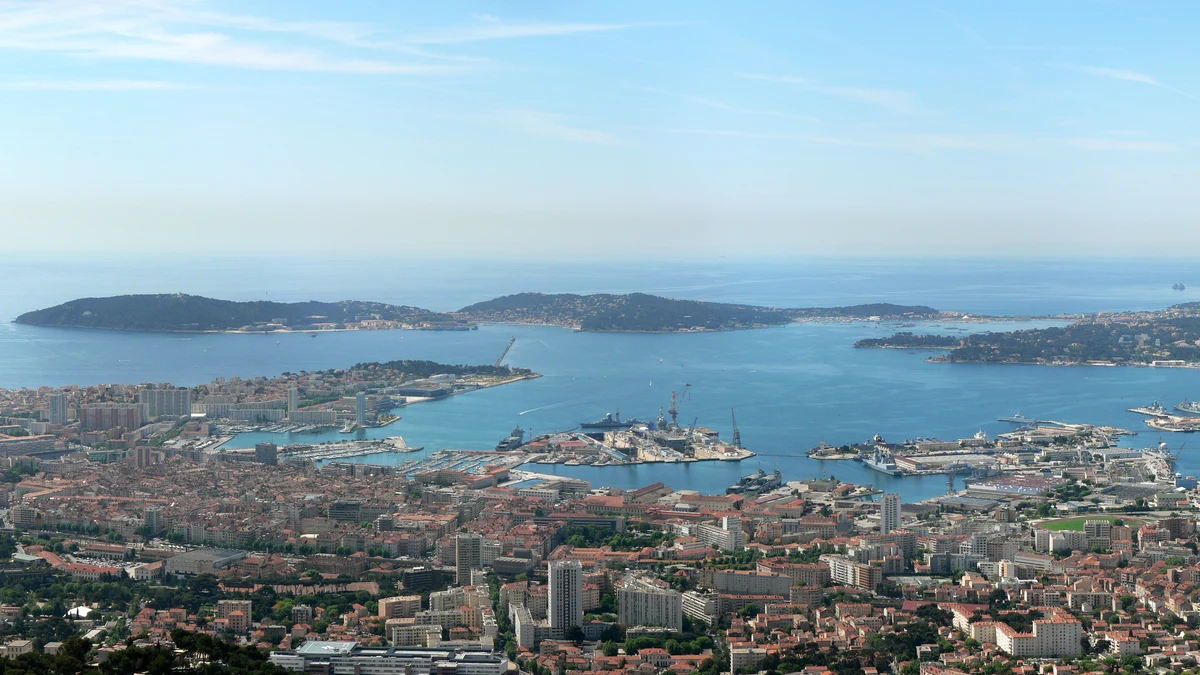
Toulon Cruise Port needs one question answered before anything else: are you arriving in central Toulon or across the harbour at La Seyne-sur-Mer? The two starts can lead to the same port day, but they do not feel the same from the gangway. Toulon is not a port where the smartest answer is always to run off to Provence or Marseille. The harbour, old town, market streets, maritime shuttles and Mont Faron cable car can make a strong local day, especially if you use the right transfer from your berth.
Toulon Cruise Port at a Glance
| Port name | Toulon Cruise Port |
|---|---|
| Main cruise area | Toulon harbour, with some cruise calls using central Toulon and others using La Seyne-sur-Mer across the roadstead |
| Cruise region | Mediterranean |
| Country / Territory | France |
| Currency | Euro (EUR) |
| Language | French |
| Disembarkation | Docked |
| Typical berth | Docked; exact berth matters because central Toulon and La Seyne create different first-transfer days |
| Walkability | Medium |
| Shuttle required | Sometimes |
| Main transport options | Walking Route, Cruise Shuttle, Local Bus, Ferry, Cable Car / Lift, Taxi, Organised Excursion |
| Best DIY option | Central Toulon, harbour, market streets and Mont Faron when the berth/transport works |
| Main caution | If your ship is at La Seyne, treat the day as a ferry or transfer day rather than a simple walk into Toulon |
Weather & Best Times to Visit Toulon
January to March
Typical high: 13–16°C
Typical low: 6–8°C
Rain / note: Cooler but workable for harbour walks; wind can make exposed viewpoints less appealing.
April to June
Typical high: 18–26°C
Typical low: 10–17°C
Rain / note: A good period for the harbour, old town, ferry links and Mont Faron before peak summer heat.
July to September
Typical high: 27–30°C
Typical low: 19–21°C
Rain / note: Hot and bright; beaches and Mont Faron work best with early starts and shade planning.
October to December
Typical high: 14–23°C
Typical low: 8–15°C
Rain / note: Often pleasant in early autumn, with more unsettled weather later in the season.
Weather guide: CruisePing summary based on NASA POWER climate data for the Toulon harbour area. Check the latest forecast.
Toulon’s weather matters most for Mont Faron and boat-linked plans. Strong wind can reduce the appeal or operation of exposed viewpoint and harbour-boat ideas, while peak summer heat makes central walking and the cable-car base more comfortable earlier in the day.
Where Cruise Ships Dock in Toulon
Toulon-area cruise calls may involve central Toulon or La Seyne-sur-Mer across the roadstead. Official local port and tourism information treats these as related but distinct access points, with local bus, ferry and taxi options shaping the passenger route. That is why a Toulon plan should start with the actual berth, not just the word “Toulon” on the itinerary.
Central Toulon is the easier DIY version because the harbour and city are close. La Seyne is still workable, but you need to handle the first transfer, often using the local maritime/bus network or a taxi depending on the day’s arrangements. A cruise-line shuttle may simplify the start, but do not assume one without checking the ship’s instructions.
Transfer Reality Check: La Seyne to Toulon
If your ship is at La Seyne, the day begins with a connection. Ports Rade de Toulon and Provence Méditerranée information point passengers towards local Mistral network links and the practical relationship between La Seyne and central Toulon. The important cruise-day point is that La Seyne adds a layer: ship to terminal exit, then ferry/bus/taxi, then the Toulon plan itself.
Allow more slack on the return than you would from a central berth. A ferry or bus connection that looks easy at midday can feel less comfortable when everyone is trying to return, the next service is not immediate, or you have misread the pier. If berthed at La Seyne, CruisePing would keep the day focused on Toulon and Mont Faron rather than adding a long out-of-town excursion.
Getting Around Toulon Independently
The local Mistral network is the main independent transport tool, including buses and maritime shuttles around the roadstead. For central Toulon, walking covers the harbour, old town and market streets. For Mont Faron, you need to reach the cable-car base and then confirm operating details for the day.
Taxis are useful when timing matters or when moving between La Seyne, central Toulon and Mont Faron. The ferry can be both practical and scenic, but it should be checked as transport, not treated as a guaranteed sightseeing loop without looking at current schedules.
Best Cruise-Compatible Things to Do from Toulon Cruise Port
Toulon harbour and old town
Best for: A low-risk city-and-harbour plan for central berths or passengers transferred into town.
Best way: Walk from central Toulon or arrive by ferry/taxi from La Seyne.
Watch: Check the berth first; La Seyne changes the start of the day.
Cours Lafayette market area
Best for: Local colour, food browsing and a compact city route.
Best way: Walk from the central harbour area.
Watch: Best earlier in the day; do not leave market-focused plans too late.
Mont Faron cable car
Best for: The strongest viewpoint above Toulon and a clear half-day anchor.
Best way: Use Réseau Mistral transport/taxi to the cable-car base, then cable car if operating.
Watch: Wind, operating schedules and return timing matter; check the official cable-car information.
Harbour boat and La Seyne links
Best for: A practical and scenic way to understand the roadstead.
Best way: Use the Mistral maritime network where schedules match the call.
Watch: Do not confuse ferry sightseeing with a guaranteed fast transfer unless the current timetable supports it.
Mourillon beaches
Best for: A relaxed Toulon beach option without leaving the area for a full Riviera day.
Best way: Taxi, local bus or excursion depending on berth.
Watch: Beach time is better chosen early than squeezed after Mont Faron and town.
Bandol, Sanary or wider Provence
Best for: A broader coastal excursion for repeat visitors.
Best way: Private tour or organised excursion.
Watch: Useful if you have seen Toulon, but it adds road timing and reduces flexibility.
CruisePing Recommended Port Day
For central Toulon, the strongest plan is harbour, old town, market area and Mont Faron if the weather and cable-car operation are favourable. That gives you the local identity of the port without turning the day into a coach ride across Provence.
For La Seyne, simplify. Transfer into Toulon, choose either town-and-harbour or Mont Faron as the anchor, and protect the return connection. Wider Provence routes are better as organised excursions for passengers who have already seen Toulon or strongly prefer a village/coast tour.
Mont Faron: Worth It or Too Much?
Mont Faron is the Toulon sight that changes the day. The official cable-car information describes access to the summit area above the city, and Provence Méditerranée promotes the cable car as a way to reach panoramic views and trails. For cruise passengers, that makes it a strong option when the weather is clear and the cable car is running.
It is not the right choice for everyone. Passengers with limited mobility, nervousness around heights or a tight La Seyne transfer may prefer the harbour, old town and market. If low cloud, wind or service disruption weakens the viewpoint, do not force it; Toulon has enough local content for a city-and-harbour day.
The central Toulon version of the day is compact and satisfying. You can move from the harbour to the old town, market streets and waterfront without solving a complex transfer. In that version, Mont Faron is the optional upgrade: worthwhile if the cable car and weather cooperate, unnecessary if you prefer a lower-energy harbour day.
The La Seyne version begins differently. You are still on the Toulon roadstead, but you are not in the same practical position as a passenger stepping into central Toulon. The ferry, bus, taxi or cruise shuttle becomes the first decision. This does not ruin the port. It simply means the return leg deserves more attention than it would from a central berth.
Mont Faron is the main reason to add structure to a Toulon day. The cable-car ride is short once you reach it, but getting to the base station, checking operation and returning afterwards create a chain of small tasks. In clear weather the view can justify that effort. In high wind, poor visibility or a tight La Seyne call, the harbour and old-town route may be the better choice.
Do not overlook the maritime network. The Mistral boat links are part of how the roadstead works, and for cruise passengers they can be both useful and scenic. They should still be treated as transport with a timetable. The difference between a relaxed ferry return and a tense one is often whether you checked the next service before setting off.
Wider Provence excursions are appealing but should be chosen for a reason. Bandol, Sanary, Cassis, Le Castellet and coastal villages offer a different day from Toulon. They are best for passengers who have already seen the port or who strongly prefer village/coast scenery. They are not the natural first move if you have a central berth and limited time.
For passengers with limited mobility, central Toulon is easier than La Seyne, and the harbour/market version is easier than Mont Faron. A taxi can still make Faron possible, but the cable-car station and summit area need checking against your own comfort with slopes, steps and exposure.
Toulon becomes frustrating only when passengers plan as if the berth does not matter. Once you know where the ship is, the day is quite logical: local harbour route, viewpoint route, beach route or Provence route. Choose one and make the transfer fit that choice.
The local harbour plan is underrated because it does not sound as famous as Marseille or Provence. Yet Toulon’s roadstead, naval history, market streets and viewpoint give the port a coherent identity. From a cruise-planning point of view, that coherence matters. You can experience the place you have actually arrived at rather than spending most of the day reaching somewhere else.
La Seyne passengers should think in legs. First, get from the ship to the local transfer point. Second, cross or travel into Toulon if that is the plan. Third, do the Toulon activity. Fourth, reverse the process with a buffer. Written out like that, the day becomes clearer. It also explains why adding Mont Faron and a beach and a village can become unrealistic from a La Seyne berth.
Mont Faron deserves special handling because it is both close and conditional. It looks like an easy hill above the city, but the cable-car base, operating status, queues, weather and return transport all matter. The best version is early, clear and uncluttered: go up, enjoy the view, come down, then use the harbour or old town as the flexible part of the day.
Beaches around Toulon are more useful than many passengers expect, especially in summer, but they change the tone of the port. A Mourillon beach plan is relaxed and local. A Provence village plan is scenic and road-based. A Mont Faron plan is viewpoint-led. Trying to merge all of them creates the kind of day where the final memory is transport rather than Toulon.
Organised excursions should earn their cost here. A basic panoramic tour may be poor value if your ship is central and you are mobile. A well-designed coastal or village route can be good value because it solves road logistics. The same applies to passengers with limited mobility: paying for transport may be worthwhile not because Toulon is impossible, but because it preserves energy for the part of the day that matters.
If the weather turns, Toulon still has a fallback. Keep the day closer to the harbour, market streets and cafés, and treat Mont Faron as optional. If you are at La Seyne, poor weather is another reason to keep the transfer chain short and avoid distant touring.
From a central berth, Toulon can be treated almost like a working harbour city with a viewpoint above it. That is its advantage. You do not need to escape immediately to find a real place. The market streets, cafés, naval atmosphere and roadstead give enough texture for a day that stays close to the ship.
From La Seyne, the same local day is still possible but the return psychology changes. You should know your crossing point, your likely return service and your fallback taxi plan. This is especially important if your ship is large or if several groups are moving at the same time. The last transfer should never be the part of the day you are improvising.
Mont Faron works best when it is the first or second major move, not a late experiment. If the cable car opens cleanly and visibility is good, go up while there is still time to adjust. If the queue is poor or the weather weakens the view, return to the harbour plan. The viewpoint is a bonus, not the only way to make Toulon worthwhile.
Provence tours should be judged by itinerary quality. A rushed bus loop that offers little time anywhere may be weaker than a focused Toulon day. A well-designed trip to a coastal village, vineyard area or scenic route can be worthwhile, especially for repeat visitors. The difference is not “tour versus DIY”; it is whether the route gives you enough time at the places that justify leaving Toulon.
Passengers who want a beach should decide that early. Mourillon and nearby coastal choices can make a relaxed summer day, but adding beach time after Mont Faron and the market often results in too little time for everything. Beach, viewpoint and Provence are three different Toulon days. Pick the one that suits the weather and your berth.
The ship’s published port name can also be misleading for expectations. Passengers may imagine Toulon city, then discover La Seyne on the day. Read the cruise-line berth information if available, and listen carefully to the ship’s arrival briefing. That single detail changes the sensible walking distance, the taxi value and the amount of time you should reserve for returning.
If you are travelling in a group, agree the day’s priority before leaving the pier. Some people will want the viewpoint, others the market, others the beach. Toulon can handle all of those as separate plans, but the transfer structure makes compromise harder once you are already moving. Decide whether the day is about harbour atmosphere, views or a wider coastal route, then use transport to serve that choice.
The most comfortable Toulon plan is the one that keeps your final move short. If you are central, end near the harbour. If you are at La Seyne, end near the return ferry, bus, shuttle or taxi point. The more distance you leave for the end of the day, the less relaxed Toulon feels.
That advice is especially important when Mont Faron is included. The summit is the highlight for many passengers, but it should not become the place that leaves the rest of the day squeezed.
In Toulon, the best port day usually has a visible return path, not just a good outward idea.
Toulon is not a weak fallback when Provence is skipped; it is the port day for passengers who value a shorter, more controllable route.
That is the calmer Toulon choice.
Keep it simple and Toulon works well.
Central clarity helps.
DIY or Organised Excursion?
Toulon is DIY-friendly if you stay local and understand the berth. Central Toulon is straightforward. La Seyne is manageable but requires more attention. Mont Faron can still be DIY if you check transport and cable-car operation, but it is not a blind walk-up plan.
Organised excursions are better for Bandol, Sanary, Cassis, Le Castellet or wider Provence drives, especially where the route includes multiple stops. The value is in not having to coordinate rural/coastal transport on a cruise clock. CruisePing would not pay for a basic Toulon city tour from a central berth unless mobility or confidence makes it worthwhile.
Toulon Port-Day Pitfalls and Value Tips
- Check whether your berth is central Toulon or La Seyne before judging walkability.
- Use current Réseau Mistral information for ferry and bus plans.
- Check the Mont Faron cable-car operation and weather before making it the main target.
- Do not combine La Seyne transfer, Mont Faron, beaches and a Provence village unless you are on a structured excursion.
- Keep the final part of the day close to your return transfer point.
Toulon Cruise Port Checklist
- Confirm your berth: central Toulon or La Seyne-sur-Mer.
- Check whether a cruise shuttle is provided and where it drops passengers.
- Look at current Mistral ferry/bus information if crossing the harbour.
- Check Mont Faron cable-car operation before heading to the base station.
- Choose either Toulon local sights or a wider Provence excursion.
- Leave extra return time if you need a ferry, bus or shuttle back to La Seyne.
Useful Official Links for Toulon
For Toulon, the berth is the first thing to confirm because central Toulon and La Seyne have different transport logic.
- Ports Rade de Toulon cruise passenger information
- Provence Méditerranée port access guide
- Réseau Mistral bus and boat network
- Mont Faron cable car official site
- Provence Méditerranée Mont Faron visitor information
- Météo-France Toulon forecast
FAQ
Does Toulon cruise port mean central Toulon or La Seyne?
It can mean either, depending on the ship call. This is the key planning detail because central Toulon is much easier for walking, while La Seyne needs a ferry, bus, taxi or shuttle plan.
Is Toulon a good DIY cruise port?
Yes, especially for central Toulon, the harbour, market area and Mont Faron. La Seyne calls are still possible DIY, but the transfer must be planned more carefully.
Is Mont Faron worth visiting from a cruise ship?
It can be one of the best Toulon choices in clear weather if the cable car is operating and your call allows enough time. In wind, poor visibility or a short La Seyne call, a local harbour plan may be wiser.
Should you take an excursion from Toulon to Provence?
Consider one if you want villages, vineyards or a wider coastal route. For first-time visitors on a normal call, Toulon itself and Mont Faron can make a more efficient day.
CruisePing Port Verdict
Toulon is a good port when you treat the berth as the starting decision. Central Toulon supports a confident DIY harbour and city day, with Mont Faron adding a memorable viewpoint when conditions cooperate. La Seyne is still workable, but it asks for more transfer discipline. The best value is usually local Toulon first, wider Provence only when you deliberately choose an organised route.
Ready to browse our article library?
Looking beyond Toulon? Explore more ports in the Mediterranean region, or narrow it to France in particular. For cruise comparisons, planning shortcuts and value guides, head over to our main article archive.