
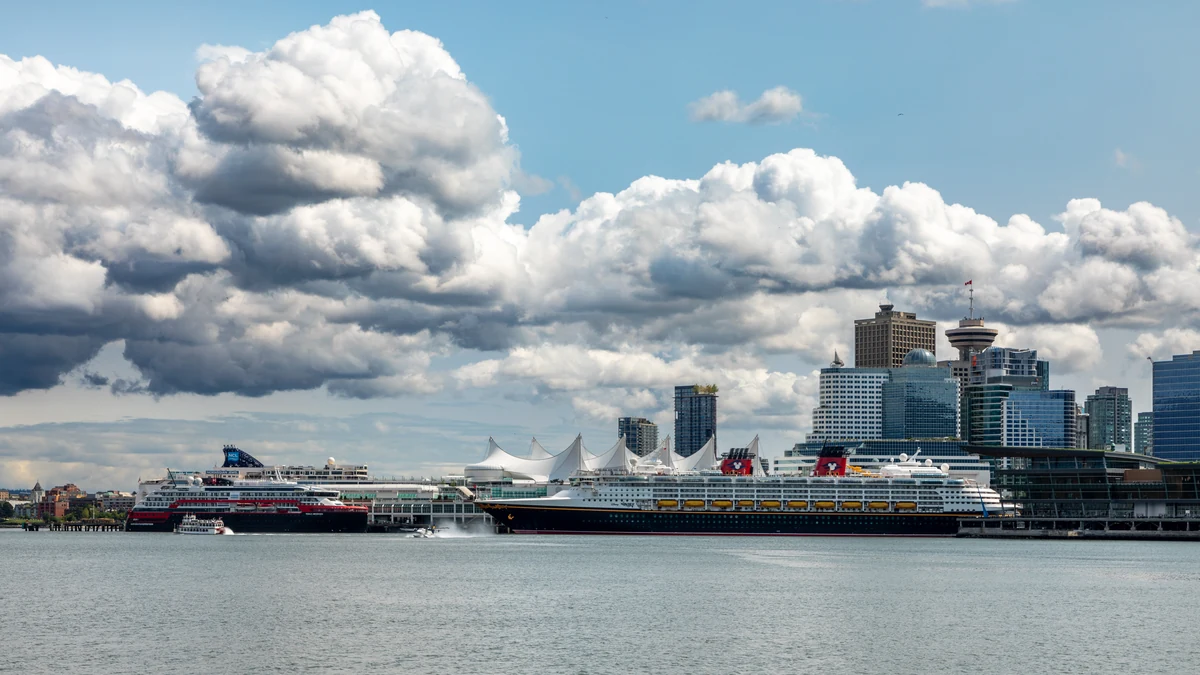
Vancouver Cruise Port is unusually well placed for an embarkation terminal. Canada Place sits on the downtown harbourfront beside hotels, the convention centre and Waterfront Station, with mountain views across Burrard Inlet. That central position makes Vancouver an excellent city to add before or after an Alaska cruise, but it does not remove the pressure created when several ships turn around at once.
The most important planning choice is made before arrival: fly in at least one day before the cruise and choose accommodation that simplifies the terminal transfer. YVR is linked to downtown by the Canada Line, yet luggage, station lifts, rain and check-in timing can make a theoretically easy route harder than expected. A calm night in Vancouver is worth more than a risky same-day connection designed to save one hotel bill.
Vancouver Cruise Port at a Glance
| Port name | Vancouver Cruise Port |
|---|---|
| Main arrival area | Canada Place cruise terminal at the downtown harbourfront, beside Waterfront Station and the Vancouver Convention Centre |
| Cruise region | Alaska / North America / Canada |
| Country / Territory | Canada |
| Currency | Canadian dollar (CAD) |
| Languages | English; French is also an official language of Canada |
| Port role | Departure|Turnaround|Day Call |
| Disembarkation | Docked at Canada Place in the downtown waterfront; berth and terminal flow depend on the ship schedule |
| Walkability | High for downtown, Gastown and the waterfront once clear of the terminal; transport is useful for Stanley Park, Granville Island and the airport |
| Shuttle required | No city shuttle is normally needed at Canada Place; airport and hotel transfers depend on luggage and location |
| Main transport | Walking, Canada Line and SkyTrain, SeaBus, city bus, taxi, ride-hail, hotel transfer and organised sightseeing |
| Best first-time plan | Arrive in Vancouver at least one day before sailing, stay downtown or on a direct transit route, and treat embarkation morning as a controlled terminal transfer rather than a sightseeing day |
| Main caution | Same-day flight connections, multiple ships using Canada Place and confusing Waterfront Station proximity with a luggage-free walk |
Weather & Best Time to Visit Vancouver
January to March
Typical high: 7–11°C
Typical low: 2–5°C
Rain / conditions: Cool and frequently wet; mountain snow is possible nearby while downtown usually sees rain and low cloud.
April to June
Typical high: 13–21°C
Typical low: 6–12°C
Rain / conditions: Milder with longer daylight; spring rain remains possible during the opening Alaska-cruise period.
July to September
Typical high: 20–24°C
Typical low: 13–15°C
Rain / conditions: The driest and warmest period, though smoke, heat or a sudden wet day can still affect plans.
October to December
Typical high: 7–16°C
Typical low: 2–9°C
Rain / conditions: Increasingly wet, cooler and darker; shoulder-season repositioning calls need rain-ready plans.
Weather guide: CruisePing summary based on NASA POWER climate data for downtown Vancouver and Burrard Inlet. Check the latest forecast for the call.
Vancouver rain is a planning issue rather than a reason to cancel a city day. Waterfront paths, Stanley Park and Granville Island remain useful in light rain, but footwear and a proper waterproof layer matter. Keep one indoor anchor such as a museum, gallery, market or aquarium rather than spending the day moving between taxis whenever showers pass.
Alaska cruise passengers often pack for colder scenery and overlook warm Vancouver weather. Summer embarkation days can be sunny and hot, while luggage may remain inaccessible for several hours after it is handed to porters. Keep water, medication, sun protection and a light layer in hand baggage rather than in the checked case.
Canada Place: Know What the Terminal Is and Is Not
Canada Place is both a landmark and a working cruise terminal. Its white sail-like roof is visible from the harbour, and the complex also contains hotel, convention and visitor facilities. Cruise operations take place below and within this busy waterfront site. Follow the cruise line’s assigned arrival instructions rather than entering through whichever public doorway looks closest.
Berths and passenger routes change with the number and size of ships. On a quiet day, check-in can feel simple; on a multi-ship turnaround, taxis, coaches, baggage handling, security and border processes create queues. An assigned arrival time is not a promise that every stage will be immediate. Bring patience, documents and essential medication in a small bag that can remain with you.
The terminal’s central location is valuable after you have cleared the controlled areas. Before embarkation, it can create congestion because local traffic, hotel guests, sightseeing coaches and cruise vehicles share the district. A taxi from a hotel only a few streets away may spend longer in the final approach than expected. Walking can be faster when luggage and mobility allow, but identify the correct baggage entrance first.
Canada Place can process several ships on the same day. That changes the kerb, porter and security experience even though the building remains in the same downtown location. Use the cruise line’s terminal instructions, not a photograph from a quieter sailing, and keep companions together before handing over luggage. Drivers should follow the current drop-off signs rather than stopping at the first visible hotel or convention entrance. A central terminal is convenient, but multi-ship volume can still make the final few hundred metres the slowest part of the journey.
From Vancouver International Airport to Canada Place
The Canada Line connects Vancouver International Airport with downtown and Waterfront Station. TransLink’s visitor information describes the airport-to-waterfront journey as roughly twenty-five minutes on the train, before waiting, station movement and the walk to Canada Place are added. It is the strongest public-transport option for travellers who can handle their own luggage.
At YVR, follow signs for Canada Line and confirm the destination and service information on the day. Waterfront is the final downtown station, but it is a multi-level interchange serving rail and SeaBus connections. Use lifts rather than improvising with luggage on escalators, and allow time to find the correct street exit. Canada Place is nearby; it is not inside the station.
A taxi or ride-hail is easier with several large cases, young children or reduced mobility. Journey time is traffic-sensitive, particularly around weekday peaks and major events. Do not calculate the transfer from the best possible driving time shown late at night. For an embarkation day, build enough margin for a bridge or road delay and for terminal queues after arrival.
The Canada Line is particularly useful when the hotel is close to Waterfront, Vancouver City Centre or another accessible station. Count the complete journey: walking from arrivals, buying the correct fare, waiting for the train, negotiating lifts and then reaching the hotel or terminal from the station. A couple with several large cases may find a taxi better value than expected once comfort and the final pavement leg are included. During planned engineering or disruption, switch early rather than arriving downtown with no margin.
Why Arriving the Day Before Is the Sensible Minimum
A same-day flight places weather, airline disruption, baggage delivery, immigration and city traffic in front of the cruise departure. The ship’s published sailing time is not the check-in deadline; passengers normally need to be processed much earlier. A delay that would be a nuisance on a city break can become the loss of an Alaska cruise.
International travellers face additional risk from long-haul connections and time-zone fatigue. Arriving one day early creates recovery time and makes missing baggage easier to address. Two nights are better when Vancouver itself matters or when the itinerary begins after a complicated multi-leg flight.
CruisePing would treat the pre-cruise hotel as part of the transport plan, not a luxury extra. The right room protects a large holiday purchase and turns embarkation morning into a short local movement. Savings from an airport-area hotel can disappear if the family then pays for a large taxi, stores luggage awkwardly and loses the chance to see Vancouver.
Where to Stay Before a Vancouver Cruise
Canada Place and Coal Harbour hotels provide the easiest terminal access and often command the highest prices. They suit passengers who value a short walk, harbour setting and minimal embarkation logistics. Confirm whether the route is genuinely manageable with cases; a property described as “near Canada Place” may still involve slopes, crossings or several blocks.
Downtown, Gastown, Yaletown and the areas around City Centre or Vancouver stations broaden the price and dining options while retaining useful transit. Choose the hotel by the route from YVR and to Canada Place, not only by headline distance. A direct Canada Line journey followed by one taxi on embarkation morning can be simpler than repeated transfers from a cheaper outer district.
Airport hotels are appropriate for a very late arrival, but they separate you from the city and leave the full transfer for sailing day. Check whether a shuttle serves the correct terminal, whether breakfast timing fits and how you will reach Canada Place. There is no universal free cruise shuttle from YVR hotels to the port.
Embarkation Morning Step by Step
Begin with the cruise line’s current documents: terminal, arrival window, identification, visa or electronic-authorisation requirements, baggage tags and health or security instructions. Canada, the United States and the cruise line can each have relevant entry rules because most Alaska itineraries cross an international border. Do not rely on a travel companion’s documents being identical to yours.
Attach baggage tags securely but keep passports, medicine, valuables, electronics, a change of clothes and anything needed before dinner in hand luggage. Once a case is handed to the porters, it may not reach the cabin for several hours. Photograph the luggage and tag, and make sure the cabin number is legible.
After baggage drop, follow the directed sequence for check-in, security and border processing. The order can differ by operation. Keep the party together unless staff direct otherwise, and disclose accessibility needs before a queue becomes difficult. Do not schedule a timed downtown attraction immediately before check-in; one terminal delay can make both plans stressful.
Disembarkation, Luggage and the Flight Home
Disembarkation appears easier because the ship is already alongside, but passengers still move through baggage collection, border formalities and a congested pickup area. Self-assist departure can be useful for travellers able to carry every bag safely. It is not a shortcut if heavy cases make stairs, ramps or crowded lifts hazardous.
Allow a conservative interval before a flight. The road to YVR can slow, while the Canada Line requires a walk to Waterfront Station and handling bags on public transport. Airline check-in and security remain after the city transfer. Follow the cruise line and airline’s current guidance rather than using an optimistic anecdote from an online forum.
A later flight creates a luggage problem but also a valuable city opportunity. Ask the cruise line, terminal, hotel or a specialist storage provider about current arrangements before travel. Never assume Canada Place will hold bags after disembarkation. If storage is confirmed, a waterfront walk, Gastown lunch or compact Stanley Park visit can turn dead time into a useful final day.
Do not assume that leaving the ship early creates an immediate airport transfer. Immigration or border processing, baggage collection, the terminal exit and road or station access all sit between the cabin and YVR. When two or three ships are disembarking, taxis and luggage services can be under pressure. A later flight gives room to use a verified bag-storage arrangement and spend a final few hours downtown. An early flight removes that flexibility and should meet the cruise line’s published guidance, not merely the airline’s check-in deadline.
A Vancouver Day Call or Pre-Cruise Day on Foot
Canada Place opens directly onto the harbourfront. Walking west leads past the convention centre towards Coal Harbour and the edge of Stanley Park; walking east reaches Gastown. The waterfront is visually strong from the first minutes, with North Shore mountains, seaplanes and port traffic across Burrard Inlet.
Gastown is close and atmospheric, but the boundary between busy visitor streets and areas of visible social hardship can change quickly. Stay aware, especially with valuables and after dark, without treating the neighbourhood or its residents as a spectacle. The steam clock attracts crowds; the more interesting visit includes architecture, independent shops and a considered meal.
A compact pre-cruise route can combine Canada Place, the convention-centre waterfront, Gastown and Robson or Chinatown depending on interests. Do not drag cruise luggage around this circuit. Store bags or check in first, and keep the route proportional to jet lag and weather.
Stanley Park: The Best Outdoor Extension
Stanley Park is Vancouver’s defining outdoor space, with rainforest, beaches, viewpoints and the seawall around the peninsula. Destination Vancouver describes a ten-kilometre seawall, which is too long to treat casually before embarkation. Choose a section, a cycle route or a vehicle tour rather than assuming the entire loop is a short stroll.
From Canada Place, walking to the park entrance is possible but consumes time before the main scenery begins. A taxi, bus or bike hire can improve the day. Cycling is excellent for confident riders who understand the one-way sections, pedestrian separation and current closures. Helmets, weather and luggage storage need solving first.
For a few hours, focus on Coal Harbour, the totem poles area, a selected seawall section and one viewpoint. The Vancouver Aquarium can serve as a substantial indoor attraction but requires a timed, purposeful visit. Leave the park early enough to return through downtown traffic and terminal security.
Granville Island, SeaBus and Other Strong Add-Ons
Granville Island combines a public market, food, crafts and waterfront atmosphere. It is not directly beside Canada Place despite the island label and city-centre setting. Bus, taxi, bike or a small False Creek ferry can form part of the route. The market is most enjoyable before the busiest lunch period, with enough time to eat rather than merely photograph stalls.
The SeaBus from Waterfront Station offers a low-effort harbour crossing to North Vancouver. It is useful for views and access to Lonsdale Quay, while mountain attractions require onward transport and more time. Check the current TransLink schedule and do not confuse a scenic harbour ride with a complete visit to the North Shore.
Capilano Suspension Bridge and Grouse Mountain are popular but become half-day or longer projects with transport, queues and weather. They make sense on a pre-cruise day with no terminal deadline or on a long port call. For embarkation morning, remain downtown. A missed attraction is cheaper than a missed ship.
Mobility and Accessibility at Vancouver Cruise Port
Canada Place is a modern terminal, but the total journey can still be demanding: station lifts, baggage queues, long indoor routes, security lines and gangways. Request cruise-line assistance in advance and repeat the request to staff on arrival. A wheelchair for the terminal does not automatically mean the same equipment is available throughout the voyage.
Waterfront Station has accessible routes, although finding the right lift with luggage can take time. TransLink publishes accessibility information and service alerts; check both if the public-transport plan depends on a particular lift. A taxi gives closer door-to-door control but may face a queue at peak terminal times.
For sightseeing, the harbourfront is generally easier than steep city streets or a full Stanley Park circuit. Choose attractions by entrance and toilet access, not merely by map distance. A private accessible tour can be worthwhile when it replaces repeated transfers and provides secure equipment storage.
Vancouver Choices Before or After the Cruise
Canada Place and harbourfront
Best for: A simple first or final walk with mountain and port views.
Allow: One to two hours without transport.
Planning call: Use after luggage is stored or checked in.
Stanley Park
Best for: Rainforest, seawall scenery and outdoor time.
Allow: Three to five hours for a selected route.
Planning call: Do not attempt the whole seawall immediately before embarkation.
Granville Island
Best for: Food market, crafts and False Creek atmosphere.
Allow: Three to four hours including transport.
Planning call: Go early and solve luggage storage first.
Gastown and downtown
Best for: Architecture, dining and an easy Canada Place connection.
Allow: Two to four hours.
Planning call: Stay aware of changing street conditions and keep valuables secure.
North Vancouver by SeaBus
Best for: A harbour crossing and Lonsdale Quay.
Allow: Two to three hours for the simple return trip.
Planning call: Add mountain attractions only with a full free day.
CruisePing’s Vancouver Embarkation Plan
Arrive at YVR at least one day before sailing and use the Canada Line or a taxi to a downtown hotel. Spend the afternoon on a compact waterfront and Gastown route, or choose Stanley Park when weather and energy are good. Eat early enough to recover from the flight and prepare documents before bed.
On embarkation morning, keep sightseeing optional. Check out, travel to Canada Place within the assigned arrival window and hand over tagged luggage. Keep passports, medicine and a weather layer in the cabin bag. Once on board, use the open deck for the harbour departure and the route beneath Lions Gate Bridge.
After the cruise, choose a flight late enough to absorb disembarkation and the YVR journey. Pre-arrange luggage storage for any city time. Granville Island or a focused Stanley Park section is a better final programme than dragging cases around downtown.
Public Transport, Taxi or Cruise Transfer in Vancouver?
Public transport is excellent when travellers can manage luggage. The Canada Line joins YVR and Waterfront, while SkyTrain, buses and SeaBus cover the wider city. Use contactless or the current fare system as directed by TransLink, and check service alerts before relying on a lift or connection.
A taxi or ride-hail is the stronger choice for a family, several cases or limited mobility. Ask the hotel whether its entrance permits easy pickup and give the driver Canada Place cruise terminal rather than only the name of a nearby hotel or convention building. At disembarkation, follow official pickup-zone instructions.
Cruise-line transfers reduce decisions but may cost more and involve waiting for a coach group. They are most useful for same-day airport movement when the schedule meets the cruise line’s minimum flight time. Even then, an independent pre-cruise arrival remains safer than flying on embarkation day.
Vancouver Cruise Planning Mistakes
The terminal is central, but the voyage can still be lost through avoidable timing choices.
- Flying in on sailing day: airline and baggage delays sit outside the cruise line’s control.
- Assuming Waterfront Station is the terminal: allow for lifts, exits and the outdoor walk with cases.
- Putting essentials in checked cruise luggage: cases may not reach the cabin until later.
- Booking the earliest possible return flight: disembarkation, border processing and YVR security all take time.
- Planning the full Stanley Park seawall before check-in: the loop is longer than a casual city stroll.
- Arriving at Canada Place far outside the assigned window: early arrival can add congestion rather than reduce it.
- Assuming luggage storage exists: confirm a real provider before building a post-cruise day.
Vancouver Cruise Port Checklist
Complete the transport decisions before the flight, not in the Canada Place taxi queue.
- Arrival in Vancouver at least one day before sailing.
- Correct Canada Place terminal and cruise-line arrival window.
- Passports, visas or electronic authorisations for every traveller.
- Tagged checked luggage and a properly stocked cabin bag.
- YVR transfer route that works with the actual luggage and mobility needs.
- Hotel check-in, checkout and luggage-storage arrangements.
- A conservative post-cruise flight time.
- Current TransLink service alerts and Canada Line operating information.
- Rain and warm-weather layers accessible before the cabin is ready.
Useful Official Links
Use these official and authoritative pages to check details that can change before a Vancouver call, including arrival arrangements, transport, access rules and attraction information.
- Port of Vancouver cruise information
- TransLink visitor guide
- TransLink SkyTrain information
- YVR guidance for cruise passengers
- Destination Vancouver cruise guide
- Destination Vancouver guide to Stanley Park
- Destination Vancouver guide to Granville Island
Vancouver Cruise Port FAQ
Where is Vancouver Cruise Port?
Cruise ships use Canada Place on the downtown waterfront. The terminal is near Waterfront Station, hotels and the convention centre, but passengers should follow the cruise line’s directed baggage and check-in entrance.
How do you get from Vancouver airport to the cruise terminal?
The Canada Line runs from YVR to Waterfront Station, followed by a short walk to Canada Place. Taxis and ride-hail are easier with substantial luggage or reduced mobility.
Should you fly into Vancouver on the day of the cruise?
No. Arriving at least one day early protects against flight, baggage and border delays and gives a far calmer embarkation.
Can you walk from a downtown Vancouver hotel to the ship?
Many central hotels are within walking distance, but gradients, rain and luggage can change what is practical. Check the exact route and terminal entrance.
How early can you fly after a Vancouver cruise?
Use the cruise line’s current minimum guidance and add margin for disembarkation, ground transport, airline check-in and YVR security. The earliest theoretical flight is rarely the least stressful choice.
What should you do with luggage after disembarking?
Arrange storage with the cruise line, hotel or a verified provider before travel. Do not assume the terminal will hold bags automatically.
CruisePing Port Verdict
Vancouver is one of the world’s best-located major cruise terminals, but its convenience works only when the flight, hotel and luggage plan are sound. Arrive early, stay on a simple route to Canada Place and keep embarkation morning deliberately light.
The city deserves time beyond the terminal. Stanley Park, Granville Island, Gastown and the harbourfront turn an Alaska departure into a proper city break, provided they are scheduled before the cruise rather than squeezed between a flight and final check-in.
Ready to browse our article library?
Looking beyond Vancouver? Explore more ports in the Alaska / North America / Canada region, or narrow it to Canada in particular. For cruise comparisons, planning shortcuts and value guides, head over to our main article archive.