
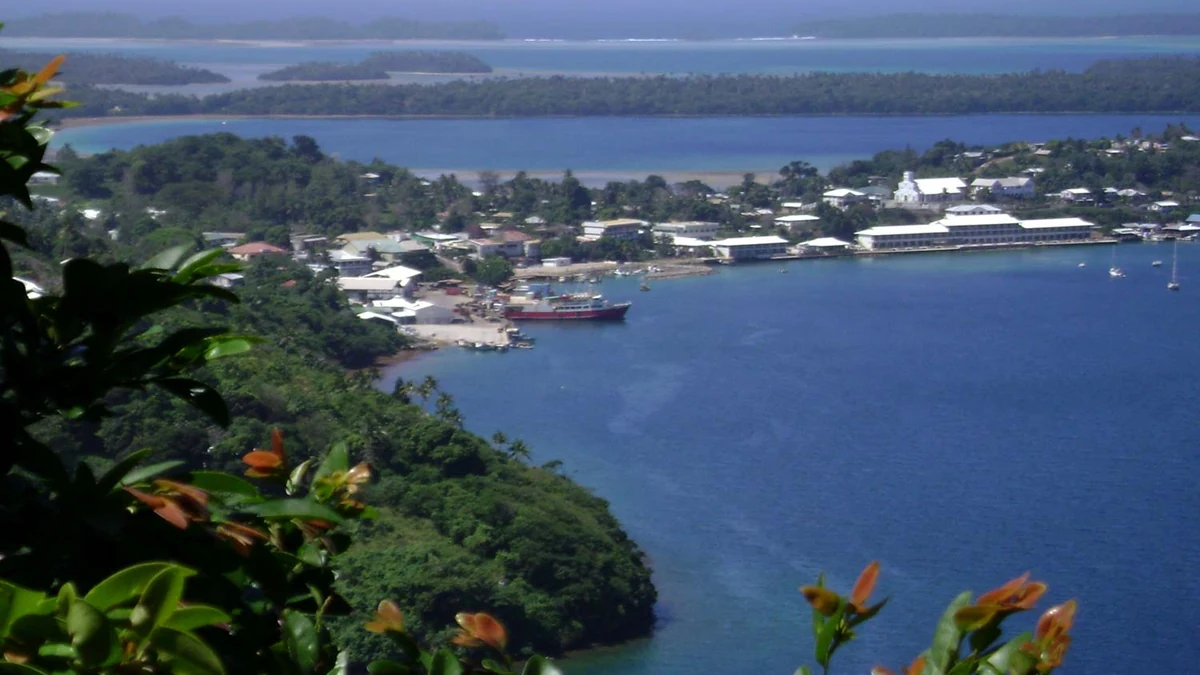
Vava’u cruise port brings passengers into Neiafu beside the deep, sheltered Port of Refuge. Central shops, market activity and the cathedral are close to Halaevalu Wharf, while the experiences that justify the call—whales, caves, reefs and outer islands—depend on small boats and careful timing.
During the licensed whale season, a responsible whale-watch or swim is the standout organised choice for passengers with the fitness and water confidence to meet the operator’s requirements. Outside that period, a Swallows Cave and lagoon snorkelling trip is the better first excursion. Neiafu remains the useful independent fallback, not a substitute that needs apologising for.
Vava'u Cruise Port at a Glance
| Port name | Vava’u |
|---|---|
| Main arrival area | Halaevalu Wharf on the Neiafu waterfront |
| Cruise region | Australasia / Pacific Islands |
| Country / Territory | Tonga |
| Currency | Tongan paʻanga (TOP) |
| Languages | Tongan and English |
| Port role | Day Call |
| Disembarkation | Tender or small-ship landing |
| Walkability | Good around Neiafu; limited beyond town without transport |
| Shuttle required | No |
| Main transport | Walking, licensed whale boat, snorkel boat, taxi and local tour vehicle |
| Best first-time plan | Licensed whale experience in season; otherwise a cruise-aware Swallows Cave and lagoon boat |
| Main caution | Small-boat safety, sea state and wildlife rules matter more than the short map distances |
Halaevalu Wharf puts passengers beside Neiafu
The mapped arrival is the wharf on the Neiafu waterfront, not an offshore point in the Port of Refuge. Tender handling varies by ship, but passengers normally step ashore close to the market, businesses and the road through town.
Photograph the wharf and note the final tender time before joining a boat operator. Several small craft may use the same waterfront, and returning to Neiafu is not sufficient unless the operator knows the ship’s exact boarding point.
DIY or organised tour? Organise the water, walk the town
Whale encounters, cave entries and reef snorkelling require a licensed or established operator with the right boat, safety equipment and local knowledge. They are not sensible DIY activities from a hired dinghy or an informal waterfront offer.
Neiafu can be explored independently. The market, cathedral, harbour viewpoints and cafés fit a short walk, while a pre-booked taxi can add Mount Talau without committing the whole day to a coach.
Whale season creates the headline choice
Tonga regulates commercial whale watching and swimming through licensing and operating rules. The Tongan whale-watching framework is intended to control approach, time and swimmer behaviour rather than turn every sighting into an unrestricted encounter.
Book a licensed operator and accept that a whale watch can succeed without a swim. Animal behaviour, calves, sea conditions and the guide’s judgement determine whether passengers enter the water. A provider promising guaranteed swimming is offering certainty that the wildlife cannot provide.
Whale experiences can fill most of the port call once the search, briefing, water entries and return are included. Passengers should not schedule a separate cave boat or distant land circuit afterwards, even when the advertised whale product appears to leave several hours free.
A slower sighting day may run close to the stated duration, while a successful early encounter does not guarantee the operator will return immediately. The skipper must continue to follow the licensed programme and the group’s booked time.
Whale swimming is physically demanding
Participants may need to enter from a small boat, swim quickly towards the guide, maintain position in open water and climb back aboard repeatedly. A calm photograph does not show the exertion, swell or waiting involved.
Choose the watch-only option when swimming confidence, mobility or stamina is limited. Watching whales from a responsibly handled boat remains an exceptional Vava’u experience and avoids pressuring the group to create an unsafe water entry.
Ship excursion or local whale operator?
A ship excursion gives the strongest protection when tendering is slow or the vessel changes its schedule. A licensed local operator can provide a smaller group and specialist experience, but must receive the ship name, landing point and all-aboard time in writing.
Compare the complete operation: licence, guide-to-swimmer ratio, flotation, shade, toilet arrangements, hydrophone use, cancellation policy and return margin. The cheapest boat at the wharf is not automatically the best value.
Swallows Cave is the best non-whale boat day
Swallows Cave combines dramatic limestone, blue water and a boat journey through Vava’u’s island network. Light conditions and sea level affect how the cave appears, while access remains a judgement for the skipper.
Choose a cruise-aware half-day trip that includes one or two snorkel stops rather than a long island-hopping list. The cave is worth prioritising; an itinerary spending most of the day transferring between minor beaches is not.
Light inside the cave is usually strongest when the sun angle suits the entrance, but a cruise departure cannot always chase the ideal photographic hour. Choose an operator for safe access and wider island interpretation rather than a promise of one exact beam of light.
A good half-day route leaves room for one calm snorkel and returns to Neiafu before lunch or the final tender pressure. Longer products should explain why the extra islands are worth the reduced margin.
Mariner’s Cave is for confident guided swimmers
Mariner’s Cave is entered underwater, requiring a short submerged swim through the opening. The distance may sound modest, but the combination of depth perception, darkness, swell and breath control can be intimidating.
Attempt it only with an established operator, suitable conditions and genuine confidence. Passengers who hesitate should stay on the boat without embarrassment; Swallows Cave and ordinary lagoon snorkelling provide a better day than forcing a stressful entry.
Reef snorkelling needs more than clear water
Vava’u’s sheltered channels can still contain current, boat traffic and coral close to the surface. Ask whether the operator provides flotation, a guide in the water and a ladder that suits the group.
Use reef-safe behaviour: do not stand on coral, feed fish or chase wildlife. One supervised site with good visibility is preferable to three hurried entries that leave passengers cold and tired.
The Port of Refuge is worth seeing from the water
The official Vava’u destination guide presents the island group as a sheltered yachting and marine-adventure centre. Neiafu’s harbour is enclosed by steep green islands and winding channels, creating scenery that cannot be understood from the market street alone.
Ask for shade and seating before booking. A scenic boat should still carry the safety equipment expected for open-water sections, because protected-looking channels can lead quickly into more exposed passages.
Neiafu market is the independent centre
The waterfront market is the most useful place for local produce, crafts and everyday contact close to the ship. Bring small paʻanga notes and ask before photographing sellers or children.
Use the market at the start or end of the day rather than delaying a fixed boat departure. Organic craft materials may face later biosecurity restrictions, so check before buying untreated wood, seeds, shells or plant products.
St Joseph’s Cathedral adds a clear landmark
The Catholic cathedral stands above the harbour and provides a strong visual and cultural stop within walking distance of the landing. It remains a place of worship, not a staged cruise attraction.
Enter quietly when permitted, dress respectfully and avoid disrupting services. The short climb also gives a better sense of Neiafu’s position around the Port of Refuge.
Mount Talau is optional, not essential
Mount Talau can provide broad views over Neiafu, islands and harbour channels, but the route needs transport to the practical access point and may involve rough, humid walking.
Use a taxi or local guide and confirm the vehicle return before starting. We would choose the viewpoint on a dry land-focused day, but skip it after a long whale or snorkel trip.
Village and cultural visits should be locally hosted
A guided land tour can explain Tongan social customs, agriculture, weaving and church life more effectively than a rapid drive between viewpoints. The value lies in the host’s interpretation and community relationship.
Choose an excursion that identifies where fees go and asks permission for photographs. Avoid programmes that treat a village as scenery or encourage uncoordinated gifts to children.
Sunday calls are quieter
Sunday observance can reduce shops, transport and commercial activity, while worship and family life become more prominent. A normal weekday itinerary should not be assumed.
Pre-book any essential boat or vehicle, confirm that it is legally and locally operating, and attend church only where visitors are welcomed. A simple Neiafu walk may be the most appropriate independent plan.
Cash remains useful
Cards may work at larger businesses, but small operators, taxis and market stalls often prefer paʻanga. An ATM cannot be treated as the first activity on a tightly timed boat day.
Obtain modest local cash before the excursion, agree taxi prices and keep payment dry during tender and boat transfers. Do not carry a large visible bundle at the market.
Weather and marine forecasts control the call
The Tonga Meteorological Service publishes public and marine information for the kingdom. Wind, swell, thunderstorms and visibility can alter a whale or cave trip even when Neiafu itself appears calm.
Keep a land fallback ready and accept operator cancellations made for safety. A boat willing to leave in conditions rejected by licensed competitors is not providing a better service.
Accessibility should be assessed boat by boat
Small craft may have high steps, narrow seating, limited shade and no toilet. Whale swimming and cave snorkelling add water ladders and repeated entries that are unsuitable for many passengers.
Ask for photographs or exact descriptions of the boat. Neiafu, a harbour drive and a locally guided cultural tour can produce a worthwhile day without boarding the most demanding vessel.
Passengers should also ask whether the crew can store a walking aid safely and whether the return requires stepping onto a floating pontoon or directly onto Halaevalu Wharf. A product called a scenic cruise can still involve difficult transfers. When those details are unsuitable, a private land vehicle can combine harbour views, Mount Talau and community interpretation without repeated boat movement.
What to skip in Vava’u
Skip an unlicensed whale offer, skip Mariner’s Cave when water confidence is doubtful and skip combining a full whale day with Mount Talau. Also skip any operator whose return plan is simply that the ship will wait.
Prioritise one water experience and protect it. Neiafu can fill any remaining time without adding another fixed departure.
Return to Halaevalu Wharf before the queue builds
Small-boat excursions may finish at a different section of waterfront from the cruise tender. Confirm the exact handover and walk before leaving.
Settle equipment, change out of wet clothing and pay the operator before the final tender margin begins. A boat reaching Neiafu at all-aboard has returned too late.
Neiafu’s waterfront can look compact from the boat, but wet gear, market traffic and several wharves slow the last walk. Pack cameras and payment before entering the harbour rather than doing it beside the cruise tender.
When a local operator returns early, use that margin for the market or cathedral. Do not ask the skipper to add an unplanned swim because the boat appears ahead of schedule.
The safest operator finishes while the market and waterfront are still active, giving passengers a useful cushion rather than a hurried wait. That margin also allows the expedition team to react if the ship moves the final tender or changes the boarding side of the wharf.
Keep that safety margin intact.
The official highlights map is useful ashore
The Tonga Tourism Vava’u highlights map identifies Neiafu, Mount Talau and local points of interest around the island group. Download it before the call because mobile data should not be the navigation plan.
Use the map to understand scale rather than to design a full road circuit. Several marked places still need a vehicle, local access knowledge or more time than a cruise passenger has.
Whale operators should explain the search time
A whale trip may involve a long period locating animals before any close observation. That search is part of responsible wildlife work, not wasted excursion time.
Ask how the operator handles a late ship tender and what minimum useful trip remains. Compressing a four-hour search-and-swim product into a short window can encourage rushed approaches and an unsafe return.
The operator should also state the latest time at which a late tender can still produce a responsible trip. If that threshold is missed, a refund or watch-only alternative is better than racing towards the first reported whale.
Cruise passengers should avoid booking two independent groups for the same morning as a hedge. Duplicate reservations reduce scarce licensed capacity and create confusion when the ship finally clears.
Watch-only passengers need a suitable boat position
Some vessels are arranged mainly around swimmers entering quickly, leaving watch-only guests with limited shade or sightlines. Confirm that seated observation is a genuine product rather than an afterthought.
A dedicated whale-watch or small-group mixed boat can be the stronger choice for photographers, limited-mobility passengers and anyone who wants interpretation without repeated water entries.
Land touring should focus on two or three places
A Vava’u road tour can include island viewpoints, plantations, villages, blowholes or beaches according to access. The roads and stops vary, so an enormous checklist is not evidence of a better guide.
Choose Mount Talau plus one cultural or coastal theme. Keep enough time for Neiafu market and the cathedral rather than remaining in a vehicle until the tender queue begins.
Food is easiest in Neiafu
Neiafu has the island group’s main concentration of cafés and restaurants, but cruise-day seating and service can become busy. A boat product may include a simple lunch or expect passengers to carry their own.
Confirm inclusions before departure and use the town meal after the fixed excursion. Passengers with dietary requirements should carry an appropriate snack rather than depending on a remote beach stop.
Cyclone-season calls need flexible bookings
Tropical systems and persistent swell can disrupt small-boat operations even when the ship reaches Vava’u. Independent products should have clear no-operation refunds rather than vague credit arrangements.
Keep Neiafu and a land drive ready. The harbour’s sheltered appearance does not prove that cave entrances or outer-island channels are suitable.
CruisePing Recommended Port Day
During the licensed whale season, choose a ship excursion or established licensed operator and decide honestly between watch-only and swimming. Keep the rest of the day in Neiafu; whales should be the headline rather than one element in an overloaded itinerary.
Outside whale season, book a half-day Swallows Cave and lagoon snorkelling trip with shade, flotation and a conservative return. Passengers avoiding small boats should walk Neiafu, visit the market and cathedral, then add Mount Talau only with a pre-booked vehicle.
Weather & Best Time to Visit Vava'u
| Month / season | Typical high | Typical low | Rain / conditions |
|---|---|---|---|
| December–March | 30°C | 24°C | Hot, humid and wetter; thunderstorms and tropical-cyclone risk |
| April–June | 28°C | 22°C | Warm with easing humidity and variable showers |
| July–October | 26°C | 20°C | Drier trade-wind season and principal whale period |
| November | 29°C | 23°C | Building heat and humidity with changing marine conditions |
Vava’u remains warm throughout the year. Marine wind, swell and lightning determine small-boat operations, while the regulated whale season shapes the most sought-after excursions. Check the current official forecast before finalising the day.
Frequently Asked Questions
Where do cruise passengers land in Vava'u?
Tenders or small ships normally use Halaevalu Wharf on the Neiafu waterfront.
When is whale season in Vava’u?
Commercial whale experiences operate seasonally, commonly during the austral winter and early spring. Confirm the licensed operating period for the sailing date.
Is whale swimming suitable for everyone?
No. It requires open-water confidence, repeated boat entries and the ability to follow the guide quickly. Watch-only products are the better choice for many passengers.
Can Neiafu be explored independently?
Yes. The market, cathedral and harbour area are close to the landing, while Mount Talau needs transport.
Should you visit Mariner’s Cave?
Only with an established guide and strong swimming confidence because entry requires a submerged swim.
Useful Official Links
- Norwegian Cruise Line: Vava'u
- Tonga Meteorological Service
- Tonga weather bulletin
- Tonga marine and public forecast products
CruisePing Port Verdict
Vava’u’s strongest cruise day is on the water. In whale season, use a licensed operator and choose swimming only when fitness and confidence are genuinely adequate; outside the season, Swallows Cave and a carefully paced snorkel trip are the better first choice.
Neiafu is compact enough for DIY and provides the right fallback when marine conditions intervene. The weak plan is not staying in town; it is accepting an informal boat, adding Mariner’s Cave without the skills or leaving the return to chance.
Ready to browse our article library?
Looking beyond Vava'u? Explore more ports in the Australasia / Pacific Islands region, or narrow it to Tonga in particular. For cruise comparisons, planning shortcuts and value guides, head over to our main article archive.