
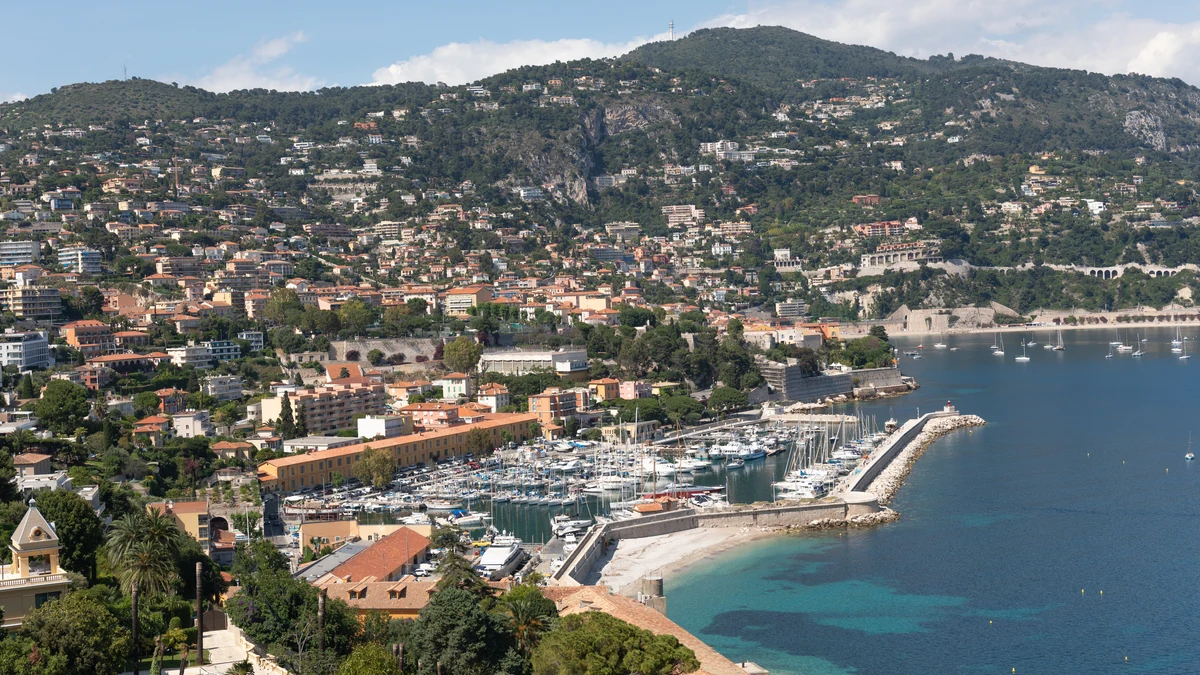
Villefranche cruise port has one of the French Riviera’s most attractive arrivals. Ships anchor in the deep natural bay and tenders usually carry passengers to Port de la Santé, where the old town rises immediately behind the waterfront. You can begin exploring without an industrial shuttle or long transfer, yet Nice and Monaco are both close enough by coastal train to create a genuine planning dilemma.
The correct answer is not to visit everything. Villefranche-sur-Mer, Nice and Monaco each support a full cruise day, while Saint-Jean-Cap-Ferrat provides a quieter coastal alternative. Decide which atmosphere matters most before leaving the tender: village lanes and bay views, a substantial city, or the concentrated spectacle of Monaco. The weakest plan is to use Villefranche only as a railway platform and then rush through two larger destinations.
Villefranche Cruise Port (Nice) at a Glance
| Port name | Villefranche Cruise Port (Nice) |
|---|---|
| Main arrival area | Tender landing at Port de la Santé, directly beside Villefranche-sur-Mer’s waterfront and old town |
| Cruise region | Mediterranean |
| Country / Territory | France |
| Currency | Euro (EUR) |
| Languages | French; English is widely understood in tourism |
| Port role | Day Call |
| Disembarkation | Tender into the deep bay, normally landing at Port de la Santé beside the old town |
| Walkability | High for the waterfront and old town, but steep stepped lanes make the upper town more demanding |
| Shuttle required | No shuttle is normally needed for Villefranche itself; transport is required for Nice, Monaco and Cap Ferrat |
| Main transport | Walking, TER coastal train, regional bus, taxi, local boat and organised excursion |
| Best first-time plan | Choose one geography: Villefranche and Cap Ferrat, Nice, or Monaco; do not spend the call commuting between all three |
| Main caution | Tender queues and relying on a late coastal train after trying to combine Nice and Monaco |
Weather & Best Time to Visit Villefranche-sur-Mer
January to March
Typical high: 12–16°C
Typical low: 5–9°C
Rain / conditions: Cool and sometimes wet; rougher sea conditions can affect tendering and coastal boat plans.
April to June
Typical high: 18–26°C
Typical low: 10–18°C
Rain / conditions: Warm, bright and usually excellent for walking, gardens and the coastal rail corridor.
July to September
Typical high: 26–30°C
Typical low: 19–23°C
Rain / conditions: Hot and busy, with limited shade on exposed waterfront routes and crowded trains and beaches.
October to December
Typical high: 15–24°C
Typical low: 8–16°C
Rain / conditions: Often mild in early autumn; heavier rain episodes and wind become more likely later.
Weather guide: CruisePing summary based on NASA POWER climate data for Villefranche-sur-Mer and the eastern French Riviera. Check the latest forecast for the call.
Sea state has a direct effect before any sightseeing decision begins. A sunny forecast does not guarantee a smooth tender, and a delayed start makes a two-city rail plan much less sensible. Keep Villefranche itself as the built-in fallback because the waterfront and old town start at the landing.
In summer, Nice and Monaco can feel significantly hotter than the temperature suggests because station approaches, palace slopes and old-town lanes hold heat. If the day is very hot, a focused Villefranche route with the beach or shaded lanes may be more enjoyable than a timetable-driven city transfer.
The Tender Arrival at Port de la Santé
Villefranche’s roadstead is deep enough to shelter large ships, but passengers normally come ashore by tender. The official local tourism information identifies Port de la Santé as the cruise arrival area, beside the old town and close to the maritime station. Exact tender berths and security arrangements can still change, so photograph the ship’s instructions and note whether the final tender requires an earlier queue time.
The first view can encourage overconfidence. Cafés, waterfront restaurants and the lower old town are immediately accessible, while the railway station appears close on the map. The station route includes an uphill approach and steps or gradients depending on the chosen path. Give yourself more time than the map’s straight-line distance suggests, particularly with luggage, a wheelchair or a crowded tender landing.
When returning from Nice or Monaco, aim to reach Villefranche well before the final tender. A coastal train delay is usually manageable when you have a buffer; it becomes serious when the tender queue is already closing. CruisePing prefers a return that leaves time for one final walk or drink at the harbour rather than using the last plausible train.
Before boarding a train, establish the ship’s return-tender procedure. Some calls use a simple queue; others issue groups or suspend independent tendering while excursion parties move. The station is uphill from the waterfront, so the timetable must include the climb, ticket purchase and platform access as well as the rail journey. On the return, step off the train with enough time to descend through Villefranche, pass any waterfront crowd and join the tender line without depending on the final boat.
Villefranche-sur-Mer Deserves More Than Leftover Time
The old town is compact but layered. Bright façades face the harbour, while lanes and stairways climb behind them. The Rue Obscure, a covered medieval passage, provides a distinctive contrast to the sunlit waterfront. The Church of Saint-Michel and the Chapelle Saint-Pierre add art and history without requiring a long transfer. Openings can be limited, so the route should still work as an architectural walk when an interior is closed.
The Citadelle Saint-Elme sits at the edge of the waterfront and contains municipal spaces and museums. Its grounds, walls and views help explain the bay’s strategic importance. Do not assume every gallery will be open on a cruise-call day; check the town or tourism pages if a specific collection is essential. The citadel is still a useful anchor for a local route even when the focus is the exterior setting.
A half-day in Villefranche can combine the lower old town, Rue Obscure, waterfront and a meal without feeling thin. The town’s scale is the advantage. You are not spending energy crossing a major city, and you can remain close to the tender while still seeing a place that feels distinct from Nice. Passengers who have visited the Riviera before often find this the more satisfying choice.
Nice by Train: The Strongest First-Time City Option
Nice is the most balanced independent excursion from Villefranche. TER trains run along the coast and place passengers within reach of the old town, Promenade des Anglais, Cours Saleya and central museums. Check the live SNCF timetable on the day because engineering works, strikes or service alterations can change the normally simple journey.
Choose a compact Nice route. From Nice-Ville station, walk or use the tram towards Place Masséna and Vieux Nice, then continue to Cours Saleya and the seafront. Castle Hill provides the headline panorama but adds steps, slopes or a lift that can attract queues. If the call is short, choose either the hill view or a longer old-town lunch rather than forcing both.
Nice rewards time more than box-ticking. The Promenade des Anglais is long; walking an arbitrary distance along it can consume the day without adding much after the initial sea view. Use the old town, market area and one viewpoint as the core. Return from Nice-Ville early enough to absorb a missed or cancelled train, then descend to Port de la Santé without pressure.
Nice works best when the route is limited to one coherent area. From Nice-Ville, the old town and seafront require an onward tram or walk; from the local coastal stations, different parts of the city may be more convenient. Decide before leaving Villefranche whether the priority is Vieux Nice and Cours Saleya, the Promenade des Anglais or a museum. Trying to cross the whole city, stop for lunch and still add Monaco wastes the advantage of the short rail journey.
Monaco by Train: Compact Sights, Steep Connections
Monaco is close by rail but more demanding on foot than its size suggests. The underground station has several exits, and choosing the wrong one can add a climb or confusing road crossing. Decide before arrival whether the priority is Monaco-Ville and the Prince’s Palace, Monte Carlo and the Casino square, or the harbour. Combining all three is possible for energetic visitors, but it is not a level stroll.
For a first visit, Monaco-Ville offers the most coherent route: the Rock, palace square, cathedral and old streets. The Oceanographic Museum can occupy a substantial part of the day and should be chosen deliberately rather than added automatically. Monte Carlo provides the famous casino setting, gardens and luxury atmosphere but sits on the other side of the harbour and elevation changes.
A guided excursion can reduce navigation effort, yet coach access and parking still involve walking. Read the mobility description rather than assuming “panoramic” means minimal exertion. Independent visitors should set a turnaround time at Monaco station and treat any missed attraction as expendable. The ship will not wait for a late self-booked train.
The railway station is built into the hillside and has several exits. Leaving by the wrong one can add a steep climb or send you away from the Old Town, harbour or Monte-Carlo district. Save an offline map and follow signs for the chosen area rather than simply following the largest crowd. For a first visit, the palace and old town form one workable cluster; Casino Square is a second cluster. Connecting both is possible, but it requires more walking and less time back in Villefranche.
Saint-Jean-Cap-Ferrat and Villa Ephrussi
Saint-Jean-Cap-Ferrat is the quieter alternative to Nice or Monaco. The peninsula combines villas, gardens, coves and coastal scenery. Villa Ephrussi de Rothschild is the principal cultural destination, with themed gardens and a richly furnished house. It is not beside the Villefranche tender, so buses, taxi arrangements and opening times need checking before the day.
The attraction works best as a planned half-day with Villefranche rather than part of a wider Riviera sweep. A taxi gives control and may be worth sharing, particularly when bus frequency is limited. Ask the driver about the return and do not assume a vehicle will be waiting outside at exactly the time you finish.
Long coastal paths around Cap Ferrat are beautiful but can be exposed, uneven and time-consuming. Choose a defined section only if weather and footwear are suitable. A complete peninsula walk is not a sensible add-on to a tender call unless you have verified the distance, access points and return transport.
Cap-Ferrat is a better fit for passengers who prefer gardens, villas and coastal scenery to another busy city centre. The practical challenge is the final connection: rail reaches Beaulieu-sur-Mer, but Villa Ephrussi and the peninsula still require a bus, taxi or substantial walk. Check the estate opening and return transport before leaving Villefranche. This is a single-destination day, not a small add-on after Nice or Monaco, and it works best when the tender schedule leaves a generous afternoon margin.
The Coastal Train: Useful, Not Risk-Free
The TER line is what makes Villefranche such a versatile port. It connects the town with Nice to the west and Monaco to the east, and services continue along the Riviera. Tickets should be bought and validated according to current SNCF rules. Keep the ticket available for inspection and check platform information rather than relying on the direction used earlier in the day.
The train’s convenience tempts passengers into a Nice-plus-Monaco itinerary. The arithmetic can work on paper, but every station approach, wait, wrong exit and attraction queue reduces useful time. A single-city plan gives enough flexibility to absorb disruption and still enjoy the destination. Two cities are best reserved for a long call, early tender and passengers already familiar with the area.
Taxis are the practical fallback but can be scarce or delayed when several ships and events overlap. Ride-hailing availability and pickup points may not match expectations from home. Keep enough payment options and the address “Port de la Santé, Villefranche-sur-Mer” available in writing for the return.
Beaches, Swimming and a Low-Stress Local Day
Plage des Marinières curves along the bay beyond the railway station and is the main beach choice. The walk from the tender is achievable for many passengers but includes the station area and takes longer than a direct waterfront stroll. Pebbles, limited shade and summer crowds should be expected. Water shoes and a compact towel are more useful than planning a large beach setup.
A beach day can be combined with the old town by visiting the lanes first, then swimming after the morning tender rush. Keep documents, valuables and the return time secure. If sea conditions were difficult enough to delay the tender, reconsider swimming plans because conditions at the beach can also be unsettled.
For passengers who want scenery without intensive sightseeing, a waterfront lunch, citadel exterior, Rue Obscure and beach produces a complete day. The key is to stop treating proximity to Nice and Monaco as an obligation. Villefranche is not a consolation prize.
Mobility and Accessibility in a Stepped Riviera Town
The tender is the first accessibility question. Cruise lines set their own rules for wheelchairs and mobility scooters based on sea conditions and equipment. Even after landing, Villefranche’s historic character includes steps, steep lanes and uneven paving. The lower waterfront is much easier than the routes towards the station and upper town.
Passengers with limited mobility can enjoy the harbour, lower streets and selected accessible venues, but should not rely on a standard walking-tour description. Ask where taxis can collect you, whether the train station route is step-free from your chosen entrance and which Monaco station exit serves your destination.
A private vehicle can create a strong day when it limits repeated climbing. One carefully chosen stop in Nice, Monaco or Cap Ferrat is more comfortable than a tour that repeatedly unloads for short photo breaks. Build rest and toilet access into the plan rather than assuming every scenic viewpoint has facilities.
Four Ways to Use a Villefranche Cruise Call
Villefranche old town and waterfront
Best for: Atmosphere, easy tender access and a low-risk day.
Allow: Three to five hours with lunch or beach time.
Decision: The strongest choice for repeat Riviera visitors or a short call.
Nice
Best for: A substantial city with old-town streets, markets and seafront.
Allow: At least four to five hours including station movement.
Decision: Choose one compact route and return on an earlier train.
Monaco
Best for: Palace, casino setting and a concentrated international destination.
Allow: Four to five hours for one side of the principality done properly.
Decision: Plan station exits and gradients before arrival.
Saint-Jean-Cap-Ferrat
Best for: Gardens, villas and quieter coastal scenery.
Allow: About four hours with transport and one main visit.
Decision: Pre-plan the return rather than improvising from the peninsula.
Plage des Marinières
Best for: A relaxed swim close to the port.
Allow: Two to three hours including the walk and changing.
Decision: Pair with Villefranche, not with a rushed Nice or Monaco trip.
CruisePing’s First-Time Villefranche Plan
For a first Riviera visit, take an early tender and go directly to the railway station for Nice. Build the city day around Vieux Nice, Cours Saleya, the seafront and one viewpoint. Avoid travelling the full length of the Promenade des Anglais merely to say it has been covered.
Return to Villefranche on a train that leaves a meaningful buffer before the final tender. Use the remaining time for the waterfront, Rue Obscure or a drink facing the bay. This sequence protects the ship while ensuring the actual arrival town is not invisible in your memory of the day.
Passengers who have already visited Nice should stay local or choose Cap Ferrat. Monaco is a worthwhile alternative when its palace or casino setting is the clear priority, but do not combine it with Nice unless the call is unusually long and the tender begins promptly.
DIY or Organised Tour from Villefranche?
Villefranche, Nice and Monaco are all feasible independently. The railway corridor is straightforward, and each destination has enough official visitor information to support a self-guided route. DIY is best for passengers who can manage station steps, monitor live services and abandon a second destination when delays occur.
An organised tour adds value for Eze, Cap Ferrat combinations, passengers needing controlled transport or anyone uncomfortable with the tender-plus-train sequence. Eze in particular sits above the coast and is less naturally connected to a simple rail day. Confirm how much walking and free time the tour actually includes.
A private driver should be used to improve access or create a focused route, not to chase Nice, Eze, Monaco and Monte Carlo in one loop. Put the return to Port de la Santé ahead of the last tender and retain enough margin for tender security and queues.
Mistakes That Turn an Easy Riviera Call into a Rush
The port is flexible, but that flexibility can encourage an unrealistic route.
- Planning both Nice and Monaco by default: choose one unless the call is long and rail conditions are excellent.
- Underestimating the station approach: the route rises from the waterfront and can be slow with crowds or limited mobility.
- Using the last viable train: one cancellation can remove the tender margin.
- Choosing the wrong Monaco station exit: plan the district before arriving underground.
- Ignoring Villefranche itself: preserve at least a short local walk before returning to the ship.
- Assuming a tender always runs normally: sea conditions can compress the entire day.
Villefranche Port-Day Checklist
A few checks keep the day flexible without becoming vague.
- Ship-specific tender landing, final tender and accessibility rules.
- Live SNCF TER timetable and any engineering or industrial-action notices.
- The exact Nice or Monaco station route you intend to use.
- Opening information for any must-see museum, villa or garden.
- A return train that leaves time for a delay and tender queue.
- Sun protection, water and shoes suitable for steps and polished lanes.
- Port de la Santé written down for a taxi fallback.
Useful Official Links
Use these official and authoritative pages to check details that can change before a Villefranche-sur-Mer call, including arrival arrangements, transport, access rules and attraction information.
- Port de la Santé cruise-arrival information
- Villefranche-sur-Mer visitor guide
- Getting to and from Villefranche-sur-Mer
- SNCF Connect journey planning
- Villefranche cruise-call schedule
Villefranche-sur-Mer Cruise Port FAQ
Where do tenders land in Villefranche?
Cruise tenders normally land at Port de la Santé beside the waterfront and old town. The ship controls the exact tender process and final return time.
Is Nice easy to reach from Villefranche cruise port?
Yes. The coastal TER train is the usual independent option, but the station is uphill from the tender and live service changes must be checked.
Can you visit Nice and Monaco in one cruise day?
It can be done on a long call with an early tender, but it creates little protection against delays. One destination usually produces a better visit and a safer return.
Is Villefranche worth staying in?
Yes. The harbour, old town, Rue Obscure, citadel area and nearby beach make a complete local day with minimal transport risk.
How difficult is Villefranche for limited mobility?
The lower waterfront is relatively manageable, but the old town and station routes include gradients and steps. Tender eligibility and step-free train access should be confirmed in advance.
CruisePing Port Verdict
Villefranche is a rare port where staying beside the tender can be as rewarding as taking an excursion. Its bay, old town and beach create a genuine destination, while the coastal train makes Nice or Monaco realistic when one is chosen decisively.
Use proximity to create flexibility, not to justify a three-place race. One strong destination, an early return and a final hour in Villefranche is the route most likely to feel like the French Riviera rather than a transport exercise.
Ready to browse our article library?
Looking beyond Villefranche-sur-Mer? Explore more ports in the Mediterranean region, or narrow it to France in particular. For cruise comparisons, planning shortcuts and value guides, head over to our main article archive.