
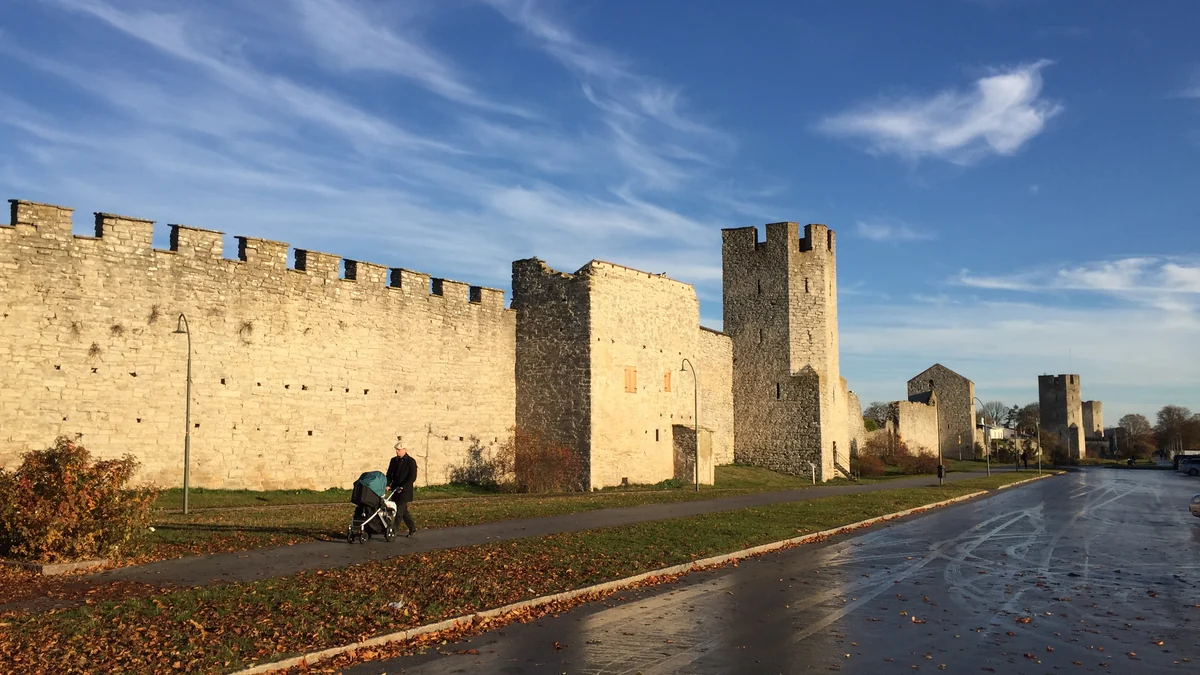
Visby cruise port delivers one of the Baltic’s strongest independent walking days. The modern cruise quay can take large ships, and Copenhagen Malmö Port says the terminal is within walking distance of the centre. The reward is a compact UNESCO-listed Hanseatic town enclosed by medieval walls, with church ruins, warehouses and lanes that need far less transport than most island calls.
Visby is easy to underestimate because its headline sights sit close together. The real planning question is not how to reach the old town but how to use your energy once inside it. A full wall circuit, repeated climbs and a rural Gotland excursion can turn a relaxed port into an endurance exercise. First-time visitors should give the medieval town most of the day and treat the wider island as a separate choice.
Visby Cruise Port at a Glance
| Port name | Visby Cruise Port |
|---|---|
| Main cruise area | Visby cruise quay south of the medieval town; occasional tender landing |
| Cruise region | Northern Europe & Baltic |
| Country / Territory | Sweden |
| Currency | Swedish krona (SEK) |
| Language | Swedish, English |
| Port role | Day Call |
| Disembarkation | Docked, Tender |
| Walkability | High |
| Shuttle required | Sometimes |
| Main transport | Walking Route, Cruise Shuttle, Local Bus, Taxi, Organised Excursion |
| Best DIY option | Medieval walls, old town and Gotlands Museum |
| Main caution | Cobbles, gradients and walking too far around the wall before seeing the old town |
Weather & Best Times to Visit Visby
January to March
Typical high: 2–7°C
Typical low: -3–1°C
Rain / conditions: Cold Baltic conditions with possible snow, ice and wind.
April to June
Typical high: 9–20°C
Typical low: 2–11°C
Rain / conditions: Cool spring gives way to long, bright early-summer days.
July to September
Typical high: 16–23°C
Typical low: 9–15°C
Rain / conditions: Mild to warm; the busiest period, with occasional showers and sea breezes.
October to December
Typical high: 4–12°C
Typical low: 0–7°C
Rain / conditions: Cooler, darker and increasingly damp or windy.
Weather guide: CruisePing summary based on NASA POWER climate data for the Visby and western Gotland. Check the latest forecast.
Visby’s old town works in most conditions, but the order should change. In heat, walk the exposed wall sections early and use the shaded lanes and museum later. In rain, cobbles and slopes become the main issue; prioritise Gotlands Museum, the cathedral and shorter stretches of the fortifications rather than forcing a full wall circuit.
Where Cruise Ships Dock in Visby
Copenhagen Malmö Port operates the dedicated cruise facilities south of central Visby and states that two large ships can use the quay. Most modern calls therefore dock, although tenders can still appear because of berth allocation, vessel size or operational changes. Check the daily ship information rather than assuming the icon in an itinerary is final.
The walk from the cruise quay reaches the southern side of town rather than placing passengers directly in Stora Torget. Cruise shuttles may be provided on some calls, but they are a convenience, not a prerequisite for reasonably mobile passengers. Ask where the shuttle returns before accepting a one-way ride.
The medieval wall is visible early, yet the first tower is not necessarily the best starting point. Entering through a southern gate and heading towards the museum or central square can preserve energy. Save a selected wall section for later instead of following the fortifications simply because they are in front of you.
How to Explore the Medieval Town
Visby’s wall, gates, church ruins and merchant streets are best understood as one urban landscape. The UNESCO description emphasises the town’s role as a Hanseatic commercial centre and the survival of its ramparts, warehouses and dwellings. A slow route through the lanes gives more context than racing from tower to tower.
Gotlands Museum is the best indoor anchor. Its collections explain the island before and during the Viking and medieval periods, including picture stones and silver. Visit early if history is a priority, or use it around midday when the busiest lanes and exposed walls are less comfortable.
The cathedral and ruined medieval churches create a second layer. Some ruins are open for events or seasonal visits; others are most effective as part of the streetscape. Stora Torget is a useful orientation point but not a reason to spend the whole day in cafés. The quieter north and west lanes show why Visby deserves more than a highlights photograph.
Getting Around Gotland Beyond Visby
Region Gotland links to the island’s public transport information, but a cruise visitor should distinguish a functioning network from a convenient excursion timetable. Rural buses can be useful on a long call, yet frequencies and seasonal services may leave little recovery if a connection is missed.
Organised excursions commonly target rural churches, coast, limestone formations or the island’s film and cultural associations. They make sense for repeat visitors or passengers who have a specific Gotland interest. A first-time passenger who spends only an hour inside the walls has traded away the port’s most distinctive asset.
Taxis and private guides work well for a short island circuit, especially for a group, but agree the return and town drop-off. A good compromise is a morning island drive followed by two or three hours in Visby, not a full-day coach that reaches the quay just before departure.
Best Cruise-Compatible Things to Do from Visby
Visby city wall and gates
Best for: The defining medieval structure and changing views over town and sea.
Best way: Walk selected sections rather than automatically circling the entire wall.
Watch: Cobbles, steps and distance accumulate; some towers or wall walks have restricted access.
Gotlands Museum
Best for: Viking, medieval and island history in one strong indoor visit.
Best way: Walk into the old town and check current opening before arrival.
Watch: Allow enough time for the main collections; do not squeeze it between two long outdoor circuits.
Stora Torget and church ruins
Best for: The social centre and a concentration of medieval remains.
Best way: Explore on foot as part of a loop through the old town.
Watch: The square becomes busy on peak days; quieter ruins and lanes are nearby.
Visby Cathedral
Best for: A living church within the medieval town.
Best way: Walk from Stora Torget or the museum.
Watch: Services and ceremonies can limit sightseeing access; dress and behave respectfully.
Botanical Garden and north wall
Best for: A calmer green route with fortification views.
Best way: Walk north through the old town, then return through the lanes.
Watch: It adds distance from the cruise quay; do not leave the return until the last moment.
Rural Gotland excursion
Best for: Limestone coast, villages, churches and a broader island view.
Best way: Organised tour, taxi or private guide.
Watch: Use this for a long call or repeat visit; it competes directly with time in Visby.
CruisePing Recommended Port Day
CruisePing would enter the old town, visit Gotlands Museum, cross to Stora Torget and the cathedral, then choose one wall section and the Botanical Garden if time and stamina allow. This route gives history before the town becomes merely a backdrop for photographs.
On a short call, drop the Botanical Garden or museum according to interest, but keep the central lanes. On a long call, a two- or three-hour rural excursion can be added only if it returns with enough time for a proper Visby walk. The medieval town should not become the buffer after the “main” tour.
Finish along the southern or western edge of town, gradually moving towards the cruise quay. That makes the return part of the sightseeing and avoids a rushed cross-town walk over cobbles.
DIY or Organised Excursion?
Visby is a strong DIY port. The town’s scale, official visitor information and visible landmarks make a guide optional rather than essential. A short walking tour can still add value because the ruins and warehouses carry stories that are easy to miss.
An organised excursion is better for rural Gotland, especially where several dispersed stops are involved. CruisePing would not book a bus simply to enter the old town unless mobility needs justify it. The port’s greatest advantage is freedom from a long transfer.
Passengers who dock and see a shuttle queue should compare the wait with the actual walking distance. The shuttle may save energy, but it can also deposit everyone at the same crowded point. Walking allows a quieter entrance and a gradual route.
Cobbles, Gradients and Crowd Timing
Visby is compact but not flat and smooth. Cobbles, ramps, steps and repeated short climbs make the effort greater than the mileage suggests. Comfortable footwear matters more here than an aggressive attraction list.
When several ships or ferries are in town, Stora Torget and the main gates fill quickly. Start with the museum, a quieter wall section or the north side, then return to the central square later. Medieval Week and major events can transform access and crowd patterns completely.
Passengers using wheelchairs or mobility aids should ask about shuttle drop-off, accessible gates and museum access. A taxi can remove the long quay approach while leaving the best parts of the old town to be explored selectively.
How Call Length Changes the Choice
Four hours ashore is enough for a focused old-town loop, one museum or cathedral visit and a selected wall section. It is not enough for a rural island tour plus a meaningful Visby visit.
With a full day, explore the old town first and then decide whether a short rural circuit adds something. Reversing that order risks leaving Visby to whatever time remains after traffic and coach stops.
Building a Visby Old-Town Route
Enter the medieval centre with a route rather than wandering immediately into the nearest lanes. A practical first circuit links the harbour side of town with Almedalen, the cathedral area and selected wall sections, then returns through the commercial streets. This reveals the relationship between the sea, defensive wall and town without requiring a complete lap. The wall is long enough that an all-the-way circuit can crowd out the ruins, museum and ordinary streets that make Visby more than a fortification.
Choose one elevated or exposed wall section early, especially in summer heat. Later, use the shaded lanes around the cathedral and ruined churches. Some ruins are open spaces rather than conventional museums, so they can be visited quickly, but their uneven surfaces and steps accumulate. The strongest route allows time to stop rather than treating each church ruin as another box to tick.
Gotlands Museum is the best indoor anchor when history matters or rain arrives. A serious museum visit should replace part of the wall walk, not simply be added to it. The collection helps explain Gotland’s trading history and medieval wealth, making the town outside easier to read. Passengers with only a few hours can choose the museum plus a compact central loop and still have a more coherent day than those attempting every gate and ruin.
Beyond the Walls: Rural Gotland Choices
A rural excursion should offer something Visby cannot: coastal rock formations, countryside churches, Viking-era context or a specific island landscape. A generic panoramic coach may spend too much time collecting passengers and too little at each stop. Read the itinerary for named places and walking time. If the tour is described mainly as “scenic Gotland”, compare it against the value of another two hours inside the UNESCO-listed town.
Northern and southern Gotland are not interchangeable add-ons. Distances across the island mean a tour usually commits to one direction, and traffic or event-day congestion affects the return. A private guide can be worthwhile for a small group when the route is selective. CruisePing would favour one landscape theme plus Visby, rather than a long island circuit that treats the medieval town as the final photo stop.
Passengers interested in beaches should remember that Baltic weather can change quickly and the port call may not align with peak water temperature. A coastal stop can still be attractive for limestone scenery and walking, but it should not be sold to yourself as a guaranteed warm beach day. Keep Visby as the fallback if wind or cloud weakens the coast.
Cruise Terminal, Events and Mobility
Visby can receive ships at the cruise pier, but operational arrangements may still vary and some calls can use alternative handling. Follow the ship’s shuttle or walking information rather than assuming the route from a previous visit. The terminal is close enough for the old town to be practical, yet the final distance back should be included before beginning a wall circuit on the far side of town.
Medieval Week and other large events transform the atmosphere but also change crowd levels, access and restaurant demand. Event activity can be a major advantage if it matches the call, although passengers should pre-book any essential visit and expect slower movement through central lanes. Do not plan an exact minute-by-minute walking route on a festival day; choose a few priorities and let the street activity become part of the experience.
Cobbles, slopes and steps make Visby more demanding than its compact map suggests. Passengers with limited mobility should use taxis or shuttles to avoid unnecessary approach walking, then concentrate on Almedalen, accessible central streets and one or two major interiors. A full wall walk is not required to understand the town. CruisePing would prioritise quality of route over mileage.
Food and Breaks Inside the Walls
Plan lunch or coffee inside the old town rather than returning towards the terminal too early. A break in the central lanes divides the walking and gives time to decide whether another wall section, Gotlands Museum or the Botanical Garden still deserves the remaining hours. During busy summer calls, choose somewhere with visible capacity rather than spending a large part of the visit waiting for a particular restaurant.
Allow time to look back at the wall and roofline from outside the gates before returning. That final perspective explains the defensive scale better than another hurried ruin and keeps the closing part of the route naturally aligned with the terminal.
Port-Day Pitfalls and Value Choices
- Trying to walk the entire wall before seeing the museum and central lanes.
- Assuming every call tenders because older cruise information predates the modern quay.
- Taking a full-day island excursion on a first visit and leaving almost no time for Visby.
- Underestimating cobbles and repeated gradients.
- Waiting in a shuttle queue without checking whether walking is quicker.
Visby Port-Day Checklist
- Check whether the ship is docked or tendered and whether a shuttle is offered.
- Choose one or two wall sections rather than promising yourself a full circuit.
- Check Gotlands Museum opening and any major event dates.
- Wear footwear suited to cobbles and steps.
- Keep rural Gotland as a separate choice, not an automatic add-on.
- Plan a return route that moves gradually back towards the cruise quay.
Useful Official Links
- CMP Visby cruise terminal
- Cruise Gotland visitor information
- Official Gotland visitor guide
- Gotlands Museum
- UNESCO Hanseatic Town of Visby
Visby Cruise Port FAQs
Can you walk from Visby cruise port?
Yes, for reasonably mobile passengers. CMP describes the terminal as within walking distance of the centre. A shuttle may still be offered, and it can be useful for passengers who want to save energy for the cobbled old town.
Do ships still tender in Visby?
Many calls use the modern cruise quay, but tendering can still occur because of berth or vessel arrangements. Check the ship’s final information.
Can I walk all the way around the wall?
A full circuit is possible for fit visitors with enough time, but it is not automatically the best cruise-day choice. Selected sections plus the museum and old-town lanes usually provide a richer first visit.
Is Gotlands Museum worth the time?
Yes for passengers interested in Viking, medieval and island history. It explains the town rather than simply repeating what can be seen outside.
Should I tour the rest of Gotland?
On a long call or repeat visit, yes. On a first short call, Visby itself deserves priority. A rural tour should return early enough for at least two or three hours in the old town.
Is Visby difficult with limited mobility?
The port approach can be reduced by shuttle or taxi, but cobbles and gradients remain inside the walls. Plan a shorter route around accessible gates, the museum and central sights.
CruisePing Port Verdict
Visby earns its reputation because the port-day logistics stay out of the way. A modern quay, compact medieval centre and strong museum allow passengers to spend the day experiencing the place rather than negotiating transport.
CruisePing would do the old town independently, choose wall sections selectively and resist the urge to use a first visit on a full island coach tour. The best Visby day has depth, not distance.
Ready to browse our article library?
Continue through CruisePing’s Northern Europe & Baltic cruise ports, browse ports in Sweden, or return to the main CruisePing article library for planning guides, comparisons and practical cruise advice.