
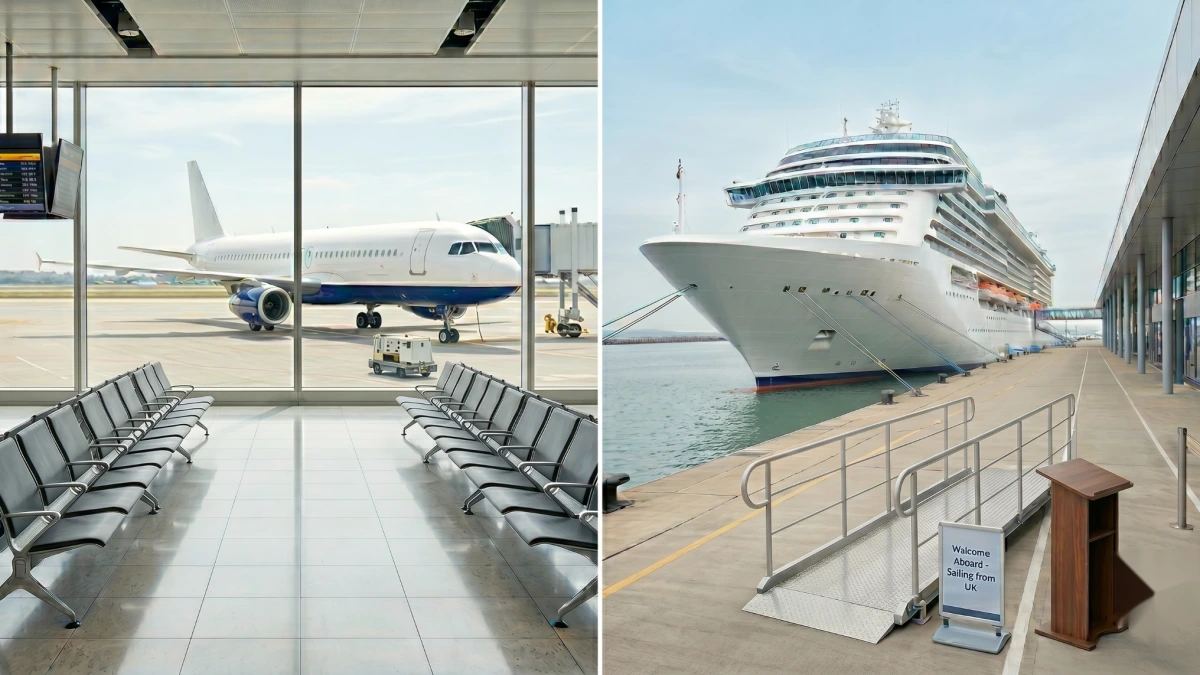
When planning a European cruise, choosing between flying to the Med vs sailing from the UK is the most significant logistical decision you will make. It dictates not just your upfront vacation budget, but your packing limits, your physical comfort levels, and how much actual holiday time you spend exploring historic ports versus relaxing at sea.
For British travellers, the choice typically comes down to two distinct pathways. You can book a fly-cruise package, which involves navigating a crowded UK airport terminal to wake up directly in Barcelona or Rome. Alternatively, you can pack your car and drive straight to a domestic port like Southampton, Tilbury, or Newcastle, stepping onto your ship without ever clearing an airport security line.
Both methods offer distinct operational advantages and hidden logistical drawbacks. In this comprehensive comparison guide, we break down the true costs, travel day realities, and structural differences of both options to help you choose your perfect transit mode.
The Travel Day Experience: Airport vs Terminal Arrival
The way your holiday begins sets the psychological tone for your entire trip. The difference between airport transit and a domestic port arrival is stark.
The Fly-Cruise Pathway
Opting to fly to the Mediterranean means accepting traditional airline schedules. You are tied to early morning charter or commercial flights, which frequently require leaving your house in the middle of the night.
Your travel day involves multi-stage friction, including parking at the airport, waiting in baggage drop queues, navigating security scanners, and enduring boarding delays. Once you land in Europe, you must collect your bags and board a transfer coach to reach the cruise terminal. It is an efficient way to get to the sun, but it can be exhausting.
The UK Port Departure
Sailing directly from a British port completely transforms the embarkation experience. If you use a port like Southampton, your travel day is entirely self-paced.
You drive directly to the terminal building, where a valet porter takes your luggage straight from your car boot. You walk into a spacious, calm departure hall, pass through a swift security check, and can be sitting on your cabin balcony with a drink in hand within thirty minutes of arriving. There are no long walks down airport piers, no passport control lines on arrival, and zero terminal stress.
Luggage Rules and Hidden Travel Costs
When evaluating the financial side of both options, the numbers on your initial booking invoice only tell half the story. Luggage allowances can alter your final holiday spend significantly.
- Fly-Cruise Limitations: Expect strict airline weight caps, typically 20kg to 23kg per person, plus premium fees for extra bags.
- UK Departure Freedom: Enjoy zero strict weight limits from the port side, allowing you to bring as many suitcases as will fit safely in your cabin.
The Financial Impact of Airline Rules
If you choose a fly-cruise, you are strictly bound by commercial airline baggage regulations. Exceeding your 23kg limit can trigger severe excess baggage fees at the airport desk. Furthermore, standard airline safety rules restrict the transport of liquids, meaning you cannot easily pack your preferred toiletries or bring home regional bottles of wine from your travels.
The Port Side Advantage
When you sail straight from the UK, the luggage restrictions evaporate. Cruise lines operating out of Southampton do not impose weight limits on your suitcases, provided individual bags can be lifted safely by the terminal porters, which is usually capped at 32kg per bag for health and safety.
You can bring multiple formal outfits, extra shoes, and specialised gear without paying a penny in penalties. More importantly, you can utilise the cruise line’s alcohol allowance, walking on board with your permitted allotment of wine or champagne without security confiscating it.
Time on Board vs Time in Port
The geographical reality of departing from the UK introduces a major itinerary trade-off that directly impacts your daily cruise experience.
The Reality of the Bay of Biscay
Sailing from Southampton to the Mediterranean requires crossing the English Channel and navigating past the western coast of France via the Bay of Biscay. This journey takes time.
The logistical surcharge means a standard cruise from the UK to the western Mediterranean requires a minimum of two full sea days at the start of your trip, and another two sea days at the end just to complete the physical transit.
The maritime vibe is also a factor because the Bay of Biscay is open ocean. It is highly susceptible to rougher sea conditions, especially during the spring and autumn months. If you are prone to motion sickness, this transit can be a challenging hurdle.
The Fly-Cruise Efficiency
Flying to the Mediterranean completely bypasses those initial transit days. By landing directly in a southern European hub, your itinerary is instantly port-intensive. A seven-night fly-cruise can easily include six distinct ports of call in a single week, maximising your time exploring destinations like Florence, Monaco, and Palma. On a UK departure, a seven-night sailing will usually only afford you two or three ports of call because the ship must spend more time moving through open water.
For the next step, compare the practical benefits of no-fly cruises from the UK, check that your cruise travel insurance covers the chosen journey, and include the hidden extras beyond the headline fare.
Transit Mode Selector: Which Option Wins?
To finalise your decision, review this structural checklist based on your budget priorities and travel preferences.
| Your Travel Priorities | Best Choice: Fly-Cruise | Best Choice: UK Departure |
| Maximising Port Exploration | Yes (Instant access to regional hubs) | No (Requires multiple sea days for transit) |
| Unlimited Packing Freedom | No (Strict airline weight caps apply) | Yes (Bring multiple large bags for free) |
| Anxiety-Free Travel Days | No (Airport queues and security delays) | Yes (Seamless drive-up valet infrastructure) |
| Guaranteed Warm Weather | Yes (Fly straight into Mediterranean sun) | No (Subject to British and northern European weather) |
Choose a Fly-Cruise if:
- You have limited vacation time and want to spend every possible hour exploring historic cities rather than looking at the open ocean.
- You want guaranteed sunshine from the very first afternoon of your holiday.
- You are comfortable travelling light and navigating modern airport terminal logistics.
Choose a UK Departure if:
- You want to eliminate the stress of flying, luggage restrictions, and airport security queues entirely.
- You genuinely love the classic cruise experience, valuing sea days, shipboard activities, and fine dining just as much as port visits.
- You want to bring home cases of regional wine, olive oil, and souvenirs without worrying about weight limits or airline baggage handlers.