
Arriving at the Zeebrugge cruise port presents one of the starkest structural contrasts of any northern European itinerary. While your ultimate destination is the breathtaking, medieval fairytale city of Bruges, your initial landing point is a high-intensity, industrial mega-port dominated by towering walls of shipping containers, massive cargo vessels, and heavy automotive freight. For British holidaymakers sailing out of Southampton, this stop is a staple on short break itineraries and classic winter market cruises.
Navigating this destination independently requires overcoming a notorious physical barrier. Because of the intense industrial operations, the port authority enforces strict safety regulations that completely alter how passengers move past the gangway. By mastering the local public transit connections, you can easily bypass the expensive coach transfers sold on board and enjoy a seamless journey to the cobblestones of Bruges for a fraction of the cost.
In this guide, we break down the industrial terminal logistics, expose the true physical distance to the medieval centre, compare independent rail journeys with official ship transfers, and provide a step-by-step blueprint to reach Bruges for under ten pounds.
At-a-Glance Port Directory
Before calculating your train timetables or planning your Belgian chocolate shopping, here are the essential fast facts for your arrival in West Flanders:
| Port Metric | Practical Specification |
| Port Role | Primary Day-Visit Stop (Essential Northern European Transit Call) |
| Arrival Method | Docked (Ships tie up at either the Leopold II-dam or the Zweedse Kaai berths) |
| Local Currency | Euro (€) |
| ATM Availability | Plentiful inside the modern ABC Cruise Terminal building |
| Distance to Centre | Roughly 17 kilometres (11 miles) from the cruise docks to historic Bruges |
Arrival & Pier Logistics
The Port of Zeebrugge is a massive, deep-water commercial harbour that functions as one of Europe’s primary hubs for roll-on/roll-off cargo and container logistics.
The Absolute Walking Ban
The most critical piece of logistical information for this port is the strict legal ban on pedestrian traffic within the industrial harbour zones. For safety reasons, you are legally prohibited from walking along the quayside or attempting to walk out of the port gates on foot. Stranded travellers attempting to walk past the container cranes will be immediately stopped by port security vehicles.
Clearing the ABC Cruise Terminal
Depending on your berth, your ship will either connect directly to the modern ABC Cruise Terminal (located at the Leopold II-dam) or use an open industrial pier at the Zweedse Kaai. If your ship docks at the secondary pier, the port authority coordinates a mandatory, complimentary internal shuttle bus. This shuttle safely carries independent passengers away from the active container zones, dropping you off directly outside the main exit gates of the ABC Cruise Terminal building.
The “Fake Port” Reality Check: The Industrial Desert vs. The Medieval Fairytale
When you browse a cruise brochure featuring a stop in Belgium, the imagery invariably showcases romantic canals, horse-drawn carriages, stepped-gable guild houses, and historic market squares. Because these itineraries are universally labelled as “Bruges Cruises”, first-time visitors frequently fall into a major geographic illusion.
Zeebrugge is not Bruges. It is a gritty, heavily industrial maritime outer-port located 17 kilometres north of the historic destination. The immediate surroundings of the ship offer absolutely no tourist appeal, consisting of vast vehicle staging yards, marine fuel tanks, and busy dual carriageways.
You cannot catch a glimpse of a historic spire or a winding canal from the ship’s decks. To experience the historic charm of Belgium, you must cross the flat agricultural polder landscape that separates the active industrial coast from the inland medieval city. Managing this transit efficiently is the defining factor of your day ashore.
Top Attractions: DIY vs. Guided Tour Showdown
Bruges is a world-class destination for independent exploration, allowing you to wander the historic streets entirely at your own pace without the rigidity of a large tour group.
The Ultimate DIY Choice: The Blankenberge Rail Blueprint
You do not need to spend £40 to £50 per person on a cruise line “Bruges on Your Own” coach transfer that simply secures you a seat on a standard tour bus. You can execute a brilliant independent rail journey that is fast, reliable, and costs less than ten pounds for your outbound transit.
The secret to this high-value hack relies on using Belgium’s excellent coastal tram and regional rail networks rather than fighting for local taxis at the port gates.
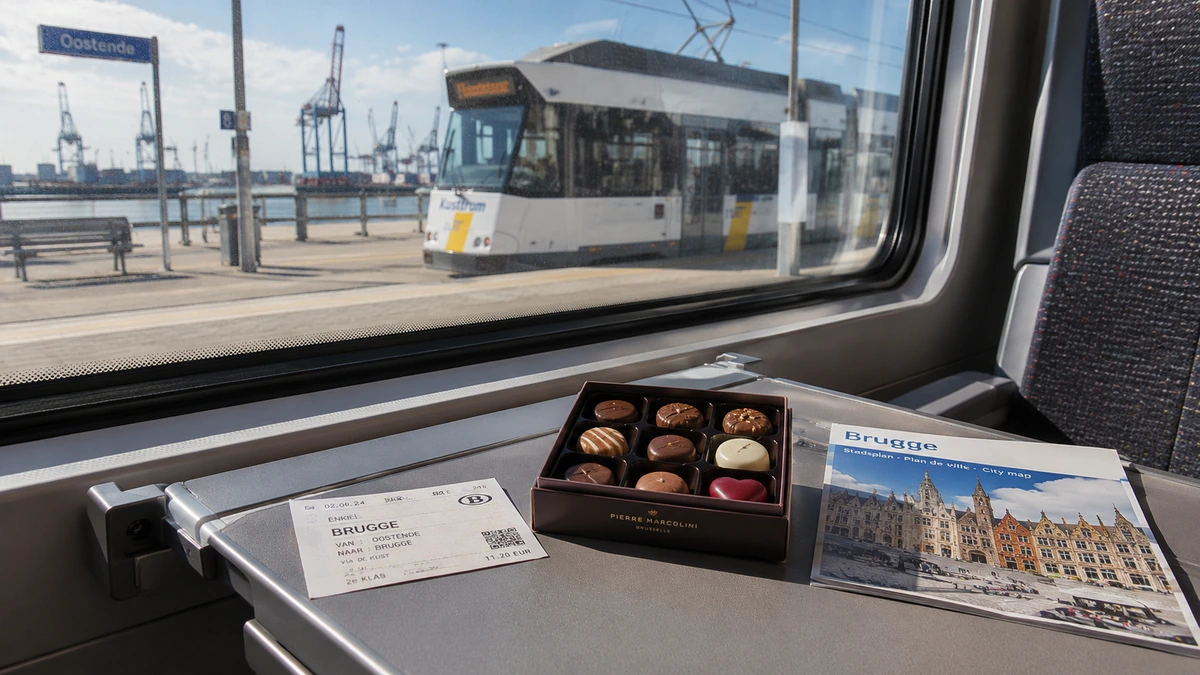
Insider Value Hack: Once you clear the ABC Cruise Terminal exit gates, walk a flat 500 metres to the nearest public tram stop, known as Zeebrugge Kerk. Board the modern, frequent Coastal Tram (Kusttram) heading westbound toward Knokke-Blankenberge. A single ticket on this clean, air-conditioned tram costs just €2.50 and can be purchased easily using a contactless bank card on board.
Ride the tram for roughly ten minutes down the coast, stepping off directly at the Blankenberge Railway Station plaza. From Blankenberge, regular, direct regional trains depart every 20 minutes straight to the main Brugge Station. The train journey takes a brief 13 minutes and costs roughly €4.50 for a standard one-way ticket.
Once you arrive at Brugge Station, you can enjoy a scenic, flat 10-minute walk through the lush Minnewater Park straight into the heart of the historic medieval core. The total out-of-pocket transit cost is under seven Euros per direction, delivering a massive financial saving compared to cruise line rates.
The Guided Tour Alternative: Brussels or Ghent Historic Highlights
While Bruges is perfectly suited to the Blankenberge rail blueprint, exploring deeper Belgian destinations like the capital city of Brussels or the medieval canals of Ghent is much better handled via an official ship-sponsored excursion. Brussels sits nearly 100 kilometres inland from the North Sea coast. Navigating multiple interconnected regional train lines across that distance within a rigid port window leaves you highly exposed to transport delays, making an official coach bubble the smartest choice to protect your return timeline.
The Port-Side Pitfall & Value Hack
The single biggest financial trap at this destination is the Terminal Gate Private Taxi Cartel.
The moment you pass through the final security gates of the ABC Cruise Terminal, you will see a line of local private taxi drivers waiting on the tarmac. Because they understand that walking out of the industrial zone is legally impossible and that many passengers fail to research transit links in advance, these drivers aggressively pitch private transfers directly to Bruges. They routinely demand flat rates ranging from €50 to €70 each way for the brief 20-minute drive.
Unless you are travelling in a large group that can divide the cost evenly across six or more passengers, these rates represent a massive cruise premium.
Simply ignore the shouting drivers at the terminal exit, follow the pedestrian pathways safely across the main road to the Zeebrugge Kerk tram platform, and leverage the public infrastructure. You will outrun the slow-moving cruise line tour buses, protect your holiday budget, and arrive at the historic canals with plenty of time to spare.
CruisePing Port Verdict
The Zeebrugge cruise port is a highly functional gateway that rewards independent, budget-conscious holidaymakers who refuse to be intimidated by the industrial scale of the docks. By understanding the legal pedestrian rules, walking to the local Zeebrugge Kerk tram stop, and pairing the coastal tram with the quick regional train from Blankenberge, you can immerse yourself in the world-class chocolate shops, historic architecture, and scenic canals of Bruges entirely on your own terms.
Ready to browse our article library?
Looking for more practical cruising shortcuts? Head back to our main hub directory to explore comprehensive stateroom comparisons, tipping breakdowns, and value guides.