
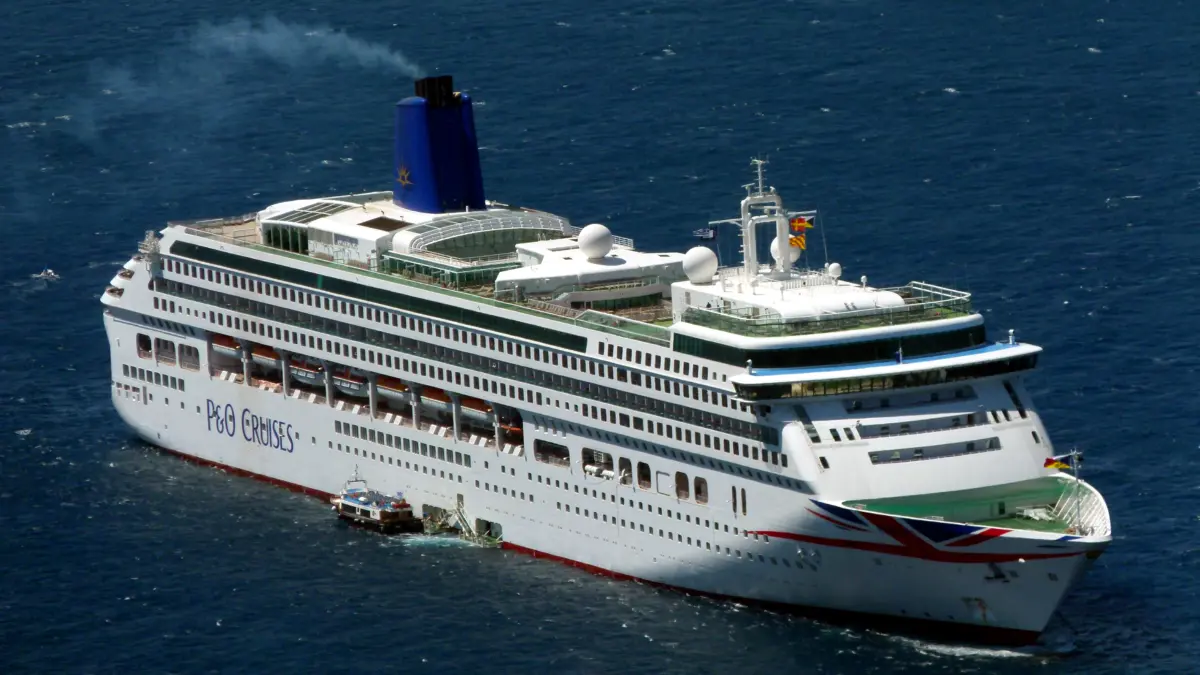
The Aurora cruise ship is P&O Cruises’ smallest current vessel and one of its two adults-only ships. That immediately changes the holiday: fewer than 1,900 guests, more traditional public rooms and a stronger emphasis on conversation, sea views, dancing, talks and familiar cruise routines than on giant attractions.
Aurora is not the best P&O choice for everyone. Her age shows in places, balconies are less plentiful than on newer ships and passengers seeking extensive casual dining or a resort-style pool deck will find more choice on Iona or Arvia. Her strength is that she feels like a ship rather than a floating leisure complex.
Why choose the Aurora cruise ship?
Choose Aurora for a quieter adults-only atmosphere, manageable scale and itineraries where sea days are part of the pleasure rather than time to be filled with headline activities. She is particularly well suited to experienced cruisers, couples and solo travellers who enjoy traditional dining, formal evenings, live music and a recognisable daily rhythm.
The smaller scale also makes Aurora easier to learn. Walking distances are shorter, public rooms are more distinct and moving between dining, theatre and a favourite bar is generally simpler than on the Excel-class ships. This matters on longer voyages and for passengers who dislike spending the first half of a cruise learning a vast deck plan.
Traditional does not mean inactive
Aurora has a full theatre, cinema, show lounge, pools, spa, sports facilities and a broad programme of quizzes, talks and classes. The difference is tone. Entertainment is more likely to sit alongside reading, dancing and socialising than to dominate the ship through large-scale attractions.
Passengers who want waterslides, high ropes, multiple contemporary speciality concepts or late-night family energy should not try to make Aurora into something she is not. The ship works best when her quieter character is the reason for booking.
Dining is compact rather than limited
Aurora’s dining range is smaller than on P&O’s newest ships, but it covers the essentials well: main dining, buffet and grill options, plus familiar additional-cost venues such as Sindhu, The Beach House and The Glass House. The advantage is that the dining landscape is easy to understand and does not require a week of reservation management.
The compromise is repetition on a long voyage. Passengers who want a different restaurant every night will find Aurora less compelling than Iona or Arvia. For P&O-wide information about drinks, Wi-Fi, gratuities and fare inclusions, use the P&O Cruises guide.
Cabins require realistic expectations
Aurora offers inside, sea-view, balcony, mini-suite and suite accommodation, but the distribution reflects an older ship. Balcony availability is lower than on newer vessels, so the price difference can be substantial. A well-positioned sea-view cabin can be a better buy than stretching the budget for a balcony that leaves less money for the itinerary.
Check what is above and below the cabin and how far it sits from the venues you will use. Aurora’s smaller size reduces long walks, but noise from entertainment or open decks still matters. Our cabin-location guide explains the wider trade-offs.
Aurora has a proper library
Aurora has a dedicated library and reading provision that fits the ship’s character. On longer cruises, this is more valuable than it may appear in a facilities list. It gives readers and solo passengers a recognised quiet space rather than asking them to improvise in a busy lounge.
Where Aurora usually sails
Aurora is Southampton-based and commonly serves longer voyages to the Mediterranean, northern Europe, the British Isles, Spain, Portugal and France. Her smaller size and adults-only atmosphere suit extended itineraries, where passengers spend more time aboard and value continuity over novelty.
Aurora compared with Arcadia
Both ships are adults-only, but Aurora is smaller, more intimate and more overtly traditional. Arcadia offers more balcony cabins, a larger spa-led environment and a strong world-cruise identity. Choose Aurora for compact familiarity; choose Arcadia for a slightly grander mid-sized ship and longer global voyages.
What passengers tend to praise and criticise
Recurring praise focuses on the friendly atmosphere, manageable size, traditional style and loyal passenger community. Criticism tends to centre on age, limited dining breadth, dated areas and fewer modern cabin or balcony choices. Those are not hidden flaws: they are the direct trade-offs of choosing the smallest and oldest current P&O ship.
Formal evenings and Aurora’s social rhythm
Aurora attracts passengers who still value the social side of traditional cruising. Celebration Nights, dancing, hosted activities and repeat meetings in the same bars often matter more than trying a new attraction every hour. This can create a friendly, club-like atmosphere on longer sailings, particularly because the adults-only passenger mix is relatively stable.
That rhythm will not suit everyone. Travellers who prefer very casual evenings, anonymous resort freedom or a constantly changing entertainment programme may find Aurora restrained. The ship is strongest when you enjoy becoming familiar with the crew, venues and other passengers over several sea days.
Mobility and choosing an older ship
Aurora’s compact dimensions reduce walking, but age can still influence accessibility through thresholds, bathroom layouts and fewer modern cabin designs. Passengers with specific mobility needs should confirm an accessible cabin rather than assuming the smaller ship automatically solves every problem. The benefit is shorter travel between key venues; the limitation is that the hardware predates newer accessibility expectations.
Official information
CruisePing verdict
Aurora is the best P&O choice for adults who want the fleet’s smallest, calmest and most traditional ship. Book her for atmosphere, manageable scale and longer no-fly itineraries. Avoid her when modern cabins, abundant balconies and a large restaurant or activity programme are central to the holiday.