
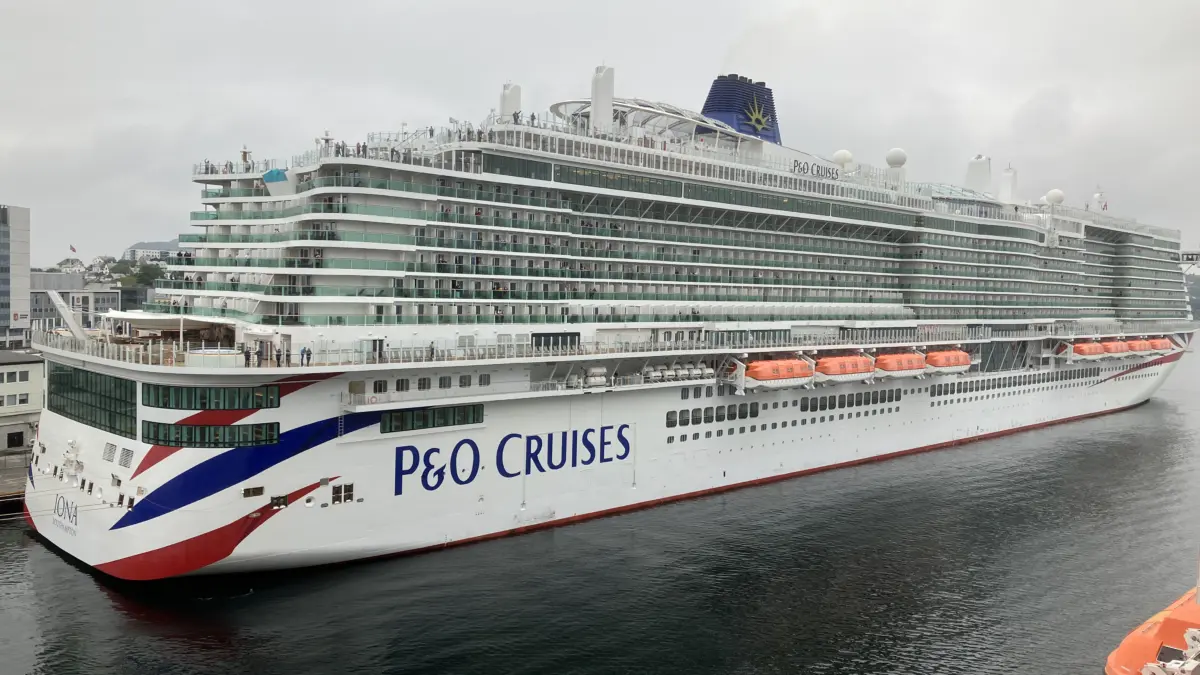
The Iona cruise ship is P&O Cruises’ large, modern ship built around choice: multiple restaurants, a covered SkyDome, extensive entertainment and a strong Southampton programme. It is particularly well matched to Norwegian fjord itineraries because its public rooms and observation spaces remain useful when the weather is cool or wet.
The ship’s scale is both its advantage and its weakness. More than 5,000 passengers support a much wider choice of venues than older P&O ships, but full sailings can produce lift queues, busy dining periods and competition for popular shows. Iona works best for passengers willing to plan a little; it is a poor choice for anyone expecting a quiet, spontaneous small-ship holiday.
The Iona cruise ship in one sentence
Iona is best for families, couples and first-time cruisers wanting a weather-resistant modern resort ship from Southampton, but passengers who dislike crowds or advance reservations should choose a smaller vessel or travel outside peak school-holiday dates.
When was Iona launched?
Meyer Werft built Iona at Papenburg in Germany. The ship was delivered to P&O Cruises in October 2020, named in May 2021 and entered passenger service on 7 August 2021. Her first major refit was completed in October 2025. At approximately 184,000 gross tonnes and 344.5 metres long, Iona is one of the largest ships designed specifically for the British cruise market.
Where Iona usually sails
Iona is based primarily at Southampton. Norwegian fjords are a defining part of the programme, particularly in the warmer months, while other sailings include Northern Europe, Spain, Portugal and the Canary Islands. Deployment changes by season and year, so use this pattern to understand the ship rather than as a permanent itinerary promise.
The fjords are arguably Iona’s strongest match. The ship has many indoor viewing areas and the SkyDome offers a usable central space when rain or low temperatures make open decks less inviting. The downside is that a large ship can feel less intimate in small ports and excursion demand can be intense.
Who Iona suits best
- First-time cruisers: the Southampton departure and broad range of facilities make the transition into cruising straightforward.
- Families: children’s clubs, pools, casual food and varied entertainment provide options across different ages.
- Couples travelling outside school holidays: the ship offers sophisticated bars and dining alongside family facilities.
- Passengers worried about poor weather: indoor public spaces and the covered SkyDome make the ship more resilient than an open-deck-focused vessel.
- People who enjoy choice: Iona rewards passengers who like trying different dining and entertainment venues rather than repeating one routine.
Who should avoid Iona?
- Passengers seeking a quiet or intimate ship.
- Anyone who becomes frustrated by lift queues, app-based information or reservations.
- Traditional cruisers who want the same dining room and table every evening.
- Travellers who prefer walking straight into every venue without checking demand.
- People for whom a long walk from cabin to restaurant would be difficult; cabin position matters on a ship of this length.
Dining on Iona
Iona offers a substantial mix of included and chargeable dining. Main dining rooms, the buffet and several casual choices allow passengers to eat without paying extra, while speciality options broaden the experience. The strongest approach is to identify the venues that matter before sailing and understand which can be reserved. Trying to improvise every popular dinner at peak time is more likely to create frustration than freedom.
Passenger reports commonly praise the breadth of choice but are less consistent about execution. Service and food can be very good, yet busy periods may lead to waiting or a less polished experience. This is a ship where timing matters. Eating slightly earlier or later than the main rush can materially improve the evening.
Entertainment and public spaces
The SkyDome is Iona’s defining public space. It provides a covered pool area by day and a setting for entertainment after dark. The ship also offers theatre productions, live music, comedy and smaller venues. Choice is a strength, but headline shows and the most popular spaces can reach capacity.
Iona feels contemporary rather than traditionally nautical. Passengers who enjoy modern hotels and large resorts are more likely to respond positively than those who want promenades, dark wood and a strong sense of maritime heritage.
Iona cabin guide
The ship offers inside, sea-view, balcony, suite and solo accommodation. A balcony is especially attractive on fjord itineraries because it provides private scenery without competing for rail space, although public viewing areas mean it is not essential. An inside cabin can be strong value for passengers who expect to spend most of the day around the ship.
Best cabin choice
A midship balcony on a deck separated from the busiest public venues is the safest all-round choice. It reduces walking, offers direct fjord views and avoids some of the noise risks associated with cabins beneath pool decks or entertainment areas.
Cabins requiring more thought
Check what sits above and below the cabin, the distance to the nearest lifts and whether a promenade or public deck affects privacy. A low fare can become poor value if the location adds repeated long walks or late-night noise. Our comparison of inside and balcony cabins helps weigh the price difference.
What passengers commonly praise
Recent passenger feedback repeatedly highlights the ship’s modern appearance, cleanliness, comfortable cabins, range of food and generally helpful crew. The SkyDome and the ability to find a different bar, restaurant or activity each day are also recurring positives. Couples often report a better-balanced experience outside the busiest family periods.
Recurring criticisms
The most persistent criticisms concern lift queues, crowded public areas, dining waits, inconsistent service during busy periods and the friction of using digital systems or booking popular venues. These are not guaranteed problems on every sailing, but they are credible consequences of the ship’s size and are more likely when the vessel is full.
Iona versus Arvia
The ships share the same broad Excel-class platform, but their programmes and identities differ. Iona is the stronger choice for fjords, cooler-weather cruising and passengers who value the SkyDome as an all-weather hub. Arvia is more obviously designed around warm-weather decks and family activity. Read the full Iona versus Arvia comparison.
Passengers comparing Iona with a large MSC ship should also read MSC Virtuosa versus P&O Iona. Iona generally offers a more British experience and Southampton simplicity; Virtuosa feels more international and can be more energetic.
Living with a ship this size
Iona is long enough for location to affect everyday life. A cabin near the forward lifts may be convenient for one set of venues and awkward for another. Before booking, identify the restaurants, children’s facilities or entertainment spaces you expect to use most and trace the route from the proposed cabin. Our guide to midship, aft and forward cabins explains the broader trade-offs.
The lift system attracts criticism partly because many passengers attempt the same journeys at the same time: immediately after a show, before dinner or when a port call ends. Taking the stairs for one or two decks, waiting ten minutes before leaving a venue or choosing a cabin that reduces repeated cross-ship journeys can make a noticeable difference. Passengers unable to use stairs should treat lift-bank position as a primary booking criterion rather than an afterthought.
Families, solo travellers and accessibility
Iona’s children’s clubs and family facilities make it a credible multi-generational choice, but standard cabins can feel tight when every berth is occupied. Families should compare usable floor space, storage and bathroom access rather than relying solely on the advertised passenger capacity. Connecting accommodation may be more comfortable than squeezing four people into one ordinary cabin.
Solo cabins are available, although pricing still needs comparison with promotional double cabins carrying a supplement. For passengers with reduced mobility, the modern ship offers accessible accommodation and step-free routes, but the sheer distances remain significant. Book through P&O or a knowledgeable agent who can confirm the cabin’s route to dining, muster station and lifts.
What costs extra on Iona?
P&O includes gratuities, main dining, much of the entertainment and standard children’s clubs. Drinks, Wi-Fi, shore excursions, spa treatments and several speciality venues remain additional costs. A low headline fare can therefore grow quickly when a family buys packages for several people. Review the hidden costs of a cheap cruise before deciding that the cheapest cabin is automatically the best deal.
How to get the best from Iona
- Complete online check-in promptly and review the current dining and entertainment system before sailing.
- Choose two or three priority experiences rather than trying to reserve every possible venue.
- Use quieter meal times and avoid leaving headline shows at exactly the same moment as the crowd.
- For the fjords, protect time on deck during arrivals and departures rather than booking every hour ashore.
- Compare the cruise date as carefully as the fare; passenger mix can change the ship’s atmosphere substantially.
Best and worst features
| Best feature | A wide choice of weather-resistant public spaces, especially useful on fjord and northern itineraries. |
|---|---|
| Biggest weakness | Peak-time pressure around lifts, dining and popular entertainment. |
| Best dining strategy | Reserve priority venues and avoid the busiest dinner times. |
| Best cabin strategy | Choose midship and check the deck plan above and below. |
| Best time to sail | Outside school holidays when possible. |
Official information
CruisePing verdict
Iona is one of the best P&O ships for a first no-fly cruise, particularly to the Norwegian fjords. It offers enough variety to keep very different passengers occupied and handles poor weather better than many resort ships. Book it for choice, not intimacy. Select the cabin carefully, reserve the experiences that matter and avoid peak family dates when a calmer atmosphere is important.