
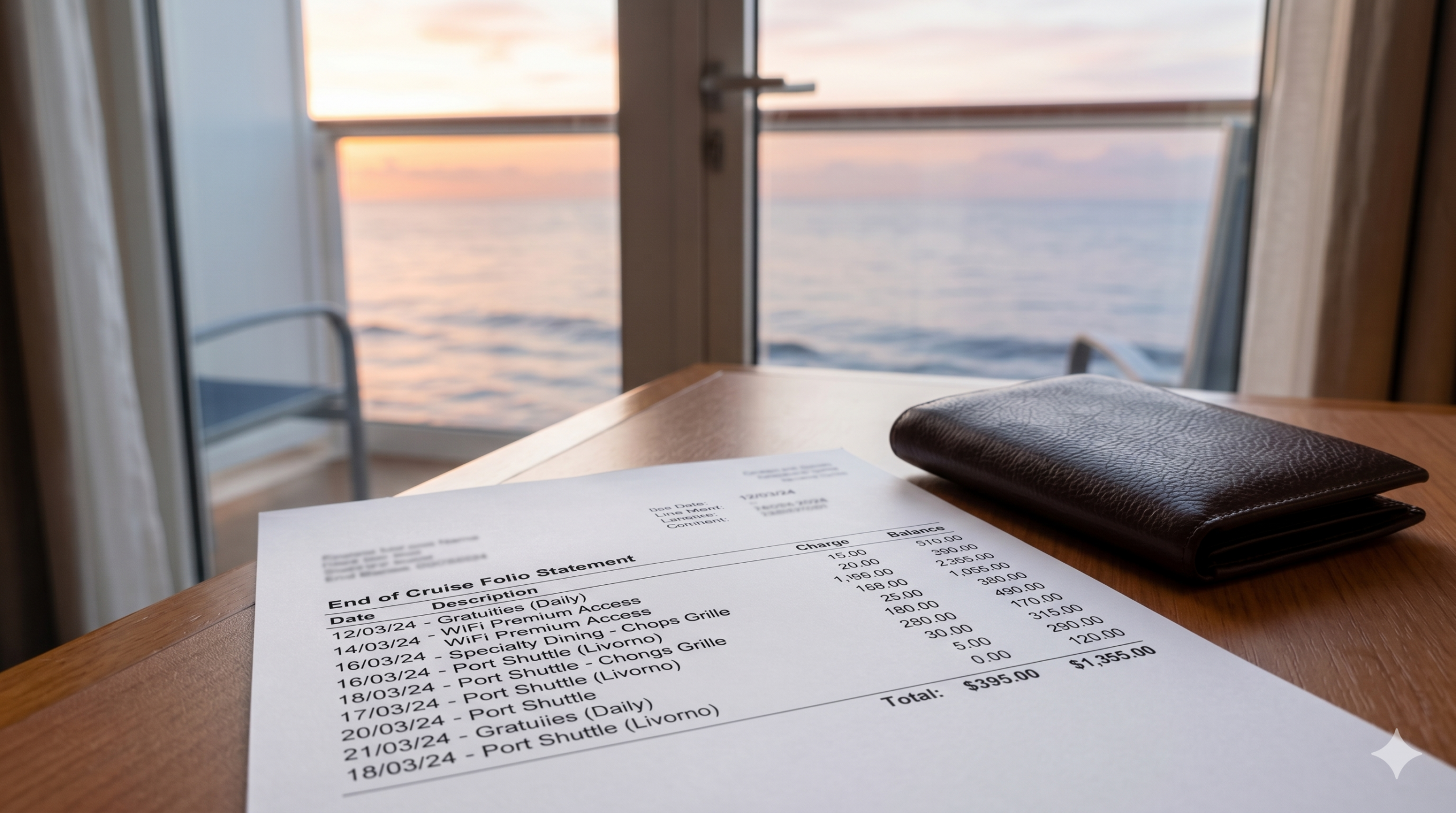
Calculating the true cost of a ‘cheap’ cruise has become an essential skill for modern holidaymakers. While an initial booking price can look like an absolute bargain on a travel portal, major cruise corporations have introduced aggressive pricing updates that can easily double your vacation spend by checkout.
Advertised base fares are no longer a reflection of your final invoice. Instead, they act as an entry ticket to a floating resort where basic services, dining variations, and connectivity are systematically locked behind premium pricing structures.
In this consumer advocacy guide, we unpack the psychology of the entry price illusion, expose seven of the most significant hidden cost factors added to modern itineraries, and provide the practical strategies you need to keep your onboard account completely under control.
The Entry-Price Illusion
Cruise lines are masters of unbundled pricing models. By driving the base cost of a cruise ticket down to historic lows, they attract budget-conscious families who assume that accommodation, transport, and food are entirely covered.
This is an intentional logistical strategy. Onboard spending has become the primary profit driver for mainline operators. Once you are out at sea, you enter a captive economy where standard market competition does not exist. If you want high-speed internet, a speciality meal, or an alcoholic beverage, you must pay the exact premium the cruise line dictates.
To navigate this landscape without draining your savings, you must understand where the baseline fare ends and where the structural add-ons begin.
7 Hidden Cost Factors Exposed
1. Automated Daily Gratuity
Unless you are sailing with a dedicated British line like P&O or Marella, tips are rarely included in your sticker price. Mainline operators like Royal Caribbean, Norwegian Cruise Line, and Celebrity automatically add a daily service charge to your cabin account.
- The Financial Impact: These charges run between $16.00 and $20.00 per person, per day, depending on your cabin category. For a standard family of four sharing a stateroom on a seven-night sailing, this single hidden fee adds roughly $500.00 (approx. £400.00) to your final checkout bill.
2. Main Dining Room Extra Entrée Fees
The days of unlimited, open ordering in the complimentary main dining rooms are officially over across several major fleets. In an effort to reduce food waste and expand ancillary revenue, lines have clamped down on multi-ordering.
- The New Rules: Norwegian Cruise Line enforces a policy where ordering a third main course entrée in the complimentary dining room incurs a flat $5.00 charge. Royal Caribbean applies similar surcharges for additional lobster tails or premium steak cuts inside the free venues.
3. Sky-High Wi-Fi Tiers
While modern ships utilize high speed Starlink satellite networks, accessing that connection carries premium daily rates.
- The Cost Tiers: Standard social media and messaging plans start around $12.50 to $20.40 per day, but if you require a full streaming profile for video calls or watching media, rates climb rapidly. On peak sailings, a premium single device streaming plan can cost up to $35.00 to $39.00 per day, meaning a week of internet can add over £200.00 per user.
4. Mandatory Port Shuttle Busiing
Beginners often assume that stepping off a cruise ship places them directly in the centre of a historic city. However, major industrial ports, such as Civitavecchia for Rome or Livorno for Florence, require passengers to transit out of dangerous container docks.
- The Shuttle Trap: When a port is too industrial for safe walking, cruise lines coordinate private shuttle buses to the nearest public transport hub. Instead of offering this as a safety courtesy, lines routinely charge between £10.00 and £15.00 per person for a return ticket. For a family, this means paying nearly £60.00 just to clear the secure port gates.
5. Curtailed Room Service Hours
In-cabin dining has traditionally been a hallmark of cruise ship luxury, but lines are systematically scaling back complimentary access to cut operational overheads.
- The Fine Print: Cunard limits free room service strictly to breakfast hours before 10:00 AM. Any orders placed later in the day incur delivery fees and standard item upcharges. Other major lines apply a flat $9.95 convenience fee for any delivery outside of a basic continental breakfast selection.
6. Private Island Beverage Restrictions
Private cruise destinations, such as Royal Caribbean’s Perfect Day at CocoCay or Norwegian’s Great Stirrup Cay, are marketed as an extension of the ship. However, corporate guidelines regarding prepaid beverage packages have shifted.
- The Restriction: Beverage packages do not automatically apply to every private island retreat. Guests with prepaid drinks plans must purchase their beverages separately using cash or credit once they step ashore on select private locations, meaning a beach day can result in a surprise bar bill.
7. Speciality Dining Cover Charges and No-Show Fees
While ships feature excellent free buffets, marketing campaigns focus heavily on premium speciality venues, such as upscale teppanyaki grills, steakhouses, and artisanal sushi bars.
- The Cost Escalation: Cover charges for these venues have risen significantly, now running between $40.00 and $60.00 per person. Furthermore, lines enforce strict $10.00 per person no-show penalties if you skip a reservation without providing advance cancellation notice, mirroring commercial airline operational models.
Build the full holiday cost before comparing headline fares: start with the cruise deals and price-drop guide, then price drink packages and daily gratuities separately.
How to Avoid the Onboard Upcharges
You do not have to succumb to the pricing traps set by the cruise lines. By applying a few strategic adjustments before booking, you can keep your vacation highly affordable:
- Pre-Cruise Bundle Fares: Purchasing your Wi-Fi packages and beverage plans before you board is often up to 30% cheaper than buying them à la carte once you are on the ship.
- Local Port Shuttles: Avoid expensive cruise line transfer tickets. Look for independent local city buses or port authority transport running right outside the terminal gates for a fraction of the price.
- Complimentary Alternative Eateries: Bypass the speciality dining cover charges by utilising the ship’s included food courts, poolside grills, and retro diners that are completely free.
| Expense Category | Onboard À La Carte Price | Smart DIY Alternative Strategy |
| Internet Access | Up to $39.00 per day | Utilise free Wi-Fi zones at port cafes or activate local roaming packages |
| In-Cabin Dining | $9.95 delivery fee per order | Walk to the buffet deck to collect free food and bring it back to your room |
| Port Transit | £15.00 ship shuttle ticket | Pre-book a local taxi or walk via designated green safety lines |
Financial Blueprint Summary
Sailing on a modern cruise liner remains an exceptional and highly rewarding travel option, but protecting your holiday budget requires vigilant consumer choices. By recognising the true cost of a cheap cruise during the planning phase, pre-purchasing vital connectivity bundles before embarkation, and bypassing luxury upcharges once out at sea, you can experience a spectacular vacation without facing a mountain of debt at checkout.