
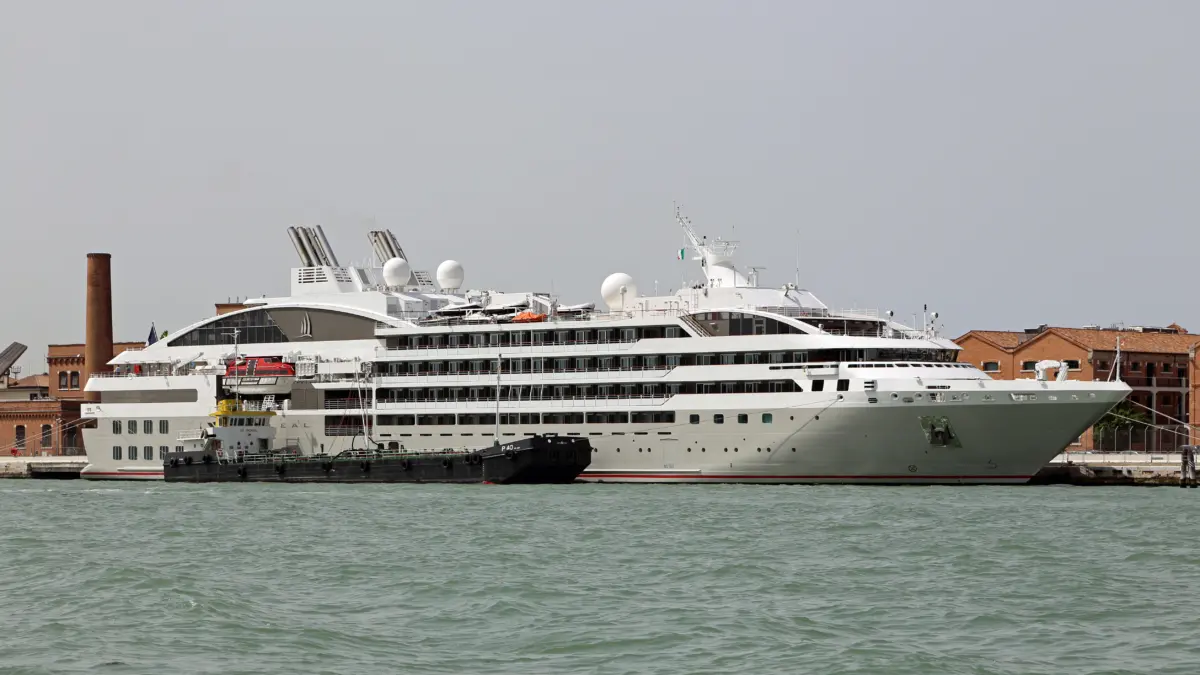
Le Soléal moored in Venice. Its strongest present-day identity is not Europe but Asia-Pacific and Kimberley expedition cruising.
Photo: Marc Ryckaert (MJJR). Licence: CC BY 3.0; crop by CruisePing.
Le Soléal is the easiest Sistership to recommend when the destination is the Kimberley or Asia-Pacific. Its published programme is unusually concentrated around Japan, Korea, Indonesia, Raja Ampat, New Guinea, the Kimberley, New Zealand’s Subantarctic islands and wider Pacific routing. That gives a 2013 ship a much clearer reason to exist than a generic argument about French design.
I would choose Le Soléal over a newer PONANT Explorer when it has the right Kimberley or Asian itinerary. I would not choose it merely because it is a Sistership. The platform is still 264 guests and 132 rooms, and it lacks the Explorer class’s Blue Eye and aft marina. The itinerary has to compensate, and on this ship it often does.
Le Soléal is the Sistership to shortlist first for Kimberley, Japan and Asia-Pacific exploration. Its older hardware is secondary when the route is genuinely difficult to replicate. For a generic Mediterranean sailing I would lean towards a newer Explorer, but for the Kimberley or remote Pacific I would choose the itinerary first and feel no need to apologise for the ship.
Le Soléal at a glance
| Cruise line | PONANT Cruises |
|---|---|
| Ship class or type | PONANT Sistership, third vessel in the four-ship series; Ice Class, Clean Ship and Comfort Class certified at delivery |
| Entered service | 2013 |
| Last major refurbishment | No recent transformative rebuild that changes the basic Sistership layout |
| Gross tonnage | 10,950 GT |
| Length | 142.1 m |
| Guest capacity | 264 maximum |
| Crew | 145 |
| Passenger decks | 6 passenger-accessible decks |
| Cabins or suites | 132 staterooms and suites; 125 have a private balcony or terrace and seven Deck 3 rooms have windows or a porthole |
| Accessible cabins | 3 wheelchair-adapted staterooms, on decks 3, 4 and 5 |
| Dining venues | Two main dining choices: a gourmet restaurant and a more informal grill/buffet venue, plus room service |
| Bars and lounges | Main lounge and panoramic/observation lounge with bar areas; no Blue Eye underwater lounge |
| Pools and hot tubs | Heated outdoor seawater pool; compact open-deck relaxation areas |
| Library | Books and board games available in the public lounges rather than a large stand-alone library |
| Spa and fitness | SOTHYS and Davines spa, sauna, hair salon and fitness room |
| Children’s facilities | Kids Club on selected voyages from age 4; expedition voyages normally accept children from age 6 |
| Adults-only facilities | No dedicated adults-only retreat |
| Wi-Fi | Included Wi-Fi throughout cabins and public areas; satellite performance still depends on geography and conditions |
| UK departures or deployment | Strong Asia-Pacific focus including Japan, Indonesia, the Kimberley, Raja Ampat, New Guinea, New Zealand Subantarctic islands and Pacific routes |
Best suited to
- Travellers focused on the Kimberley, Japan, Indonesia or remote Pacific islands
- Passengers who value expedition access more than the newest interior design
- Couples comfortable with a calm bilingual ship and only two main dining choices
Think carefully if
- You want a newer Explorer’s Blue Eye lounge and marina
- You are comparing a routine itinerary at the same price as a newer PONANT vessel
- Long flights to Asia-Pacific would overwhelm the value of the cruise for your particular trip
Where this ship fits in the PONANT fleet
Le Soléal is the third Sistership, sharing its 10,950 GT, 142.1-metre hull and 132-room plan with Le Boréal and L’Austral. Its 2013 delivery also brought Ice Class, Clean Ship and Comfort Class certifications and some technical refinements over the first pair. Those credentials support its expedition role without turning it into a modern icebreaker.
Compared with Le Lyrial, Le Soléal carries more guests and offers a less varied suite structure. Compared with the Explorers, it is longer and more traditionally arranged. None of those facts make it worse in the Kimberley. A vessel becomes valuable when its deployment, expedition team and route give you access that a newer ship is not offering on the date you need.
Cabins: choose position before category
Le Soléal has 132 staterooms and suites, most with balconies. The same seven Deck 3 exceptions apply across the Sisterships, so do not assume every category includes outside space. Three rooms are adapted for wheelchair users, and selected Prestige rooms can connect to form larger configurations.
On Kimberley or tropical voyages I would place more value on a balcony than I would in rough cold weather, because there is a realistic chance you will use it frequently. Cabin position also matters for early expedition starts. A room that keeps your route to the Zodiac staging area simple can be a better practical upgrade than moving into a larger suite purely for floor area.
Dining and drinks
Le Soléal has the familiar Sistership combination of a main gourmet restaurant and a more informal grill/buffet setting. The Open Bar, minibar and room service inclusion keep the experience uncomplicated. For most passengers the question is not whether there are enough meals, but whether two venues provide enough variety over a long expedition itinerary.
Asia-Pacific deployment adds another variable: provisioning. Menus can reflect local supply as the ship moves through Japan, Australia, New Zealand and Southeast Asia, where importing particular French products can be restricted. I see that as a reason to judge the food as part of the voyage rather than demand the same pantry everywhere in the world.
Lounges, pool and life between ports
Le Soléal’s pool, lounges, theatre, spa and observation spaces provide a comfortable base between expedition days. There is enough room to separate a lecture audience from passengers who want to read or talk, but the ship remains compact. You can learn the layout quickly and move from cabin to deck without the planning required on a large vessel.
What you do not get is the Explorer generation’s underwater lounge or stern marina. In the Kimberley, I would care more about efficient expedition operations and shaded outdoor access than the absence of Blue Eye. The newer feature photographs well, but it is not automatically worth choosing a weaker route.
Watch before you book
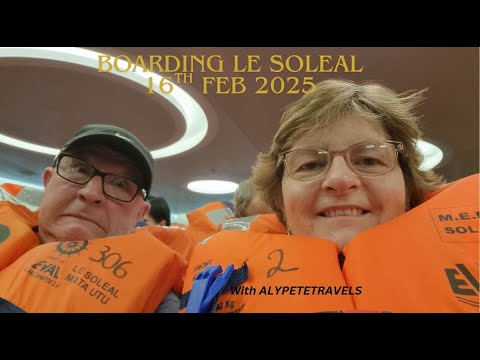
This 2025 trip report is useful precisely because it is not a polished showroom film. It includes boarding, sea-day life and a quick tour while Le Soléal is being used as an expedition ship. Watch the scale of the spaces and the informal rhythm between activities. That is closer to the question a buyer needs answered than whether every surface looks newly designed.
Expedition capability and shore days
Le Soléal’s itinerary portfolio makes expedition operations central to its identity. Kimberley sailings, Raja Ampat, New Guinea and Subantarctic routes can involve Zodiacs, remote landings and a daily plan that changes with weather, tides and local conditions. The ship is a platform for those experiences rather than the attraction that replaces them.
This is where the older design can be entirely adequate. If a ten-night Kimberley itinerary gives you the right anchorages and expedition team, the absence of an underwater lounge is a trivial disadvantage. I would spend my comparison time on landing frequency, included activities, transfers and route direction before examining décor.
Accessibility and mobility
Le Soléal has three wheelchair-adapted rooms and accessible public routes, but remote Asia-Pacific itineraries can be demanding. Tendering, Zodiacs, heat, humidity and uneven landing points can matter more than the corridor width on board. A mobility plan needs to follow the voyage, not just the ship.
For any significant mobility limitation, I would ask for a day-by-day review of likely disembarkation methods before booking. The ship may be accessible while a particular expedition day is not. That distinction is especially important when the whole reason to travel is to reach remote coastline.
Families, solo travellers and atmosphere
Le Soléal’s strongest audience is adult couples and destination-focused travellers. Families can travel within the age rules and selected voyages may operate a Kids Club, but the Kimberley and remote Pacific do not suddenly become child-centred because a club exists. The expedition schedule should suit the child, not merely the minimum age.
Solo travellers may find occasional no-single-supplement offers, and the small passenger count makes meeting people straightforward. The atmosphere remains French and English rather than aggressively internationalised. If you enjoy lectures, shared expedition stories and a quiet drink more than organised nightlife, the ship feels coherent.
Where the itinerary makes the case
Le Soléal has the clearest regional specialism of the four Sisterships. Japan and South Korea, Indonesia, the Kimberley, Raja Ampat, New Guinea, New Zealand’s Subantarctic islands and Pacific island chains recur through the programme. That concentration is a reason to seek out the ship rather than merely accept it.
For the Kimberley in particular, I would compare Le Soléal with Le Jacques Cartier rather than default to the newer Explorer. Look at route direction, date, fare, expedition content and flights. If Le Soléal wins those factors, I would book it. The newer ship’s hardware does not overturn a stronger expedition.
What is Le Soléal worth paying for?
Le Soléal can support a high daily rate when the voyage is genuinely difficult to reproduce. The Kimberley, Raja Ampat, New Guinea and Subantarctic islands are not interchangeable with a routine Mediterranean itinerary, and access logistics can account for a large part of what you are buying. In those regions I would compare Le Soléal with Le Jacques Cartier and specialist expedition competitors, not with a mainstream luxury ship that happens to be newer.
The expensive trap is focusing only on the cruise fare. Long-haul flights to Australia, Japan or the Pacific, hotels before embarkation, domestic connections and insurance can materially change the total. I would price the entire journey before choosing a cabin category. If the itinerary is already consuming the budget, a well-positioned balcony room may be the intelligent choice. If the trip includes several sea days and you value private space, a suite can make more sense. The destination should decide where the money goes.
How it compares with the other Sisterships
| Booking question | CruisePing view |
|---|---|
| Best reason to choose Le Soléal | Kimberley, Japan and remote Asia-Pacific deployment. |
| Best cabin priority | A balcony and convenient expedition-day location. |
| Versus an Explorer | Route first. Do not pay for newer hardware if Le Soléal has the better expedition. |
| Versus L’Austral | Le Soléal is the Asia-Pacific specialist; L’Austral is the broader all-rounder. |
Le Boréal is currently easier to justify in classic western Mediterranean and Atlantic cruising. L’Austral has the broadest range. Le Lyrial has the strongest low-density hardware story. Le Soléal is the one I would actively search for by region because its Asia-Pacific programme is genuinely distinctive.
Who should book it?
Book Le Soléal if the words Kimberley, Japan, Raja Ampat or New Guinea are already on your shortlist. The ship is small enough to support expedition-style access and comfortable enough to make the long-distance journey feel luxurious rather than austere.
Do not choose Le Soléal for a routine route simply because you recognise the PONANT name. On a generic itinerary, newer ships deserve comparison. Le Soléal becomes excellent when its deployment unlocks the destination you actually want, which is exactly how an expedition vessel should earn its fare.
What to check before booking
- Compare Kimberley route, date and included logistics with Le Jacques Cartier and competing expedition lines.
- Check balcony status and cabin position before paying for a category upgrade.
- Price long-haul flights and pre-cruise hotels before judging the cruise fare.
- Read activity and mobility notes for every remote landing-intensive itinerary.
- Do not assume imported French food products will be identical in every Asia-Pacific country.
Related CruisePing guides
- PONANT Cruises guide
- Which PONANT cruise ship is best?
- Le Lapérouse guide
- Le Bellot guide
- Le Jacques Cartier guide
- Le Commandant Charcot guide
- Le Ponant guide
- Le Boréal guide
- L’Austral guide
- Le Lyrial guide